Legislative Activity
Track Troy's sponsored bills, co-sponsored legislation, and voting record
This bill mandates that the VA must seek reimbursement from Medicare Advantage and Part D plans for covered care provided to veterans and establishes stricter timelines and penalties for third parties who fail to reimburse the government for care related to non-service-connected disabilities.

Lloyd Doggett
Representative
TX
Lloyd Doggett
Representative
TX
The Guarantee Utilization of All Reimbursements for Delivery of Veterans’ Health Care Act (GUARD Veterans Health Care Act) mandates that the Department of Veterans Affairs (VA) must seek reimbursement from Medicare Advantage and Medicare Part D prescription drug plans for healthcare services provided to eligible veterans. Additionally, the bill strengthens the government's authority to recover costs for non-service-connected disability care from responsible third parties. It establishes strict timelines and penalties for third parties who fail to promptly process and pay these recovery claims to the VA.
This bill repeals the Freedom of Access to Clinic Entrances (FACE) Act, effectively removing federal criminal penalties for obstructing access to reproductive health clinics.

Chip Roy
Representative
TX
Chip Roy
Representative
TX
The FACE Act Repeal Act of 2025 seeks to eliminate federal protections that currently prohibit the obstruction of reproductive health clinic entrances, the use of force or threats against patients and providers, and the intentional damage of clinic property. If enacted, this legislation would immediately repeal these federal criminal prohibitions and apply to all pending or future prosecutions.
This act raises the asset threshold to $\$25$ billion for bank and savings and loan holding companies to qualify for streamlined Federal Reserve policy treatment.
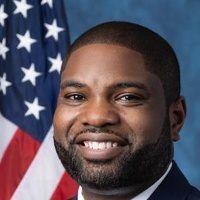
Byron Donalds
Representative
FL
Byron Donalds
Representative
FL
The Small Bank Holding Company Relief Act mandates the Federal Reserve to raise the asset threshold for qualifying as a "small" bank holding company to \$25 billion. This change will allow larger institutions, up to that new limit, to benefit from regulatory policy treatment previously reserved for smaller entities.
This Act prohibits the retirement or fuel source conversion of certain dispatchable power plants in areas deemed at high or elevated risk of electricity supply shortfalls, while providing a pathway for financial relief or exemptions under specific reliability and financial hardship criteria.

Julie Fedorchak
Representative
ND
Julie Fedorchak
Representative
ND
The Baseload Reliability Protection Act prohibits owners of certain dispatchable power plants in areas facing high or elevated risk of electricity shortages from retiring those units or switching their fuel source. Owners can seek an exemption from this ban from FERC, which must grant it if continued operation causes financial hardship or if retirement does not harm grid reliability. The Department of Energy may offer financial assistance to keep essential, money-losing plants operational.
This bill establishes the Border Operations Service Medal to honor military personnel and federal employees involved in designated national security operations along the U.S.-Mexico border starting January 1, 2025.
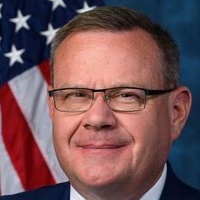
Tim Moore
Representative
NC
Tim Moore
Representative
NC
The Border Operations Service Medal Act establishes a new military decoration, the Border Operations Service Medal, to recognize service members and federal employees involved in designated national security operations along the U.S.-Mexico border starting January 2025. This medal will be awarded to active-duty, National Guard, and Reserve members who participated in these specific border security efforts. The Secretary of Defense is tasked with designing and implementing the medal within 60 days of the Act's enactment.
This bill restricts the Secretary of Homeland Security's authority to grant immigration parole to a case-by-case basis for urgent humanitarian reasons or significant public benefit, imposes annual caps, and allows states to sue over perceived abuses.
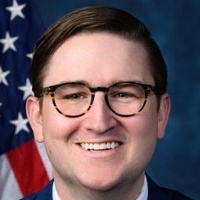
Addison McDowell
Representative
NC
Addison McDowell
Representative
NC
This bill, the Preventing the Abuse of Immigration Parole Act, aims to drastically restrict the Secretary of Homeland Security's authority to grant immigration parole. It mandates that parole decisions must be made strictly on a case-by-case basis for urgent humanitarian reasons or significant public benefit. Furthermore, the legislation imposes an annual cap on parole grants starting in FY 2029 and grants states the authority to sue the Secretary over perceived misuse of this authority.
The Patriots Over Politics Act creates a special 90-day window for service members separated solely for refusing the COVID-19 vaccine between August 2021 and January 2023 to transfer their VA education benefits to an eligible dependent.
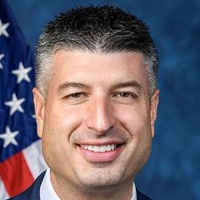
Tom Barrett
Representative
MI
Tom Barrett
Representative
MI
The Patriots Over Politics Act creates a special, limited window for certain service members separated for refusing the COVID-19 vaccine between August 2021 and January 2023 to transfer their unused VA education benefits to an eligible dependent. This transfer option is available for 90 days following the bill's enactment. If transferred to a child, the benefit use is contingent upon the service member having completed at least six years of service.
This bill reauthorizes and expands federal funding for advanced nursing education, strengthens nursing school capacity with modern training tools and partnerships, and updates appropriations through fiscal year 2030.
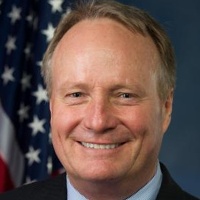
David Joyce
Representative
OH
David Joyce
Representative
OH
The Title VIII Nursing Workforce Reauthorization Act of 2025 aims to strengthen the nursing workforce by expanding federal grant support for advanced nursing education programs, including nurse practitioners and nurse-midwives. The bill updates funding rules to cover more training costs and allows nursing schools to invest in modern educational tools like simulation and telehealth technology. Furthermore, it authorizes increased appropriations through fiscal year 2030 to support these critical educational and practice expansion efforts.
The TAILOR Act mandates that federal financial agencies tailor new and existing regulations based on the risk profile and business model of the institutions they govern, while also easing reporting requirements for eligible community banks.
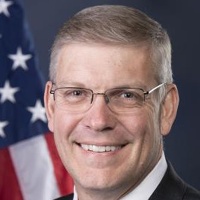
Barry Loudermilk
Representative
GA
Barry Loudermilk
Representative
GA
The TAILOR Act of 2025 mandates that federal financial agencies must tailor new regulations to the specific risk profile and business model of the institutions they govern, moving away from a one-size-fits-all approach. It also eases reporting burdens for eligible community banks by allowing for shorter financial reports twice a year. Furthermore, the bill requires federal and state supervisors to report to Congress on modernizing bank supervision practices within 18 months.
The Financial Integrity and Regulation Management Act prohibits federal banking agencies from using "reputational risk" as a factor in supervising, examining, or taking enforcement actions against depository institutions.
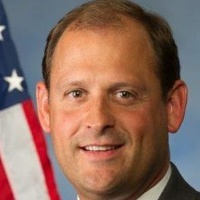
Garland Barr
Representative
KY
Garland Barr
Representative
KY
The Financial Integrity and Regulation Management (FIRM) Act prohibits federal banking agencies from using "reputational risk" as a factor in supervising, examining, or rating financial institutions. This legislation aims to ensure that bank oversight focuses strictly on financial safety and soundness, rather than public perception or political considerations. Agencies must remove all references to reputational risk from their guidance and report back to Congress on their compliance within 180 days.
This bill establishes a new excise tax on proceeds received by parties from third-party litigation financing agreements, effective after 2025.
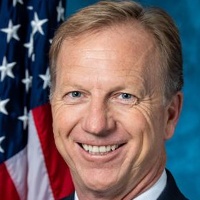
Kevin Hern
Representative
OK
Kevin Hern
Representative
OK
The Tackling Predatory Litigation Funding Act establishes a new federal excise tax on proceeds received from third-party litigation financing agreements. This tax is calculated at the highest income tax rate plus an additional 3.8 percentage points, applied annually to the proceeds received by a "covered party." The bill also institutes specific withholding requirements on payments made to financiers and reclassifies litigation funding proceeds to ensure this new tax structure is applied.
This Act restricts federal subpoena power over insurance data, enhances confidentiality protections for data shared by the Federal Insurance Office, and limits the Office of Financial Research's ability to subpoena insurance companies while imposing new requirements on financial regulators when collecting data from them.
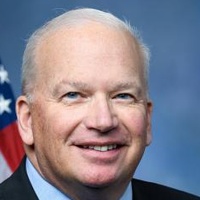
Scott Fitzgerald
Representative
WI
Scott Fitzgerald
Representative
WI
The Insurance Data Protection Act aims to adjust federal regulatory authority over insurance data by limiting the subpoena power of the Office of Financial Research against insurance companies. It also strengthens confidentiality protections for data shared with and held by the Federal Insurance Office and other financial regulators. Furthermore, the bill mandates that financial regulators must seek existing data from other sources before directly collecting information from insurance companies, ensuring data privacy is maintained.
This act modifies the student loan interest deduction limit for married couples filing separately, applying the \$2,500 cap to each spouse individually.
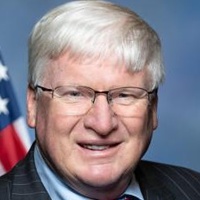
Glenn Grothman
Representative
WI
Glenn Grothman
Representative
WI
The Student Loan Marriage Penalty Elimination Act of 2025 aims to adjust the student loan interest deduction for married couples filing separately. This bill caps the deductible student loan interest at \$2,500 per individual spouse. It ensures that taxpayers cannot claim the same interest amount under multiple deduction provisions.
This bill removes federal tax and registration requirements for firearm silencers, preempts certain state regulations, mandates the destruction of existing federal silencer owner records, and updates related definitions and marking requirements.
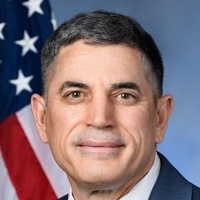
Andrew Clyde
Representative
GA
Andrew Clyde
Representative
GA
The Constitutional Hearing Protection Act aims to treat firearm silencers equally under federal tax law by updating definitions and removing certain registration requirements if existing firearm laws are followed. The bill also preempts state and local governments from imposing special taxes or registration burdens on silencers. Furthermore, it mandates the destruction of existing federal records identifying silencer owners within one year of enactment.
This bill significantly increases mandatory minimum prison sentences for non-citizens who commit crimes after entering the U.S. illegally or after previous removal.
Brad Knott
Representative
NC
Brad Knott
Representative
NC
The Punishing Illegal Immigrant Felons Act of 2025 significantly increases prison sentences for non-citizens who commit crimes after entering the U.S. illegally or after being previously removed. This legislation mandates substantial minimum prison terms—including an additional five years for illegal entry followed by a felony conviction and a new ten-year minimum for re-entry after deportation coupled with a crime. The bill aims to impose much harsher penalties on undocumented immigrants who commit serious offenses.
This bill establishes a permanent advisory committee to study and report on the financial market fallout from potential Chinese military aggression toward Taiwan, requiring regular reports and recommendations to bolster U.S. market resilience.
Zachary (Zach) Nunn
Representative
IA
Zachary (Zach) Nunn
Representative
IA
This bill establishes a permanent advisory committee focused on studying and reporting on the severe financial market fallout that could result from Chinese military aggression toward Taiwan. The committee, composed of market experts and regulators, will advise the Financial Stability Oversight Council on potential economic vulnerabilities. The Council must then issue an annual public report detailing market risks, potential losses, and specific recommendations for regulators to fortify U.S. financial systems against such geopolitical shocks.
This bill prohibits the Small Business Administration from facilitating voter registration and restricts recipients of SBA assistance from engaging in such activities.
Roger Williams
Representative
TX
Roger Williams
Representative
TX
The Business over Ballots Act reaffirms that the Small Business Administration's (SBA) primary mission is solely to support small businesses. This legislation explicitly prohibits the SBA from engaging in or facilitating voter registration activities. Furthermore, it mandates that all new contracts and existing assistance agreements must restrict recipients from using SBA funds for voter registration efforts.
This Act promotes private employee ownership by extending tax deferrals for S corporation ESOP sales, ensuring ESOP-owned businesses retain small business status, and establishing new Treasury and Labor offices to provide assistance and advocacy.
Mike Kelly
Representative
PA
Mike Kelly
Representative
PA
The Promotion and Expansion of Private Employee Ownership Act of 2025 aims to significantly boost employee ownership in S corporations through Employee Stock Ownership Plans (ESOPs). The bill extends key tax deferral benefits for stock sales to ESOPs and removes a major restriction on this tax treatment. Furthermore, it establishes new government offices and an Advocate for Employee Ownership to provide technical assistance and resolve disputes, while ensuring ESOP-owned businesses retain small business status for federal programs.
The NFA SBS Act redefines short-barreled shotguns, removes specific federal restrictions on them, preempts certain state taxes and registration requirements, and mandates the destruction of related government records.
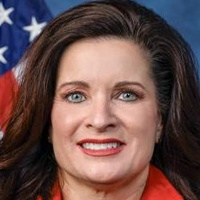
Sheri Biggs
Representative
SC
Sheri Biggs
Representative
SC
The NFA SBS Act redefines short-barreled shotguns under federal tax law, removing specific restrictions and ensuring they are not treated as destructive devices. This legislation eliminates disparate federal restrictions on these shotguns and preempts state or local laws that attempt to impose special taxes or registration requirements referencing the National Firearms Act. Furthermore, the Act mandates the destruction of specific government records related to the registration and transfer of these shotguns.
This resolution strongly supports the Second Amendment right to keep and bear arms while commending President Trump for working to reverse recent Biden administration infringements on those freedoms.
Roger Williams
Representative
TX
Roger Williams
Representative
TX
This resolution strongly affirms the constitutional right to keep and bear arms under the Second Amendment. It criticizes recent actions by the Biden administration and federal agencies, such as the ATF, for implementing what are viewed as infringements on these freedoms. The resolution commends former President Trump for his past efforts to protect Second Amendment rights against such measures.