Legislative Activity
Track Troy's sponsored bills, co-sponsored legislation, and voting record
The "Protecting Life from Chemical Abortions Act" restricts the Department of Health and Human Services (including the FDA) from reducing Risk Evaluation and Mitigation Strategy (REMS) protections for abortion drugs and mandates the collection of standardized abortion data.
Kevin Hern
Representative
OK
Kevin Hern
Representative
OK
The "Protecting Life from Chemical Abortions Act" restricts the Department of Health and Human Services and the FDA, requiring them to enforce Risk Evaluation and Mitigation Strategy (REMS) requirements for abortion drugs, reinstate the in-person dispensing requirement, and prohibits reducing REMS protections until standardized abortion data is collected by the CDC from every state. It also defines key terms such as "abortion," "abortion drug," and "unborn child" and prohibits the HHS secretary from declaring a public health emergency with respect to abortion.
This bill authorizes the creation of a Congressional Gold Medal to honor the volunteers and communities involved with the North Platte Canteen during World War II.

Adrian Smith
Representative
NE
Adrian Smith
Representative
NE
The North Platte Canteen Congressional Gold Medal Act recognizes and honors the volunteers and donors of the North Platte Canteen in Nebraska during World War II with a Congressional Gold Medal. This medal will be presented by the Speaker of the House and the President pro tempore of the Senate, and then displayed at the Lincoln County Historical Museum. The Act also authorizes the creation and sale of bronze duplicates of the gold medal to cover production costs, with proceeds deposited into the Mint's Public Enterprise Fund.
The Secure Rural Schools Reauthorization Act of 2025 extends federal funding and program authorities for states and counties containing national forest land through 2026.
Doug LaMalfa
Representative
CA
Doug LaMalfa
Representative
CA
The Secure Rural Schools Reauthorization Act of 2025 extends critical federal funding for states and counties containing national forest land through 2026. This legislation ensures the continuation of essential community services and maintains the authority for resource advisory committees and local special projects.
The I CAN Act removes practice and billing barriers for Nurse Practitioners, CRNAs, and CNMs across Medicare and Medicaid while increasing transparency in federal health program coverage decisions.
David Joyce
Representative
OH
David Joyce
Representative
OH
The "I CAN Act" is comprehensive legislation designed to remove existing practice and billing barriers for various Advanced Practice Registered Nurses (APRNs)—including Nurse Practitioners, CRNAs, and CNMs—within Medicare and Medicaid. It aims to expand patient access to care by allowing these qualified professionals to supervise, order, and bill for services to the full extent of their state-defined scope of practice. Furthermore, the bill enhances transparency and accountability for Medicare's local coverage decisions affecting APRN services. Overall, this act seeks to integrate APRNs more fully into federal healthcare programs, improving efficiency and service delivery.
This bill mandates payment and performance security for construction projects receiving federal water infrastructure funding, ensuring subcontractors are paid and projects are completed.
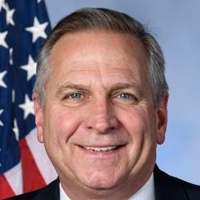
Mike Bost
Representative
IL
Mike Bost
Representative
IL
The Water Infrastructure Subcontractor and Taxpayer Protection Act of 2025 amends the Water Infrastructure Finance and Innovation Act of 2014 to ensure payment and performance security for construction projects receiving federal assistance. It allows the Secretary of Transportation or the Administrator to consider state or local laws mandating payment and performance security as fulfilling this requirement if they cover at least 50% of the construction contract. If state or local laws don't apply or meet the 50% threshold, adherence to federal bond requirements under 40 U.S.C. 3131(b)(1) and (2) is required.
Mandates that schools receiving federal funds require daily Pledge of Allegiance recitation, display the U.S. flag in every classroom, and provide education on flag history, while allowing individuals to abstain for religious or personal reasons.
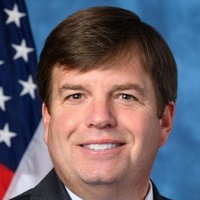
Dale Strong
Representative
AL
Dale Strong
Representative
AL
The "Promoting American Patriotism In Our Schools Act" mandates that schools receiving federal funds must require daily Pledge of Allegiance recitation, prominently display the U.S. flag in classrooms and gyms, and provide education on the flag's history. Individuals can abstain from reciting the Pledge for religious or personal reasons. Non-compliant schools will face enforcement by the Secretary.
Prohibits securities exchanges from processing transactions involving securities issued by "natural asset companies" that manage land for conservation and ecological performance.
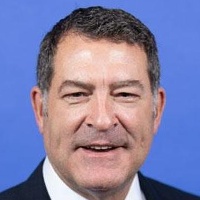
Mark Green
Representative
TN
Mark Green
Representative
TN
The "Protect America's Lands Act" prevents national securities exchanges from handling transactions of securities issued by "natural asset companies." These companies manage land for conservation and aim to enhance the value of natural assets and ecosystem services. The bill defines specific criteria for what constitutes a "natural asset company" to ensure the prohibition is appropriately applied.
The "Death Tax Repeal Act" eliminates estate and generation-skipping transfer taxes, adjusts gift tax calculations, and sets a $10,000,000 lifetime gift exemption.
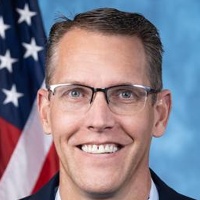
Randy Feenstra
Representative
IA
Randy Feenstra
Representative
IA
The "Death Tax Repeal Act" eliminates both estate and generation-skipping transfer taxes, effective from the date of enactment. It adjusts gift tax calculations by setting the lifetime gift exemption at $10,000,000, with inflation adjustments after 2011. The Act also includes transitional rules for applying certain sections of the Internal Revenue Code during the enactment year.
The "National Right-to-Work Act" prohibits mandatory union membership as a condition of employment, protecting employees' rights to choose whether or not to join or support a labor union.
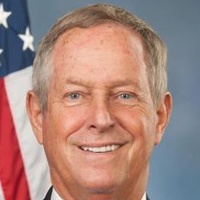
Joe Wilson
Representative
SC
Joe Wilson
Representative
SC
The "National Right-to-Work Act" amends both the National Labor Relations Act and the Railway Labor Act to protect an employee's right to choose whether or not to join or support a labor union. It eliminates the possibility of mandatory union membership or dues payments as a condition of employment, ensuring that employees cannot be forced to join or support a union against their will.
This Act allows schools participating in the National School Lunch Program to offer organic or non-organic whole milk alongside other options, while clarifying saturated fat accounting and restricting milk sourcing from China state-owned enterprises.
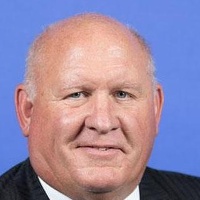
Glenn Thompson
Representative
PA
Glenn Thompson
Representative
PA
The Whole Milk for Healthy Kids Act of 2025 expands milk options available to students in the National School Lunch Program by allowing schools to offer organic or non-organic whole milk. This legislation provides greater flexibility for schools in providing fluid milk choices while maintaining accommodations for students with special dietary needs. Importantly, the saturated fat content of these offered milk options will not count toward the meal's overall saturated fat limits.
The SAFE for America Act of 2025 eliminates the diversity visa program, effective October 1, 2025.
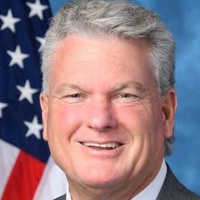
Mike Collins
Representative
GA
Mike Collins
Representative
GA
The SAFE for America Act of 2025 eliminates the Diversity Visa Program, which makes visas available to persons from countries with low rates of immigration to the United States. This is achieved through repealing subsection (c) of Section 203 of the Immigration and Nationality Act. The Act also makes corresponding technical amendments to other sections of the Immigration and Nationality Act to reflect this change. These changes would take effect beginning October 1, 2025.
This bill directs the Forest Service to expand the use of strategic livestock grazing on federal lands as a tool to reduce wildfire risks and manage invasive fuels.
Doug LaMalfa
Representative
CA
Doug LaMalfa
Representative
CA
The Grazing for Wildfire Risk Reduction Act directs the Forest Service to expand the use of livestock grazing as a strategic tool to mitigate wildfire hazards. By streamlining environmental reviews and increasing the use of targeted grazing, the bill aims to reduce hazardous fuels and invasive grasses across federal lands. This initiative also provides greater flexibility for permit holders to manage livestock during natural disasters and post-fire recovery efforts.
The United States-Israel Defense Partnership Act of 2025 bolsters defense cooperation between the U.S. and Israel through joint programs, funding increases, and extended authorities related to countering unmanned systems, anti-tunnel technology, emerging technologies, and war reserve stockpiles, while also exploring Israel's inclusion in the national technology and industrial base and assessing integrated air and missile defense in the CENTCOM region.
Joe Wilson
Representative
SC
Joe Wilson
Representative
SC
The United States-Israel Defense Partnership Act of 2025 seeks to bolster the defense relationship between the United States and Israel through joint initiatives and increased cooperation. It establishes programs to counter unmanned systems, extend anti-tunnel and counter-UAS cooperation, and promote collaboration in emerging technologies like AI and cybersecurity. The act also mandates the establishment of a Defense Innovation Unit office in Israel and assesses integrated air and missile defense in the U.S. Central Command region. Finally, it explores Israel's potential inclusion in the national technology and industrial base.
This bill extends the beneficial ownership information reporting deadline for pre-existing small businesses to January 1, 2026, to reduce their administrative burden.
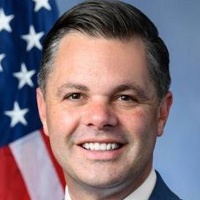
Zachary (Zach) Nunn
Representative
IA
Zachary (Zach) Nunn
Representative
IA
The Protect Small Businesses from Excessive Paperwork Act of 2025 provides regulatory relief by extending the filing deadline for beneficial ownership information reports. Under this legislation, companies formed before January 1, 2024, now have until January 1, 2026, to comply with Corporate Transparency Act requirements.
Exempts family farms and small businesses from asset considerations in need analysis for federal student aid.
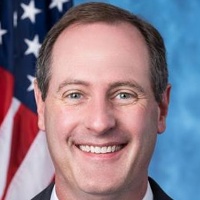
Tracey Mann
Representative
KS
Tracey Mann
Representative
KS
The "Family Farm and Small Business Exemption Act" amends the Higher Education Act of 1965 to exclude the net value of a family farm (on which the family resides) or a small business (with no more than 100 employees and owned/controlled by the family) from consideration as an asset when determining financial need for federal student aid. This change aims to make higher education more accessible for students from family farm and small business backgrounds.
Mandates the disclosure of third parties entitled to payment from civil action settlements or judgments to ensure transparency.
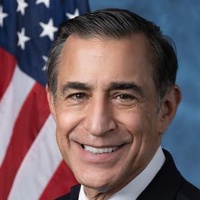
Darrell Issa
Representative
CA
Darrell Issa
Representative
CA
The Litigation Transparency Act of 2025 requires parties in civil actions to disclose the identity of any third party entitled to payment contingent on the outcome of the case, along with the relevant agreements. This disclosure aims to increase transparency in civil litigation by revealing who financially benefits from the lawsuit's outcome. Certain payments, such as loan repayments and attorney's fees, are exempt from this disclosure requirement. The Act applies to both ongoing and future court cases.
The Fair Access to Banking Act prohibits large financial institutions and payment networks from denying services to law-abiding businesses based on subjective, non-financial, or political criteria.
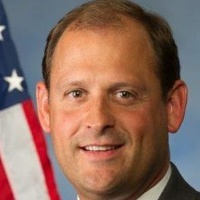
Garland Barr
Representative
KY
Garland Barr
Representative
KY
The Fair Access to Banking Act prohibits large financial institutions and payment networks from denying services to law-abiding businesses based on subjective, politically motivated, or reputational criteria. The bill mandates that financial institutions use impartial, quantitative, risk-based standards to evaluate customers rather than category-based exclusions. To ensure compliance, the legislation establishes enforcement mechanisms through federal regulators and provides a legal pathway for businesses to sue for damages if they are unfairly denied access to financial services.
The PATROL Act prevents the federal government from using the Rivers and Harbors Act of 1899 to legally challenge state-led efforts to construct physical border barriers.
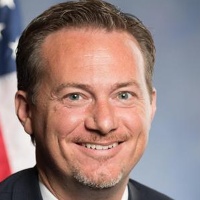
Michael Cloud
Representative
TX
Michael Cloud
Representative
TX
The PATROL Act (Preventing Aliens Through Rivers or Land Act) prohibits the federal government from using the Rivers and Harbors Act of 1899 to legally challenge states that construct physical barriers along their international borders. This legislation aims to protect state-led border security initiatives, such as walls, fences, or floating buoys, from federal civil lawsuits.
This bill prohibits state and local governments from imposing special taxes, insurance requirements, or user fees as a condition for the ownership, manufacture, or transfer of firearms and ammunition.
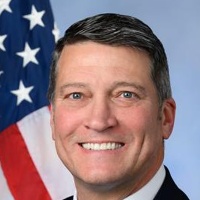
Ronny Jackson
Representative
TX
Ronny Jackson
Representative
TX
The "No User Fees for Gun Owners Act" prohibits state and local governments from imposing special taxes, insurance requirements, or user fees as a condition for owning, manufacturing, or transferring firearms and ammunition. The bill ensures that firearms are only subject to standard, generally applicable sales taxes, preventing discriminatory financial barriers to gun ownership.
The Aerial Firefighting Enhancement Act of 2025 extends and expands the Department of Defense’s authority to sell excess aircraft and parts to support wildfire suppression efforts through 2035.
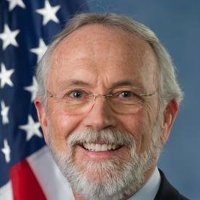
Dan Newhouse
Representative
WA
Dan Newhouse
Representative
WA
The Aerial Firefighting Enhancement Act of 2025 extends the Department of Defense’s authority to sell excess aircraft and parts for wildfire suppression through 2035. This legislation expands the permitted use of these aircraft to include water dropping and mandates their exclusive use for firefighting operations.