Legislative Activity
Track Neal's sponsored bills, co-sponsored legislation, and voting record
This resolution expresses support for designating September 2026 as "National Prostate Cancer Awareness Month" to promote screening, research, and public awareness.
Troy Carter
Representative
LA
Troy Carter
Representative
LA
This resolution expresses support for designating September 2026 as "National Prostate Cancer Awareness Month." It highlights the critical importance of early screening and research in combating the disease, while encouraging public participation in awareness efforts to improve health outcomes for men across the United States.
This resolution commemorates the 13 U.S. servicemembers killed at Abbey Gate and condemns the Biden administration’s handling of the 2021 withdrawal from Afghanistan.
Matt Van Epps
Representative
TN
Matt Van Epps
Representative
TN
This resolution commemorates the 13 U.S. servicemembers killed during the 2021 Abbey Gate bombing in Afghanistan. It formally condemns the Biden-Harris administration for its handling of the withdrawal, citing failures in planning, security, and accountability. The measure denounces the administration's decisions as a dereliction of duty that compromised national security and abandoned American allies.
This resolution expresses the House of Representatives' support for Charleston, South Carolina, to host the 2027 annual session of the OSCE Parliamentary Assembly.
Joe Wilson
Representative
SC
Joe Wilson
Representative
SC
This resolution expresses the support of the House of Representatives for Charleston, South Carolina, to host the 2027 annual session of the Organization for Security and Cooperation in Europe (OSCE) Parliamentary Assembly. It highlights the city’s world-class infrastructure and honors the legacy of the late Senator Lindsey Olin Graham by advocating for the event to proceed as originally planned.
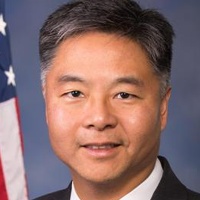
Tyler's Law mandates a study and subsequent guidance on the routine testing for fentanyl in hospital emergency departments during overdose treatment.
Ted Lieu
Representative
CA
Ted Lieu
Representative
CA
Tyler's Law mandates a comprehensive study by the Secretary of Health and Human Services on the frequency, cost, and impact of fentanyl testing in hospital emergency departments during overdose cases. Following the study, the Secretary must issue guidance on whether routine fentanyl testing should become standard practice for overdose patients. This guidance will also address staff training regarding existing drug test panels and the long-term health implications of such testing.
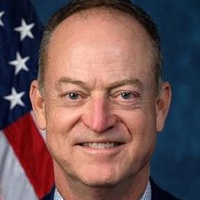
This bill prohibits the Department of Labor from finalizing, implementing, or enforcing the proposed rule regarding heat injury and illness prevention in outdoor and indoor work settings.
Mark Messmer
Representative
IN
Mark Messmer
Representative
IN
This act, the Heat Workforce Standards Act of 2025, prohibits the Secretary of Labor from finalizing, implementing, or enforcing the proposed rule regarding heat injury and illness prevention published in August 2024. This restriction extends to any future standard substantially similar to the one proposed.
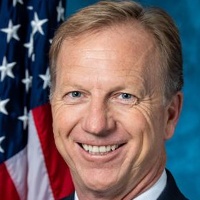
This bill clarifies that a franchisor is only considered a joint employer of a franchisee's workers if it exercises substantial, direct, and immediate control over essential terms of employment.
Kevin Hern
Representative
OK
Kevin Hern
Representative
OK
The American Franchise Act aims to protect the traditional franchise business model by clarifying the definition of a "joint employer." This legislation establishes that a franchisor is only considered a joint employer if it exercises "substantial direct and immediate control" over the essential terms of employment for a franchisee's workers. This change specifically targets liability risks associated with maintaining brand standards, ensuring franchisors are not automatically held responsible for local labor practices. The new standard applies prospectively to future legal proceedings.
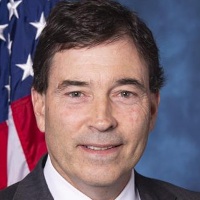
The AADAPT Act expands grant eligibility and funding to integrate dementia care services into health centers through 2031.
Troy Balderson
Representative
OH
Troy Balderson
Representative
OH
The AADAPT Act expands access to specialized dementia care by authorizing grants for public and nonprofit health centers to integrate these services into their programs. Additionally, the bill extends federal funding authorization through 2031 to ensure the continued growth and sustainability of these critical health outcomes.
The Patients First Act of 2026 reforms Medicare physician payment systems to ensure more stable, predictable reimbursement for providers while improving patient access to primary care and value-based services.
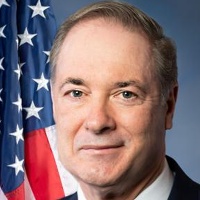
John Joyce
Representative
PA
John Joyce
Representative
PA
The Patients First Act of 2026 is comprehensive legislation designed to stabilize Medicare physician payments, improve patient access to primary care, and transition the current quality reporting system to a more clinician-led framework. By modernizing reimbursement formulas, reducing financial volatility for providers, and increasing transparency in value-based care models, the bill aims to ensure a more sustainable and predictable healthcare environment. These reforms seek to lower out-of-pocket costs for patients while supporting the long-term viability of medical practices.
This bill mandates electronic prior authorization, increases transparency through required data reporting, and establishes faster decision timelines for Medicare Advantage plans to improve timely access to care for seniors.
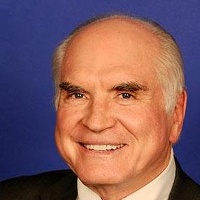
Mike Kelly
Representative
PA
Mike Kelly
Representative
PA
The Improving Seniors’ Timely Access to Care Act of 2025 aims to streamline and modernize the prior authorization process within Medicare Advantage plans. This bill mandates the adoption of electronic prior authorization systems and significantly increases transparency regarding approval rates and decision times starting in 2027. Furthermore, it establishes new enrollee protections and grants the Secretary authority to enforce faster decision timeframes for medical services.
This bill supports the goals of Alzheimer's and Brain Awareness Month by encouraging education, advocacy for research and care, and support for those affected by Alzheimer's disease.
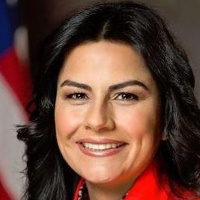
Nanette Barragán
Representative
CA
Nanette Barragán
Representative
CA
This resolution officially designates June as Alzheimer's and Brain Awareness Month. It highlights the widespread impact of Alzheimer's disease, including rising prevalence, significant caregiver strain, and health disparities. The measure encourages public education, advocacy for research and support services, and support for those affected by the disease.
The CREATE AI Act of 2025 establishes the National Artificial Intelligence Research Resource (NAIRR) to democratize access to essential AI computing power and data for diverse U.S. researchers, students, and small businesses.
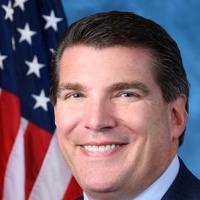
Jay Obernolte
Representative
CA
Jay Obernolte
Representative
CA
The CREATE AI Act of 2025 establishes the National Artificial Intelligence Research Resource (NAIRR) to democratize access to the high-powered computing and data necessary for advanced AI research. This resource will be managed by a non-governmental Operating Entity overseen by a new Steering Subcommittee. The goal is to broaden participation in AI development beyond large tech companies to maintain U.S. leadership and ensure AI benefits all Americans. Access will be prioritized for U.S.-affiliated researchers, educators, and students, with specific provisions for ethics, security, and privacy reviews.
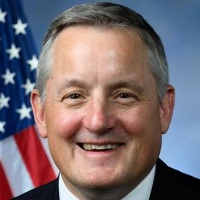
This bill renames and revises the Great American Outdoors Act's maintenance fund, increases dedicated funding through new, higher fees for foreign visitors, and sets spending priorities for deferred maintenance across public lands agencies.
Bruce Westerman
Representative
AR
Bruce Westerman
Representative
AR
This bill, the Great American Outdoors Act 250, significantly reforms and renames the existing public lands restoration fund to the America’s Legacy Restoration Fund. It secures dedicated funding streams, primarily from energy revenues and new fees on foreign visitors, to address critical deferred maintenance across the National Park Service, Forest Service, and other public land agencies. The legislation establishes strict spending priorities for infrastructure repair while also creating pilot programs for enhancing outdoor recreation and sportsmen's access. Finally, it mandates increased transparency and accountability through standardized metrics and public reporting on all funded projects.
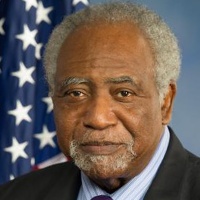
This bill expresses support for World Sickle Cell Awareness Day to increase public awareness and advocate for research, early detection, novel treatments, and equitable care for sickle cell disease.
Danny Davis
Representative
IL
Danny Davis
Representative
IL
This bill expresses support for "World Sickle Cell Awareness Day" to raise public awareness about sickle cell disease (SCD). It highlights the need for continued research, early detection, novel treatments, and equitable access to care for those affected by SCD. The resolution specifically designates June 19, 2026, as the awareness day and calls for interagency coordination to address healthcare disparities.
This bill supports the designation of June 14 through June 21, 2026, as "National Men's Health Week" to promote awareness of early detection and treatment for preventable health issues affecting men.
Troy Carter
Representative
LA
Troy Carter
Representative
LA
This resolution supports the designation of June 14 through June 21, 2026, as National Men’s Health Week. It aims to raise awareness about the health disparities affecting men, such as lower life expectancy and higher rates of certain chronic diseases. The week encourages men, families, and providers to focus on early detection, preventive care, and healthy lifestyle choices.
The Jewish American Security Act aims to combat rising antisemitism through enhanced security grants, new protections for Jewish students in education, and increased transparency requirements for online platforms regarding hate speech.

Dan Goldman
Representative
NY
Dan Goldman
Representative
NY
The Jewish American Security Act addresses the rising threat of antisemitism across the nation. This bill mandates new protections for Jewish students in educational settings and significantly increases funding and administrative support for securing Jewish community institutions. Furthermore, it requires increased transparency from large online platforms regarding their moderation of antisemitic content and mandates federal assessments of domestic and transnational antisemitic threats.
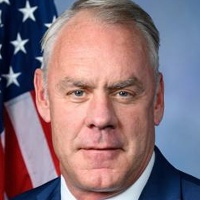
This act mandates the State Department to develop and report on a strategy encouraging allied nations to purchase U.S. defense equipment through coordinated multinational deals rather than individual sales.
Ryan Zinke
Representative
MT
Ryan Zinke
Representative
MT
The Allied Defense Sales Act directs the State Department to create a strategy encouraging allied nations to purchase U.S. defense equipment through multinational group deals rather than individual purchases. This aims to improve interoperability, strengthen the U.S. defense industry, and streamline the sales process. The Secretary of State must regularly report to Congress on the strategy's implementation, challenges encountered, and any necessary legislative changes.
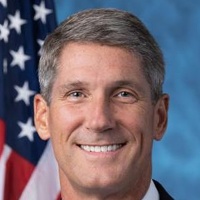
This act appropriates \$3.5 billion in emergency funding for block grants to states to compensate agricultural producers for losses caused by the March 2026 freeze.
C. Franklin
Representative
FL
C. Franklin
Representative
FL
This act appropriates \$3.5 billion in emergency funding to the USDA to provide block grants to states for agricultural losses caused by the March 2026 freeze. These funds are specifically designated to compensate producers for lost revenue, quality, or production of crops, trees, bushes, and vines in designated disaster counties. The Secretary of Agriculture must report on the implementation of this assistance quarterly.
This act establishes the Medal of Sacrifice to honor law enforcement officers and first responders killed in the line of duty, creating a Commission to oversee its design and eligibility determinations.
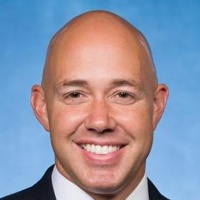
Brian Mast
Representative
FL
Brian Mast
Representative
FL
The Medal of Sacrifice Act establishes a new national medal to honor law enforcement officers and first responders killed in the line of duty. This legislation creates a Commission to advise on the medal's design, presentation, and final eligibility decisions, particularly when there are findings of wrongdoing. The medal itself will feature specific symbolic elements and will be awarded to eligible fallen heroes.
The Provider Reimbursement Stability Act of 2026 reforms Medicare physician payment policies by updating budget neutrality thresholds, establishing a correction process for utilization estimates, mandating periodic updates to practice expense data, and limiting annual conversion factor fluctuations.
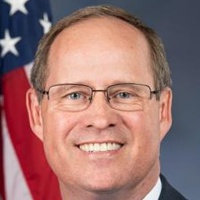
Gregory Murphy
Representative
NC
Gregory Murphy
Representative
NC
The Provider Reimbursement Stability Act of 2026 aims to improve the accuracy and predictability of Medicare physician payments. The bill reforms budget neutrality calculations, mandates periodic updates to practice expense cost data, and establishes a 2.5% cap on annual conversion factor fluctuations. These measures are designed to ensure more stable reimbursement rates for healthcare providers.
This bill authorizes the minting and sale of commemorative gold and silver coins to honor the 25th anniversary of the September 11, 2001, terrorist attacks, with surcharges supporting the National September 11 Memorial and Museum.
Dan Goldman
Representative
NY
Dan Goldman
Representative
NY
This bill authorizes the Secretary of the Treasury to mint and issue commemorative gold and silver coins marking the 25th anniversary of the September 11, 2001, terrorist attacks. The coins will honor the victims, first responders, and survivors, with designs selected in consultation with the National September 11 Memorial and Museum. All surcharges from the sale of these coins will be paid directly to the Memorial and Museum to support its operations and maintenance.