
Legislative Activity
Track Mike's sponsored bills, co-sponsored legislation, and voting record
The Major Richard Star Act ensures that military retirees with combat-related disabilities can concurrently receive their full military retirement pay and VA disability compensation without reduction.

Gus Bilirakis
Representative
FL
Gus Bilirakis
Representative
FL
The Major Richard Star Act ensures that military retirees with combat-related disabilities can receive both their military retirement pay and VA disability compensation concurrently without reduction. This law removes previous restrictions that caused military retirement pay to be offset by VA disability payments for these specific cases. The changes take effect on the first day of the month following the Act's enactment.
This bill seeks to nullify the EPA’s rule regarding waste emissions charges for petroleum and natural gas systems.
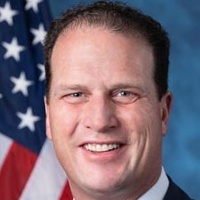
August Pfluger
Representative
TX
August Pfluger
Representative
TX
This resolution seeks to exercise congressional disapproval of the EPA’s "Waste Emissions Charge for Petroleum and Natural Gas Systems" rule. If passed, the measure would nullify the rule, ensuring it has no legal force or effect.
The HELPER Act of 2025 establishes a new FHA mortgage insurance program offering 100% financing with an upfront premium and no monthly premiums for eligible first responders, educators, and law enforcement officers.
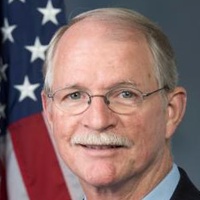
John Rutherford
Representative
FL
John Rutherford
Representative
FL
The HELPER Act of 2025 establishes a new FHA mortgage insurance program to assist first responders, educators, and law enforcement officers in purchasing homes. This program offers eligible first-time homebuyers 100% financing with no down payment required. Instead of monthly premiums, borrowers pay an upfront FHA insurance premium at closing.
Extends the statute of limitations to 10 years for prosecuting fraud related to specific pandemic unemployment programs and rescinds $5,000,000 from unspent COVID-19 relief funds.

Jason Smith
Representative
MO
Jason Smith
Representative
MO
The "Pandemic Unemployment Fraud Enforcement Act" extends the statute of limitations to 10 years for prosecuting fraud related to specific pandemic unemployment programs. It applies to violations or conspiracies under Title 18 and Title 31 of the U.S. Code and rescinds $5,000,000 from previously allocated funds to offset the budget. The changes made by this law will begin on the date of enactment.
This bill establishes the Space National Guard as a new, federally recognized state-level space force component for the U.S. Space Force, initially limited to seven states.
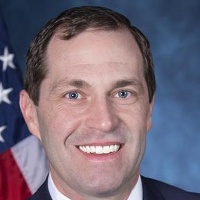
Jason Crow
Representative
CO
Jason Crow
Representative
CO
The Space National Guard Establishment Act of 2025 formally creates the Space National Guard as a new state-level component of the organized militia, serving as the reserve component for the U.S. Space Force. This initial structure transfers existing Air National Guard space personnel and units in seven specified states into the new branch. The Act mandates that the Space National Guard utilize existing Air National Guard facilities and requires annual briefings to Congress on its implementation and operations for five years.
This bill allows investors to defer taxes on capital gain dividends from mutual funds when those dividends are automatically reinvested until the shares are sold or the investor passes away.

Beth Van Duyne
Representative
TX
Beth Van Duyne
Representative
TX
This bill, the Generating Retirement Ownership through Long-Term Holding Act, allows individual investors to defer paying taxes on capital gain dividends from mutual funds if those dividends are automatically reinvested into more fund shares. Taxes on these deferred gains are only due when the investor sells the shares or upon death. This provision aims to encourage long-term investment in mutual funds by providing immediate tax relief on reinvested earnings.
This Act expands Medicare eligibility for home health services by explicitly including the need for occupational therapy as a qualifying factor.
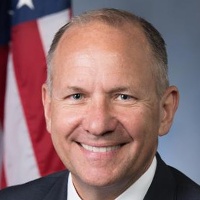
Lloyd Smucker
Representative
PA
Lloyd Smucker
Representative
PA
The Medicare Home Health Accessibility Act updates Medicare rules to explicitly include the need for occupational therapy as a valid basis for qualifying for home health services under both Part A and Part B. This change ensures that occupational therapy is treated equally alongside physical and speech therapy when determining eligibility for in-home care. These new provisions will take effect for services provided on or after January 1, 2026.
This act amends the tax code to give businesses the option to immediately deduct or amortize (spread out over at least five years) their research and experimental expenditures.
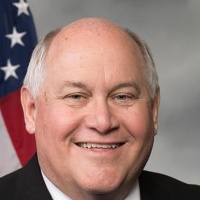
Ron Estes
Representative
KS
Ron Estes
Representative
KS
The American Innovation and R&D Competitiveness Act of 2025 revises how businesses treat research and experimental (R&E) expenditures for tax purposes. Taxpayers can now choose between immediately deducting R&E costs or amortizing them over a period of at least 60 months. This legislation also makes technical adjustments to ensure consistency between immediate deductions and claiming the research tax credit.
This bill ensures that long-term care hospitals receive appropriate Medicare payments for treating seniors with critical conditions by exempting certain high-acuity cases from site-neutral payment rules.
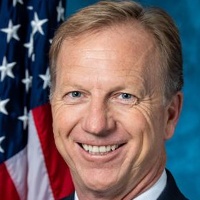
Kevin Hern
Representative
OK
Kevin Hern
Representative
OK
The "Securing Access to Care for Seniors in Critical Condition Act of 2025" amends the Social Security Act to change Medicare payment rules for long-term care hospitals. Beginning October 1, 2026, hospitals will not be subject to site-neutral payment rules for patients discharged under specific high-severity diagnosis groups. This adjustment aims to ensure adequate financial support for hospitals treating the most critical patients.
This bill repeals the excise tax on indoor tanning services, effective after the date of enactment.
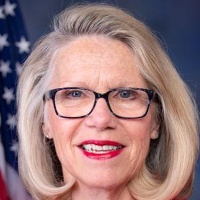
Carol Miller
Representative
WV
Carol Miller
Representative
WV
The "Tanning Tax Repeal Act of 2025" eliminates the federal excise tax on indoor tanning services. This bill removes Chapter 49 from the Internal Revenue Code, effectively repealing the tax. The repeal is applicable for services provided after the bill's enactment.
This bill reinstates the pre-American Rescue Plan Act threshold for third-party payment networks to report gig economy earnings to the IRS, requiring both over $20,000 in payments and over 200 transactions.
Carol Miller
Representative
WV
Carol Miller
Representative
WV
The Saving Gig Economy Taxpayers Act seeks to reinstate the previous, higher reporting thresholds for third-party payment processors issuing Form 1099-K. This means payment networks will only be required to report earnings to the IRS if a user exceeds both a \$20,000 total payment amount and 200 separate transactions in a calendar year. Furthermore, the bill applies this "de minimis" standard to backup withholding rules for these network payments starting in 2025.
This Act establishes a tax credit incentive for capturing methane gas from mines and utilizing it for energy purposes.
Carol Miller
Representative
WV
Carol Miller
Representative
WV
The Methane Reduction and Economic Growth Act amends existing tax law to create a new incentive credit for capturing methane gas emitted from mines. This credit mirrors the existing carbon capture tax structure, applying it specifically to qualified methane captured from mining operations. The goal is to encourage the capture and beneficial use of this potent greenhouse gas, provided certain construction and capture thresholds are met.
This resolution expresses formal condolences to the families and loved ones of the 67 victims of the January 2025 collision between American Eagle Flight 5342 and a U.S. Army flight, while honoring the victims and commending the first responders.
Ron Estes
Representative
KS
Ron Estes
Representative
KS
This resolution expresses the House of Representatives' deepest condolences to the families and loved ones of the 67 individuals who lost their lives in the January 29, 2025, collision of American Eagle Flight 5342 and a U.S. Army flight. It honors the victims, many of whom had strong ties to Wichita, Kansas, and commends the heroic efforts of the first responders and emergency personnel who managed the recovery.
This resolution disapproves and nullifies the Environmental Protection Agency’s rule regarding the withdrawal of a technical amendment to Ohio's air quality plan.

Troy Balderson
Representative
OH
Troy Balderson
Representative
OH
This resolution invokes the Congressional Review Act to formally disapprove and nullify a recent Environmental Protection Agency rule regarding air plan approvals in Ohio. By passing this measure, Congress ensures the specified EPA technical amendment will have no further force or effect.
The American Innovation Act of 2025 incentivizes entrepreneurship by increasing tax deductions for start-up costs, allowing unused losses and credits to be preserved after an ownership change under certain conditions.

Vern Buchanan
Representative
FL
Vern Buchanan
Representative
FL
The American Innovation Act of 2025 modifies the tax code to simplify and expand deductions for start-up and organizational expenditures for new businesses, allowing businesses to deduct up to $20,000 in start-up costs in the first year. The Act also preserves start-up net operating losses and tax credits after an ownership change, with specific conditions to ensure the continuation of the business. These changes aim to support new businesses by providing more immediate tax relief and ensuring that their losses and credits are not entirely forfeited after an ownership change. The provisions of this act generally apply to businesses starting after December 31, 2025.
The "Stop Electronic Stalking Act of 2025" amends federal stalking laws to include the unauthorized use of electronic geotracking devices to track someone's location without their consent.

Emilia Sykes
Representative
OH
Emilia Sykes
Representative
OH
The Stop Electronic Stalking Act of 2025 amends federal stalking laws to include the use of unauthorized geotracking devices. This bill defines a geotracking device as any electronic or mechanical tool used to remotely monitor a person's location without their consent. By including this, the law aims to modernize stalking definitions to address technological advancements.
The SAFE Act of 2025 amends existing law to include equines (horses) in the prohibition of slaughtering animals for human consumption.
Vern Buchanan
Representative
FL
Vern Buchanan
Representative
FL
The SAFE Act of 2025 amends existing legislation to explicitly prohibit the slaughter of horses for human consumption, reinforcing protections for these animals. This bill seeks to prevent the inhumane treatment of American equines by closing loopholes that allow their slaughter and export for human consumption.
The "Grown in America Act of 2025" establishes a tax credit for businesses that use domestically produced agricultural commodities in their products, aiming to incentivize the use of American-grown ingredients.
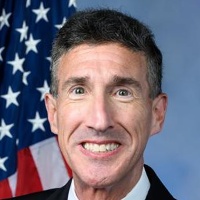
David Kustoff
Representative
TN
David Kustoff
Representative
TN
The "Grown in America Act of 2025" introduces a tax credit for businesses that use domestic agricultural commodities in their products for human consumption. This credit, capped at $100,000,000, aims to incentivize the use of U.S.-produced agricultural inputs by offering a tax benefit based on the percentage of domestic agricultural commodities used. The percentage of domestic inputs required to receive the full credit increases over time, with the Secretary of Agriculture maintaining a list of agricultural commodities that cannot be produced domestically. These provisions will be effective for taxable years starting after December 31, 2025.
This bill creates a tax credit for investments in innovative agricultural technology, such as precision and controlled environment agriculture, to encourage advancements in specialty crop production.
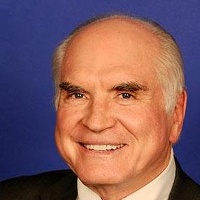
Mike Kelly
Representative
PA
Mike Kelly
Representative
PA
The Supporting Innovation in Agriculture Act of 2025 introduces a tax credit for investments in innovative agricultural technology, aiming to boost the production, storage, and processing of specialty crops through precision and controlled environment agriculture. This credit covers 30% of qualified investments in projects using technologies like precision agriculture and controlled environment agriculture, effective for construction starting after January 1, 2025, and includes options for direct payment or transfer of the credit.
This bill extends the tax credit deadline for quality fuel cell property construction starting after 2024 from 2025 to 2033.

Claudia Tenney
Representative
NY
Claudia Tenney
Representative
NY
The Technology for Energy Security Act extends the tax credit deadline for "quality fuel cell property" from January 1, 2025, to January 1, 2033. This extension applies only to fuel cell property where construction begins after December 31, 2024. The bill aims to promote energy security by incentivizing the development of fuel cell technology.