Legislative Activity
Track John's sponsored bills, co-sponsored legislation, and voting record
This bill establishes the Taiwan Undersea Cable Resilience Initiative to counter threats to critical undersea communications infrastructure near Taiwan through monitoring, rapid response, international cooperation, and imposing sanctions on responsible Chinese persons.
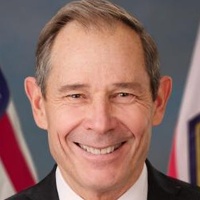
John Curtis
Senator
UT
John Curtis
Senator
UT
This bill establishes the **Taiwan Undersea Cable Resilience Initiative** to counter threats, including suspected sabotage by the People's Republic of China, against critical undersea communication cables vital to Taiwan's security and commerce. The Initiative mandates advanced monitoring, rapid repair protocols, enhanced maritime awareness, and international cooperation to protect these assets. Furthermore, the Act requires the imposition of mandatory sanctions on any Chinese persons found responsible for such sabotage and mandates regular reporting to Congress on security incidents and U.S. responses.
This Act establishes federal transparency requirements for timeshare sales agreements, mandating itemized costs, clear termination options, and a 14-day penalty-free cancellation period.
John Curtis
Senator
UT
John Curtis
Senator
UT
The Timeshare Transparency Act establishes new federal requirements to protect consumers during timeshare purchases. It mandates that sales agreements clearly itemize all costs, outline fee change procedures, list exit options, and include a 14-day penalty-free cancellation period. The Federal Trade Commission (FTC) is tasked with enforcing these new transparency standards.
Ally's Act mandates that private health insurance plans cover auditory implant devices, related services, and necessary maintenance for qualifying individuals starting in 2026.
John Curtis
Senator
UT
John Curtis
Senator
UT
Ally's Act mandates that private health insurance plans cover essential hearing devices, including auditory implants and their related services, for qualifying individuals. This coverage must begin for plan years starting January 1, 2026. The law ensures that cost-sharing and treatment limitations for these hearing benefits are no more restrictive than those for other medical services. Furthermore, coverage cannot be denied if a physician or qualified audiologist determines the device is medically necessary.
This bill establishes the Western Refined Fuel Reserve, a dedicated storage facility for gasoline, diesel, and jet fuel within the Strategic Petroleum Reserve to address supply disruptions in Western States.
John Curtis
Senator
UT
John Curtis
Senator
UT
The Western Refined Fuel Reserve Act of 2025 establishes a dedicated storage reserve for refined petroleum products like gasoline, diesel, and jet fuel within the Western United States. This reserve will be managed by the Secretary of Energy and must be maintained at a minimum capacity to address supply disruptions in the region. The Act mandates the selection of a storage location within a Western State and sets specific requirements for filling and maintaining the reserve for the first five years.
The QUIET Act mandates disclosure for AI-generated robocalls and doubles penalties for fraudulent impersonation using AI voice or text.
John Curtis
Senator
UT
John Curtis
Senator
UT
The Quashing Unwanted and Interruptive Electronic Telecommunications (QUIET) Act mandates that robocalls using artificial intelligence to mimic a human must disclose this fact at the beginning of the communication. The bill also establishes enhanced civil and criminal penalties, doubling the maximum fines for violations involving fraudulent AI voice or text message impersonation. This legislation aims to curb unwanted and deceptive electronic telecommunications.
This bill mandates the U.S. Postal Service to assign a single, unique ZIP Code specifically for Highland City, Utah.
John Curtis
Senator
UT
John Curtis
Senator
UT
This bill mandates the United States Postal Service to assign a single, unique ZIP Code specifically for Highland City, Utah. The USPS must establish this new ZIP Code within 270 days of the law's enactment. This designation will apply exclusively to the geographic boundaries of Highland City.
This bill codifies the Six Assurances to Taiwan as official U.S. policy and establishes a mandatory congressional review process for any presidential action that would alter these assurances.
John Curtis
Senator
UT
John Curtis
Senator
UT
This bill formally codifies the "Six Assurances" made by the Reagan Administration regarding U.S. policy toward Taiwan, emphasizing commitments on arms sales and non-mediation. It declares that maintaining peace in the Taiwan Strait and determining Taiwan's future peacefully are vital U.S. interests. Furthermore, the Act establishes a mandatory congressional review process that the President must follow before taking specific actions that would alter these long-standing assurances.
This bill establishes a duty of care for social media platforms regarding their recommendation algorithms, allowing lawsuits for resulting bodily injury or death by removing certain Section 230 liability protections.
John Curtis
Senator
UT
John Curtis
Senator
UT
The Algorithm Accountability Act amends Section 230 to impose a new duty of care on social media platforms regarding their recommendation algorithms. This duty requires platforms to use reasonable care to prevent foreseeable bodily injury or death resulting from the algorithm's operation. A violation of this duty strips the platform of its standard liability protection, allowing victims to sue for damages in federal court. The law specifically exempts content displayed chronologically or in direct response to a user's initial search query.
This Act establishes new standards for oversight, data collection, and training accountability for contract security personnel protecting federal facilities, alongside modernizing personnel shift tracking systems.
John Curtis
Senator
UT
John Curtis
Senator
UT
The Personnel Oversight and Shift Tracking Act of 2025, or POST Act, aims to enhance accountability for contract security personnel protecting federal facilities. It mandates improved data collection from covert testing, requiring mandatory training for staff who fail these tests. Furthermore, the Act requires the Federal Protective Service to evaluate and modernize its system for tracking security personnel shifts and reporting coverage gaps to building tenants.
This bill amends the tax code to provide a production credit for the manufacturing of specified fusion energy components.
John Curtis
Senator
UT
John Curtis
Senator
UT
The Fusion Advanced Manufacturing Parity Act amends the tax code to provide a 25% advanced manufacturing production credit for the sale of specified fusion energy components. This legislation defines key fusion components, such as superconducting magnets and vacuum vessels, as eligible for this credit. The credit is set to phase out starting in 2032 and will expire after 2034. These provisions apply to components produced and sold after December 31, 2025.
This Act updates the Clean Air Act to formally include prescribed fires alongside exceptional events when reviewing state air quality monitoring data.
John Curtis
Senator
UT
John Curtis
Senator
UT
The Wildfire Emissions Prevention Act of 2025 updates the Clean Air Act to formally include "prescribed fires" alongside "exceptional events" when reviewing air quality monitoring data. This legislation mandates the EPA Administrator to revise rules within a strict timeline, ensuring state determinations regarding pollution spikes from these events are consistently reviewed. The bill also clarifies definitions and establishes procedures for handling large, multi-jurisdictional events involving prescribed fires or natural disasters.
The Fix Our Forests Act accelerates hazardous fuel reduction and community wildfire defense by streamlining environmental reviews, enhancing interagency coordination, and establishing new support programs for affected communities and fallen firefighters.
John Curtis
Senator
UT
John Curtis
Senator
UT
The Fix Our Forests Act is comprehensive legislation designed to aggressively reduce catastrophic wildfire risk through landscape-scale restoration and streamlined management of high-risk federal lands. It establishes new centralized intelligence centers, accelerates hazardous fuel reduction projects by reforming environmental reviews, and bolsters community resilience through new risk reduction programs. Furthermore, the bill enhances support for firefighters' families and promotes technological innovation and transparency in forest management practices.
The Consumer Safety Technology Act establishes a CPSC pilot program for AI in product safety, mandates a study on blockchain for consumer protection, and requires the FTC to report on deceptive token transactions.
John Curtis
Senator
UT
John Curtis
Senator
UT
The Consumer Safety Technology Act establishes initiatives to enhance consumer protection in the face of emerging technologies. It mandates a pilot program for the CPSC to test the use of Artificial Intelligence in product safety enforcement. Furthermore, the bill requires studies on how blockchain technology can combat fraud and directs the FTC to report on deceptive practices involving digital tokens.
This Act mandates that transportation safety standards allow organizations to implement flexible, risk-based approaches to compliance.
John Curtis
Senator
UT
John Curtis
Senator
UT
The Modern Risk Detection Act of 2025 mandates that transportation safety standards allow organizations to implement risk-based approaches when meeting regulatory requirements. This shifts the focus from rigid, one-size-fits-all rules to methods that prioritize managing specific, identified risks. The goal is to encourage the use of risk-based concepts in achieving overall safety compliance.
This bill authorizes pipeline owners and operators to use risk-based inspections instead of standard requirements for in-service breakout tanks.
John Curtis
Senator
UT
John Curtis
Senator
UT
This bill authorizes pipeline owners and operators to use risk-based inspection methods for in-service breakout tanks, replacing existing standard inspection requirements. The Secretary of Transportation is directed to promptly update federal regulations to formally permit these risk-based inspections. This change provides flexibility in how certain storage tanks are inspected.
This Act authorizes the Secretary of Agriculture to issue a 10-year, no-fee special use permit for the maintenance of an American flag flagpole at Kyhv Peak Lookout Point in the Uinta National Forest, prioritizing Robert S. Collins.
John Curtis
Senator
UT
John Curtis
Senator
UT
The Star-Spangled Summit Act of 2025 authorizes the Secretary of Agriculture to issue a 10-year special use permit for the placement and maintenance of an American flag flagpole at Kyhv Peak Lookout Point in Utah. This permit is initially offered to a specific individual, Robert S. Collins, with a clear preference system established for subsequent renewals or transfers. Crucially, the Act stipulates that no land use fees can be charged for this permit, and it exempts the permit process from the National Environmental Policy Act (NEPA).
This resolution commemorates the anniversary of the 1992 and 1994 terrorist bombings in Buenos Aires and recommits to upholding justice for the victims by urging international cooperation and support for ongoing Argentine investigations.
John Curtis
Senator
UT
John Curtis
Senator
UT
This resolution commemorates the 33rd anniversary of the 1992 Israeli Embassy bombing and the 31st anniversary of the 1994 AMIA bombing in Buenos Aires. It strongly condemns these terrorist acts, which were allegedly directed by Iran, and highlights the decades-long struggle for justice for the victims. The resolution urges continued international efforts to hold the perpetrators accountable and commends recent Argentine legal actions toward achieving that goal.
This joint resolution disapproves of the EPA's rule reclassifying major sources of air pollution as area sources under the Clean Air Act.
John Curtis
Senator
UT
John Curtis
Senator
UT
This Joint Resolution uses the Congressional Review Act to formally disapprove and nullify an Environmental Protection Agency (EPA) rule. The rejected rule concerned the reclassification of major sources of pollution as area sources under Section 112 of the Clean Air Act. Consequently, the EPA's December 29, 2023, final rule will have no legal effect.
This bill amends the budgetary treatment of certain WIFIA financial assistance to ensure loans repaid solely by non-Federal sources are counted as non-Federal for federal budget scoring.
John Curtis
Senator
UT
John Curtis
Senator
UT
The Restoring WIFIA Eligibility Act of 2025 modifies how the federal government budgets for certain financial assistance provided under the Water Infrastructure Finance and Innovation Act (WIFIA). This bill stipulates that if loan repayments for water infrastructure projects come entirely from non-Federal sources, the assistance must be counted as a direct loan or loan guarantee for budgetary scoring purposes. This change effectively treats these specific WIFIA loans as non-Federal financing in the federal budget.
The Shivwits Band of Paiutes Jurisdictional Clarity Act clarifies state and federal court jurisdiction over the Tribe's lands and agreements while preserving the Band's sovereign immunity and granting them specific federal leasing authority.
John Curtis
Senator
UT
John Curtis
Senator
UT
The Shivwits Band of Paiutes Jurisdictional Clarity Act defines the Tribe and its lands for legal purposes. It grants Utah state courts jurisdiction over civil lawsuits involving the Band on their lands, while ensuring disputes arising from contracts on those lands can be heard in federal court. Crucially, the Act explicitly preserves the Shivwits Band of Paiutes' sovereign immunity from being sued without their consent. Finally, it grants the Tribe the authority to lease its federal trust lands under existing federal leasing statutes.