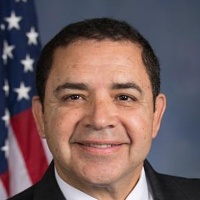
Legislative Activity
Track Henry's sponsored bills, co-sponsored legislation, and voting record
The IBEM Act of 2025 modernizes permitting for international bridges and land ports of entry by removing time-based restrictions and exempting certain Presidential permit applications from National Environmental Policy Act reviews.
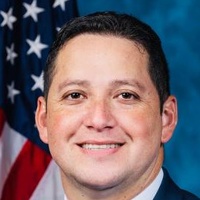
Ernest Gonzales
Representative
TX
Ernest Gonzales
Representative
TX
The International Bridge and Port of Entry Modernization Act of 2025 (IBEM Act) updates the permitting process for international bridges and land ports of entry on the U.S.-Mexico and U.S.-Canada borders. This legislation removes previous time-based restrictions on permit issuance and streamlines the process by explicitly excluding National Environmental Policy Act (NEPA) reviews for certain Presidential permit applications. The goal is to modernize and expedite approvals for critical border infrastructure.
This Act strengthens the Unfunded Mandates Reform Act by requiring detailed regulatory impact analyses, enhanced stakeholder consultation, and judicial review for major federal rules.
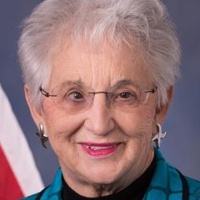
Virginia Foxx
Representative
NC
Virginia Foxx
Representative
NC
The Unfunded Mandates Accountability and Transparency Act of 2025 significantly strengthens oversight of major federal regulations that impose substantial costs on state, local, Tribal governments, or the private sector. It mandates detailed regulatory impact analyses, enhances early stakeholder consultation, and requires agencies to select alternatives that maximize net benefits. Furthermore, the bill grants authority for judicial review of major rules that fail to comply with these new accountability standards.
The ANCHOR for Military Families Act mandates comprehensive and timely delivery of detailed relocation assistance information, especially regarding educational support, to service members and their families before a permanent change of station.
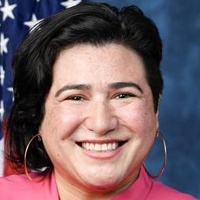
Emily Randall
Representative
WA
Emily Randall
Representative
WA
The ANCHOR for Military Families Act aims to significantly improve how the military informs service members and their families about available relocation assistance programs before a Permanent Change of Station (PCS). This bill mandates the delivery of comprehensive, accessible information packets covering housing, education (including school enrollment rules), and mental health support at least 45 days prior to a move. Furthermore, it requires the Department of Defense to report annually to Congress on the implementation and effectiveness of these new information delivery standards.
This act increases the penalty-free withdrawal limit from retirement accounts for first-time homebuyers from $\$10,000$ to $\$50,000$.
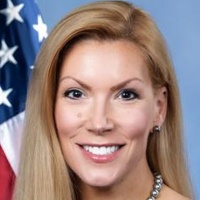
Beth Van Duyne
Representative
TX
Beth Van Duyne
Representative
TX
The Uplifting First-Time Homebuyers Act of 2025 significantly increases the penalty-free withdrawal limit from retirement accounts for first-time homebuyers. This legislation raises the maximum allowable distribution from $\$10,000$ to $\$50,000$. This change is designed to provide greater financial flexibility for individuals purchasing their first home, taking effect for tax years beginning after December 31, 2024.
This bill mandates comprehensive federal data collection and reporting on attacks, aggression, and mental wellness to improve law enforcement officer safety and support.
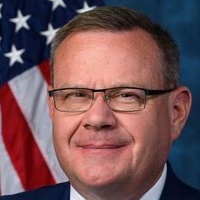
Tim Moore
Representative
NC
Tim Moore
Representative
NC
This bill mandates comprehensive federal reporting to better understand and address violence, aggression, and wellness challenges facing law enforcement officers. It requires the Attorney General to produce detailed reports analyzing attacks on officers, potential new data collection methods for non-criminal aggressive incidents, and the state of officer mental health resources. The goal is to use this improved data to recommend better federal, state, and local responses and support systems for officers.
The LEOSA Reform Act updates federal law to clarify concealed carry exceptions in school zones and modernizes qualification standards and carrying privileges for qualified active and retired law enforcement officers in certain federal facilities.
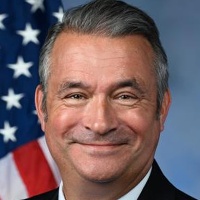
Don Bacon
Representative
NE
Don Bacon
Representative
NE
The LEOSA Reform Act updates federal laws to better align concealed carry rights for qualified active and retired law enforcement officers with existing school zone restrictions. This legislation modernizes the Law Enforcement Officer Safety Act (LEOSA) by expanding qualification standards for retired officers and clarifying where they may carry firearms, including in certain lower-security federal facilities. The bill ensures that LEOSA-authorized carriers are not inadvertently violating federal school zone prohibitions.
This bill mandates the establishment of facilities to rear and release sterile New World screwworm flies to combat agricultural threats, supported by mandatory reporting and funding.
Ernest Gonzales
Representative
TX
Ernest Gonzales
Representative
TX
The STOP Screwworms Act mandates the establishment of facilities to rear and release sterile New World screwworm flies in high-risk areas to combat infestations. The Secretary of Agriculture must build these modular facilities within 180 days of enactment and provide annual public reports on the threat and control efforts. The bill authorizes up to $300 million to fund these necessary actions.
This Act doubles the tax-free amount public safety officers can receive from government retirement plans to cover health and long-term care insurance premiums, increasing the exclusion from $3,000 to $6,000 starting in tax years after 2025.
Don Bacon
Representative
NE
Don Bacon
Representative
NE
The Public Safety Retirees Healthcare Protection Act of 2025 aims to increase the amount of tax-free income public safety officers can receive from their government retirement plans to cover healthcare costs. Specifically, this bill doubles the current annual exclusion limit from $\$3,000$ to $\$6,000$. This increased tax benefit will apply to distributions taken in tax years beginning after December 31, 2025.
This Act establishes a bipartisan Fiscal Commission tasked with developing and reporting legislative recommendations to reduce the national debt, followed by an expedited congressional process for considering those recommendations.
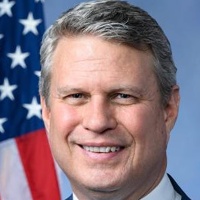
Bill Huizenga
Representative
MI
Bill Huizenga
Representative
MI
The Fiscal Commission Act establishes a bipartisan commission tasked with developing legislative recommendations to improve the nation's long-term fiscal health, aiming to reduce the national debt ratio to 100% of GDP by 2039. This Commission, composed of appointed members from both chambers of Congress and outside experts, must submit its final report and proposed legislation within a specific timeframe. The Act also creates an expedited, amendment-free process for Congress to consider and vote on any resulting "implementing bills."
This bill expands the definition of "law enforcement officer" for federal retirement purposes under FERS and CSRS to include specific IRS, Postal Inspection, and VA police employees, and establishes rules for how current employees can count prior service under the new designation.
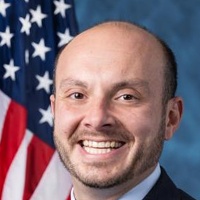
Andrew Garbarino
Representative
NY
Andrew Garbarino
Representative
NY
The Law Enforcement Officers Equity Act expands the definition of "law enforcement officer" for federal retirement purposes under both the Federal Employees Retirement System (FERS) and the Civil Service Retirement System (CSRS). This change adds specific IRS, Postal Inspection Service, and VA police roles to those eligible for enhanced retirement benefits. The bill also establishes procedures for current officers to elect to have their prior service counted under these new definitions, which may require a payment from the employee and their employing agency.
This Act requires Federal Housing Enterprises to use state-regulated title protection products for mortgages or hold extra capital reserves against those without such protection.
Andrew Garbarino
Representative
NY
Andrew Garbarino
Representative
NY
The Protecting America's Property Rights Act aims to enhance the security of mortgages purchased by Federal Housing Enterprises by requiring the use of state-regulated title protection products. If these regulated products are not used, the Enterprises must hold additional capital reserves against those mortgages. This legislation mandates the Director to quickly establish rules ensuring compliance with these new title risk management standards.
This resolution officially recognizes the cultural and historical significance of Cinco de Mayo, celebrating the Mexican victory at the Battle of Puebla and encouraging its observance in the United States.
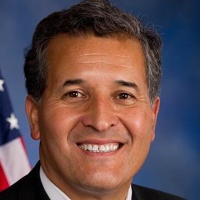
Juan Vargas
Representative
CA
Juan Vargas
Representative
CA
This resolution officially recognizes Cinco de Mayo as a significant holiday celebrating the Mexican victory over the French at the Battle of Puebla in 1862. It honors the historical importance of this day as a symbol of self-governance and democracy. Furthermore, the bill encourages the observance of Cinco de Mayo in the United States to celebrate the vibrant culture and strong relationship between the people of Mexico and the U.S.
This resolution commends United States Border Patrol Chief Jason Owens upon his retirement after 29 years of exemplary service, recognizing his leadership and dedication to the mission.
Ernest Gonzales
Representative
TX
Ernest Gonzales
Representative
TX
This resolution formally commends United States Border Patrol Chief Jason Owens upon his retirement after 29 years of dedicated public service. It recognizes his extensive career, highlighting his leadership in establishing key divisions to combat cartel activity and support agents. The bill serves as an official acknowledgment of his faithfulness and commitment to the Border Patrol's mission.
This bill reauthorizes and modifies federal programs to combat human trafficking by enhancing prevention education grants, establishing survivor employment and education support, and extending critical funding authorizations.
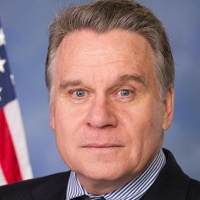
Christopher Smith
Representative
NJ
Christopher Smith
Representative
NJ
The Frederick Douglass Trafficking Victims Prevention and Protection Reauthorization Act of 2025 aims to strengthen efforts against human trafficking in the U.S. It renames and prioritizes grants for schools to educate students on recognizing and preventing trafficking, including online exploitation. The bill also establishes a new program to provide comprehensive employment, education, and life skills support for survivors. Finally, it extends and increases the authorization of appropriations for key anti-trafficking and victim assistance programs through Fiscal Year 2029.
This resolution supports designating April 10th as "Dolores Huerta Day" to honor the lifelong accomplishments and legacy of the trailblazing labor and civil rights leader.
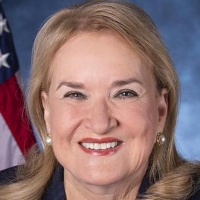
Sylvia Garcia
Representative
TX
Sylvia Garcia
Representative
TX
This resolution supports the designation of April 10th as "Dolores Huerta Day" to honor her legacy as a trailblazing labor and civil rights leader. It recognizes her foundational work co-founding the United Farm Workers and her lifelong fight for economic justice, workers' rights, and equality. The bill formally celebrates her accomplishments without creating new laws or programs.
The Transportation Freedom Act incentivizes domestic auto manufacturing with tax breaks, repeals recent EPA emissions rules, eliminates state authority to set stricter emission standards, and mandates a feasibility-based process for setting future national fuel economy and greenhouse gas standards.
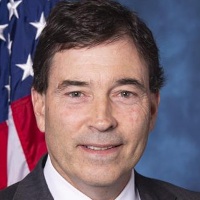
Troy Balderson
Representative
OH
Troy Balderson
Representative
OH
The Transportation Freedom Act seeks to bolster domestic auto manufacturing through significant tax incentives tied to high-wage American jobs and strong worker benefits. Simultaneously, the bill repeals recent EPA and NHTSA rules regarding multipollutant emissions and fuel economy standards for light, medium, and heavy-duty vehicles. Furthermore, it centralizes emission control by eliminating the authority of individual states to set standards stricter than the federal level. Finally, it mandates the establishment of new, feasibility-based fuel economy and greenhouse gas standards for future model years, explicitly prohibiting mandates for electric-only vehicle sales.
The Housing Supply Frameworks Act directs the federal government to create guidelines and best practices for state and local governments to reform restrictive zoning and land-use regulations to increase housing supply across all income levels.
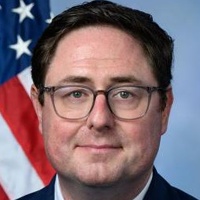
Mike Flood
Representative
NE
Mike Flood
Representative
NE
The Housing Supply Frameworks Act aims to address the national housing shortage by encouraging state and local governments to reform restrictive zoning and land use regulations. It directs the Department of Housing and Urban Development (HUD) to develop and publish comprehensive guidelines and best practices for these reforms. The Act also establishes reporting requirements to track the adoption of these new frameworks and authorizes funding to support these efforts.
This Act reauthorizes and modifies federal programs to enhance the prevention of human trafficking through updated educational grants and establishes a new employment and education program for survivors, while extending critical funding authorizations.
Christopher Smith
Representative
NJ
Christopher Smith
Representative
NJ
The Frederick Douglass Trafficking Victims Prevention and Protection Reauthorization Act of 2025 updates federal efforts to combat human trafficking by enhancing grant programs for schools to educate students and staff on prevention. It establishes a new program to provide comprehensive employment, education, and life skills support for survivors aged 18 and older. Furthermore, the bill extends and increases funding authorizations through Fiscal Year 2029 for critical anti-trafficking operations and housing assistance grants.
This bill establishes the American Family Act, which revamps the Child Tax Credit into a system of refundable monthly advance payments for qualifying children and a separate credit for other dependents.

Rosa DeLauro
Representative
CT
Rosa DeLauro
Representative
CT
The American Family Act fundamentally overhauls the Child Tax Credit by replacing the annual lump sum with a system of advance, refundable monthly payments delivered directly to families. These monthly allowances vary based on the child's age, with higher amounts provided for younger children. The bill also establishes a separate, smaller credit for other dependents and outlines procedures for annual renewal and reconciliation of advance payments when filing taxes.
The TAKE IT DOWN Act establishes federal criminal penalties for sharing nonconsensual intimate images (real or digitally forged) and mandates that covered online platforms remove such content within 48 hours of receiving a valid request.

Maria Salazar
Representative
FL
Maria Salazar
Representative
FL
The TAKE IT DOWN Act establishes federal criminal penalties for the intentional sharing of both real and digitally forged nonconsensual intimate images, with stricter penalties for images involving minors. It mandates that covered online platforms create a clear process for victims to request the removal of such content within 48 hours. Failure by platforms to reasonably comply with these removal requests will be treated as an unfair or deceptive practice enforced by the Federal Trade Commission (FTC).