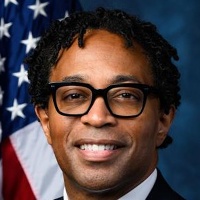
Legislative Activity
Track Wesley's sponsored bills, co-sponsored legislation, and voting record
This bill officially designates May 2026 as Asian American, Native Hawaiian, and Pacific Islander Heritage Month to celebrate their significant contributions to U.S. history and culture.

Grace Meng
Representative
NY
Grace Meng
Representative
NY
This bill officially designates May 2026 as Asian American, Native Hawaiian, and Pacific Islander Heritage Month. It calls for nationwide recognition and celebration of the significant contributions, achievements, and history of these communities to the United States. The measure emphasizes that these communities enhance the nation's diversity and strength.
This resolution directs the House Oversight Committee Chair to sue Pamela J. Bondi to compel her testimony regarding the federal government's enforcement of sex trafficking laws related to the Jeffrey Epstein investigation.
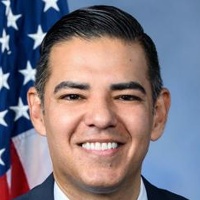
Robert Garcia
Representative
CA
Robert Garcia
Representative
CA
This resolution directs the House Oversight Committee Chair to initiate or intervene in a federal lawsuit within 30 days. The legal action must compel Pamela J. Bondi to comply with a committee subpoena for testimony regarding the DOJ's handling of records related to Jeffrey Epstein and sex trafficking law enforcement.
This bill nullifies three specific Department of State rules regarding foreign assistance, effectively voiding their implementation and preventing enforcement of similar future policies.
Grace Meng
Representative
NY
Grace Meng
Representative
NY
This Act nullifies three specific Department of State rules concerning foreign assistance, effectively treating them as if they never existed. It prohibits any federal agency from implementing or enforcing these rules, or any substantially similar future policies. The legislation aims to prevent the enforcement of rules related to "Protecting Life," "Discriminatory Equity Ideology," and "Gender Ideology" in foreign aid.
This bill designates April as Community College Month to recognize the vital role of over 1,000 community colleges in advancing accessible higher education, workforce training, and national economic prosperity.
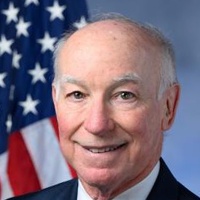
Joe Courtney
Representative
CT
Joe Courtney
Representative
CT
This resolution officially designates April as Community College Month to celebrate the vital role of over 1,000 community colleges nationwide. It recognizes these institutions for providing accessible higher education, workforce training, and significant contributions to the U.S. economy. The bill highlights their affordability, local presence, and impact on student success across the country.
This bill designates April 2026 as "National County Government Month" to honor the county workforce, educate the public on local services, and celebrate the county's role in governance.
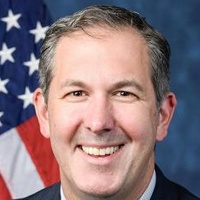
Johnny Olszewski
Representative
MD
Johnny Olszewski
Representative
MD
This bill officially designates April 2026 as "National County Government Month." The purpose is to honor the county government workforce and educate the public on the vital local programs and services counties provide. It encourages counties nationwide to use this month for outreach and celebration of their essential role in American life.
This resolution expresses support for honoring Earth Day while affirming Congress's commitment to environmental protection, climate action, and reversing recent environmental rollbacks.
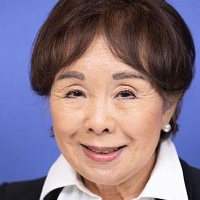
Doris Matsui
Representative
CA
Doris Matsui
Representative
CA
This resolution expresses support for honoring Earth Day and reaffirms Congress's commitment to environmental protection and sustainability. It recognizes the historical impact of Earth Day on the modern environmental movement and calls for continued action against threats like climate change and pollution. The bill urges immediate steps to reduce emissions, address environmental injustices, and ensure a healthy planet for future generations.
This Act establishes a program for SCORE volunteers to teach entrepreneurship to students in disadvantaged communities through community learning centers.
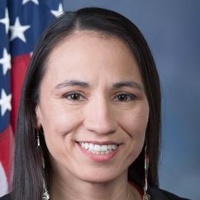
Sharice Davids
Representative
KS
Sharice Davids
Representative
KS
The 21st Century Entrepreneurship Act aims to boost economic growth by increasing entrepreneurship rates, particularly in disadvantaged communities. This is achieved by requiring the Small Business Administration (SBA) to develop an entrepreneurship curriculum for SCORE volunteers to teach at community learning centers. The bill mandates collaboration between the SBA and the Department of Education to implement this program and includes regular reporting to Congress on its progress and impact.
This Act establishes federal programs to address the impact of climate change risks, like extreme heat and pollution, on maternal and infant health through grants, education, research, and risk zone identification.
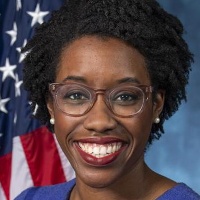
Lauren Underwood
Representative
IL
Lauren Underwood
Representative
IL
The Protecting Moms and Babies Against Climate Change Act directs the Department of Health and Human Services to address how climate change risks, like extreme heat and pollution, harm maternal and infant health. The bill establishes grant programs to support local efforts and education, and mandates research and strategies to identify high-risk zones for pregnant individuals and young children. Its goal is to reduce adverse outcomes such as preterm birth, low birth weight, and maternal mortality linked to climate change.
This bill mandates the Secretary of Homeland Security to designate Haiti for Temporary Protected Status (TPS) until early 2029, overriding other legal requirements.
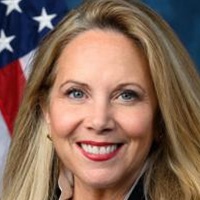
Laura Gillen
Representative
NY
Laura Gillen
Representative
NY
This bill mandates the Secretary of Homeland Security to immediately designate Haiti for Temporary Protected Status (TPS). This designation overrides other legal requirements and will remain in effect until early 2029.
The YouthBuild for the Future Act reauthorizes and updates the YouthBuild program to provide education, job training, and green building experience for low-income young people, while also establishing new grants for employer partnerships.
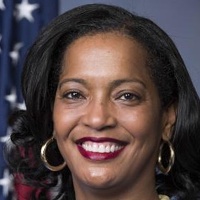
Jahana Hayes
Representative
CT
Jahana Hayes
Representative
CT
The YouthBuild for the Future Act reauthorizes and updates the YouthBuild program through 2030, providing education, job training, and leadership development for low-income young people, with a focus on green building skills. The bill increases funding authorization and expands allowable services, such as food assistance and help applying for benefits. It also establishes a new grant program to create employer partnerships that connect participants directly to local job opportunities.
This bill mandates comprehensive safety upgrades for civilian and military aviation, focusing on collision avoidance technology, air traffic control training, and enhanced airspace transparency, particularly around high-traffic airports.
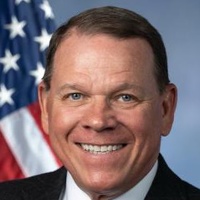
Sam Graves
Representative
MO
Sam Graves
Representative
MO
The Airspace Location and Enhanced Risk Transparency Act of 2026 mandates significant safety upgrades across both civilian and military aviation to prevent midair collisions. It requires the FAA to implement advanced collision avoidance systems and new air traffic controller training, while also compelling the Department of Defense to equip most military helicopters with transponders for increased visibility. The bill establishes new transparency measures, including public tracking of safety rule implementation and enhanced reporting on near-miss incidents, particularly around major airports like Reagan National.
This bill establishes a commission of medical and former government experts to evaluate a President's physical or mental capacity to discharge the duties of the office when directed by Congress.
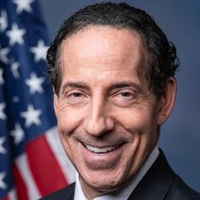
Jamie Raskin
Representative
MD
Jamie Raskin
Representative
MD
This bill establishes the Commission on Presidential Capacity to Discharge the Powers and Duties of the Office, a body tasked with evaluating the physical or mental fitness of the President. The Commission, composed of medical experts and former high-ranking officials, can be directed by Congress to examine the President. Its findings regarding the President's ability to execute their duties are then reported to Congress and the Vice President.
This bill mandates gender-neutral occupational standards across the U.S. Armed Forces and establishes new reporting requirements for military assignments and performance criteria.
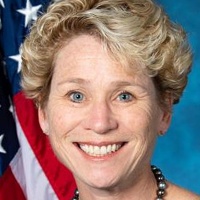
Chrissy Houlahan
Representative
PA
Chrissy Houlahan
Representative
PA
This bill mandates gender-neutral assignment standards across all branches of the U.S. Armed Forces, effective September 30, 2026. It requires that all occupational performance standards be based on scientifically rigorous, job-specific criteria rather than gender. Additionally, the legislation establishes new annual reporting requirements for Congress and mandates a formal review of ground combat unit effectiveness.
The Reproductive Healthcare Leave Act establishes a national requirement for employers to provide employees with paid leave for medical care, procedures, and recovery related to reproductive health.
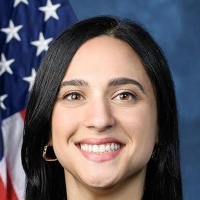
Yassamin Ansari
Representative
AZ
Yassamin Ansari
Representative
AZ
The Reproductive Healthcare Leave Act establishes a national requirement for employers to provide employees with paid leave for medical needs related to reproductive health, including fertility treatments, miscarriage management, and contraception. The bill mandates that eligible employees receive up to 96 hours of paid leave annually while protecting them from retaliation or interference when exercising these rights. The Department of Labor is tasked with enforcing these provisions, ensuring that employees can access necessary healthcare without jeopardizing their job security or benefits.
This bill mandates a comprehensive study by the Department of Health and Human Services to identify and address barriers to accessing effective pain management during gynecologic procedures.
Yassamin Ansari
Representative
AZ
Yassamin Ansari
Representative
AZ
The Gynecologic Pain Management Study Act directs the Secretary of Health and Human Services to conduct a comprehensive study on the barriers patients and providers face regarding pain management during gynecologic procedures. By consulting with diverse stakeholders, the study aims to identify these challenges and provide actionable recommendations to Congress. The final report will help inform future legislative and administrative efforts to improve patient care and accessibility.
This legislation authorizes federal funding to expand research, improve public awareness, and enhance professional training regarding the diagnosis and treatment of Premenstrual Dysphoric Disorder (PMDD).
Yassamin Ansari
Representative
AZ
Yassamin Ansari
Representative
AZ
The Premenstrual Dysphoric Disorder (PMDD) Awareness and Research Act of 2026 aims to improve the lives of those affected by PMDD by expanding federal research, data collection, and public awareness initiatives. The bill authorizes funding to enhance healthcare provider training and education, ensuring more accurate diagnosis and effective treatment for this often under-recognized condition.
This resolution acknowledges the historical and systemic injustices in women’s health care while affirming a federal commitment to bodily autonomy, equitable treatment, and patient-centered medical research.
Yassamin Ansari
Representative
AZ
Yassamin Ansari
Representative
AZ
This resolution acknowledges the historical and systemic injustices, bias, and lack of bodily autonomy that have long marginalized women in the U.S. healthcare system. It affirms the Federal Government’s commitment to dismantling these barriers by prioritizing patient-centered care, increasing research investment, and protecting reproductive rights. Ultimately, the bill seeks to ensure that all women receive dignified, equitable, and informed medical treatment.
The Maternal Vaccination Act establishes a federal awareness and equity campaign to increase vaccination rates among pregnant and postpartum individuals and their children.
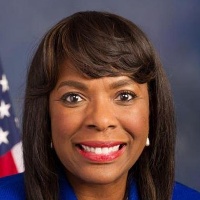
Terri Sewell
Representative
AL
Terri Sewell
Representative
AL
The Maternal Vaccination Act establishes a dedicated awareness and equity campaign to increase vaccination rates among pregnant and postpartum individuals. By providing targeted funding and expanding immunization program grants, the bill ensures that healthcare providers are better equipped to support maternal health, with a specific focus on reaching underserved and minority communities.
The Home Team Act of 2026 prohibits professional sports leagues from banning public ownership and requires franchise owners to offer their local community a fair opportunity to purchase the team before relocating or dissolving it.
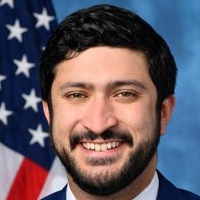
Gregorio Casar
Representative
TX
Gregorio Casar
Representative
TX
The Home Team Act of 2026 protects local communities by prohibiting professional sports leagues from banning public or government ownership of franchises. It requires team owners to provide their home community with a fair opportunity to purchase the franchise before it can be relocated or eliminated. Additionally, the bill mandates that any sale price be adjusted to account for public subsidies previously invested in the team's stadium.
This resolution formally recognizes the persistence of the gender wage gap in the United States and reaffirms a commitment to achieving equal pay for equal work.
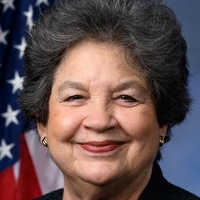
Lois Frankel
Representative
FL
Lois Frankel
Representative
FL
This resolution formally recognizes the persistent gender wage gap in the United States and its significant negative impact on women, families, and the national economy. It highlights the systemic factors contributing to pay disparities across various demographics and occupations. Ultimately, the resolution reaffirms Congress's commitment to achieving equal pay for equal work.