Legislative Activity
Track Wesley's sponsored bills, co-sponsored legislation, and voting record
The PREP Act shortens the initial probationary period for federal employees, often to six months, when they are transferring from another executive branch civil service position.
Donald Beyer
Representative
VA
Donald Beyer
Representative
VA
The Probationary Reduction for Employee Protections (PREP) Act shortens the initial probationary periods for new federal employees. Specifically, it limits the trial period to a maximum of six months for those transitioning directly from another executive branch civil service job. For other new hires, the maximum probationary period will be 12 months across competitive service, excepted service, and Senior Executive Service appointments.
The Equality Act comprehensively prohibits discrimination based on sex, sexual orientation, and gender identity across key areas including public accommodations, employment, housing, credit, and jury service.
Mark Takano
Representative
CA
Mark Takano
Representative
CA
The Equality Act comprehensively expands federal civil rights protections against discrimination based on sex, sexual orientation, and gender identity across key areas of American life. It amends existing laws to prohibit discrimination in public accommodations, housing, credit, employment, and federal funding. The purpose of the bill is to provide consistent, explicit, and comprehensive remedies for individuals facing bias in these essential sectors.
This bill establishes a universal, comprehensive national health insurance program called "Medicare for All" that eliminates patient cost-sharing and transitions the nation away from private insurance duplication.

Pramila Jayapal
Representative
WA
Pramila Jayapal
Representative
WA
The Medicare for All Act establishes a universal, nationwide health insurance program providing comprehensive coverage for all U.S. residents with no out-of-pocket costs. It fundamentally restructures healthcare financing by implementing global budgets for institutions and a new fee schedule for individuals, while phasing out existing federal programs like Medicare and Medicaid. The legislation also sets strict quality standards for providers and creates a dedicated Trust Fund to manage the system's finances.
The PROSPER Act of 2025 establishes a grant program administered by the Attorney General to fund evidence-based, culturally sensitive programs focused on preventing youth gun violence through trauma healing, skill-building, and community resource connection.

Dan Goldman
Representative
NY
Dan Goldman
Representative
NY
The PROSPER Act of 2025 establishes a new grant program administered by the Attorney General to fund evidence-based violence prevention strategies for youth. These grants will support community organizations and educational institutions in implementing programs focused on trauma healing, skill-building, and connecting high-risk young people with essential resources. The initiative is specifically funded by $25 million set aside from existing juvenile justice allocations between fiscal years 2026 and 2030.
This Act authorizes the President to impose sanctions, including asset freezes and visa bans, on foreign individuals involved in violence, property destruction, or displacement in the West Bank.
Jerrold Nadler
Representative
NY
Jerrold Nadler
Representative
NY
The West Bank Violence Prevention Act of 2025 declares extreme settler violence and displacement in the West Bank a threat to U.S. national security interests. This Act mandates the President to impose sanctions, including asset freezes and visa bans, on foreign individuals responsible for undermining peace and stability in the region. The Treasury Department must report to Congress on the implementation of these sanctions every 90 days.
This resolution officially designates April 2025 as Community College Month to recognize the vital role over 1,000 community colleges play in providing accessible education, workforce training, and economic prosperity across the United States.
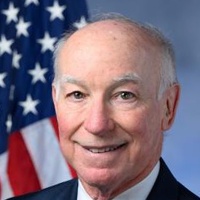
Joe Courtney
Representative
CT
Joe Courtney
Representative
CT
This resolution officially designates April 2025 as "Community College Month" to celebrate the vital role of over 1,000 community colleges nationwide. It recognizes these institutions for providing accessible, affordable higher education and critical workforce training. The bill highlights their significant economic contributions and commitment to local community needs.
The Training and Nutrition Stability Act amends the Supplemental Nutrition Assistance Program by removing a specific existing rule and excluding income earned from certain employment and training programs from benefit calculations.
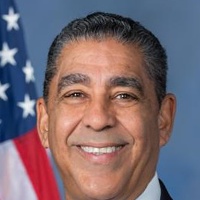
Adriano Espaillat
Representative
NY
Adriano Espaillat
Representative
NY
The Training and Nutrition Stability Act amends the Supplemental Nutrition Assistance Program (SNAP) by removing an outdated rule. Crucially, this bill excludes income earned from specific employment and job training programs when calculating a household's SNAP eligibility. This change aims to encourage participation in workforce development and rehabilitation efforts without negatively impacting food assistance benefits.
The DISASTER Act of 2025 mandates the annual public reporting of all federal disaster spending, broken down by agency and purpose, to improve budget oversight and mitigation planning.
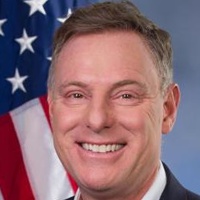
Scott Peters
Representative
CA
Scott Peters
Representative
CA
The DISASTER Act of 2025 mandates that the Office of Management and Budget (OMB) annually report comprehensive data on all federal disaster-related spending to Congress. This report must detail spending by agency, disaster event, and type of aid provided. The goal is to increase transparency, improve future budget decisions, and identify cost-saving mitigation opportunities. The new public reporting requirement takes effect with the Fiscal Year 2027 budget submission.
This act updates federal law to specifically prohibit the taking or transmitting of video of national defense information, treating it the same as photographic material.
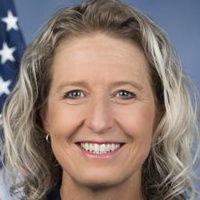
Jennifer Kiggans
Representative
VA
Jennifer Kiggans
Representative
VA
The Drone Espionage Act updates federal law to specifically prohibit the unauthorized taking or transmission of **video** of national defense information. This amendment modernizes existing statutes, ensuring that capturing sensitive material via video is treated the same as capturing it via photographs or negatives. The bill aims to strengthen protections against the illicit sharing of defense secrets using modern recording technology.
This Act establishes a federal grant program for states, local governments, and eligible dealers to conduct gun buybacks using restricted smart prepaid cards, and criminalizes the use of those cards for firearm or ammunition purchases.
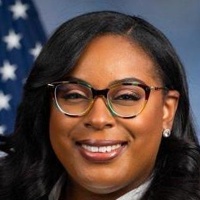
LaMonica McIver
Representative
NJ
LaMonica McIver
Representative
NJ
The Safer Neighborhoods Gun Buyback Act of 2025 establishes a federal grant program administered by the Bureau of Justice Assistance to fund state, local, and tribal governments, as well as eligible gun dealers, to conduct local gun buyback events. These buybacks must utilize specially designed "smart prepaid cards" that are technologically barred from purchasing firearms or ammunition. The bill also creates a new federal crime with significant penalties for anyone using or accepting these specific prepaid cards to illegally acquire or transfer a firearm or ammunition.
The Housing for All Act of 2025 is a comprehensive bill that dramatically increases federal funding and establishes new programs to expand affordable housing, guarantee rental assistance, combat homelessness, and promote community-driven solutions.
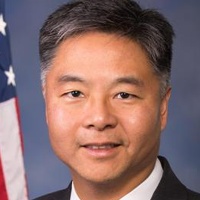
Ted Lieu
Representative
CA
Ted Lieu
Representative
CA
The Housing for All Act of 2025 is a comprehensive bill designed to aggressively combat the national housing shortage and homelessness crisis through massive federal investment. It establishes long-term funding for housing development, dramatically expands rental assistance programs like Section 8 vouchers, and creates new grants for supportive services and community-driven solutions. Ultimately, the Act aims to increase the supply of affordable and supportive housing while providing legal and crisis intervention resources for vulnerable populations.
The Deafblind DATA Act mandates the Census Bureau to cross-reference existing survey data to produce annual, state-level demographic and economic statistics on the U.S. deafblind population.
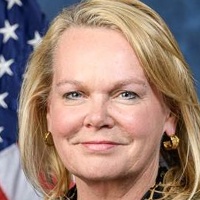
April McClain Delaney
Representative
MD
April McClain Delaney
Representative
MD
The Deafblind DATA Act aims to establish a more accurate count of Americans who are deafblind by directing the Census Bureau to cross-reference existing survey data. This new law mandates the annual publication of a public table detailing the demographic and economic characteristics of the deafblind population by state, starting in 2026. The goal is to provide essential data to ensure these individuals receive necessary support and resources.
This resolution supports designating Black Maternal Health Week to highlight the urgent need to address the severe and preventable maternal health crisis disproportionately affecting Black women and birthing people in the United States.
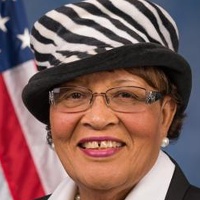
Alma Adams
Representative
NC
Alma Adams
Representative
NC
This resolution officially designates the week of April 11–17, 2025, as the eighth annual Black Maternal Health Week to raise national awareness of the severe maternal and reproductive health crisis facing Black women and birthing people. It highlights the unacceptable disparity where Black women are significantly more likely to die from pregnancy-related causes, emphasizing that most of these deaths are preventable. The bill calls for targeted investments, policy changes addressing systemic barriers, and the centering of Black women's voices in developing solutions to achieve equitable maternal health outcomes.
The Youth Workforce Readiness Act of 2025 establishes grants for out-of-school programs run by community organizations to prepare eligible youth (ages 6-18) for employment through work experience, training, and mentorship, while also strengthening local Youth Councils.
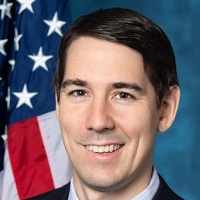
Josh Harder
Representative
CA
Josh Harder
Representative
CA
The Youth Workforce Readiness Act of 2025 establishes a competitive grant program to fund national organizations in developing comprehensive, out-of-school workforce readiness programs for youth aged 6 to 18. This Act aims to boost employment opportunities by connecting youth education and training with employer needs through community partnerships. Furthermore, it strengthens youth voices by mandating the reestablishment and integration of Youth Councils within local workforce boards to advise on training and readiness initiatives.
The Pursuing Equity in Mental Health Act increases funding for mental health programs, mandates research into racial and ethnic minority mental health disparities, and establishes new outreach and training initiatives to address these inequities.
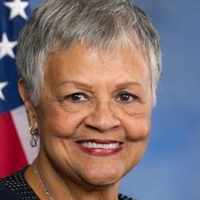
Bonnie Watson Coleman
Representative
NJ
Bonnie Watson Coleman
Representative
NJ
The Pursuing Equity in Mental Health Act aims to reduce mental health disparities among racial and ethnic minority groups through several key actions. It increases funding for existing grant programs and authorizes significant new funding for the NIH and NIMHD to support relevant research and community engagement. Furthermore, the bill mandates a comprehensive study on mental health research gaps and establishes a national strategy for culturally competent mental health outreach and education.
This bill mandates a report assessing the feasibility and requirements for expanding the mission of Joint Interagency Taskforce South to combat illegal arms trafficking in the Caribbean.

Sheila Cherfilus-McCormick
Representative
FL
Sheila Cherfilus-McCormick
Representative
FL
The Caribbean Anti-Smuggling of Trafficked Arms Act (CAST Act) mandates the Secretary of Defense to produce a comprehensive report on expanding the mission of Joint Interagency Taskforce South (JIATF South) to combat illegal arms trafficking in the Caribbean. This report must detail the feasibility, necessary legal changes, resource requirements, and coordination efforts for such an expansion. The findings will be submitted to relevant congressional committees for review.
This Act mandates comprehensive mental health education within the military's Transition Assistance Program and the VA's Solid Start Program to better support servicemembers leaving the military and reduce veteran suicide.
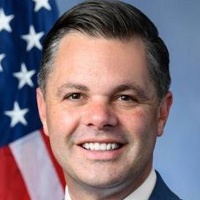
Zachary (Zach) Nunn
Representative
IA
Zachary (Zach) Nunn
Representative
IA
This Act mandates improvements to the mental health components of the Department of Defense's Transition Assistance Program (TAP) and the Department of Veterans Affairs' Solid Start Program. It ensures transitioning service members and new veterans receive comprehensive information on available mental health services, suicide risk, and related support resources. The Secretaries of Defense and Veterans Affairs must jointly report to Congress on these updates within one year of enactment.
This Act establishes an Advisory Council to survey needs, identify best practices, and disseminate comprehensive resources for victims of all forms of gun violence.
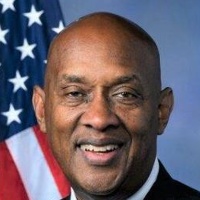
Dwight Evans
Representative
PA
Dwight Evans
Representative
PA
The Resources for Victims of Gun Violence Act of 2025 establishes an Advisory Council, led by HHS, to assess the needs of gun violence victims and service providers. This Council will survey stakeholders, review existing support programs, and identify best practices for medical, financial, and mental health assistance. Its primary function is to compile and widely distribute a comprehensive list of available federal, state, and nonprofit resources to ensure victims can easily access necessary aid.
This bill grants enhanced due process protections and potential reinstatement rights to certain federal employees removed during their probationary period following a promotion.
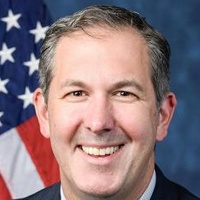
Johnny Olszewski
Representative
MD
Johnny Olszewski
Representative
MD
This bill provides enhanced employment protections and reinstatement options for certain Federal career employees who were serving under a probationary period following a promotion. It grants these employees standard due process rights against unfair removal while on probation. Furthermore, it allows employees removed between January 20, 2025, and the date of enactment to elect reinstatement to their former or an equivalent position with back pay. These protections generally exclude those promoted into or removed from political positions.
This act establishes a federal program to gather, research, and disseminate critical health information regarding concussions and traumatic brain injuries among public safety officers.

Dan Crenshaw
Representative
TX
Dan Crenshaw
Representative
TX
The Public Safety Officer Concussion and Traumatic Brain Injury Health Act of 2025 directs the CDC to gather and publicly share critical information regarding concussions and TBIs affecting public safety officers. This effort includes developing evidence-based practices for diagnosis, treatment, and prevention of these injuries. The resulting data will be disseminated through an updated CDC website and various outreach efforts to medical professionals, employers, and the families of officers.