Legislative Activity
Track Michael's sponsored bills, co-sponsored legislation, and voting record
The Foreign Service Language Readiness Act requires the Secretary of State to identify critical foreign languages and integrate language proficiency requirements into workforce planning, training, and national security operations.
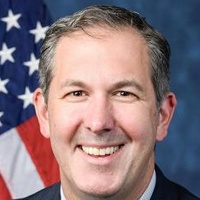
Johnny Olszewski
Representative
MD
Johnny Olszewski
Representative
MD
The Foreign Service Language Readiness Act mandates that the Secretary of State identify and maintain a list of critical foreign languages essential to U.S. national security and economic interests. The bill requires the Department of State to integrate these language capabilities into workforce planning, training, and surge-capacity strategies. Additionally, it establishes reporting requirements to ensure Congress is informed on the Department's progress in meeting critical language staffing needs.
This bill restricts stock trading by Members of Congress and their families while establishing new federal requirements for voters to provide photo identification in federal elections.
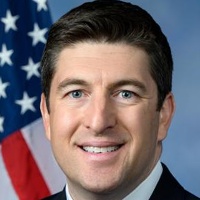
Bryan Steil
Representative
WI
Bryan Steil
Representative
WI
The Stop Insider Trading Act restricts Members of Congress, their spouses, and dependent children from purchasing or selling individual stocks to prevent conflicts of interest. Additionally, the bill mandates that voters provide valid photo identification when voting in person or by mail in federal elections.
The STOP Nitazenes Act amends the Controlled Substances Act to permanently classify nitazenes and related synthetic opioids as Schedule I controlled substances.
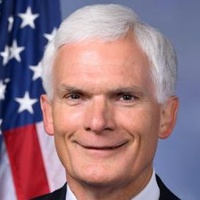
Robert Latta
Representative
OH
Robert Latta
Representative
OH
The STOP Nitazenes Act amends the Controlled Substances Act to permanently classify nitazenes—a highly potent class of synthetic opioids—as Schedule I controlled substances. This legislation strengthens federal enforcement by establishing a permanent legal framework to regulate these dangerous substances and any future chemical derivatives.
This bill prohibits the Department of Labor from finalizing, implementing, or enforcing the proposed rule regarding heat injury and illness prevention in outdoor and indoor work settings.
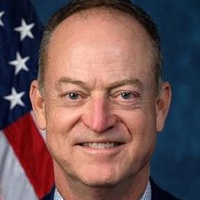
Mark Messmer
Representative
IN
Mark Messmer
Representative
IN
This act, the Heat Workforce Standards Act of 2025, prohibits the Secretary of Labor from finalizing, implementing, or enforcing the proposed rule regarding heat injury and illness prevention published in August 2024. This restriction extends to any future standard substantially similar to the one proposed.
This bill clarifies that a franchisor is only considered a joint employer of a franchisee's workers if it exercises substantial, direct, and immediate control over essential terms of employment.
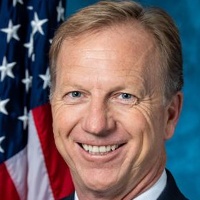
Kevin Hern
Representative
OK
Kevin Hern
Representative
OK
The American Franchise Act aims to protect the traditional franchise business model by clarifying the definition of a "joint employer." This legislation establishes that a franchisor is only considered a joint employer if it exercises "substantial direct and immediate control" over the essential terms of employment for a franchisee's workers. This change specifically targets liability risks associated with maintaining brand standards, ensuring franchisors are not automatically held responsible for local labor practices. The new standard applies prospectively to future legal proceedings.
This bill establishes a federal standard requiring large industrial electricity customers to fully cover the costs of necessary utility infrastructure upgrades and provide financial assurances before construction begins.
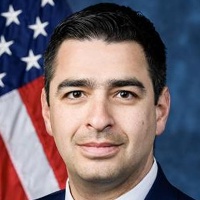
Gabe Evans
Representative
CO
Gabe Evans
Representative
CO
The Ratepayer Protection Act establishes a new federal standard requiring electric utilities to ensure large industrial customers (100 MW or more) fully cover the costs of necessary infrastructure upgrades. This mandates that large-load customers provide financial assurances before construction begins, protecting existing ratepayers from bearing the risk of future contract terminations. States must consider and adopt this standard within two years, unless they have already implemented similar requirements.
This bill amends the federal charter of the Daughters of the American Revolution to restrict membership eligibility to individuals who meet the organization's genealogical requirements and are defined as adult human females.
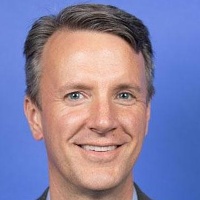
Ben Cline
Representative
VA
Ben Cline
Representative
VA
The Daughters of the American Revolution Membership Integrity Act amends the organization’s federal charter to formally define membership eligibility. The bill restricts membership to adult human females, establishing a biological definition for the term "female" based on reproductive system development.
The Chloe Cole Act of 2026 establishes a private right of action allowing individuals to sue healthcare providers for damages resulting from gender-transition medical interventions performed on them as minors.
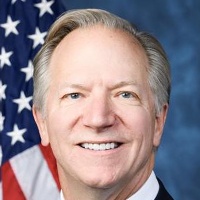
Robert Onder
Representative
MO
Robert Onder
Representative
MO
The Chloe Cole Act of 2026 establishes a federal private right of action allowing individuals to sue healthcare professionals and institutions for damages related to gender-transition medical interventions performed on them as minors. The bill permits lawsuits regardless of when the intervention occurred and sets a statute of limitations extending 25 years past the individual's 18th birthday. Additionally, it mandates strict liability for such interventions performed after the Act's enactment.
This bill mandates electronic prior authorization, increases transparency through required data reporting, and establishes faster decision timelines for Medicare Advantage plans to improve timely access to care for seniors.
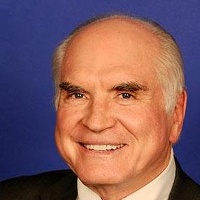
Mike Kelly
Representative
PA
Mike Kelly
Representative
PA
The Improving Seniors’ Timely Access to Care Act of 2025 aims to streamline and modernize the prior authorization process within Medicare Advantage plans. This bill mandates the adoption of electronic prior authorization systems and significantly increases transparency regarding approval rates and decision times starting in 2027. Furthermore, it establishes new enrollee protections and grants the Secretary authority to enforce faster decision timeframes for medical services.
This Act prohibits payment card networks and processors from assigning specific merchant category codes to identify firearms retailers, protecting the privacy of firearm and ammunition purchases.
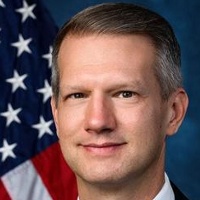
Riley Moore
Representative
WV
Riley Moore
Representative
WV
The Protecting Privacy in Purchases Act prohibits payment card networks and processors from assigning specific merchant category codes to firearms retailers. This legislation aims to protect consumer privacy by preventing the tracking of firearm and ammunition purchases through specialized financial classification. The Attorney General is tasked with enforcing these provisions and reporting annually on compliance.
The SHARE Act of 2025 establishes federal requirements for the FBI to share criminal history record information with states participating in interstate professional licensing compacts, while strictly limiting how those states can use and further disseminate that data.
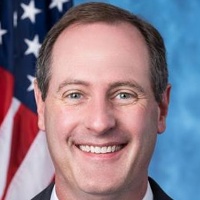
Tracey Mann
Representative
KS
Tracey Mann
Representative
KS
The SHARE Act of 2025 establishes new federal requirements for the FBI to share criminal history record information with states participating in professional licensing interstate compacts. This information sharing is strictly for the purpose of conducting background checks on applicants seeking to practice a profession in another compact state. States receiving this data are severely restricted on how they can use or further disseminate the detailed criminal history, generally only being permitted to report a binary "satisfactory" or "unsatisfactory" determination back to the compact's Commission.
The No Antisemitism in Education Act of 2026 mandates that educational institutions receiving federal funding treat antisemitism with the same enforcement rigor as other forms of discrimination prohibited under Title VI of the Civil Rights Act.
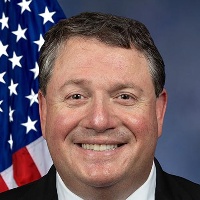
Randall Fine
Representative
FL
Randall Fine
Representative
FL
The No Antisemitism in Education Act of 2026 mandates that educational institutions receiving federal funding treat antisemitic discrimination with the same rigor as other forms of discrimination prohibited under Title VI of the Civil Rights Act of 1964. The bill requires institutions to utilize a formal definition of antisemitism when investigating and addressing discriminatory acts. It aims to ensure accountability for systemic failures to protect Jewish students while upholding First Amendment rights and existing state laws.
This bill, the Hydropower Licensing Affordability Act, modernizes the hydropower licensing process by expanding the Federal Energy Regulatory Commission's authority to require mitigation measures for adverse effects on federal reservations and fish populations.
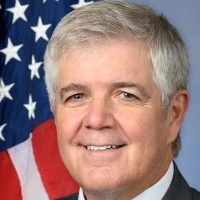
Cliff Bentz
Representative
OR
Cliff Bentz
Representative
OR
This bill, the Hydropower Licensing Affordability Act, modernizes the hydropower licensing process under the Federal Power Act. It expands the Federal Energy Regulatory Commission's authority to impose conditions on licenses to ensure hydropower projects reasonably mitigate direct adverse effects on federal reservations and local fish populations.
This bill establishes a temporary Diplomatic Reserve Corps Pilot Program to create a surge workforce of retired Foreign Service members to support U.S. diplomatic operations during crises.
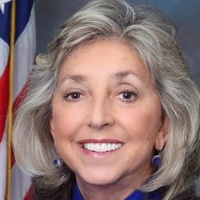
Dina Titus
Representative
NV
Dina Titus
Representative
NV
This act establishes the Diplomatic Reserve Corps Pilot Program within the State Department to create a surge workforce for supporting U.S. diplomatic operations during crises. The program will recruit retired Foreign Service members to provide temporary assistance during emergencies like conflicts or disasters. After three years, the Secretary of State will submit a final evaluation recommending whether to establish a permanent corps.
This bill establishes the Smithsonian American Women's History Museum, designates its site on the National Mall, and sets requirements for its mission, construction, and diverse representation of viewpoints.
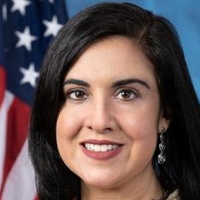
Nicole Malliotakis
Representative
NY
Nicole Malliotakis
Representative
NY
This act officially establishes the Smithsonian American Women’s History Museum and designates its location on the National Mall, requiring the transfer of land jurisdiction to the Smithsonian Institution. The museum is mandated to preserve and present the history and achievements of biological women in the United States. Furthermore, the legislation requires that exhibits and programs reflect diverse political viewpoints and authentic experiences of women, as guided by a broad array of knowledgeable sources.
This bill establishes the Combating Organized Retail Crime Act of 2025 to enhance federal prosecution tools against organized retail and supply chain crime and create a DHS-led coordination center to align law enforcement efforts.
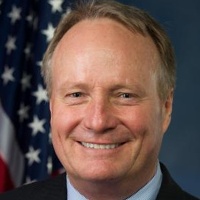
David Joyce
Representative
OH
David Joyce
Representative
OH
The Combating Organized Retail Crime Act of 2025 aims to combat sophisticated, cross-jurisdictional organized retail and supply chain theft. It achieves this by strengthening federal laws regarding money laundering and stolen property offenses, including lowering monetary thresholds for prosecution. Furthermore, the bill establishes a dedicated Center within the Department of Homeland Security to coordinate federal, state, and local enforcement efforts against these criminal organizations.
This Act authorizes the National Guard, upon a governor's request, to protect critical facilities and assets from unmanned aircraft threats.
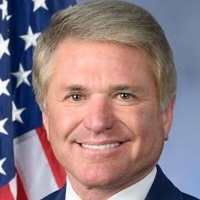
Michael McCaul
Representative
TX
Michael McCaul
Representative
TX
The Guard the Skies Act authorizes the National Guard to protect critical facilities and assets from threats posed by unmanned aircraft (drones). This authority is established at the request of a state's governor and requires consultation with the Secretary of Defense. The bill outlines specific conditions under which National Guard members can be activated and take action against threatening drones.
This Act repeals the federal beneficial ownership information reporting requirements for domestic persons and entities, limiting them only to foreign individuals and foreign-connected companies, and mandates the deletion of existing domestic data.
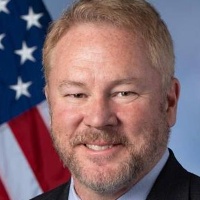
Warren Davidson
Representative
OH
Warren Davidson
Representative
OH
The Repealing Big Brother Overreach Act significantly narrows the federal beneficial ownership information reporting requirements. This legislation limits reporting obligations exclusively to foreign individuals and foreign-connected companies. Furthermore, it mandates the deletion of all previously collected data pertaining to domestic persons and entities.
This bill establishes the Diplomatic Reserve Corps within the Department of State to maintain a trained pool of personnel available to support U.S. diplomatic efforts during contingencies, setting rules for their appointment, compensation, service obligations, and retirement.
Dina Titus
Representative
NV
Dina Titus
Representative
NV
The Diplomatic Reserve Corps Act of 2026 establishes a new, separate personnel system within the Department of State to maintain a pool of trained civilian experts ready for immediate deployment. This Corps will be gradually built up to 1,000 members and can be called to active service during national emergencies or to augment diplomatic efforts abroad. The legislation details comprehensive rules for appointments, compensation, benefits, retirement, and service obligations, closely aligning the Corps' structure and protections with those of the Foreign Service and uniformed services.
This Act establishes requirements for defining, assessing, and improving the State Department's capacity to conduct "expeditionary diplomacy" in high-security-risk environments.
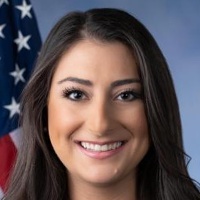
Sara Jacobs
Representative
CA
Sara Jacobs
Representative
CA
The Expeditionary Diplomacy Act mandates the State Department to formally define "expeditionary diplomacy" and assess its current practice in high-risk environments. It requires reports from the GAO and establishes a dedicated Tiger Team to develop recommendations for improving the department's ability to engage in this type of diplomacy. Ultimately, the bill seeks to encourage diplomats to regularly interact with local populations, even in challenging security settings, through new directives and risk management practices.