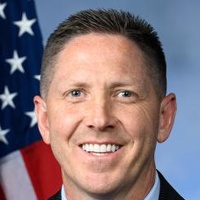
Legislative Activity
Track Josh's sponsored bills, co-sponsored legislation, and voting record
This bill officially renames the United States Postal Service facility at 201 West Oklahoma Avenue in Guthrie, Oklahoma, as the "Oscar J. Upham Post Office."
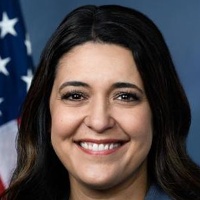
Stephanie Bice
Representative
OK
Stephanie Bice
Representative
OK
This bill officially designates the United States Postal Service facility located at 201 West Oklahoma Avenue in Guthrie, Oklahoma, as the "Oscar J. Upham Post Office." This action formally renames the existing post office building.
This bill requires the District of Columbia to allow Members of Congress with valid concealed carry permits from their home states to carry concealed firearms within the District.
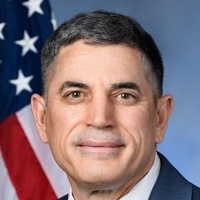
Andrew Clyde
Representative
GA
Andrew Clyde
Representative
GA
This bill would require the District of Columbia to recognize valid concealed carry permits or the legal right to carry a concealed firearm held by Members of Congress from their home states. Specifically, it allows Senators, Representatives, Delegates, and Resident Commissioners to carry a concealed firearm in D.C. provided they meet federal eligibility requirements and carry proper identification.
This bill ends the liability shield for vaccine manufacturers by allowing individuals to sue directly in court or seek compensation through the existing program, while also removing time limits for program claims and excluding COVID-19 vaccines from countermeasure liability protections.
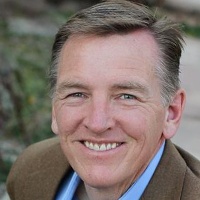
Paul Gosar
Representative
AZ
Paul Gosar
Representative
AZ
The End the Vaccine Carveout Act fundamentally changes vaccine injury compensation by allowing individuals to choose between filing a claim through the existing National Vaccine Injury Compensation Program or suing the manufacturer or administrator directly in court. This legislation removes the liability shield for vaccine makers and eliminates time limits for filing claims with the Program. Additionally, it specifically excludes COVID-19 vaccines from existing countermeasure liability protections.
The PRIME Act exempts custom slaughter facilities from federal inspection requirements for meat distributed only within the state where it was processed, provided they comply with state law.
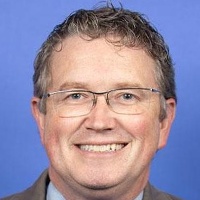
Thomas Massie
Representative
KY
Thomas Massie
Representative
KY
The PRIME Act, or Processing Revival and Intrastate Meat Exemption Act, exempts custom slaughter facilities from federal inspection requirements for meat that is processed and sold only within the state of origin. To qualify, facilities must comply with all applicable state laws regarding slaughter and preparation. This legislation ensures that states retain the authority to enforce their own, potentially stricter, regulations on local meat processing.
This bill amends federal law to include violations related to rioting within the definition of racketeering activity.
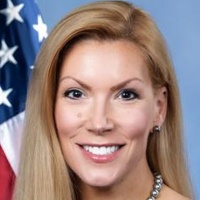
Beth Van Duyne
Representative
TX
Beth Van Duyne
Representative
TX
This bill amends federal law to explicitly include violations related to rioting within the definition of "racketeering activity." By adding this specific crime to the list under Title 18, Section 1961(1), the legislation makes participation in such activities subject to serious federal racketeering charges. This change treats rioting violations similarly to other established offenses like bribery or extortion for the purposes of federal prosecution.
This Act prohibits the Federal Reserve from directly or indirectly issuing a Central Bank Digital Currency (CBDC) and bars the Fed from developing or using one for monetary policy without explicit Congressional authorization.
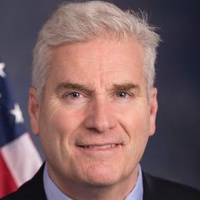
Tom Emmer
Representative
MN
Tom Emmer
Representative
MN
The Anti-CBDC Surveillance State Act strictly prohibits the Federal Reserve from directly or indirectly issuing a Central Bank Digital Currency (CBDC) to individuals. This legislation prevents the Fed from developing, testing, or implementing any digital currency that functions as a direct liability of the Federal Reserve. Furthermore, Congress asserts that any authority to create such a digital asset must explicitly come from Congress itself.
This resolution mandates the public release of nearly all Department of Justice documents related to the Jeffrey Epstein and Ghislaine Maxwell investigations, with limited exceptions for victim privacy and ongoing legal integrity.
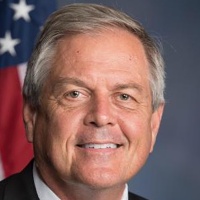
Ralph Norman
Representative
SC
Ralph Norman
Representative
SC
This resolution mandates the Department of Justice (DOJ) to publicly release nearly all documents, records, and communications related to the investigations of Jeffrey Epstein and Ghislaine Maxwell within 30 days. The bill strictly prohibits withholding information based on embarrassment or political sensitivity. Any permitted redactions, such as protecting victim privacy or grand jury secrets, must be publicly justified to Congress.
This bill requires states to reimburse the federal government for military deployment costs incurred due to local obstruction of federal immigration enforcement operations.
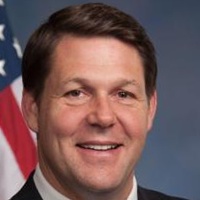
Jodey Arrington
Representative
TX
Jodey Arrington
Representative
TX
This bill requires states to reimburse the federal government for the costs of deploying military forces, such as the National Guard, when state or local obstruction of federal immigration enforcement leads to civil unrest. If a state fails to pay the resulting invoice from the Department of Defense within 180 days, the President is authorized to withhold federal discretionary grant funds to cover the debt. This legislation establishes financial accountability for local interference with federal immigration operations.
This Act prohibits lawsuits claiming discrimination based solely on the unintended, disproportionate statistical effect (disparate impact) of employment or housing practices.
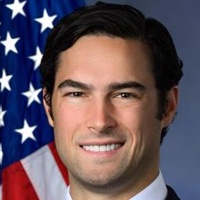
Brandon Gill
Representative
TX
Brandon Gill
Representative
TX
The Restoring Equal Opportunity Act aims to eliminate "disparate-impact liability" across major federal laws. This bill prohibits lawsuits claiming discrimination based solely on the unintended, disproportionate negative effect of a rule or practice. Consequently, it removes the ability to challenge employment and housing practices unless discriminatory intent can be proven. The Act also nullifies specific prior regulatory approvals related to civil rights enforcement.
This bill repeals the federal charter granted to the National Education Association.
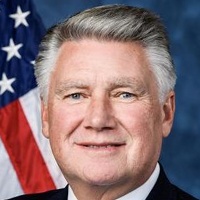
Mark Harris
Representative
NC
Mark Harris
Representative
NC
The National Education Association Charter Repeal Act aims to revoke the federal charter granted to the National Education Association (NEA). This legislation specifically repeals the section of U.S. Code that provides the NEA with its official federal recognition status. In essence, the bill removes the legal standing previously conferred upon the NEA by Congress.
This bill authorizes the creation and sale of commemorative coins for the 2028 Los Angeles and 2034 Salt Lake City Olympic and Paralympic Games to help fund the events, with all surcharges going to the respective organizing committees after covering production costs.
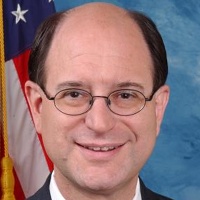
Brad Sherman
Representative
CA
Brad Sherman
Representative
CA
This Act authorizes the Secretary of the Treasury to mint and sell special commemorative coins for the 2028 Los Angeles Olympic and Paralympic Games and the 2034 Salt Lake City Winter Olympic and Paralympic Games. The coins will feature designs celebrating American athletes and the Games themselves. All surcharges collected from the sale of these coins will be directed to the respective organizing committees to help fund the events and related youth sports programs. The entire program must be conducted at no cost to the U.S. Government.
This bill mandates the Department of Homeland Security to publicly report monthly statistics on encounters with individuals identified as "special interest aliens."
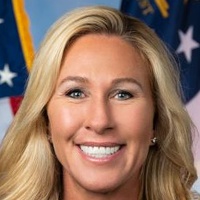
Marjorie Greene
Representative
GA
Marjorie Greene
Representative
GA
The Special Interest Alien Reporting Act of 2025 mandates that the Department of Homeland Security (DHS) publish monthly public reports detailing the number and nationalities of "special interest aliens" encountered. These reports must break down encounters by geographic region and location (e.g., port of entry vs. interior). The initial report must also retroactively cover this data from January 20, 2021, through January 19, 2025.
This Act amends immigration law to make non-citizens inadmissible or deportable for convictions related to driving while intoxicated or impaired (DWI/DUI).
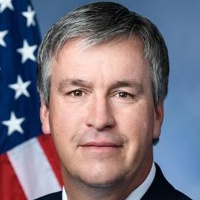
Barry Moore
Representative
AL
Barry Moore
Representative
AL
The Jeremy and Angel Seay and Sergeant Brandon Mendoza Protect Our Communities from DUIs Act of 2025 amends immigration law to address driving while intoxicated or impaired (DWI/DUI) offenses. This legislation establishes that a conviction for, or admission to the underlying acts of, a DWI/DUI offense makes a non-citizen inadmissible to the United States or deportable if already present. This applies regardless of whether the offense is classified as a misdemeanor or felony under local law.
The Protect RAIL Act makes non-citizens inadmissible to the U.S. and deportable if they commit or conspire to commit crimes involving theft or tampering with goods shipped across state or international lines.
Paul Gosar
Representative
AZ
Paul Gosar
Representative
AZ
The Protect RAIL Act amends immigration law to prevent non-citizens convicted of or admitting to crimes involving the theft or tampering of goods shipped across state or international lines from entering the United States. Furthermore, this bill makes non-citizens already in the U.S. deportable if they have committed such offenses related to interstate or foreign shipments.
This resolution censures Representative LaMonica McIver and removes her from the Committee on Homeland Security following her alleged interference with federal officers at an immigration facility.
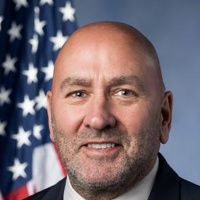
Clay Higgins
Representative
LA
Clay Higgins
Representative
LA
This resolution formally censures Representative LaMonica McIver following her indictment for allegedly interfering with federal officers at an immigration facility. As a result of her conduct, the House is officially expressing its strong disapproval and immediately removing her from the Committee on Homeland Security. This action is taken because her alleged actions are deemed not to reflect creditably upon the House.
This bill prohibits males from participating in athletic programs or activities designated for women or girls at the U.S. military service academies.
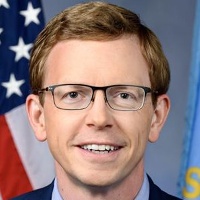
Dusty Johnson
Representative
SD
Dusty Johnson
Representative
SD
This bill prohibits males from participating in any athletic program or activity at the U.S. military service academies that is designated for women or girls. It mandates that sex in this context is defined by reproductive biology and genetics at birth. While males may practice with women's teams, they cannot displace female athletes from rosters, competition opportunities, or scholarships.
The Small Business Regulatory Flexibility Improvements Act strengthens federal oversight by requiring agencies to conduct more rigorous economic impact analyses, enhance transparency, and provide greater protections for small businesses during the rulemaking process.
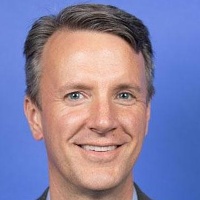
Ben Cline
Representative
VA
Ben Cline
Representative
VA
The Small Business Regulatory Flexibility Improvements Act strengthens protections for small businesses by requiring federal agencies to conduct more rigorous and transparent economic impact analyses for proposed regulations. The bill expands the scope of these reviews to include indirect economic effects, mandates the creation of plain-language compliance guides, and establishes a process for the periodic review of existing rules. Additionally, it empowers the Small Business Administration’s Office of Advocacy to better oversee agency compliance and requires agencies to waive civil fines for most first-time paperwork violations by small businesses.
This bill repeals the Freedom of Access to Clinic Entrances (FACE) Act, effectively removing federal criminal penalties for obstructing access to reproductive health clinics.
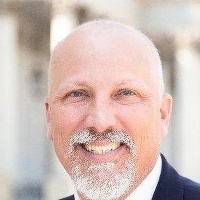
Chip Roy
Representative
TX
Chip Roy
Representative
TX
The FACE Act Repeal Act of 2025 seeks to eliminate federal protections that currently prohibit the obstruction of reproductive health clinic entrances, the use of force or threats against patients and providers, and the intentional damage of clinic property. If enacted, this legislation would immediately repeal these federal criminal prohibitions and apply to all pending or future prosecutions.
This bill significantly increases criminal and civil penalties for individuals who illegally enter the country or overstay their nonimmigrant visas.
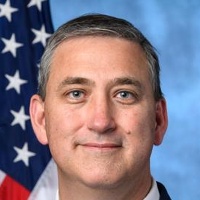
Nathaniel Moran
Representative
TX
Nathaniel Moran
Representative
TX
The Visa Overstays Penalties Act significantly increases penalties for individuals who enter the country illegally or overstay their authorized visas. This legislation establishes a new violation specifically targeting nonimmigrant visa holders who remain in the U.S. for more than 10 days past their authorized status. Consequences include increased criminal penalties, up to two years in jail for repeat offenses, and substantial civil fines ranging from $\$500$ to $\$1,000$ per violation.
This bill establishes the death penalty or life imprisonment for knowingly distributing or manufacturing fentanyl that results in another person's death.
Paul Gosar
Representative
AZ
Paul Gosar
Representative
AZ
This Act establishes the death penalty or life imprisonment as the mandatory punishment for individuals convicted of distributing, manufacturing, or possessing fentanyl with intent to distribute, if that action results in another person's death. It significantly increases the penalties for fentanyl offenses that lead to fatalities.