
Legislative Activity
Track Shontel's sponsored bills, co-sponsored legislation, and voting record
This act codifies the FTC's "click-to-cancel" rule into federal law, requiring businesses to provide simple online cancellation methods for subscriptions.
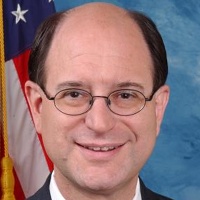
Brad Sherman
Representative
CA
Brad Sherman
Representative
CA
The Click to Cancel Act of 2025 officially codifies the Federal Trade Commission's "click-to-cancel" rule into federal law. This mandates that businesses provide consumers with a simple, online method to cancel subscriptions. Violations of this new law will be enforced by the FTC using its existing authority under the Federal Trade Commission Act.
This act authorizes $50 million annually from 2026 through 2031 for the CDC to conduct research on firearms safety and gun violence prevention.
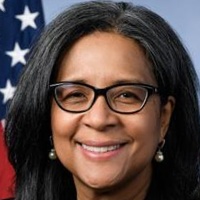
Marilyn Strickland
Representative
WA
Marilyn Strickland
Representative
WA
The Gun Violence Prevention Research Act of 2025 authorizes $50 million annually for the Centers for Disease Control and Prevention (CDC) to conduct or support research on firearms safety and gun violence prevention. This dedicated funding is authorized for each fiscal year from 2026 through 2031. This new allocation is separate from and in addition to any existing CDC research funding.
This Act expands FEMA disaster assistance to cover all moisture damage in flood-damaged basements and increases coverage under the Group Flood Insurance Policy.
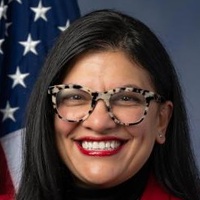
Rashida Tlaib
Representative
MI
Rashida Tlaib
Representative
MI
The Fix Our Flooded Basements Act of 2025 significantly expands FEMA disaster assistance for flood-damaged basements, covering mold and moisture damage beyond just habitable areas. It mandates increased personal property aid for basement contents, aligning it with Standard Flood Insurance Policy levels. Furthermore, the bill updates the Group Flood Insurance Policy to offer broader eligibility and comprehensive coverage for real and personal property within basements.
The Protected Time Off Act establishes a federal minimum accrual rate of one hour of paid annual leave for every 25 hours worked, while protecting employees' rights to use and enforce this earned time off.
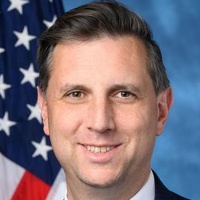
Seth Magaziner
Representative
RI
Seth Magaziner
Representative
RI
The Protected Time Off Act establishes a federal minimum standard for earned paid annual leave, requiring employers to grant employees at least one hour of paid time off for every 25 hours worked, up to 80 hours annually. This law specifies how leave is accrued, used, and rolled over, while protecting employees from retaliation for exercising these rights. It also ensures that existing state laws or agreements that provide more generous leave benefits remain in effect. Enforcement mechanisms are established, largely mirroring those under the Fair Labor Standards Act, allowing both government investigation and direct employee lawsuits.
This bill establishes a federal grant program to help low-income households pay for their drinking water and sewer services.
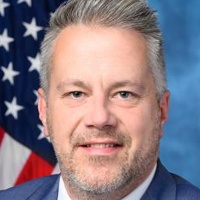
Eric Sorensen
Representative
IL
Eric Sorensen
Representative
IL
This bill establishes the Low-Income Household Water Assistance Program to provide grants to states and tribes. These funds will help public water systems cover the water and sewer bills for eligible low-income households. The program aims to supplement existing aid by assisting families whose income is at or below 150% of the poverty level or 60% of the state median income. Funding is authorized at $500 million annually from fiscal years 2026 through 2030.
The EACH Act of 2025 mandates that all federally funded health programs and facilities must cover and provide abortion services, while also prohibiting federal interference with private insurance coverage.
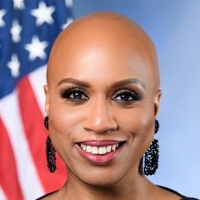
Ayanna Pressley
Representative
MA
Ayanna Pressley
Representative
MA
The EACH Act of 2025 aims to ensure equal access to abortion coverage by requiring all federally funded health programs and facilities to cover abortion services. This legislation prohibits federal interference with state or private insurance coverage of abortion and repeals Section 1303 of the Affordable Care Act. Ultimately, the bill seeks to eliminate financial and insurance barriers to abortion care, particularly for low-income individuals relying on programs like Medicaid.
This constitutional amendment prohibits immunity from criminal prosecution for federal officials based on their official duties and bars the President from self-pardoning.
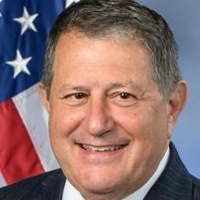
Joseph Morelle
Representative
NY
Joseph Morelle
Representative
NY
This proposed constitutional amendment would eliminate immunity from criminal prosecution for federal officials, including the President, based on their official duties. It also explicitly prohibits the President from issuing a self-pardon for any federal crimes. If ratified, these changes would take effect immediately.
This Act mandates that federal agencies integrate specific equity goals into their strategic and performance planning, establish internal equity advisory teams, and enhance data practices to ensure fair service delivery to underserved communities.
Ayanna Pressley
Representative
MA
Ayanna Pressley
Representative
MA
The Equity in Government Act mandates that federal agencies integrate specific equity goals into their strategic and performance plans, ensuring at least 20% of goals focus on improving service delivery to underserved communities. The bill establishes new leadership structures, including an Agency Equity Advisory Team, and enhances the role of the Chief Data Officer Council to prioritize equitable data collection and use. Furthermore, it creates an Equitable Data Working Group to guide the government toward fairer methods and outcomes in federal operations.
This bill establishes grants for food hubs to increase market access for socially disadvantaged farmers, creates a tax credit to support food hub purchases, mandates civil rights accountability for USDA employees, shifts the burden of proof in appeals, and creates an independent Office of the Civil Rights Ombudsperson.
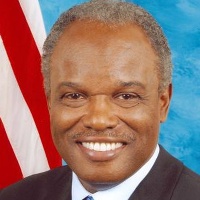
David Scott
Representative
GA
David Scott
Representative
GA
The Black Farmers and Socially Disadvantaged Farmers Increased Market Share Act establishes a new grant program to help food hubs increase market access for socially disadvantaged farmers and ranchers. The bill also introduces an "Agriculture Hub Credit" tax incentive to encourage related spending. Furthermore, it strengthens civil rights accountability for USDA employees, grants new equitable relief powers to the Assistant Secretary for Civil Rights, shifts the burden of proof in agency appeals, and creates an independent Office of the Civil Rights Ombudsperson.
The Gun Safety Incentive Act establishes federal guidelines for safe firearm storage, mandates safety warnings on new firearms, expands safe storage requirements for firearm sales, creates a grant program for states to distribute storage devices, and offers a tax credit to businesses selling safe storage devices.

André Carson
Representative
IN
André Carson
Representative
IN
The Gun Safety Incentive Act aims to promote responsible firearm ownership by establishing voluntary best practices for safe storage developed by the Attorney General. It mandates clear safe storage warnings on newly manufactured firearms and expands existing federal law to require safe storage information for all firearm purchases, including rifles and shotguns. Furthermore, the Act establishes a grant program to help states and Tribes distribute free safe storage devices and creates a tax credit for businesses selling these devices.
This House resolution expresses support for honoring Nelson Mandela's legacy of peace, reconciliation, and human rights through the observance of Nelson Mandela International Day.

Henry Johnson
Representative
GA
Henry Johnson
Representative
GA
This resolution expresses the sense of the House of Representatives honoring the life and legacy of Nelson Mandela. It recognizes his pivotal role in ending apartheid in South Africa through nonviolent resistance and reconciliation. The bill supports the international observance of Nelson Mandela International Day as a time for reflection on peace, tolerance, and human rights.
This Act mandates a comprehensive federal study to investigate the potential link between the use of chemical hair straighteners and the incidence of uterine cancer, with a specific focus on disparities among women of color.
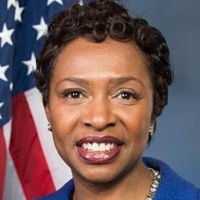
Yvette Clarke
Representative
NY
Yvette Clarke
Representative
NY
The Uterine Cancer Study Act of 2025 mandates a comprehensive federal study to investigate the potential link between the use of chemical hair straighteners and the risk of developing uterine cancer. This research must specifically examine disparities in cancer rates among women of color. The study will ultimately recommend whether the FDA should require additional safety testing for these hair products.
This bill mandates the Attorney General to release nearly all unclassified Department of Justice records related to Jeffrey Epstein within 30 days, with limited exceptions for victim privacy or active investigations.

Thomas Massie
Representative
KY
Thomas Massie
Representative
KY
This bill, titled the Epstein Files Transparency Act, mandates the Attorney General to release nearly all unclassified Department of Justice records related to Jeffrey Epstein within 30 days of enactment. The legislation strictly limits the justifications for withholding or redacting documents, prohibiting secrecy based on political sensitivity or potential embarrassment. The only permissible redactions involve victim privacy, child sexual abuse material, or narrowly defined threats to active investigations or national security classifications. Upon completion, the Attorney General must submit a detailed report to Congress listing all released and withheld materials, including an unredacted list of all named government officials.
This Act mandates that VA medical staff promptly certify the deaths of veterans who died from natural causes within 48 hours to expedite burial and survivor benefits.
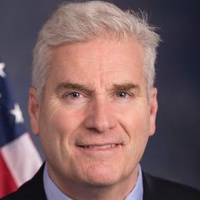
Tom Emmer
Representative
MN
Tom Emmer
Representative
MN
The Veteran Burial Timeliness and Death Certificate Accountability Act addresses significant delays in obtaining death certificates for veterans who die from natural causes, often due to VA medical staff delays. This bill mandates that VA medical providers must certify a veteran's death within 48 hours or allow the local medical examiner to step in. Furthermore, the VA must annually report on its compliance with this new timely certification requirement.
This comprehensive act establishes federal entitlements and grants to ensure access to affordable, high-quality child care and universal preschool for young children while significantly increasing compensation for early childhood educators.
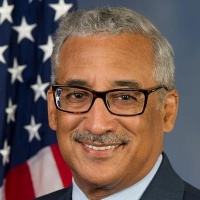
Robert Scott
Representative
VA
Robert Scott
Representative
VA
The Child Care for Working Families Act establishes comprehensive federal programs to ensure access to high-quality, affordable child care and universal preschool for young children. The legislation creates an entitlement program for child care, mandates that provider reimbursement rates cover actual costs and ensure living wages for staff, and establishes free, universal preschool for 3- and 4-year-olds. Additionally, it provides dedicated funding to stabilize childcare providers and extend the operating hours and compensation for Head Start staff.
This Act establishes increased federal research, public education, and provider information dissemination regarding uterine fibroids, with a focus on addressing racial disparities and non-hysterectomy treatment options.
Yvette Clarke
Representative
NY
Yvette Clarke
Representative
NY
The Stephanie Tubbs Jones Uterine Fibroid Research and Education Act of 2025 aims to significantly increase federal research, public education, and provider awareness regarding uterine fibroids. The bill mandates expanded research coordination across federal agencies and authorizes funding to study the condition, which disproportionately affects minority women. It also requires the creation of public awareness campaigns detailing non-hysterectomy treatment options and mandates data collection on Medicaid/CHIP spending for fibroid treatments.
This resolution supports the designation of July as Uterine Fibroids Awareness Month to highlight the commonality, disproportionate impact, and need for increased research and treatment options for uterine fibroids.
David Scott
Representative
GA
David Scott
Representative
GA
This resolution supports the designation of July as Uterine Fibroids Awareness Month to highlight the significant health impact of these common growths on women. It recognizes the disproportionate burden of fibroids on Black and Hispanic women and calls for increased research and improved treatment options. The bill encourages the President to issue a proclamation supporting national awareness activities throughout July.
This resolution formally recognizes the significant and persistent wage gap disproportionately affecting Black women in the United States.
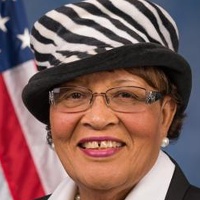
Alma Adams
Representative
NC
Alma Adams
Representative
NC
This resolution formally recognizes the significant and persistent wage disparity faced by Black women in the United States. It highlights that despite existing equal pay laws, Black women earn substantially less than their male counterparts, leading to massive lifetime earnings losses. Congress uses this measure to emphasize the urgent need to address both racial and gender discrimination to achieve true pay equity.
The Unearth America’s Future Act establishes federal incentives, oversight, and research funding to secure and expand domestic supply chains for materials critical to U.S. national security and economic competitiveness.

Haley Stevens
Representative
MI
Haley Stevens
Representative
MI
The Unearth America’s Future Act is a comprehensive legislative package designed to secure and strengthen U.S. supply chains for materials critical to national security and economic competitiveness. It achieves this through significant federal incentives, including loans and tax credits, to boost domestic and allied production capacity. The bill imposes strict labor protections, environmental standards, and robust restrictions on foreign influence for all recipients of federal support. Ultimately, this legislation aims to foster American self-sufficiency in vital materials through investment, innovation, and workforce development.
This Act mandates that federal officers involved in border security or immigration enforcement must clearly display identification, wear visible uniforms or badges, and not conceal their faces during detentions or arrests.

Dan Goldman
Representative
NY
Dan Goldman
Representative
NY
The No Secret Police Act of 2025 mandates that federal officers engaged in border security or immigration enforcement must clearly display identification, wear visible badges or uniforms, and refrain from wearing face coverings during detentions or arrests. This ensures accountability by requiring clear identification from Department of Homeland Security (DHS) personnel. The bill also requires the Secretary of Homeland Security to report on current tactical gear policies and research methods to improve officer visibility.