Legislative Activity
Track Ted's sponsored bills, co-sponsored legislation, and voting record
The CLEAN DC Act completely repeals the Comprehensive Policing and Justice Reform Amendment Act of 2022, restoring previous laws.

Ted Cruz
Senator
TX
Ted Cruz
Senator
TX
The CLEAN DC Act, officially the Common-Sense Law Enforcement and Accountability Now in DC Act, seeks to completely repeal the Comprehensive Policing and Justice Reform Amendment Act of 2022. This action effectively nullifies all changes made by the 2022 Act, restoring the previous legal standards regarding policing and justice in DC.
The DC CRIMES Act lowers the age for youth offender status to 18 and under, mandates a public website for detailed juvenile crime statistics, and prohibits the D.C. Council from changing existing mandatory criminal sentences.
Jim Banks
Senator
IN
Jim Banks
Senator
IN
The DC CRIMES Act significantly revises the handling of youth offenders by lowering the age eligibility for youth offender status to 18 and under. It also mandates the creation of a public website managed by the Attorney General to display detailed, monthly statistics on juvenile crime and legal outcomes. Finally, the Act prohibits the D.C. Council from enacting changes to existing mandatory minimum sentences or current criminal sentencing guidelines.
This bill establishes a Veterans Experience Office within the VA, mandates quarterly budget briefings for Congress, and places new restrictions on executive bonuses.
Dan Sullivan
Senator
AK
Dan Sullivan
Senator
AK
The Protecting Regular Order for Veterans Act of 2025 mandates quarterly budget briefings for Congress by the VA Secretary and places new restrictions on critical skills bonuses for senior executives. Additionally, the bill establishes a new Veterans Experience Office, reporting directly to the Secretary, tasked with improving beneficiary satisfaction and reporting on customer feedback data to Congress. This new office will sunset on September 30, 2028, following a review by the Comptroller General.
The LETITIA Act establishes significantly enhanced mandatory minimum penalties for public officials convicted of federal financial crimes like bank fraud, loan application fraud, and tax fraud.

John Cornyn
Senator
TX
John Cornyn
Senator
TX
The LETITIA Act significantly increases criminal penalties for public officials who commit financial crimes, including bank fraud, lying on loan applications, and tax fraud. This legislation establishes mandatory minimum sentences and higher fines that escalate based on the number of prior offenses committed by the official. Furthermore, it directs the Department of Justice and the Department of the Treasury to issue guidance ensuring rigorous investigation and enforcement of these enhanced statutes against public servants.
This resolution solemnly marks the anniversary of the attempted assassination of President Trump, condemns political violence, and honors the victims and first responders involved.
Eric Schmitt
Senator
MO
Eric Schmitt
Senator
MO
This resolution solemnly marks the one-year anniversary of the attempted assassination of former President Donald J. Trump. It condemns the multiple attempts against his life and other political officials, while honoring the victims and first responders involved in the July 2024 shooting. The measure further calls for an end to the incitement of political violence that threatens the democratic process.
The Bankruptcy Administration Improvement Act of 2025 increases compensation for Chapter 7 trustees, adjusts bankruptcy fee structures to fund the U.S. Trustee System, and extends the terms of certain temporary bankruptcy judge offices.
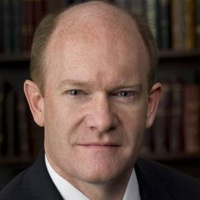
Christopher Coons
Senator
DE
Christopher Coons
Senator
DE
The Bankruptcy Administration Improvement Act of 2025 aims to modernize the bankruptcy system by increasing the compensation for Chapter 7 trustees to a level reflecting current economic realities. The bill also adjusts various bankruptcy fees to ensure the U.S. Trustee System remains fully funded without taxpayer assistance. Finally, it extends the terms of certain temporary bankruptcy judge offices to ensure continued judicial capacity.
This bill strengthens global anti-trafficking efforts through foreign policy integration, increases federal funding authorizations for victim protection programs, and mandates greater Congressional oversight of the State Department's annual trafficking report and waiver decisions.

James Risch
Senator
ID
James Risch
Senator
ID
The International Trafficking Victims Protection Reauthorization Act of 2025 strengthens global anti-trafficking efforts by integrating these measures into U.S. foreign policy and development aid. It extends and increases authorization for federal programs combating trafficking and child exploitation through 2030. Furthermore, the bill mandates increased transparency by requiring the State Department to immediately brief Congress on the annual Trafficking in Persons Report rankings and any granted anti-trafficking waivers.
This bill prohibits non-citizens from voting in District of Columbia elections and repeals the Local Resident Voting Rights Amendment Act of 2022.

Katie Britt
Senator
AL
Katie Britt
Senator
AL
This bill prohibits non-U.S. citizens from voting in any election within the District of Columbia. It also repeals the Local Resident Voting Rights Amendment Act of 2022, effectively undoing that prior legislation. The measure ensures that only citizens can participate in D.C. local elections and ballot initiatives.
This resolution designates August 16, 2025, as "National Airborne Day" to honor the history and bravery of U.S. airborne forces and special operations warriors.
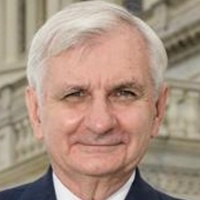
John Reed
Senator
RI
John Reed
Senator
RI
This resolution designates August 16, 2025, as "National Airborne Day" to honor the history and bravery of U.S. airborne forces. It specifically recognizes the service of combat parachutists, air assault forces, and special operations warriors across all conflicts. The day serves as an expression of national gratitude for the thousands who have served in these elite units.
The Equal Shot Act of 2025 prohibits the Small Business Administration from denying financial assistance to qualified firearm entities, affiliates, or trade associations solely based on their connection to the firearms industry.
James Risch
Senator
ID
James Risch
Senator
ID
The Equal Shot Act of 2025 aims to prevent discrimination against businesses within the firearms industry when applying for financial assistance from the Small Business Administration (SBA). This legislation explicitly prohibits the SBA from denying loans or guarantees solely based on an applicant's status as a firearm entity, affiliate, or trade association. The Act first establishes clear definitions for these industry participants to ensure fair and equal consideration for all qualified applicants.
This bill establishes a program allowing VA schedulers to directly book veterans' appointments with community care providers using real-time scheduling technology.

Jerry Moran
Senator
KS
Jerry Moran
Senator
KS
This bill establishes a new External Provider Scheduling Program within the Department of Veterans Affairs to streamline appointment booking for veterans utilizing the Veterans Community Care Program. The program will allow VA schedulers to directly view and book appointments in real-time with participating community health care providers. Its primary goals are to reduce the time it takes to schedule community care appointments and improve overall efficiency for VA staff.
The SAVES Act of 2025 establishes a five-year VA pilot program to award competitive grants, up to \$2 million each, to nonprofits providing service dogs and necessary veterinary insurance to eligible veterans with specific disabilities.
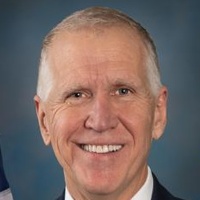
Thom Tillis
Senator
NC
Thom Tillis
Senator
NC
The SAVES Act of 2025 establishes a five-year pilot program within the VA to award competitive grants to nonprofits providing service dogs to eligible veterans with disabilities like PTSD or mobility issues. These grants, capped at $2 million per recipient, will cover the cost of training the dog and veteran, and the VA will also provide veterinary insurance for each service dog. The goal is to ensure veterans receive necessary support dogs without incurring any personal fees.
This resolution urges all NATO members to commit a minimum of 5% of their GDP to defense, clarifying spending goals and reaffirming support for the Alliance.

John Kennedy
Senator
LA
John Kennedy
Senator
LA
This resolution urges all NATO members to commit to spending a minimum of 5% of their Gross Domestic Product (GDP) on defense, clarifying the breakdown between traditional and non-traditional defense expenditures. It emphasizes that failing to meet current spending goals reflects a lack of political will rather than financial inability. Ultimately, the resolution reaffirms the U.S. Senate's strong support for a unified and robust NATO alliance.
This Act establishes that non-citizens convicted of or admitting to driving while intoxicated or impaired offenses, regardless of classification as a misdemeanor or felony, are inadmissible to and deportable from the United States.
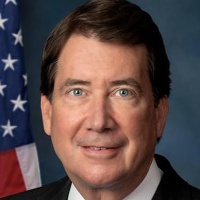
Bill Hagerty
Senator
TN
Bill Hagerty
Senator
TN
The Protect Our Communities from DUIs Act revises immigration law to address driving while intoxicated or impaired offenses. This bill makes non-citizens inadmissible to the U.S. if they have been convicted of, or admit to committing, DUI/DWI offenses, regardless of whether the offense was a misdemeanor or felony. Furthermore, the Act establishes that a conviction for driving while intoxicated or impaired makes an alien deportable from the United States.
This bill aligns the update schedule for the National Advanced Manufacturing Program's strategic plan with the National Strategy for Advanced Manufacturing, mandating updates at least every four years.

Lisa Blunt Rochester
Senator
DE
Lisa Blunt Rochester
Senator
DE
The Streamlining American Manufacturing Strategy Act updates the required update frequency for the National Advanced Manufacturing Program's strategic plan. This legislation mandates that the strategic plan be updated at least every four years. The key goal is to align this update cycle directly with the planning cycle for the broader National Strategy for Advanced Manufacturing.
Kate's Law increases mandatory minimum prison sentences for aliens unlawfully present who commit serious crimes and for aliens who illegally reenter the U.S. after prior removal.
Ted Cruz
Senator
TX
Ted Cruz
Senator
TX
Kate's Law increases penalties for illegal entry into the U.S. by individuals who are later convicted of serious crimes. The bill mandates a minimum five-year sentence for illegal entry if the person is subsequently convicted of a crime punishable by over one year in prison. Furthermore, it significantly increases prison sentences, including mandatory minimums, for aliens who illegally reenter the U.S. after being previously removed.
This bill mandates training and guidance for federal agencies that fail to meet their contract award goals for small businesses owned by service-disabled veterans.
John Kennedy
Senator
LA
John Kennedy
Senator
LA
The Service-Disabled Veteran Opportunities in Small Business Act aims to increase federal contract awards to small businesses owned and controlled by service-disabled veterans. It mandates that the Small Business Administrator provide specialized training to any agency failing to meet its established contract goals for these businesses. Furthermore, the Act requires the Administrator to issue best practices guidance and report annually to Congress on agency compliance and training efforts.
This bill mandates new data collection and analysis to update Medicare payment rates for air ambulance services and requires a GAO study on the true costs of these emergency transports.

Michael Bennet
Senator
CO
Michael Bennet
Senator
CO
The Protecting Air Ambulance Services for Americans Act of 2025 aims to reform how Medicare pays for emergency air ambulance services. It requires the Secretary of HHS to update the payment system using newly collected cost and usage data from providers. Furthermore, the bill mandates the timely finalization of data collection rules and directs the GAO to study the true costs of these essential emergency transports.
This resolution honors the economic and cultural contributions of small firearm manufacturers and designates August 2025 as "National Shooting Sports Month."
James Risch
Senator
ID
James Risch
Senator
ID
This resolution formally honors the significant economic and cultural contributions of small, domestic firearm manufacturers to the United States. It recognizes these businesses as vital to supporting American manufacturing, job creation, and the traditions of recreational shooting sports. Furthermore, the resolution designates August 2025 as "National Shooting Sports Month."
This act prohibits the Small Business Administration from issuing new direct 7(a) loans while requiring them to continue servicing existing ones.

Tim Scott
Senator
SC
Tim Scott
Senator
SC
The Protecting Access to Credit for Small Businesses Act prohibits the Small Business Administration (SBA) from issuing any new direct loans under its primary Section 7(a) loan program. While the SBA can no longer originate these loans directly, it must continue to manage and service any existing direct 7(a) loans. This change shifts the focus of the program away from direct government lending.