Legislative Activity
Track Ted's sponsored bills, co-sponsored legislation, and voting record
This bill eases the tax burden on Intelligence Community employees by expanding moving expense deductions and excluding related reimbursements from taxable income following required relocations.

Tom Cotton
Senator
AR
Tom Cotton
Senator
AR
The Intelligence Community Workforce Agility Protection Act of 2025 aims to support intelligence community personnel by simplifying the tax treatment of required relocations. This bill allows intelligence community employees and appointees to utilize specific moving expense deductions when changing duty stations. Furthermore, it ensures that reimbursements for qualified moving expenses related to these official relocations are excluded from taxable income.
This Act establishes a new federal crime for intentionally blocking public roads or highways in a manner that interferes with commerce, while also updating the title of the existing law on interference with commerce.
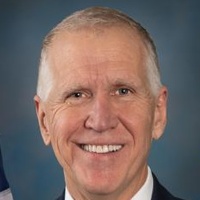
Thom Tillis
Senator
NC
Thom Tillis
Senator
NC
The Safe and Open Streets Act establishes a new federal crime for intentionally blocking public roads or highways in a manner that interferes with commerce. This legislation amends existing federal law to include this specific offense, punishable by fines or up to five years in prison. The Act also updates the title of the relevant statute to broadly cover "Interference with commerce."
The RAPID Reserve Act establishes a program for the HHS Secretary to contract with companies to maintain rolling reserves of critical drugs and their active ingredients to bolster supply chain resilience.
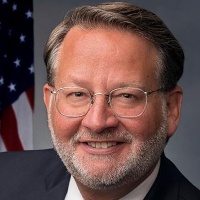
Gary Peters
Senator
MI
Gary Peters
Senator
MI
The RAPID Reserve Act establishes a new program requiring the Secretary of HHS to contract with companies to create and maintain rolling reserves of critical drugs and their active ingredients, focusing on those with vulnerable supply chains. These contracted entities must store a six-month supply, keep it fresh, and agree to surge production or transfer stock upon government direction. The goal is to strengthen domestic manufacturing capacity and ensure supply chain resiliency against shortages or national security threats.
This Act prohibits employers from taking adverse action against employees based on their expression of views regarding the biological nature of sex or their use of single-sex spaces, and expands protections against retaliation for opposing such actions.
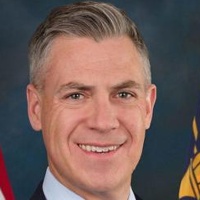
Jim Banks
Senator
IN
Jim Banks
Senator
IN
The Restoring Biological Truth to the Workplace Act amends federal employment law to prohibit employers from taking adverse action against employees based on their expression of views regarding the binary or biological nature of sex. This legislation also protects employees who request or use single-sex spaces, such as bathrooms or changing rooms. Furthermore, the Act expands anti-retaliation protections for employees who oppose these newly defined unlawful employment practices.
This resolution formally recognizes the 250th birthday of the United States Army, honoring its history, valor, and ongoing commitment to national security.

Jerry Moran
Senator
KS
Jerry Moran
Senator
KS
This resolution formally recognizes the 250th birthday of the United States Army, celebrating its long history of defending the nation since 1775. It honors the valor, dedication, and core values of the soldiers who have served across two and a half centuries. The Senate encourages all Americans to observe this significant anniversary with appropriate ceremonies and programs.
This bill mandates detailed reporting and public transparency for federal payments while expanding data access across agencies to verify recipients and prevent improper government spending.

Joni Ernst
Senator
IA
Joni Ernst
Senator
IA
The Delivering On Government Efficiency in Spending Act mandates increased transparency by requiring federal agencies to report detailed information on all Treasury payments for public posting. It also enhances government integrity by granting the Treasury access to sensitive data, like new hire and tax records, to verify recipients and prevent improper payments. Furthermore, the bill requires agencies to verify bank account information before disbursing funds to ensure accuracy. These measures aim to improve oversight, reduce fraud, and increase accountability in federal spending.
The REMOVE Act mandates that immigration court proceedings for deportable migrant offenders must be completed within 15 days of initiation.

Marsha Blackburn
Senator
TN
Marsha Blackburn
Senator
TN
The Rapid Expulsion of Migrant Offenders who Violate and Evade (REMOVE) Act mandates the swift removal of immigrants who have been ordered to leave the country, particularly those convicted of deportable offenses. This legislation requires the Attorney General to complete all necessary immigration court proceedings for these individuals within a strict 15-day timeframe after they begin. The goal is to significantly speed up the deportation process for migrant offenders.
This Act expands Medicare coverage for intensive behavioral therapy for obesity by authorizing more providers and mandates future Part D coverage for obesity and weight management medications.

Bill Cassidy
Senator
LA
Bill Cassidy
Senator
LA
The Treat and Reduce Obesity Act of 2025 addresses the growing public health crisis of obesity, particularly among Medicare beneficiaries. This bill expands Medicare coverage for intensive behavioral therapy by allowing more types of qualified healthcare providers to furnish the treatment. Furthermore, it amends Medicare Part D to allow coverage for prescription medications used to treat obesity or weight management in individuals with related health conditions. Finally, the Act requires the Secretary of HHS to report regularly to Congress on the implementation and coordination of federal obesity-related efforts.
The ABC-ED Act of 2025 expands public health data grants to track real-time hospital capacity, mandates CMMI pilot programs for improving emergency care for older adults and psychiatric crises, and directs a study on best practices for hospital capacity data systems.

Christopher Coons
Senator
DE
Christopher Coons
Senator
DE
The ABC-ED Act of 2025 aims to improve emergency department efficiency by allowing public health grants to fund real-time hospital bed capacity tracking systems. It also mandates the Center for Medicare and Medicaid Innovation to pilot programs focused on enhancing emergency care for older adults and those in acute psychiatric crises. Finally, the bill directs a study on best practices for these capacity tracking systems and their impact on emergency wait times.
This Act mandates that any final World Health Organization pandemic preparedness treaty or agreement must receive the advice and consent of the U.S. Senate by a two-thirds majority vote to be binding on the United States.

Ron Johnson
Senator
WI
Ron Johnson
Senator
WI
This Act mandates that any final convention or agreement on pandemic preparedness resulting from the World Health Organization's (WHO) International Negotiating Body must be treated as a formal treaty. Consequently, the United States cannot adopt or implement such an agreement without receiving the "advice and consent" of the Senate. This ensures that the Senate has a final, two-thirds majority vote on any binding international health instrument negotiated by the WHO.
This Act directs the U.S. to actively support Taiwan's full membership and participation in the International Monetary Fund (IMF) and requires annual reporting on these efforts.
Dave McCormick
Senator
PA
Dave McCormick
Senator
PA
The Taiwan Non-Discrimination Act of 2025 declares the sense of Congress that Taiwan, as a major global economy, should have greater participation in the International Monetary Fund (IMF). The bill directs the U.S. Governor of the IMF to actively support Taiwan's bid for full membership and related engagement opportunities. This legislation reaffirms long-standing U.S. policy against hindering Taiwan's involvement in international financial bodies. The requirements for U.S. support will terminate upon Taiwan's admission or ten years after the Act's enactment.
This resolution formally establishes an annual "Life Month" to affirm the inherent value of all human life, especially the unborn, and to encourage legislative action and support for life-affirming resources.

Ted Cruz
Senator
TX
Ted Cruz
Senator
TX
This resolution formally declares the nation's foundational belief in the inherent right to life for every human being, including the unborn. It recognizes the Supreme Court's decision to return authority over life protection laws to the people and their elected officials. Furthermore, the bill establishes an annual "Life Month" to commend organizations supporting life and urge lawmakers to enact protections for the unborn.
This Act requires colleges and universities to print or post essential suicide prevention contact information, including the 988 Lifeline, on student IDs or main websites.
John Kennedy
Senator
LA
John Kennedy
Senator
LA
The Improving Mental Health Access for Students Act mandates that colleges and universities prominently display critical mental health and suicide prevention resources on student ID cards or main websites. This includes contact information for the 988 Suicide and Crisis Lifeline, the Crisis Text Line, and the campus mental health center. Schools will have one year after the Act's enactment to comply with these new requirements.
The Plant Biostimulant Act of 2025 updates federal definitions to specifically categorize plant biostimulants and mandates a study on their effectiveness in improving soil health.

Roger Marshall
Senator
KS
Roger Marshall
Senator
KS
The Plant Biostimulant Act of 2025 updates federal law to specifically define "plant biostimulant," separating it from other regulated agricultural products. This legislation requires the EPA to update its regulations to reflect these new definitions within 120 days of enactment. Furthermore, the bill mandates the Secretary of Agriculture to conduct a comprehensive study on how various biostimulants can improve soil health and sustainability outcomes.
This resolution formally honors the life, achievements, and legacy of former United States Senator Christopher "Kit" Bond of Missouri.

Joshua Hawley
Senator
MO
Joshua Hawley
Senator
MO
This resolution serves as a formal tribute honoring the life, achievements, and enduring legacy of former United States Senator Christopher "Kit" Bond of Missouri. It recognizes his decades of public service, including his terms as Missouri Governor and U.S. Senator, where he championed infrastructure, agriculture, and conservative values. The Senate expresses deep sadness over his passing and directs that official copies of this tribute be sent to his family.
The Innovative FEED Act of 2025 establishes a new regulatory category for specialized animal food ingredients intended to modify digestion or reduce foodborne pathogens, while maintaining their status as food additives requiring FDA approval.
Roger Marshall
Senator
KS
Roger Marshall
Senator
KS
The Innovative FEED Act of 2025 establishes a new regulatory category for "zootechnical animal food substances" intended to modify digestion or reduce foodborne pathogens in food animals, while explicitly excluding substances intended to treat disease. These substances are still regulated as food additives requiring FDA approval based on demonstrated efficacy and safety. The bill mandates specific labeling requirements to clarify that these products are not intended as animal drugs.
This Act mandates the SEC to establish rules allowing regulated financial entities to deliver required investor documents electronically while ensuring investors receive clear notice, the option to opt for paper, and continued access to information.
Thom Tillis
Senator
NC
Thom Tillis
Senator
NC
The Improving Disclosure for Investors Act of 2025 mandates the SEC to establish new rules modernizing how financial firms deliver required regulatory documents to investors, primarily by facilitating electronic delivery. This legislation sets deadlines for the SEC to finalize rules that allow digital distribution of documents like prospectuses and annual reports, while ensuring investor protections remain in place. The bill focuses solely on the method of delivery, not the substance or timing of the required disclosures themselves. If the SEC delays, covered entities can proceed with electronic delivery based on the standards outlined in the Act.
This bill repeals the federal excise tax on indoor tanning services, effective immediately upon enactment.

Rand Paul
Senator
KY
Rand Paul
Senator
KY
The Tanning Tax Repeal Act of 2025 officially eliminates the federal excise tax on indoor tanning services. This legislation strikes the relevant chapter from the Internal Revenue Code, immediately ceasing the tax requirement for services rendered after the bill's enactment. In short, it removes the tax on tanning salons moving forward.
This act establishes a tax credit for businesses that use digitally traced, domestically grown U.S. cotton in their final products.

Cindy Hyde-Smith
Senator
MS
Cindy Hyde-Smith
Senator
MS
The Buying American Cotton Act of 2025 establishes a new tax credit to incentivize businesses to use cotton grown in the United States. This Domestic Cotton Consumption Credit is calculated based on the amount of qualified U.S. cotton in an eligible product sold, factoring in processing location and market price. The bill mandates strict digital tracing requirements to prove the origin of the cotton throughout the supply chain. Special enhanced credit multipliers are available for businesses that elect to claim the credit separately for qualified U.S. cotton yarn or fabric components.
This bill establishes an expedited process for the Department of Homeland Security to deport non-citizens convicted of serious crimes, including gang membership, terrorism support, and specific violent offenses.

Ashley Moody
Senator
FL
Ashley Moody
Senator
FL
The Expedited Removal of Criminal Aliens Act establishes a new, faster process for the government to deport non-citizens who are members of criminal gangs or terrorist organizations, or who have been convicted of specific serious crimes. This process mandates detention and bars these individuals from seeking withholding of removal. The law specifically defines vulnerable groups for the purpose of determining which misdemeanor convictions qualify for this expedited action.