Legislative Activity
Track Suzanne's sponsored bills, co-sponsored legislation, and voting record
The Better CARE for Animals Act of 2025 strengthens the enforcement of the Animal Welfare Act by expanding investigative authority, establishing new civil penalties up to \$10,000 per day, and explicitly granting the Attorney General power to file civil actions, including seeking seizure and forfeiture of animals.
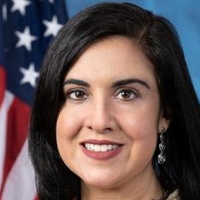
Nicole Malliotakis
Representative
NY
Nicole Malliotakis
Representative
NY
The Better CARE for Animals Act of 2025 significantly strengthens enforcement of the Animal Welfare Act by clarifying definitions and expanding the scope of investigations. It grants the Attorney General explicit authority to file civil actions seeking penalties up to $10,000 per day, and mandates that collected fines help cover temporary animal care costs. The bill also requires the Secretary of Agriculture and the Attorney General to establish a formal agreement for coordinated enforcement.
This bill bans the manufacture, sale, and transfer of specific semiautomatic assault weapons and large-capacity ammunition feeding devices while grandfathering existing possessions and establishing new transfer requirements.
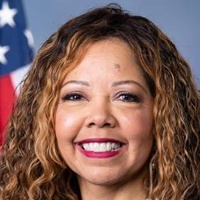
Lucy McBath
Representative
GA
Lucy McBath
Representative
GA
The Assault Weapons Ban of 2025 comprehensively defines and bans the manufacture, sale, and transfer of specific semiautomatic assault weapons and large capacity ammunition feeding devices. The bill grandfathers existing weapons but imposes new requirements for their secure storage and mandates dealer involvement for future private transfers. It also allows federal grant money to be used by states for buy-back programs targeting these banned items.
The PREP Act shortens the initial probationary period for federal employees, often to six months, when they are transferring from another executive branch civil service position.
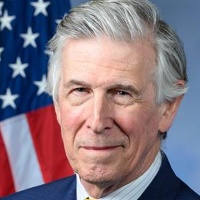
Donald Beyer
Representative
VA
Donald Beyer
Representative
VA
The Probationary Reduction for Employee Protections (PREP) Act shortens the initial probationary periods for new federal employees. Specifically, it limits the trial period to a maximum of six months for those transitioning directly from another executive branch civil service job. For other new hires, the maximum probationary period will be 12 months across competitive service, excepted service, and Senior Executive Service appointments.
This Act promotes private employee ownership by extending tax deferrals for S corporation ESOP sales, ensuring ESOP-owned businesses retain small business status, and establishing new Treasury and Labor offices to provide assistance and advocacy.
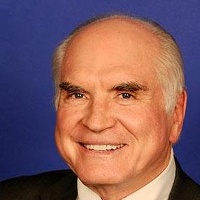
Mike Kelly
Representative
PA
Mike Kelly
Representative
PA
The Promotion and Expansion of Private Employee Ownership Act of 2025 aims to significantly boost employee ownership in S corporations through Employee Stock Ownership Plans (ESOPs). The bill extends key tax deferral benefits for stock sales to ESOPs and removes a major restriction on this tax treatment. Furthermore, it establishes new government offices and an Advocate for Employee Ownership to provide technical assistance and resolve disputes, while ensuring ESOP-owned businesses retain small business status for federal programs.
The REHIRE Act grants a special hiring preference, including five extra points, to certain Federal employees involuntarily removed between January 1, 2025, and January 1, 2027, provided they were not removed for misconduct or poor performance.
Donald Beyer
Representative
VA
Donald Beyer
Representative
VA
The REHIRE Act establishes a temporary hiring preference for certain Federal employees involuntarily removed from their positions between January 1, 2025, and January 1, 2027. These eligible former employees will receive the equivalent of a "preference eligible" status plus five extra points on their earned scores when applying for competitive service jobs. This hiring advantage excludes those removed for misconduct, poor performance, or from political positions, and it expires five years after enactment.
This bill establishes a universal, comprehensive national health insurance program called "Medicare for All" that eliminates patient cost-sharing and transitions the nation away from private insurance duplication.
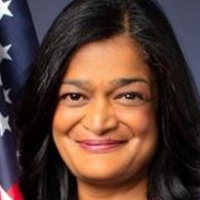
Pramila Jayapal
Representative
WA
Pramila Jayapal
Representative
WA
The Medicare for All Act establishes a universal, nationwide health insurance program providing comprehensive coverage for all U.S. residents with no out-of-pocket costs. It fundamentally restructures healthcare financing by implementing global budgets for institutions and a new fee schedule for individuals, while phasing out existing federal programs like Medicare and Medicaid. The legislation also sets strict quality standards for providers and creates a dedicated Trust Fund to manage the system's finances.
The RESEARCHER Act establishes new federal guidelines to address the financial instability of graduate and postdoctoral researchers by improving stipends, benefits, and support services, while mandating new data collection and studies on the issue.
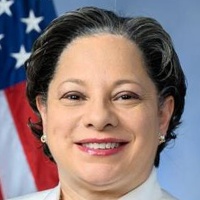
Jennifer McClellan
Representative
VA
Jennifer McClellan
Representative
VA
The RESEARCHER Act establishes new federal guidelines to address the financial instability faced by graduate and postdoctoral researchers supported by federal funding. It mandates agencies to improve stipends, healthcare access, and support for housing and family care for these essential researchers. Furthermore, the bill requires comprehensive data collection and studies by the National Academies and GAO to assess and report on the effectiveness of these new financial support measures.
The Equality Act comprehensively prohibits discrimination based on sex, sexual orientation, and gender identity across key areas including public accommodations, employment, housing, credit, and jury service.
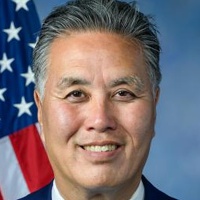
Mark Takano
Representative
CA
Mark Takano
Representative
CA
The Equality Act comprehensively expands federal civil rights protections against discrimination based on sex, sexual orientation, and gender identity across key areas of American life. It amends existing laws to prohibit discrimination in public accommodations, housing, credit, employment, and federal funding. The purpose of the bill is to provide consistent, explicit, and comprehensive remedies for individuals facing bias in these essential sectors.
This bill repeals the Arctic National Wildlife Refuge oil and gas program and designates over 1.5 million acres of the refuge as protected wilderness.
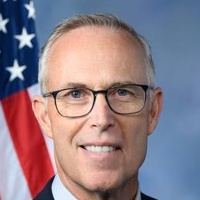
Jared Huffman
Representative
CA
Jared Huffman
Representative
CA
The Arctic Refuge Protection Act officially repeals the previous law authorizing oil and gas leasing in the Arctic National Wildlife Refuge. This legislation simultaneously designates approximately 1.56 million acres within the Refuge as protected wilderness under the National Wilderness Preservation System. The Secretary of the Interior is now required to manage this newly designated land according to strict wilderness preservation standards.
This Act establishes and funds regional "Ocean Innovation Clusters" to foster sustainable economic growth and collaboration within the "Blue Economy."

Chellie Pingree
Representative
ME
Chellie Pingree
Representative
ME
The Ocean Regional Opportunity and Innovation Act of 2025 establishes "Ocean Innovation Clusters" across the U.S. to foster sustainable growth in the "Blue Economy." This legislation directs the Secretary of Commerce to designate at least seven regional clusters led by non-profits to enhance collaboration between industry, academia, and local governments. The Act authorizes a competitive grant program, up to $10 million per award, to help these clusters operate and create physical collaboration centers. Ultimately, the goal is to drive economic opportunity, workforce development, and climate resilience in ocean-related sectors.
The **Protecting America’s Workers Act** significantly expands OSHA coverage to public employees, strengthens whistleblower protections, increases penalties for safety violations, and tightens federal oversight of state safety plans.
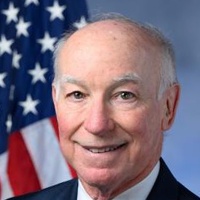
Joe Courtney
Representative
CT
Joe Courtney
Representative
CT
The **Protecting America’s Workers Act** significantly expands OSHA coverage to include public employees, strengthens whistleblower protections by lowering the burden of proof for workers and increasing remedies for retaliation, and mandates stricter reporting, increased penalties, and greater transparency for workplace safety violations. The bill also tightens federal oversight of state-run safety plans and enhances NIOSH's role in hazard evaluation and safety training.
This Act authorizes the President to impose sanctions, including asset freezes and visa bans, on foreign individuals involved in violence, property destruction, or displacement in the West Bank.
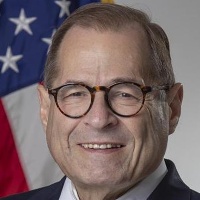
Jerrold Nadler
Representative
NY
Jerrold Nadler
Representative
NY
The West Bank Violence Prevention Act of 2025 declares extreme settler violence and displacement in the West Bank a threat to U.S. national security interests. This Act mandates the President to impose sanctions, including asset freezes and visa bans, on foreign individuals responsible for undermining peace and stability in the region. The Treasury Department must report to Congress on the implementation of these sanctions every 90 days.
This resolution designates a week in 2025 to recognize and support the vital role of over one million specialized instructional support personnel in creating safe, supportive, and effective learning environments for all students.
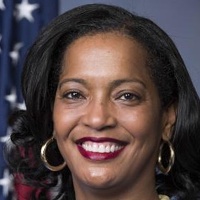
Jahana Hayes
Representative
CT
Jahana Hayes
Representative
CT
This resolution supports designating the week of April 28 through May 2, 2025, as "National Specialized Instructional Support Personnel Appreciation Week." It recognizes the vital role of over one million school-based professionals, such as counselors, social workers, and nurses, in supporting student learning and well-being. The bill commends these staff for providing essential prevention and intervention services that create safe and supportive learning environments. Ultimately, it encourages policymakers to recognize and promote the importance of these personnel for improving overall educational outcomes.
This resolution expresses support for honoring Earth Day, recognizes past environmental achievements, warns against undermining current climate laws, and urges the President to issue a proclamation encouraging environmental action.

Doris Matsui
Representative
CA
Doris Matsui
Representative
CA
This resolution expresses strong support for honoring Earth Day and recognizes its historical importance in launching the modern environmental movement. It highlights ongoing challenges like climate change while celebrating recent landmark investments in clean energy and infrastructure. Ultimately, the bill urges the President to issue a proclamation recognizing Earth Day and encourages all Americans to take sustained action to protect the environment for future generations.
The Vote at Home Act of 2025 mandates that states mail federal election ballots to all registered voters two weeks before the election, provides free postage for these ballots, and establishes automatic voter registration through motor vehicle departments.
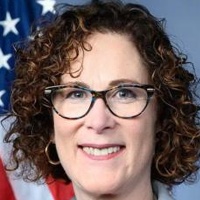
Valerie Hoyle
Representative
OR
Valerie Hoyle
Representative
OR
The Vote at Home Act of 2025 aims to expand access to federal elections by mandating that states mail ballots to all registered voters two weeks before election day and provide free return postage. It also modernizes voter registration by requiring motor vehicle departments to streamline registration forms and automatically register eligible citizens who provide proof of citizenship when obtaining or renewing a driver's license. These provisions are intended to increase voter turnout, reduce in-person lines, and lower administrative costs.
This Act establishes an Advisory Council to survey needs, identify best practices, and disseminate comprehensive resources for victims of all forms of gun violence.
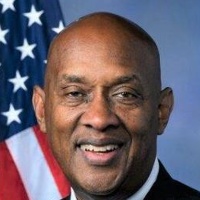
Dwight Evans
Representative
PA
Dwight Evans
Representative
PA
The Resources for Victims of Gun Violence Act of 2025 establishes an Advisory Council, led by HHS, to assess the needs of gun violence victims and service providers. This Council will survey stakeholders, review existing support programs, and identify best practices for medical, financial, and mental health assistance. Its primary function is to compile and widely distribute a comprehensive list of available federal, state, and nonprofit resources to ensure victims can easily access necessary aid.
This act increases federal reimbursement rates by 10 cents per meal or snack served through the Child and Adult Care Food Program and streamlines payment calculations for day care homes.
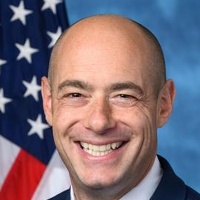
Greg Landsman
Representative
OH
Greg Landsman
Representative
OH
The Child Care Nutrition Enhancement Act of 2025 increases federal support for child care nutrition programs. This bill mandates an additional 10 cents in reimbursement for every meal or snack served through the Child and Adult Care Food Program (CACFP). It also streamlines the calculation methods for payments made to family and group day care homes participating in the program.
The SERVICE Act requires federal agencies to submit detailed reports to the GAO and Congress before implementing workforce reductions exceeding 5% and mandates a GAO review of those reports' completeness and credibility.
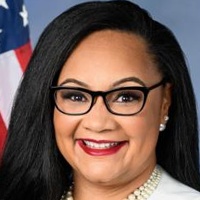
Nikema Williams
Representative
GA
Nikema Williams
Representative
GA
The SERVICE Act mandates that federal agencies must undergo a thorough review process before implementing significant workforce reductions. Agencies planning to cut staff by more than 5% must first submit a detailed report to the GAO analyzing the financial and mission impacts of the proposed layoffs. The GAO then reviews this report to ensure the analysis is complete and credible before the agency can proceed with the cuts after a mandatory waiting period.
This Act permanently prohibits new oil and gas exploration, development, and production on the Outer Continental Shelf off the coasts of California, Oregon, and Washington.
Jared Huffman
Representative
CA
Jared Huffman
Representative
CA
The West Coast Ocean Protection Act of 2025 permanently prohibits all new oil and gas exploration, development, and production on the Outer Continental Shelf off the coasts of California, Oregon, and Washington. This legislation specifically bans the Secretary of the Interior from issuing any new leases or permissions for drilling activities in designated planning areas. The goal is to secure long-term protection for these vital West Coast marine environments.
This bill permanently prohibits new and existing oil and gas leasing for drilling in designated Arctic areas of the outer Continental Shelf.
Jared Huffman
Representative
CA
Jared Huffman
Representative
CA
The Stop Arctic Ocean Drilling Act of 2025 permanently prohibits the issuance of new oil and gas leases, or the extension of existing ones, for mineral exploration and production in designated Arctic areas of the outer Continental Shelf. This measure establishes an ironclad ban on offshore drilling in these specific Arctic waters.