
Legislative Activity
Track Marsha's sponsored bills, co-sponsored legislation, and voting record
This act prohibits individuals with seriously delinquent tax debt from being employed by the Internal Revenue Service and mandates regular audits of current employees' tax status.

Joni Ernst
Senator
IA
Joni Ernst
Senator
IA
The Audit the IRS Act prohibits individuals with seriously delinquent tax debt from being hired by or continuing employment with the Internal Revenue Service. This measure ensures that IRS employees meet basic tax compliance standards. The Commissioner is required to conduct regular checks on current employees and pre-employment screening for new applicants.
The SNOOP Act of 2025 reinstates the higher reporting thresholds for third-party payment processors to send 1099-K forms to the IRS and limits when backup withholding applies to network transactions.
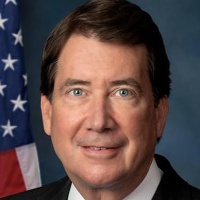
Bill Hagerty
Senator
TN
Bill Hagerty
Senator
TN
The SNOOP Act of 2025 aims to adjust the reporting requirements for third-party payment processors regarding transactions sent to the IRS. This bill reinstates the higher reporting threshold of over $20,000 in payments across more than 200 transactions for issuing 1099-K forms. Furthermore, it clarifies that backup withholding on network payments only applies if both the transaction count and dollar amount thresholds are met for the year.
This Act establishes cost-based payment rules under Medicare for certain algorithm-based healthcare services utilizing AI or machine learning, effective January 1, 2026.
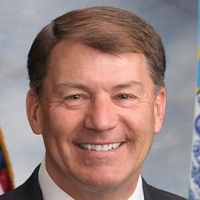
Mike Rounds
Senator
SD
Mike Rounds
Senator
SD
The Health Tech Investment Act aims to establish specific, cost-based payment rules for advanced algorithm-based healthcare services under Medicare, starting in 2026. This ensures that services utilizing AI or machine learning receive appropriate payment based on manufacturer-submitted costs while in the New Technology Ambulatory Payment Classification (NTAP). The bill also clarifies eligibility for these new technologies within the Medicare outpatient payment system.
The NO FAKES Act of 2025 establishes exclusive rights for individuals and their heirs to control the licensing and use of their digital voice and visual likeness replicas.
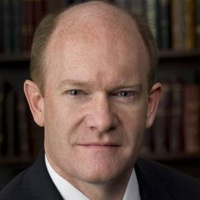
Christopher Coons
Senator
DE
Christopher Coons
Senator
DE
The NO FAKES Act of 2025 establishes exclusive property rights for individuals over the creation and use of their digital voice and visual likenesses (Digital Replicas). This federal law grants the right holder the authority to license or control the use of these replicas, both during the individual's life and for a set period after death. The Act outlines specific licensing rules, liability for unauthorized use in commerce, and safe harbor provisions for online services that comply with takedown notices based on digital fingerprinting.
This Act establishes standards for content provenance information and detection methods to protect the integrity of digital media against unauthorized synthetic and deepfaked content.

Maria Cantwell
Senator
WA
Maria Cantwell
Senator
WA
The Content Origin Protection and Integrity from Edited and Deepfaked Media Act of 2025 aims to combat the challenges posed by AI-generated and altered content. It establishes requirements for attaching and protecting digital labels (content provenance information) that identify the origin of media. The bill directs federal agencies to develop standards for content detection and mandates that sellers of AI creation tools facilitate this labeling. Enforcement will be handled by the FTC, state attorneys general, and private citizens.
This Act mandates that states receiving federal Medicaid funds must publicly report detailed information on all payments made to abortion providers, including the number and specifics of abortions performed.
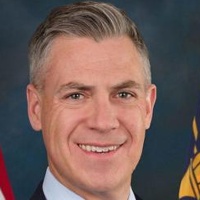
Jim Banks
Senator
IN
Jim Banks
Senator
IN
The Abortion Funding Awareness Act of 2025 requires states to report detailed information annually regarding any federal Medicaid payments made to abortion providers. These state reports must specify payment amounts, the number of abortions performed by the provider, and the gestational age and method used for each procedure. The Secretary of HHS will then compile these state submissions into a summary report for Congress and the public.
This act modifies tax rules for certain insurance companies by preventing debt from being treated as a capital asset and extending the carryover period for specific capital losses to ten years.
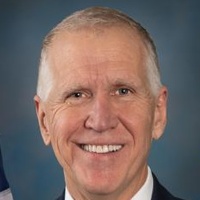
Thom Tillis
Senator
NC
Thom Tillis
Senator
NC
The Secure Family Futures Act of 2025 modifies tax rules for certain insurance companies regarding their investments and losses. Specifically, it prevents qualifying insurers from treating newly acquired debt instruments as capital assets for tax purposes. Additionally, the bill extends the carryover period for specific capital losses incurred by these companies to ten years. These changes apply only to tax years beginning after December 31, 2025.
The TASK Act directs the SEC to consider requiring public companies to disclose specific details about their supply chains related to forced labor in Xinjiang, transactions with restricted Chinese entities, and the presence and influence of Chinese Communist Party committees in their Chinese operations.
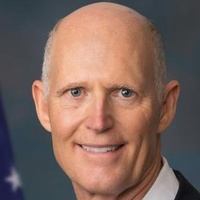
Rick Scott
Senator
FL
Rick Scott
Senator
FL
The Transaction and Sourcing Knowledge (TASK) Act directs the Securities and Exchange Commission (SEC) to consider new reporting requirements for publicly traded companies regarding environmental, social, and governance (ESG) issues. Specifically, it mandates the SEC to look into requiring disclosures related to supply chains connected to forced labor in Xinjiang, China, and transactions with U.S. government-restricted entities. Furthermore, the bill requires companies operating in China to report on the presence and involvement of any Chinese Communist Party (CCP) committees within their facilities.
The SAFE Act mandates that companies listing stock on U.S. exchanges must disclose financial support received from the Chinese government and details about their internal Chinese Communist Party (CCP) structure and leadership ties.
Rick Scott
Senator
FL
Rick Scott
Senator
FL
The Secure Americas Financial Exchanges Act (SAFE Act) mandates that stock exchanges require listed companies to disclose any financial support received from the People's Republic of China (PRC). Companies must also reveal details about internal Chinese Communist Party (CCP) structures and any leadership ties to the PRC government. These new transparency rules aim to inform investors about potential foreign influence on publicly traded entities.
This Act establishes a dedicated Department of Defense office to coordinate, lead, and report on U.S. quantum technology efforts to ensure national security dominance against global competitors.
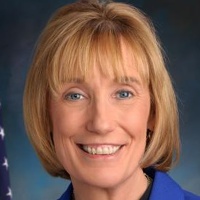
Margaret Hassan
Senator
NH
Margaret Hassan
Senator
NH
The Quantum National Security Coordination and Competition Act of 2025 establishes a dedicated office within the Department of Defense to lead and coordinate all quantum technology efforts related to national security. This office is tasked with advancing research, building expertise, and ensuring U.S. global competitiveness in quantum sensing, computing, and communications. Furthermore, the Act mandates regular, classified reports to Congress detailing U.S. capabilities versus those of adversarial nations like China, Russia, and Iran.
The STOP CCP Act of 2025 prohibits U.S. persons from investing in publicly traded securities of Chinese entities involved in defense or surveillance technology and expands the list of sanctioned military-linked companies while mandating the automatic application of all relevant sanctions against targeted entities.
Rick Scott
Senator
FL
Rick Scott
Senator
FL
The STOP CCP Act of 2025 prohibits U.S. persons from investing in publicly traded securities of specific Chinese entities involved in defense or surveillance technology. This legislation mandates the expansion of the Treasury Department's list of Chinese military-industrial complex companies and closes loopholes by automatically applying all relevant sanctions when a Chinese entity is targeted under any existing authority. The goal is to prevent U.S. capital from financing pernicious Chinese companies and policies.
This resolution honors the life, distinguished public service, and significant legislative contributions of the late former Louisiana Senator, John Bennett Johnston, Jr.

Bill Cassidy
Senator
LA
Bill Cassidy
Senator
LA
This resolution formally honors the life and extensive public service of the late Honorable John Bennett Johnston, Jr., former U.S. Senator for Louisiana. It details his career, highlighting his significant tenure on key Senate committees, particularly his leadership on energy policy. The resolution recognizes his legislative achievements benefiting Louisiana, including flood control and conservation efforts. Finally, the Senate adjourns immediately in his memory as a final tribute to his service.
This joint resolution expresses Congress's disapproval of the EPA's rule concerning California's Advanced Clean Cars II pollution control standards.

Shelley Capito
Senator
WV
Shelley Capito
Senator
WV
This joint resolution expresses Congress's disapproval of a specific Environmental Protection Agency (EPA) rule concerning California's "Advanced Clean Cars II" pollution control standards. By invoking the Congressional Review Act, Congress is effectively vetoing this EPA regulation. This action prevents the EPA's rule regarding California's vehicle emission standards from taking effect.
The Veterans Education and Technical Skills Opportunity Act of 2025 updates the requirements for independent study programs to qualify for VA educational assistance, mandating regular instructor interaction for eligibility starting August 1, 2025.
Thom Tillis
Senator
NC
Thom Tillis
Senator
NC
The Veterans Education and Technical Skills Opportunity Act of 2025 (VETS Opportunity Act of 2025) updates how independent study programs qualify for VA educational assistance. This legislation mandates that eligible programs must feature regular and meaningful communication between students and instructors after the course begins. This clarification applies to institutions already participating in federal student financial aid programs, with the changes taking effect for terms starting on or after August 1, 2025.
The DETERRENT Act mandates increased federal and institutional transparency regarding foreign gifts and contracts for colleges, bans certain contracts with "countries of concern," and establishes strict enforcement penalties for non-compliance.
Thom Tillis
Senator
NC
Thom Tillis
Senator
NC
The DETERRENT Act significantly tightens reporting requirements for colleges and universities regarding foreign gifts and contracts, mandating public disclosure databases and imposing strict new prohibitions on agreements with "foreign countries or entities of concern." It establishes severe financial penalties and potential ineligibility for federal aid for institutions that knowingly violate these transparency and compliance rules. The bill also requires institutions to implement internal policies and designate compliance officers to manage risks associated with foreign influence.
This bill authorizes the minting and sale of special commemorative gold and silver coins to mark the 25th anniversary of the September 11th attacks, with all surcharges benefiting the National September 11 Memorial and Museum.

Kirsten Gillibrand
Senator
NY
Kirsten Gillibrand
Senator
NY
This Act authorizes the minting and issuance of special commemorative gold and silver coins to mark the 25th anniversary of the September 11, 2001, terrorist attacks. The coins will honor the victims, first responders, and the National September 11 Memorial and Museum. All surcharges collected from the sale of these coins must be paid directly to the National September 11 Memorial and Museum to support its operations.
This act permanently exempts certain school bus drivers from the under-the-hood inspection portion of the skills test while requiring states to report on the use of this exemption for six years.

John Cornyn
Senator
TX
John Cornyn
Senator
TX
The Driving Forward Act permanently extends an existing exemption allowing certain school bus drivers to bypass the "under-the-hood" portion of their skills test. This change codifies the rules previously established in a 2024 Federal Register notice. States utilizing this exemption must still report annually on the number of drivers who qualify under these permanent terms for the next six years.
This bill reauthorizes the Project Safe Neighborhoods Grant Program through fiscal year 2030, updates eligible grant uses to include technology and overtime pay, and mandates annual transparency reports on fund expenditures and local crime statistics.
John Cornyn
Senator
TX
John Cornyn
Senator
TX
The Project Safe Neighborhoods Reauthorization Act of 2025 extends the crucial nationwide program that unites federal, state, and local partners to combat violent crime using community-focused strategies. This bill reauthorizes funding for the program through fiscal year 2030 and updates grant provisions to explicitly cover new personnel, overtime costs, and technology for crime reduction. Furthermore, it mandates annual transparency reports detailing fund usage, community outreach, and specific violent crime statistics for every participating district.
This Act mandates the Federal Trade Commission to study and report on the practices of pharmaceutical supply chain intermediaries, particularly Pharmacy Benefit Managers, to promote competition and transparency in drug pricing.
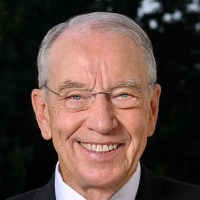
Charles Grassley
Senator
IA
Charles Grassley
Senator
IA
The Prescription Pricing for the People Act of 2025 directs the Federal Trade Commission (FTC) to conduct a comprehensive study of the pharmaceutical supply chain, focusing heavily on the practices of Pharmacy Benefit Managers (PBMs). This investigation will examine issues like pricing fairness, patient steering, data misuse, and formulary manipulation. The FTC must deliver a final report to Congress detailing its findings, planned enforcement actions, and legislative recommendations to increase transparency and competition in the drug market.
This act exempts specific, low-velocity, less-than-lethal projectile devices from certain federal restrictions under Title 18 of the U.S. Code.
Bill Hagerty
Senator
TN
Bill Hagerty
Senator
TN
The Innovate to De-Escalate Modernization Act exempts specific less-than-lethal projectile devices from certain federal restrictions under Title 18 of the U.S. Code. This exemption applies only to devices that cannot fire standard ammunition, are designed to minimize serious injury, and meet specific design criteria regarding ammunition feeding mechanisms. The bill also establishes a process for manufacturers to seek a ruling from the Attorney General on whether their device qualifies for this exemption.