Legislative Activity
Track Cliff's sponsored bills, co-sponsored legislation, and voting record
This Act prohibits the Federal Reserve from directly or indirectly issuing a Central Bank Digital Currency (CBDC) and bars the Fed from developing or using one for monetary policy without explicit Congressional authorization.
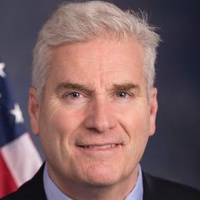
Tom Emmer
Representative
MN
Tom Emmer
Representative
MN
The Anti-CBDC Surveillance State Act strictly prohibits the Federal Reserve from directly or indirectly issuing a Central Bank Digital Currency (CBDC) to individuals. This legislation prevents the Fed from developing, testing, or implementing any digital currency that functions as a direct liability of the Federal Reserve. Furthermore, Congress asserts that any authority to create such a digital asset must explicitly come from Congress itself.
The SHIELD Act amends federal unemployment rules to prohibit benefits for individuals unemployed due to active participation in or direct stake in a labor dispute or strike.
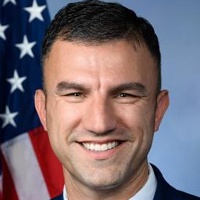
Rudy Yakym
Representative
IN
Rudy Yakym
Representative
IN
The Securing Help for Involuntary Employment Loss and Displacement Act (SHIELD Act) revises federal requirements for state unemployment programs regarding labor disputes. This bill mandates that states deny regular unemployment benefits to individuals unemployed due to a strike or labor dispute in which they actively participated or had a direct stake. The new federal conditions take effect in two years, though states may adopt them sooner.
This Act mandates that VA medical staff promptly certify the deaths of veterans who died from natural causes within 48 hours to expedite burial and survivor benefits.
Tom Emmer
Representative
MN
Tom Emmer
Representative
MN
The Veteran Burial Timeliness and Death Certificate Accountability Act addresses significant delays in obtaining death certificates for veterans who die from natural causes, often due to VA medical staff delays. This bill mandates that VA medical providers must certify a veteran's death within 48 hours or allow the local medical examiner to step in. Furthermore, the VA must annually report on its compliance with this new timely certification requirement.
The SAMS Act of 2025 codifies several existing Executive Orders related to critical minerals into permanent federal law.
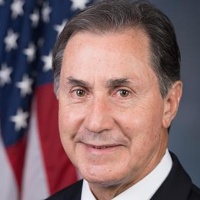
Gary Palmer
Representative
AL
Gary Palmer
Representative
AL
The SAMS Act of 2025 codifies several previous Executive Orders into permanent law, specifically focusing on policies related to critical minerals. This action elevates existing presidential directives concerning these vital resources to the full force and effect of statutory law. The bill ensures the long-term legal standing of established critical mineral supply chain strategies.
The PBM Reform Act of 2025 mandates sweeping changes to increase transparency, ensure fair pharmacy access in Medicare, and prohibit abusive spread pricing in Medicaid by holding Pharmacy Benefit Managers accountable for their financial dealings.
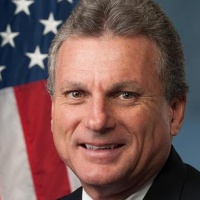
Earl Carter
Representative
GA
Earl Carter
Representative
GA
The Pharmacy Benefit Manager Reform Act of 2025 aims to increase transparency and accountability across the prescription drug supply chain. It mandates fairer pharmacy network access for Medicare beneficiaries and imposes strict new financial reporting and service fee requirements on Pharmacy Benefit Managers (PBMs) working with Medicare and private health plans. Furthermore, the bill establishes new federal mechanisms to accurately track drug acquisition costs in Medicaid and explicitly bans the practice of "spread pricing" in state Medicaid contracts.
This act modernizes the Fairness to Contact Lens Consumers Act by requiring online sellers to accept electronic prescription transfers, mandating encrypted email for health information, and updating required seller contact information.
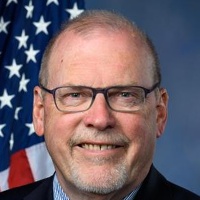
H. Griffith
Representative
VA
H. Griffith
Representative
VA
The Contact Lens Prescription Verification Modernization Act updates existing law to ensure consumers can easily obtain and use their contact lens prescriptions. This bill specifically requires online sellers to provide a HIPAA-compliant method for electronically receiving prescriptions and mandates encryption for any protected health information sent via email. Additionally, it updates seller record-keeping requirements to include customer email addresses.
The FIGHT Act of 2025 strengthens federal prohibitions against animal fighting, enhances enforcement mechanisms, and allows citizens to sue violators of animal fighting provisions.
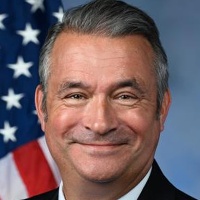
Don Bacon
Representative
NE
Don Bacon
Representative
NE
The FIGHT Act of 2025 significantly strengthens federal prohibitions against animal fighting ventures, specifically targeting the sponsorship, exhibition, and gambling associated with these events. This legislation clarifies the definition of a rooster for legal purposes and bans the interstate transport of roosters for fighting. Furthermore, it empowers private citizens to file lawsuits against violators, allowing for civil penalties and the potential seizure of property used to facilitate illegal animal fighting.
This bill formally rejects the Environmental Protection Agency's recently issued rule concerning California's heavy-duty vehicle and engine pollution control standards.
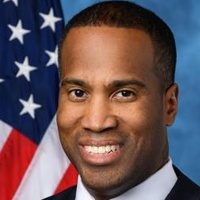
John James
Representative
MI
John James
Representative
MI
This resolution expresses the disapproval of Congress regarding a recent rule issued by the Environmental Protection Agency (EPA) concerning California's motor vehicle and engine pollution control standards. Specifically, it rejects the EPA's proposed regulations covering heavy-duty vehicle emissions, warranties, maintenance, and zero-emission vehicle provisions. By disapproving the rule under the Congressional Review Act, Congress effectively nullifies the EPA's action.
This joint resolution disapproves the EPA's rule allowing California to implement its Advanced Clean Cars II vehicle pollution control standards.
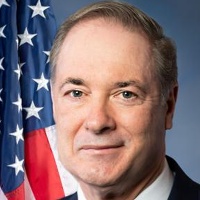
John Joyce
Representative
PA
John Joyce
Representative
PA
This joint resolution expresses Congressional disapproval of the Environmental Protection Agency's (EPA) rule regarding California's "Advanced Clean Cars II" vehicle pollution standards. By rejecting this rule, Congress is effectively canceling the EPA's decision to grant California a waiver allowing it to set stricter emission standards than federal law typically permits. Consequently, the approved California standards will not take effect.
This resolution seeks to disapprove and nullify the Environmental Protection Agency's rule regarding California's Low NOX vehicle and engine pollution control standards.
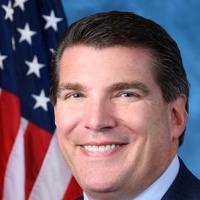
Jay Obernolte
Representative
CA
Jay Obernolte
Representative
CA
This joint resolution seeks to disapprove and nullify a specific rule issued by the Environmental Protection Agency (EPA) regarding California's stringent motor vehicle and engine pollution control standards, known as the "Omnibus Low NOX Regulation." By exercising disapproval under the Congressional Review Act, this measure prevents the EPA's decision on waiving federal preemption for these California standards from taking legal effect. If passed, the EPA's rule will be entirely canceled.
This bill disapproves the Department of Energy's submitted rule establishing new energy conservation standards for consumer gas-fired instantaneous water heaters.
Gary Palmer
Representative
AL
Gary Palmer
Representative
AL
This bill seeks to formally reject a recent rule submitted by the Department of Energy (DOE) concerning new energy conservation standards for consumer gas-fired instantaneous water heaters. By invoking congressional disapproval, the legislation immediately cancels the DOE's proposed efficiency standards. In essence, Congress is overriding the DOE's attempt to implement these specific new regulations for tankless gas water heaters.
This Act exempts discharges from the use of Forest Service-approved products for fire control and suppression from certain federal water pollution permit requirements.
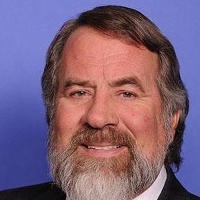
Doug LaMalfa
Representative
CA
Doug LaMalfa
Representative
CA
The Forest Protection and Wildland Firefighter Safety Act of 2025 exempts discharges resulting from the use of Forest Service-approved products for fire control and suppression from certain federal water pollution permit requirements. This change streamlines firefighting operations by removing unnecessary permitting hurdles for using approved suppression agents. The Act also includes technical updates to related environmental statutes.
This bill authorizes the Secretary of the Interior to acquire approximately 551.14 acres of land to expand the southern boundary of Mammoth Cave National Park.
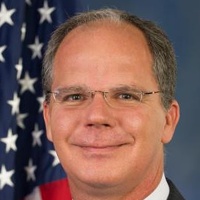
Brett Guthrie
Representative
KY
Brett Guthrie
Representative
KY
The Mammoth Cave National Park Boundary Adjustment Act of 2025 authorizes the Secretary of the Interior to acquire approximately 551.14 acres of land to expand the boundaries of Mammoth Cave National Park. This addition, detailed on a specific map, modifies the park's existing boundaries in Edmonson and Barren Counties, Kentucky.
The LOCOMOTIVES Act centralizes federal authority over emission standards for existing locomotives and engines, limiting the ability of states to impose their own regulations on this equipment.

John Moolenaar
Representative
MI
John Moolenaar
Representative
MI
The Lifting Overburdensome Commerce Obstructions and Motives (LOCOMOTIVES) Act clarifies and strengthens federal authority over emission standards for existing locomotives and engines. This legislation limits the ability of states to set their own pollution control standards for certain railroad equipment. Specifically, it expands federal preemption to cover more nonroad engines and locomotives engaged in commerce.
This Act establishes federal penalties for assaulting hospital personnel and creates a grant program to help medical facilities improve workforce safety.

Madeleine Dean
Representative
PA
Madeleine Dean
Representative
PA
The Save Healthcare Workers Act aims to protect hospital personnel by making assault against them a federal crime with severe penalties. It also establishes a new federal grant program to help hospitals implement crucial safety measures, such as violence prevention training and physical security upgrades. This legislation seeks to reduce workplace violence in healthcare settings across the nation.
This Act extends the required renewal periods for certain Medicaid home and community-based services waivers to provide greater stability for states administering these programs.

Michael Rulli
Representative
OH
Michael Rulli
Representative
OH
The Medicaid Empowerment Act of 2025 aims to provide greater stability for state-run home and community-based services (HCBS) programs. This legislation extends the required renewal periods for certain Medicaid waivers offering community care services. By allowing longer cycles between mandatory reviews, the Act offers states more consistency in administering these vital services.
This Act directs the SelectUSA program to coordinate with state economic development organizations to attract foreign direct investment for securing the domestic semiconductor supply chain.
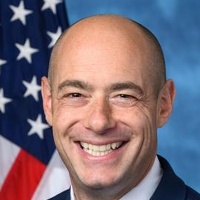
Greg Landsman
Representative
OH
Greg Landsman
Representative
OH
The Securing Semiconductor Supply Chains Act of 2025 directs the Commerce Department's SelectUSA program to focus on attracting foreign direct investment into domestic semiconductor manufacturing. This involves coordinating with state-level economic development groups to identify barriers and opportunities for boosting investment in the critical chip supply chain. The Act mandates a report detailing current and future strategies to secure this supply chain without authorizing new funds.
The Transportation Freedom Act incentivizes domestic auto manufacturing with tax breaks, repeals recent EPA emissions rules, eliminates state authority to set stricter emission standards, and mandates a feasibility-based process for setting future national fuel economy and greenhouse gas standards.
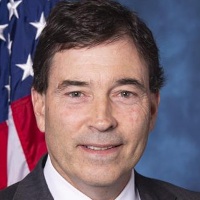
Troy Balderson
Representative
OH
Troy Balderson
Representative
OH
The Transportation Freedom Act seeks to bolster domestic auto manufacturing through significant tax incentives tied to high-wage American jobs and strong worker benefits. Simultaneously, the bill repeals recent EPA and NHTSA rules regarding multipollutant emissions and fuel economy standards for light, medium, and heavy-duty vehicles. Furthermore, it centralizes emission control by eliminating the authority of individual states to set standards stricter than the federal level. Finally, it mandates the establishment of new, feasibility-based fuel economy and greenhouse gas standards for future model years, explicitly prohibiting mandates for electric-only vehicle sales.
The Affordable Housing Credit Improvement Act of 2025 updates state allocation formulas, reforms tenant eligibility and credit determination rules, and enhances assistance for Native American and rural housing projects.
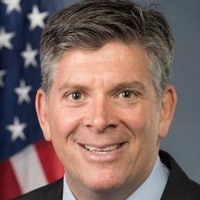
Darin LaHood
Representative
IL
Darin LaHood
Representative
IL
The Affordable Housing Credit Improvement Act of 2025 updates federal housing tax credit allocations to reflect current economic realities and boosts minimum state allotments. It reforms tenant eligibility rules to stabilize tenancy and enhance protections for vulnerable residents, including victims of abuse. The bill also provides disaster relief for property owners, increases incentives for housing the extremely low-income, and directs greater resources toward Native American and rural housing needs. Finally, it streamlines administrative processes and signals a future focus on data transparency and discouraging restrictive local zoning.
This bill amends the Antiquities Act to impose a short-term expiration date on national monument designations unless extended by Congress, and prohibits re-designation of the same land for 25 years if the initial designation expires or is rejected.
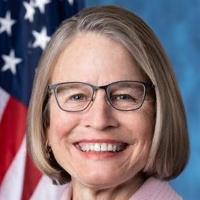
Mariannette Miller-Meeks
Representative
IA
Mariannette Miller-Meeks
Representative
IA
This bill, the Congressional Oversight of the Antiquities Act, amends existing law to impose strict time limits on national monument designations made under the Antiquities Act. Designations will automatically expire after six months or the end of the current Congressional session unless Congress passes new legislation to extend them. Furthermore, if a monument designation expires or is rejected by Congress, the same land cannot be designated again for 25 years.