Legislation
This bill mandates dedicated, funded resources for specialized 988 Suicide Prevention Lifeline services for LGBTQ+ youth.
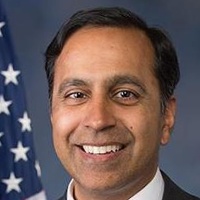
Raja Krishnamoorthi
Representative
IL
Raja Krishnamoorthi
Representative
IL
The **988 LGBTQ+ Youth Access Act of 2025** addresses the high rates of suicide risk among LGBTQ youth by strengthening specialized support through the national crisis hotline. This bill mandates that dedicated resources and services, such as a specific dialing option, must be maintained for LGBTQ individuals contacting 988. Furthermore, it requires that at least 9 percent of appropriated funds for the hotline be specifically reserved to ensure these specialized services for LGBTQ youth remain fully operational.
The Health Access Innovation Act of 2025 establishes a grant program to fund community and faith-based organizations working to improve health outcomes for underserved populations.

Kirsten Gillibrand
Senator
NY
Kirsten Gillibrand
Senator
NY
The Health Access Innovation Act of 2025 establishes the Health Equity Innovation Grant Program to fund community and faith-based organizations. These grants aim to improve health outcomes for underserved populations by covering direct care costs and addressing social determinants of health. Priority will be given to groups that have demonstrated success in underserved areas, particularly those that ran access programs during past public health emergencies. The program is authorized with specific funding levels through fiscal year 2030.
The Energizing Our Communities Act establishes a fund to return interest earned from major electric transmission project loans back to the local communities hosting that infrastructure for community and conservation use.
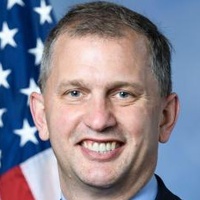
Sean Casten
Representative
IL
Sean Casten
Representative
IL
The Energizing Our Communities Act establishes the Community Economic Development Transmission Fund to return revenue to local communities hosting major new electric power transmission projects. This fund will be financed by interest collected from specific federal loans made for high-capacity transmission infrastructure. Host communities can use these payments for local services, infrastructure improvements, and dedicated conservation or recreation projects. The Secretary of Energy will manage the fund and establish a formula for distributing payments to eligible local governments and Tribes.
This Act amends the Fair Housing Act to prohibit discrimination in housing based on source of income, veteran status, or military status.
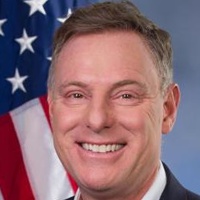
Scott Peters
Representative
CA
Scott Peters
Representative
CA
The Fair Housing Improvement Act of 2025 amends the Fair Housing Act to prohibit discrimination in housing based on source of income, veteran status, and military status. This expansion ensures that landlords cannot deny housing based on factors like the use of housing vouchers or military service. The Act also strengthens existing prohibitions against intimidation related to these newly protected statuses.
The Register America to Vote Act of 2025 mandates automatic voter registration for 18-year-olds and through state motor vehicle agencies, while establishing new federal standards for voter data security and providing grants to states for system upgrades.

Amy Klobuchar
Senator
MN
Amy Klobuchar
Senator
MN
The Register America to Vote Act of 2025 aims to modernize and secure voter registration nationwide by establishing automatic registration systems. This includes automatically registering citizens when they turn 18 and implementing opt-out registration through state motor vehicle agencies. The Act provides federal funding to states to upgrade technology and mandates new national security and privacy standards for handling voter data.
This Act mandates that states use an independent commission or the state's highest court to draw congressional districts after the 2030 census, preventing mid-decade redistricting except by court order.

Steve Cohen
Representative
TN
Steve Cohen
Representative
TN
The John Tanner and Jim Cooper Fairness and Independence in Redistricting Act mandates that states must use an independent, non-partisan commission to draw new congressional district maps following the 2030 census. This law prohibits mid-decade redistricting unless ordered by a court and provides federal funding to states that establish the required commission. The new rules ensure that map drawing is transparent, public, and adheres to strict constitutional criteria, taking effect after the 2030 census results are available.
This bill establishes a grant program to fund public colleges training medical students to provide primary health care in medically underserved communities.
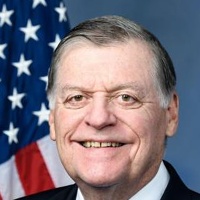
Tom Cole
Representative
OK
Tom Cole
Representative
OK
The Medical Student Education Authorization Act of 2025 establishes a new federal grant program to bolster primary healthcare in medically underserved communities. This funding, administered by HRSA, will support public medical colleges that train students committed to practicing in high-need areas like rural or Tribal regions. Grants will focus on developing community-based training, increasing faculty capacity, and providing direct student support to improve the primary care workforce pipeline.
This bill mandates that unspent federal agency funds be split, with most going to debt reduction, some rolled over for one year, and a small portion used for employee retention bonuses, while also limiting future budget requests.
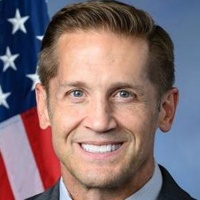
Rich McCormick
Representative
GA
Rich McCormick
Representative
GA
The Incentivize Savings Act mandates how federal agencies must handle unspent appropriations by dedicating the majority to debt reduction and allowing a portion for employee retention bonuses. This legislation also restricts future budget requests to only account for inflation unless the agency fully spends its prior allocation. Ultimately, the bill aims to encourage fiscal responsibility by linking unspent funds to debt reduction and limiting budget growth.
This bill extends the temporary enhanced premium tax credits for health insurance coverage for two additional years, through the 2027 tax year.

Lisa Murkowski
Senator
AK
Lisa Murkowski
Senator
AK
This bill extends the temporary enhanced premium tax credits designed to help individuals afford health insurance coverage under the Affordable Care Act. Specifically, it pushes back the expiration date for these increased subsidies by two years, maintaining them through the 2027 tax year. This ensures continued financial assistance for both general enrollees and higher earners who qualify for the credits.
The Stop CMV Act of 2025 establishes a framework for voluntary newborn screening for congenital Cytomegalovirus (CMV), provides federal funding for state implementation and data collection, and expands research efforts.
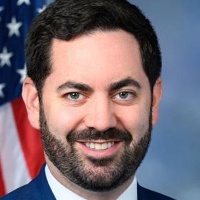
Michael Lawler
Representative
NY
Michael Lawler
Representative
NY
The Stop CMV Act of 2025 aims to establish a national framework for screening newborns for congenital Cytomegalovirus (CMV). This legislation authorizes federal funding for states to implement testing programs and improve data collection systems related to CMV. Furthermore, the bill mandates the expansion of research efforts through the NIH to improve CMV diagnostics, prevention, and treatment.
This bill establishes a six-year pilot program for selected hospitals to provide medically tailored, home-delivered meals and nutrition therapy to high-risk Medicare patients upon discharge to reduce hospital readmissions.
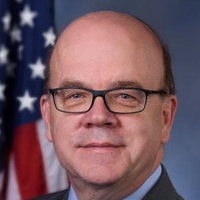
James McGovern
Representative
MA
James McGovern
Representative
MA
This bill establishes a six-year pilot program for hospitals to provide medically tailored, home-delivered meals and nutrition therapy to eligible Medicare patients upon discharge. The goal is to improve health outcomes and reduce hospital readmissions for individuals with diet-sensitive conditions who have difficulty with daily living activities. Participating hospitals will receive payment for these services, which must be provided at no out-of-pocket cost to the patient. The Secretary of Health and Human Services will evaluate the program's effectiveness using data collected from the participating sites.
This Act mandates that all states allow eligible citizens to register to vote at the polling place on Election Day for federal elections, with limited exceptions and transition timelines.
Amy Klobuchar
Senator
MN
Amy Klobuchar
Senator
MN
The Same Day Registration Act mandates that all states allow eligible citizens to register to vote or update their registration at the polling place on Election Day for any federal election. This ensures that individuals can register and cast their ballot simultaneously, provided the state does not already have a no-registration requirement. States must ensure registration forms are available at all polling locations, with full compliance generally required starting with the November 2026 general election.
This Act expands the National Health Service Corps to include medical laboratory personnel and establishes a new grant program to support their education and training.
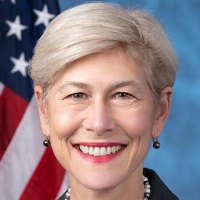
Deborah Ross
Representative
NC
Deborah Ross
Representative
NC
The Medical Laboratory Personnel Shortage Relief Act of 2025 aims to address critical shortages in the medical laboratory workforce. This bill expands eligibility for National Health Service Corps programs to include medical laboratory personnel, offering loan repayment incentives for service in designated shortage areas. Additionally, it establishes a new grant program to support and expand accredited education and training for laboratory professionals.
The FAMILY Act establishes a federal paid family and medical leave insurance program administered by the Social Security Administration to provide wage replacement benefits for qualified caregiving.
Kirsten Gillibrand
Senator
NY
Kirsten Gillibrand
Senator
NY
The FAMILY Act establishes the Family and Medical Insurance Leave program, creating a new office within the Social Security Administration to manage paid benefits for qualified caregiving and serious health conditions. This law outlines eligibility requirements, a tiered formula for calculating monthly benefit payments, and protections against employer retaliation for taking leave. The Act also provides funding mechanisms for states that already have similar paid leave programs in place.
The Patients Over Profit Act prohibits common ownership between Medicare-related health insurance issuers and certain healthcare providers, requiring divestiture and imposing penalties for violations.
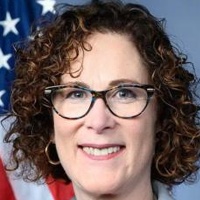
Valerie Hoyle
Representative
OR
Valerie Hoyle
Representative
OR
The Patients Over Profit Act (POP Act) prohibits common ownership between entities that run Medicare-related health insurance plans and certain healthcare providers. This aims to prevent conflicts of interest by separating insurance and provider control within the Medicare system. Violators will be required to divest one of their holdings within a set timeframe. Enforcement actions can result in the disgorgement of ill-gotten gains, which will be directed toward community healthcare needs.
The SPACEPORT Act updates federal grant rules to modernize and expand eligibility, funding criteria, and reporting requirements for U.S. space launch infrastructure projects.
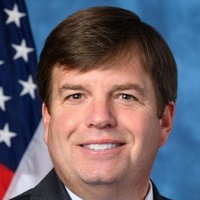
Dale Strong
Representative
AL
Dale Strong
Representative
AL
The SPACEPORT Act updates federal grant programs to modernize and improve U.S. space launch facilities. It broadens eligibility for grants and requires the evaluation of projects based on civil, national security, and commercial space transportation needs. The bill also mandates comprehensive reporting to Congress on future transportation demands and funding strategies. Finally, it authorizes up to $10 million annually for these infrastructure grants.
This bill significantly increases federal funding for state and local wetlands protection programs and raises the authorization cap for state water pollution control management assistance through 2030.
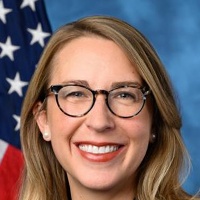
Hillary Scholten
Representative
MI
Hillary Scholten
Representative
MI
The Federal-State Partnership for Clean Water Act of 2025 significantly increases federal funding authorizations to support state and local efforts in water quality management. This bill boosts dedicated funding for wetlands protection and restoration programs through 2030, guaranteeing a minimum of \$100 million annually for state and local initiatives. Additionally, it authorizes \$500 million annually through 2030 to assist states in managing their core water pollution control programs.
The American Tech Workforce Act of 2025 terminates the OPT program, raises the minimum H-1B salary to $150,000 initially, and prioritizes higher-paying applications to protect American jobs.
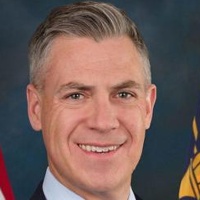
Jim Banks
Senator
IN
Jim Banks
Senator
IN
The American Tech Workforce Act of 2025 aims to reform the H-1B visa program by raising the minimum required salary to $150,000 (adjusted for inflation) and imposing stricter rules on third-party worksites. This legislation also terminates the Optional Practical Training (OPT) program, immediately ending work authorization for F-1 students upon course completion. The overall goal is to prioritize higher-paying jobs and discourage the use of foreign labor to replace American workers.
This Act establishes a temporary, phased-out advanced manufacturing production tax credit for components used in fusion energy systems.
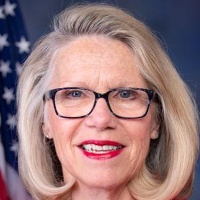
Carol Miller
Representative
WV
Carol Miller
Representative
WV
The Fusion Advanced Manufacturing Parity Act amends the existing advanced manufacturing production credit to specifically include components used for fusion energy. This provides a temporary 25% tax credit on the sale price of qualifying fusion energy components, beginning after 2025. The credit is scheduled to phase out completely by the end of 2034. The bill also expands the list of eligible materials qualifying for the broader advanced manufacturing credit.
This bill establishes a tax credit for small businesses to cover 70% of the cost of installing diaper changing stations and dispensers in their public restrooms.

Robert Menendez
Representative
NJ
Robert Menendez
Representative
NJ
This bill establishes the "Diaper Changing Station Restroom Credit" to incentivize eligible small businesses to install family-friendly restrooms. The credit covers 70% of qualified expenses, up to a limit, for installing diaper changing stations and dispensers in both men's and women's restrooms at a business location. Eligibility is based on gross receipts or employee count, and the provisions apply to tax years beginning after December 31, 2025.