Legislation
This act establishes a new, evidence-based Formulary for the Department of Veterans Affairs to manage and standardize the provision of prosthetic and rehabilitative items and services to veterans.

Jerry Moran
Senator
KS
Jerry Moran
Senator
KS
The Veterans Prosthetics Advancement and Reform Act mandates the Department of Veterans Affairs (VA) to establish a comprehensive, evidence-based Formulary for all prosthetic and rehabilitative items and services. This new system requires public input during development and ensures all listed items are available at every VA facility. Furthermore, the Act establishes clear processes for veterans to be informed of their benefits and to appeal denials, while also creating a pathway for clinicians to prescribe medically necessary items not currently on the official list.
This resolution designates the week beginning October 12, 2025, as National Wildlife Refuge Week to recognize the critical conservation, economic, and recreational value of the National Wildlife Refuge System.

Christopher Coons
Senator
DE
Christopher Coons
Senator
DE
This resolution officially designates the week beginning October 12, 2025, as "National Wildlife Refuge Week." It recognizes the critical role of the National Wildlife Refuge System in conserving over 850 million acres of vital habitat for threatened and endangered species. The resolution also highlights the refuges' significant contributions to local economies, public recreation, and community access to nature. Ultimately, it reaffirms Congress's commitment to supporting the conservation mission of the U.S. Fish and Wildlife Service.
The TAAP Act reauthorizes and expands the Transboundary Aquifer Assessment Program to include Arizona, updates its annual funding authorization through 2033, and modifies its expiration date.
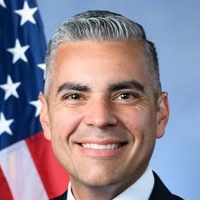
Juan Ciscomani
Representative
AZ
Juan Ciscomani
Representative
AZ
The Transboundary Aquifer Assessment Program Act (TAAP Act) reauthorizes and updates the existing program for assessing shared underground water resources between the U.S. and Mexico. This update officially expands the program's scope to include Arizona alongside Texas and New Mexico. Furthermore, the bill authorizes $1.5 million annually for the program from fiscal years 2026 through 2033.
This Act mandates federal health programs like Medicare and Medicaid to cover medically necessary specialized foods and formulas prescribed for managing severe digestive or inherited metabolic disorders.
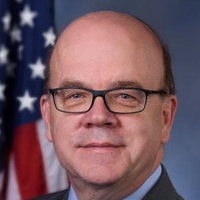
James McGovern
Representative
MA
James McGovern
Representative
MA
The Medical Foods and Formulas Access Act of 2025 mandates federal health programs, including Medicare and Medicaid, to cover medically necessary specialized foods and formulas prescribed for managing severe digestive or inherited metabolic disorders. This ensures patients with conditions like urea cycle disorders or short bowel syndrome receive essential, prescribed nutrition when standard food is insufficient. The bill aims to standardize access to these life-sustaining treatments across federal and state health plans.
This bill allows federal contractors and affected government employees to make tax-advantaged retirement plan withdrawals during a government shutdown, with provisions for repayment within three years.
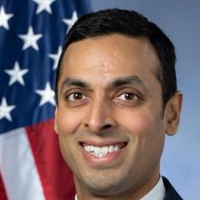
Suhas Subramanyam
Representative
VA
Suhas Subramanyam
Representative
VA
The Emergency Relief for Federal Contractors Act of 2025 allows individuals affected by a federal appropriations lapse to make tax-favored withdrawals of up to \$30,000 from their retirement plans without incurring early withdrawal penalties. These distributions can be repaid within three years and the taxable income can be spread over three years. This relief specifically targets furloughed federal contractors, grantee employees, and certain D.C. government workers impacted by shutdowns lasting two weeks or more.
This Act suspends 2025 federal farm payment limitations and allows producers to receive an advance partial payment for their 2025 covered commodities.
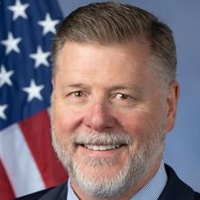
Eric Crawford
Representative
AR
Eric Crawford
Representative
AR
The Bridge the Gap for Rural Communities Act temporarily suspends federal payment limitations for the 2025 crop year. It also establishes an option for eligible producers to receive an advance partial payment of up to 50% of their projected 2025 covered commodity payments by the end of that year. This measure aims to provide immediate financial support to rural agricultural producers.
This bill increases the minimum monthly Personal Needs Allowance for institutionalized individuals and couples under Medicaid and ties future increases to Social Security cost-of-living adjustments.
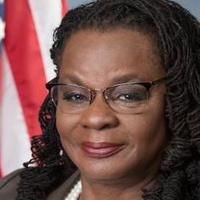
Gwen Moore
Representative
WI
Gwen Moore
Representative
WI
The Personal Needs Allowance Modernization Act, or PNA Modernization Act, increases the minimum monthly allowance Medicaid recipients in long-term care facilities can keep for personal needs. This bill raises the minimum allowance from $\$30$ to $\$60$. Furthermore, it mandates that the allowance amounts will automatically increase in the future, tied directly to cost-of-living adjustments made to Social Security benefits after November 2025.
This Act establishes strict evidence requirements for states to remove registered voters from the rolls for federal elections and mandates timely notification to those affected.
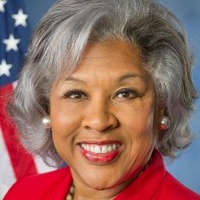
Joyce Beatty
Representative
OH
Joyce Beatty
Representative
OH
The Voter Purge Protection Act establishes strict new evidence requirements for states before they can remove registered voters from the rolls for federal elections. States must have objective proof that a voter is ineligible and cannot remove someone solely for not voting or failing to respond to a notice unless it was returned as undeliverable. If a voter is removed, the state must notify them within 48 hours with instructions on how to re-register.
This bill authorizes the Federal Government to reimburse states for using their own funds to maintain WIC program operations during a lapse in federal appropriations.
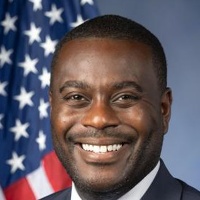
Gabe Amo
Representative
RI
Gabe Amo
Representative
RI
This bill ensures that states are reimbursed by the Federal Government for any state funds they use to maintain essential operations of the Special Supplemental Nutrition Program for Women, Infants, and Children (WIC) during a lapse in federal appropriations. It provides a mechanism for the Federal Government to pay back states that cover WIC costs during a government shutdown. This protects state budgets while keeping vital nutrition assistance running.
This bill prohibits federal funding for local educational agencies that mandate COVID-19 vaccines for students.
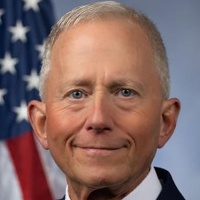
Jefferson Van Drew
Representative
NJ
Jefferson Van Drew
Representative
NJ
This bill prohibits the provision of federal funds to any local educational agency that imposes or enforces a COVID-19 vaccine mandate on students attending its public elementary or secondary schools. Essentially, local school districts that require student COVID-19 vaccination for enrollment will lose their federal funding.
This Act temporarily halts certain legal and financial actions against federal employees and their contractors during a government shutdown to protect their civil rights and financial stability.
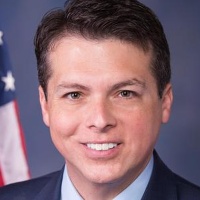
Brendan Boyle
Representative
PA
Brendan Boyle
Representative
PA
The Federal Employees Civil Relief Act aims to protect federal employees and contractors from negative civil actions during a government shutdown. It temporarily pauses various legal and administrative proceedings, including evictions, foreclosures, and debt collections, when a worker is furloughed or working without pay. The bill also grants federal workers the ability to defer income tax payments without penalty and prevents negative credit reporting based on seeking relief under this Act.
This bill requires federal financial regulators to create and quickly disseminate guidance encouraging lenders to offer flexible, fair accommodations to consumers and businesses impacted by a government shutdown.
Suhas Subramanyam
Representative
VA
Suhas Subramanyam
Representative
VA
The Shutdown Guidance for Financial Institutions Act requires federal financial regulators to create and issue guidance for banks and lenders on how to support customers and businesses affected by a government shutdown. This guidance must encourage flexible loan adjustments and prevent unfair negative credit reporting for those experiencing income loss due to the lapse in funding. Regulators must also issue rapid alerts when a shutdown occurs and report on the effectiveness of the guidance afterward.
The STOP HATE Act of 2025 mandates that large social media companies publicly detail their policies against terrorist content and report their enforcement actions against such content to the Attorney General three times annually.
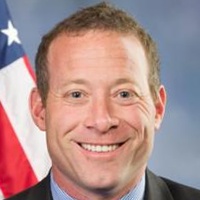
Josh Gottheimer
Representative
NJ
Josh Gottheimer
Representative
NJ
The STOP HATE Act of 2025 mandates that large social media companies publicly detail their policies for handling terrorist content and significantly increase transparency regarding enforcement. Covered platforms must report detailed, triannual data on content flagging, removal, and user appeals to the Attorney General. This data will then be compiled into a public database, with significant civil penalties imposed for non-compliance.
This act suspends the collection of federal income tax on wages during any period of a government shutdown and exempts back pay for furloughed employees from federal income tax.
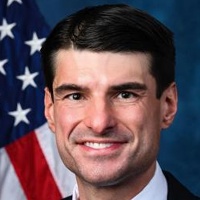
Robert Bresnahan
Representative
PA
Robert Bresnahan
Representative
PA
The No Taxation Without Operation Act suspends the collection of federal income taxes on wages for all citizens during any period of a government shutdown. Furthermore, furloughed federal employees will not pay income tax on any back pay received for the shutdown period. The Treasury Department is required to issue guidance to ensure employers correctly implement these tax suspension rules.
This Act establishes the Marine Energy Acceleration Fund to invest one billion dollars in demonstration projects, research, site assessment, and workforce development to advance ocean wave, tidal, and current energy technologies.
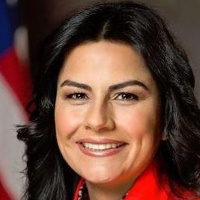
Nanette Barragán
Representative
CA
Nanette Barragán
Representative
CA
The Marine Energy Technologies Acceleration Act establishes the Marine Energy Acceleration Fund to boost power generation from ocean waves, tides, and currents. This legislation directs significant funding toward demonstration projects that connect to local power grids and supports research and development to improve technology efficiency and lower costs. Furthermore, the bill mandates efforts to assess promising energy sites, streamline the permitting process, and develop a skilled workforce for the emerging marine energy industry.
The PAW Act of 2025 extends the period an individual can be classified as a surviving spouse for tax purposes from two to five taxable years following the death of their spouse.
Jefferson Van Drew
Representative
NJ
Jefferson Van Drew
Representative
NJ
The PAW Act of 2025, or Protect American Widows Act, amends the Internal Revenue Code to expand the definition of "surviving spouse" for tax purposes. This legislation removes the previous two-year limit, allowing individuals to qualify as a surviving spouse for up to five taxable years following the death of their spouse. This change aims to provide extended tax benefits to surviving spouses starting with tax years after December 31, 2024.
This bill mandates a reduction in Congressional pay for days a government shutdown occurs, with specific rules applying to the One Hundred Nineteenth Congress.
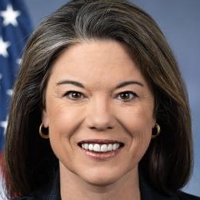
Angie Craig
Representative
MN
Angie Craig
Representative
MN
The No Pay for Disarray Act mandates a reduction in salary for Members of Congress if a government shutdown occurs. This pay cut equals one day's salary for each day the shutdown is in effect, though this penalty is delayed until after the November 2026 federal elections. A special, temporary withholding and escrow rule applies specifically to the One Hundred Nineteenth Congress, requiring pay to be returned at the end of that session. A government shutdown is defined as any period where a federal agency ceases operations due to a failure to pass appropriations.
This Act eliminates the coinsurance requirement for certain colorectal cancer screening tests covered under Medicare, ensuring full coverage for patients.
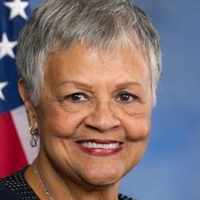
Bonnie Watson Coleman
Representative
NJ
Bonnie Watson Coleman
Representative
NJ
The Colorectal Cancer Payment Fairness Act eliminates the coinsurance requirement for certain colorectal cancer screening tests covered under Medicare. This legislation ensures that Medicare patients will pay 100% of the cost for these vital screenings starting in 2026. The goal is to remove financial barriers to early detection of colorectal cancer.
The Protecting America’s Roads Act tightens Commercial Driver's License requirements by mandating proof of citizenship or lawful presence, ending foreign CDL reciprocity, and enhancing immigration enforcement cooperation regarding commercial vehicle operators.
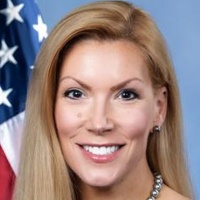
Beth Van Duyne
Representative
TX
Beth Van Duyne
Representative
TX
The Protecting America’s Roads Act establishes stricter requirements for obtaining and maintaining a Commercial Driver's License (CDL), mandating proof of U.S. citizenship or lawful presence for all applicants. This legislation also requires states to verify non-citizen status through the SAVE system and limits the duration of licenses issued to non-citizens. Furthermore, the Act terminates reciprocity agreements that recognize foreign commercial driver's licenses for operation within the U.S.
The LOAN Act significantly expands Pell Grants, eliminates loan fees, restructures repayment and forgiveness for federal loans, stops interest capitalization, and ties future federal loan interest rates to Treasury yields while creating refinancing options.
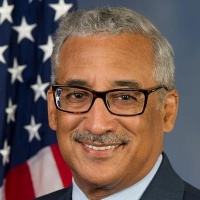
Robert Scott
Representative
VA
Robert Scott
Representative
VA
The LOAN Act significantly overhauls federal student aid by dramatically expanding Pell Grants, making higher education more accessible through increased funding and eligibility pathways. It also restructures federal student loans by eliminating origination fees, introducing new income-driven repayment plans, and stopping interest capitalization to reduce borrower debt. Furthermore, the bill establishes new fixed interest rate formulas for future loans and creates refinancing options for both existing federal and private student loans. Overall, the legislation aims to lower the cost of college and ease the burden of repayment for millions of borrowers.