Legislation
This act mandates an annual joint hearing where the Comptroller General presents an objective analysis of the federal government's financial audit findings to the Budget Committees.
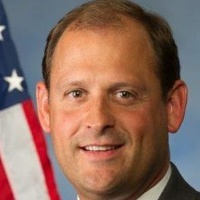
Garland Barr
Representative
KY
Garland Barr
Representative
KY
The Fiscal State of the Nation Act mandates an annual joint hearing where the Comptroller General presents the findings of the federal government's financial audit to the Budget Committees. This presentation must objectively analyze the nation's financial position and sustainability measures based on the Treasury Secretary's report. The hearing ensures public review of the government's fiscal health, open to all members of Congress.
This act mandates standardized, clear financial aid offer formats for colleges receiving federal funds starting in 2029 to improve student understanding of costs and aid packages.

Lisa McClain
Representative
MI
Lisa McClain
Representative
MI
The College Financial Aid Clarity Act of 2025 mandates that colleges standardize how they present financial aid offers to students starting in 2029. This new federal requirement establishes a uniform "Financial Aid Offer" format, ensuring clear, consistent language and specific disclosures about costs, loans, and net price. The goal is to make comparing financial aid packages simpler and more transparent for students and families.
This bill proposes a constitutional amendment requiring a two-thirds vote in both Houses of Congress for the admission of new states and restricts the formation of new states from existing ones.
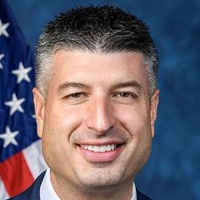
Tom Barrett
Representative
MI
Tom Barrett
Representative
MI
This proposed constitutional amendment would significantly raise the bar for admitting new states to the Union, requiring a two-thirds majority vote in both the House and the Senate. It also establishes stricter rules regarding the formation of new states from existing ones or through the combination of multiple states. The amendment is contingent upon ratification by three-fourths of the states within seven years.
This resolution honors Cristina M. Rodríguez for her historic appointment as the first Latina dean of Yale Law School.
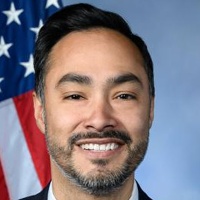
Joaquin Castro
Representative
TX
Joaquin Castro
Representative
TX
This resolution formally recognizes and honors Cristina M. Rodríguez on her historic appointment as the Dean of Yale Law School. It celebrates her distinguished career, academic achievements, and her significance as the first Latina to lead the institution. The resolution further encourages all legal educators to follow her example in mentoring students and upholding the rule of law.
This act amends Medicare Part B to cover pharmacist-provided HIV prevention services, including PrEP and PEP management, starting January 1, 2027.
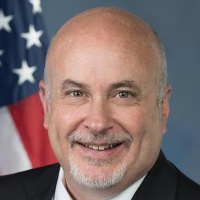
Mark Pocan
Representative
WI
Mark Pocan
Representative
WI
The PrEP Access Act aims to expand access to HIV prevention by amending Medicare Part B to cover HIV prevention services, such as PrEP and PEP management, when provided by pharmacists. This coverage will take effect on January 1, 2027. The bill also establishes specific payment rates and prohibits pharmacists from balance billing Medicare beneficiaries for these services.
This bill mandates enhanced transparency for college costs and financial aid through detailed updates to the College Scorecard and the creation of a Universal Net Price Calculator.
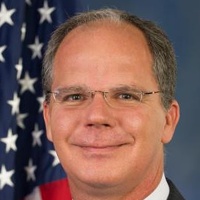
Brett Guthrie
Representative
KY
Brett Guthrie
Representative
KY
The Student Financial Clarity Act of 2025 aims to significantly increase transparency in college costs for students and families. It mandates major enhancements to the College Scorecard website with detailed, disaggregated data on costs, aid, and outcomes for every program of study. The bill also establishes a Universal Net Price Calculator to provide personalized, comparable cost estimates across institutions. These changes will require colleges to report costs based on specific programs rather than a single institutional average, with an effective date of July 1, 2027.
This bill reinstates the rule limiting the deduction of gambling losses to the amount of gambling gains for taxable years beginning after December 31, 2025.
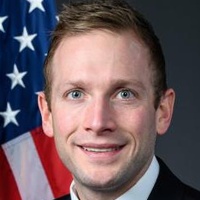
Max Miller
Representative
OH
Max Miller
Representative
OH
The FULL HOUSE Act aims to reinstate a specific rule for deducting gambling losses under the Internal Revenue Code. This change limits the deduction of wagering losses to the exact amount of a taxpayer's gambling winnings, preventing deductions for net losses. This provision is set to take effect for taxable years beginning after December 31, 2025.
This bill establishes a temporary authority for the Bureau of Industry and Security (BIS) to hire up to 25 highly qualified external experts for five years to fill critical national security expertise gaps.
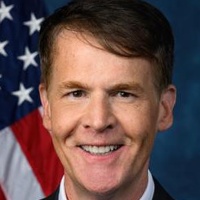
Jefferson Shreve
Representative
IN
Jefferson Shreve
Representative
IN
The BIS STRENGTH Act establishes a temporary, five-year authority for the Bureau of Industry and Security (BIS) to hire up to 25 highly qualified external experts to fill critical, hard-to-fill expertise gaps. This allows BIS to bypass standard civil service hiring rules to quickly secure specialized talent needed for national security and technology handling missions. The appointments are limited in duration, subject to a high pay cap, and require regular reporting to Congress on their impact.
This act excludes portable fuel containers, fuels, and certain vehicles from the definition of "consumer or commercial product" under the Clean Air Act.
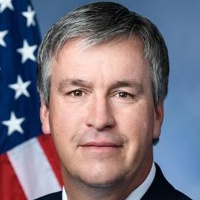
Barry Moore
Representative
AL
Barry Moore
Representative
AL
The Freedom to Fuel Act amends the Clean Air Act to exclude portable fuel containers from the definition of "consumer or commercial product" for regulatory purposes. This action specifically exempts these containers, along with regulated fuels and vehicles, from certain federal regulations.
This bill explicitly prohibits discrimination based on sex, sexual orientation, and gender identity in all places of public accommodation.
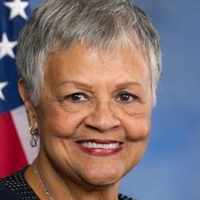
Bonnie Watson Coleman
Representative
NJ
Bonnie Watson Coleman
Representative
NJ
The Customer Non-Discrimination Act amends the Civil Rights Act of 1964 to explicitly prohibit discrimination in public accommodations based on sex, sexual orientation, and gender identity. This expansion covers a wide range of establishments, including retailers, service providers, and transportation services. The bill also provides clear definitions for these protected characteristics and clarifies that existing federal sex discrimination laws already cover these areas.
This act mandates that all large data centers must generate 100% of their annual electricity consumption on-site, with increasing requirements for clean energy sources starting in 2035.
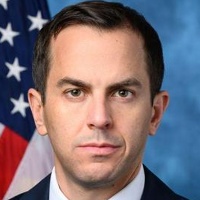
Robert Menendez
Representative
NJ
Robert Menendez
Representative
NJ
The **Preventing Rate Inflation in Consumer Energy (PRICE) Act** mandates that all large data centers in the U.S. must generate 100% of the electricity they consume annually. This requirement includes escalating clean energy benchmarks, demanding 75% clean energy generation by 2035 and 100% by 2040. Non-compliance will result in significant daily civil penalties.
This act significantly increases both criminal and civil penalties for employers who violate child labor laws.
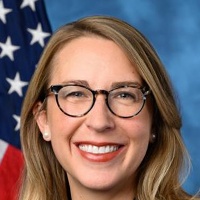
Hillary Scholten
Representative
MI
Hillary Scholten
Representative
MI
The Justice for Exploited Children Act significantly strengthens penalties for child labor violations under the Fair Labor Standards Act. This legislation introduces harsher criminal penalties, including substantial fines and imprisonment, for willful or repeated offenses. It also dramatically increases the civil monetary penalties for all child labor violations, especially those resulting in serious injury or death to a minor employee.
This act removes limitations on casualty loss deductions and provides special tax relief, including penalty-free retirement withdrawals, for victims of theft involving fraud.
Max Miller
Representative
OH
Max Miller
Representative
OH
The Tax Relief for Fraud Victims Act aims to provide greater financial relief to individuals who suffer theft losses due to fraud. This bill repeals current limitations on deducting personal casualty losses and establishes special rules for fraud-related theft, allowing taxpayers to claim losses in the year they occur. Furthermore, it permits penalty-free early withdrawals from retirement accounts to cover these specific losses.
This bill excludes certain cost-of-living adjustments and supplementary Social Security payments from being counted as income when determining SNAP benefit eligibility.
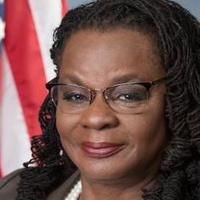
Gwen Moore
Representative
WI
Gwen Moore
Representative
WI
The COLAs Don’t Count Act of 2026 aims to protect SNAP benefits by excluding certain cost-of-living adjustments (COLAs) from Social Security and other federal benefits when calculating eligibility. This ensures that automatic annual income increases do not cause households to lose their food assistance. The legislation also excludes specific supplementary payments from the income calculation.
This Act establishes a strategy for expanding Trade Transparency Units to enhance international data sharing and combat global money laundering.
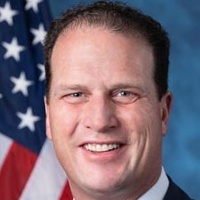
August Pfluger
Representative
TX
August Pfluger
Representative
TX
This act establishes a strategy to expand the use of Trade Transparency Units (TTUs) to combat international money laundering. It mandates the submission of a plan to Congress detailing how information sharing between U.S. agencies and foreign customs counterparts through TTUs will be improved. The legislation also requires an independent assessment of this strategy.
This act prohibits federal officials and employees from trading prediction market contracts while possessing material nonpublic government information.
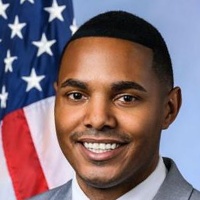
Ritchie Torres
Representative
NY
Ritchie Torres
Representative
NY
The Public Integrity in Financial Prediction Markets Act of 2026 prohibits federal officials and employees from trading in prediction market contracts while possessing material, nonpublic government information. This ban specifically targets transactions related to government policy, actions, or political outcomes. The goal is to prevent insider trading within these emerging financial markets by those with privileged access to government knowledge.
This bill mandates regular federal reporting on the air quality, water usage, and electricity consumption impacts of data centers across the United States.
Robert Menendez
Representative
NJ
Robert Menendez
Representative
NJ
The Data Center Transparency Act establishes new federal reporting requirements to monitor the environmental and energy impacts of data centers across the United States. This legislation mandates regular reports from the EPA detailing data center water consumption, reuse, and pollution discharge, as well as reports from the EIA on total electricity consumption broken down by state. These measures aim to provide transparency regarding how data centers affect local air quality, water resources, and household energy costs.
The COURSE Credit Act mandates that the Department of Education collect and report data, and requires colleges to publish detailed information regarding their policies for awarding academic credit for Advanced Placement (AP) and International Baccalaureate (IB) exam scores.
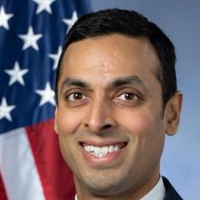
Suhas Subramanyam
Representative
VA
Suhas Subramanyam
Representative
VA
The COURSE Credit Act mandates that the Department of Education collect and report data on how colleges award credit for Advanced Placement (AP) and International Baccalaureate (IB) exams on the College Scorecard website. Furthermore, the bill requires participating colleges and universities to publicly post detailed information about their specific AP and IB credit policies on their websites. This aims to increase transparency regarding how these standardized exam scores translate into college credit.
This act makes fraud a deportable offense for non-citizens, mandates detention for those convicted of certain crimes including fraud, and establishes automatic denaturalization for naturalized citizens convicted of specified serious offenses.
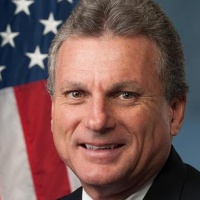
Earl Carter
Representative
GA
Earl Carter
Representative
GA
The Fraud Accountability Act makes fraud a deportable offense for non-citizens, regardless of the loss threshold typically associated with aggravated felonies. This legislation also expands mandatory detention for non-citizens convicted of certain crimes, including fraud. Furthermore, it establishes a process for the automatic revocation of citizenship for naturalized citizens convicted of specific criminal offenses.
This act makes fraud a deportable offense, mandates detention for non-citizens convicted of fraud, and establishes automatic denaturalization for naturalized citizens convicted of certain crimes.

Marsha Blackburn
Senator
TN
Marsha Blackburn
Senator
TN
The Fraud Accountability Act makes fraud a deportable offense for non-citizens, regardless of the loss threshold. This legislation also mandates detention for non-citizens convicted of these fraud crimes. Furthermore, it establishes a process for the automatic revocation of citizenship for naturalized citizens convicted of certain serious crimes, including fraud.