Legislation
This bill allows medical device manufacturers to provide required labeling solely through electronic means, provided they ensure user accessibility and the option for paper copies upon request.
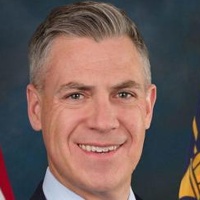
Jim Banks
Senator
IN
Jim Banks
Senator
IN
The Medical Device Electronic Labeling Act amends federal law to allow medical device manufacturers to provide required labeling entirely through electronic means, provided they ensure user access and offer paper copies upon request. This legislation aims to modernize labeling requirements while maintaining safety and effectiveness standards. The Secretary of Health and Human Services retains authority to add requirements or grant exceptions to these electronic labeling conditions. Furthermore, the bill mandates the FDA to seek public feedback on optimizing electronic labeling for professional-use medical devices.
This Act permanently bans former Members and elected officers of Congress from ever lobbying Congress after leaving office.
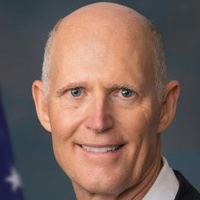
Rick Scott
Senator
FL
Rick Scott
Senator
FL
The Banning Lobbying And Safeguarding Trust Act (BLAST Act) permanently prohibits former Members of Congress and certain elected officers from ever lobbying Congress after leaving office. This measure amends federal law to make it a crime for these former officials to attempt to influence congressional action on behalf of others. The Act also automatically classifies former Members engaged in lobbying activities as registered lobbyists.
This act redefines "public interest" for LNG export authorizations to prioritize domestic natural gas development, supply, economic interests, and national security.
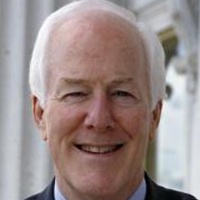
John Cornyn
Senator
TX
John Cornyn
Senator
TX
The LNG Export Security Act amends the Natural Gas Act to redefine "public interest" for LNG export applications. This new definition mandates that national security, domestic economic interests, and the development of U.S. natural gas supply and facilities must be considered. This ensures that export decisions prioritize domestic needs and security.
This bill mandates the addition of a voluntary question to a major federal survey to better identify and collect data on individuals providing unpaid care to both children and older adults or disabled adults.

Andy Kim
Senator
NJ
Andy Kim
Senator
NJ
This bill mandates the collection of new data to identify Americans who provide unpaid care to both children and older adults. The Secretary of Commerce must add a specific question to at least one major national survey within three years to capture these "multigenerational caregivers." This improved data collection aims to better inform federal policy regarding caregiving, the workforce, and health outcomes.
This bill establishes a 30% tax credit for investments in qualifying water reuse projects, including industrial recycling systems and municipal water recycling expansions.
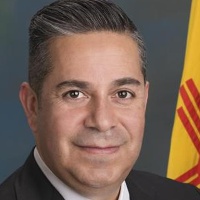
Ben Luján
Senator
NM
Ben Luján
Senator
NM
The Advancing Water Reuse Act establishes a new 30% investment tax credit for taxpayers who invest in qualifying water reuse projects. This credit incentivizes the installation or expansion of systems that recycle water for industrial, manufacturing, data center, food processing, or municipal use. The provision applies to projects placed in service within 10 years of enactment, provided construction begins after that date.
This act exempts income taxes for the families of public safety officers who die from line-of-duty injuries, covering the year of death and prior years back to the injury.
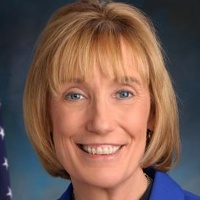
Margaret Hassan
Senator
NH
Margaret Hassan
Senator
NH
The Relief for Families of the Fallen Act provides significant income tax relief for the families of public safety officers who die from injuries sustained in the line of duty. This bill exempts income taxes for the year of death and prior years back to when the injury occurred. Eligibility will be determined by the Treasury Secretary based on existing federal death benefit criteria.
This Act prohibits entities from owning both a pharmacy and an insurance company or Pharmacy Benefit Manager (PBM) to eliminate conflicts of interest and restore competition in the prescription drug market.
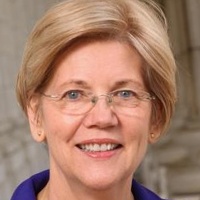
Elizabeth Warren
Senator
MA
Elizabeth Warren
Senator
MA
The Patients Before Monopolies Act aims to restore competition in the prescription drug market by structurally separating vertically integrated health conglomerates. This is achieved by making it illegal for any entity to own both a pharmacy and either an insurer or a Pharmacy Benefit Manager (PBM). The bill mandates divestiture of any conflicting ownership within one year and grants the FTC and DOJ strong enforcement and civil penalty authority to ensure compliance.
This act caps insulin cost-sharing for privately insured individuals at $35 or 25% of the negotiated price (whichever is lower) starting in 2027 and establishes a federal program to reimburse providers for supplying insulin to uninsured individuals for a $35 out-of-pocket cost.

John Kennedy
Senator
LA
John Kennedy
Senator
LA
The Affordable Insulin Now Act of 2026 aims to lower insulin costs for Americans. For those with private health insurance, the bill caps out-of-pocket costs for certain essential insulin products at the lower of \$35 or 25% of the negotiated price, starting in 2027. Additionally, it establishes a federal program to ensure uninsured individuals can obtain a 30-day supply of insulin for no more than \$35.
This Act mandates that hospitals and birth centers notify parents of their rights regarding the disposition of fetal remains following a miscarriage or stillbirth.

Roger Marshall
Senator
KS
Roger Marshall
Senator
KS
The Bereaved Parents Rights Act establishes new requirements for hospitals and birth centers following a miscarriage or stillbirth. These facilities must notify parents of their rights regarding the disposition of the fetus, including options for burial or cremation. Parents who choose to arrange disposition must have their wishes honored according to state law.
This bill allows individuals aged 70½ and older to exclude certain direct charitable distributions from employer-sponsored retirement plans from their gross income, similar to existing IRA rules.

Kevin Cramer
Senator
ND
Kevin Cramer
Senator
ND
This bill amends the Internal Revenue Code to allow individuals to exclude certain direct charitable distributions from employer-sponsored retirement plans from their gross income. To qualify, the distribution must be made after age 70½ and sent directly to eligible charities, excluding private foundations and donor-advised funds. The exclusion amount is capped based on existing IRA charitable distribution limits.
The ABLE MATCH Act establishes a federal matching payment, up to \$2,000 annually, for self-contributions to an individual's ABLE account, subject to income phaseouts, and funds state grants to promote ABLE account usage.
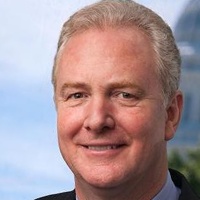
Chris Van Hollen
Senator
MD
Chris Van Hollen
Senator
MD
The ABLE MATCH Act establishes a federal program to match contributions made by individuals to their own ABLE accounts, offering a 100% match up to \$2,000, subject to an income-based phaseout. This new benefit aims to increase savings for people with disabilities, starting in tax years after 2026. The bill also mandates demographic reporting for ABLE account beneficiaries and authorizes grants to states to promote the use of these accounts and the new matching contribution.
This bill directs the Secretary of State to enhance international cooperation and develop strategies for biodefense, biosecurity, and biotechnology engagement, particularly within NATO and with key allies.
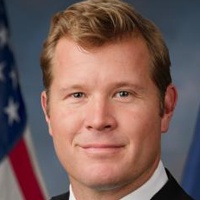
Tim Sheehy
Senator
MT
Tim Sheehy
Senator
MT
The Biodefense Diplomacy Enhancement Act directs the Secretary of State to strengthen international cooperation on biodefense, biosecurity, and biotechnology with U.S. allies and partners. This includes pushing for stronger collaboration within NATO on biological threat countermeasures and developing strategies for international engagement. The bill mandates the creation of a NATO Biodefense Strategy and an International Cooperation Strategy to address gaps and enhance global security efforts against biological threats.
This bill streamlines permitting and environmental reviews for energy infrastructure, LNG terminals, and nuclear power projects while significantly limiting judicial review under NEPA.
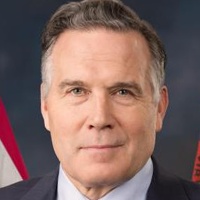
Dave McCormick
Senator
PA
Dave McCormick
Senator
PA
The Unlock American Energy and Jobs Act of 2026 aims to accelerate energy infrastructure development by significantly streamlining federal permitting processes under the Clean Water Act and NEPA. It imposes strict timelines and limits the scope of state water quality reviews, while also making major changes to judicial review under NEPA, restricting remedies to remand only. Furthermore, the bill permanently secures early site permits for nuclear facilities and removes environmental review considerations for new LNG terminal approvals.
This bill allows for year-round sales of E15 gasoline and restructures the Renewable Fuel Standard program by phasing out small refinery exemptions in favor of a 75% compliance obligation reduction starting in 2028.
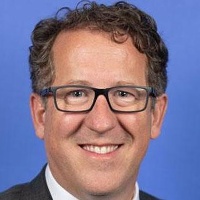
Adrian Smith
Representative
NE
Adrian Smith
Representative
NE
This bill, the Nationwide Consumer and Fuel Retailer Choice Act of 2025, makes two major changes: it allows for the year-round sale of E15 gasoline and reforms the Renewable Fuel Standard (RFS) for small refineries. The RFS reform phases out existing small refinery exemptions starting in 2028, replacing them with a 75% compliance obligation reduction. The Act also directs the EPA to update fuel infrastructure rules for E15 distribution.
This Act imposes an annual tax on the net assets of certain trusts, coordinates this tax with existing estate and generation-skipping taxes, and treats grantor trust tax payments by the owner as taxable gifts unless reimbursed.
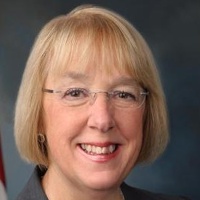
Patty Murray
Senator
WA
Patty Murray
Senator
WA
The Fair Trusts for Fiscal Responsibility Act imposes an annual tax on the net assets of certain trusts starting in 2027, calculated using a progressive rate structure with bracket thresholds that can be adjusted by beneficiaries. The bill also establishes a "trust withholding credit account" to coordinate this new tax with existing estate and generation-skipping transfer taxes. Finally, it treats tax payments made by the owner of a non-revocable grantor trust as a taxable gift unless the trust reimburses the owner within the same year.
This resolution requires the Secretary of the Senate to withhold Senators' pay during any federal government shutdown, to be released once the shutdown ends.
John Kennedy
Senator
LA
John Kennedy
Senator
LA
This resolution mandates that the pay for all Senators be withheld during any federal government shutdown. The Secretary of the Senate must hold these compensation payments until the shutdown concludes, at which point the funds will be released. This measure will take effect following the November 2026 general election.
This bill directs the President to end U.S. military hostilities against Iran under the War Powers Resolution unless Congress has explicitly authorized the use of force.
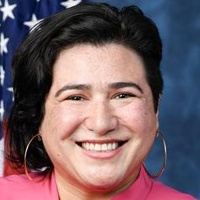
Emily Randall
Representative
WA
Emily Randall
Representative
WA
This resolution directs the President to terminate the use of U.S. Armed Forces in military hostilities against Iran, as authorized under the War Powers Resolution. It explicitly prohibits ground forces from engaging in combat or occupation roles unless Congress has declared war or passed a specific authorization. The bill safeguards intelligence operations and clarifies that it does not authorize any new use of military force.
This bill officially recognizes National Salvation Army Week from May 11 through May 17, 2026, honoring the organization's extensive history of providing critical social services across the nation.
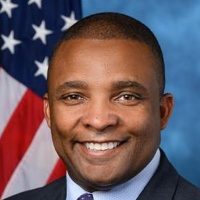
Donald Davis
Representative
NC
Donald Davis
Representative
NC
This bill officially recognizes and celebrates "National Salvation Army Week" from May 11 through May 17, 2026. It commends the Salvation Army for over 150 years of dedicated, non-discriminatory service providing critical aid like disaster relief, food assistance, and shelter to millions of vulnerable Americans annually. The resolution encourages the public to support the organization's ongoing mission to combat human need.
The Great American Healthcare Plan overhauls Health Savings Accounts, creates new group health purchasing pools, mandates sweeping price transparency, reforms Medicare drug payments, and expands access to certain prescription drugs.
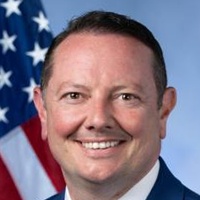
Eric Burlison
Representative
MO
Eric Burlison
Representative
MO
The **Great American Healthcare Plan** is a comprehensive bill designed to overhaul the U.S. healthcare system through five key titles. It dramatically expands Health Savings Accounts (HSAs) to be universally accessible with higher contribution limits and broader spending options, while also creating new group health coverage pools through ERISA. Furthermore, the plan mandates strict price transparency for providers and insurers, adjusts Medicare payment structures for high-cost cancer drugs, and establishes a new category of "expanded-access prescription drugs" for easier dispensing by certain licensed professionals. Overall, the legislation aims to increase consumer control over healthcare spending, lower costs through transparency, and improve access to both savings vehicles and medications.
This resolution supports designating May 15, 2026, as "Endangered Species Day" to celebrate the success of the Endangered Species Act in protecting imperiled wildlife.

Debbie Dingell
Representative
MI
Debbie Dingell
Representative
MI
This resolution supports designating May 15, 2026, as "Endangered Species Day" to celebrate the success of the Endangered Species Act of 1973. It recognizes the vital role this Act and other conservation efforts play in protecting imperiled wildlife and addressing the ongoing biodiversity crisis. The bill also highlights the cultural and economic benefits derived from healthy ecosystems and at-risk species recovery.