Legislation
This bill mandates the automatic establishment of Trump accounts for all newborns by utilizing data collected through the Social Security Administration’s Enumeration at Birth Program.

Shelley Capito
Senator
WV
Shelley Capito
Senator
WV
This bill mandates the automatic creation of "Trump accounts" for all newborns by integrating the Social Security Administration’s Enumeration at Birth Program with the Department of the Treasury. It requires the Social Security Administration to share necessary enrollment information with the Treasury to ensure every child is automatically registered upon birth.
The MATCH IT Act of 2026 establishes national standards, data protocols, and voluntary reporting measures to improve the accuracy of patient identification and medical record matching within the U.S. health care system.

Mark Warner
Senator
VA
Mark Warner
Senator
VA
The MATCH IT Act of 2026 aims to improve patient safety and reduce healthcare costs by establishing national standards for accurate patient identification and medical record matching. The bill directs the Department of Health and Human Services to define uniform patient match rates and adopt a minimum data set to enhance interoperability across health IT systems. Additionally, it creates voluntary reporting programs and incentive measures to encourage providers to improve their matching accuracy.
This bill designates the United States Postal Service facility located at 200 1st Avenue Southeast in Austin, Minnesota, as the "John Madden Memorial Post Office."
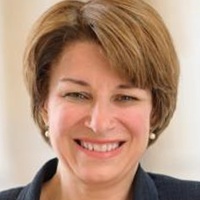
Amy Klobuchar
Senator
MN
Amy Klobuchar
Senator
MN
This bill officially designates the United States Postal Service facility located at 200 1st Avenue Southeast in Austin, Minnesota, as the "John Madden Memorial Post Office." All official federal documents and records will henceforth refer to the facility by this name.
The Stroke Act authorizes federal funding for research, data collection, and grant programs to improve stroke prevention, education, and the quality of emergency and rehabilitative stroke care nationwide.
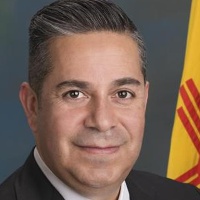
Ben Luján
Senator
NM
Ben Luján
Senator
NM
The Stroke Act aims to improve stroke outcomes by authorizing federal research, data collection, and grant programs focused on stroke care and prevention. This legislation supports the development of a national stroke registry, strengthens emergency and rehabilitation systems, and funds public education campaigns to increase awareness and timely treatment.
The MORE American Fuel Act of 2026 streamlines the licensing process for uranium enrichment facilities by allowing for pre-license construction and updating regulatory review requirements.
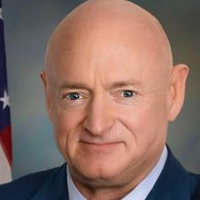
Mark Kelly
Senator
AZ
Mark Kelly
Senator
AZ
The Modernizing Outdated Regulations to Expand American Fuel (MORE American Fuel) Act of 2026 streamlines the licensing process for uranium enrichment facilities by allowing construction to begin after an application is docketed. The bill updates Nuclear Regulatory Commission requirements to accelerate development while maintaining safety oversight and ensuring local, state, and tribal governments receive advance notice of construction activities.
This legislation authorizes federal grants to states to enhance the professional development, credentials, and compensation of early childhood educators.
Ben Luján
Senator
NM
Ben Luján
Senator
NM
The Early Childhood Educator Professional Improvement Act of 2026 provides federal grants to states to strengthen the early childhood workforce. This initiative supports educators through scholarships, professional development, and increased compensation to improve educational standards and career pathways. By fostering collaboration between state agencies and higher education institutions, the Act aims to enhance the quality of early childhood education programs nationwide.
This Act directs U.S. agencies to streamline sanctions, licensing, and travel requirements to facilitate the delivery of essential humanitarian assistance to the people of North Korea.
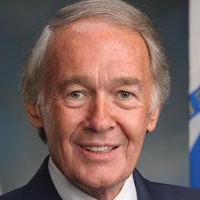
Edward Markey
Senator
MA
Edward Markey
Senator
MA
The Enhancing North Korea Humanitarian Assistance Act of 2026 aims to streamline the delivery of life-saving aid to North Korea by reducing bureaucratic barriers and regulatory delays. The bill directs U.S. agencies to simplify licensing, reporting, and travel requirements for humanitarian organizations while providing clearer guidance to financial and shipping institutions. Additionally, it mandates that the U.S. advocate for more efficient humanitarian exemption processes within the United Nations.
This bill amends federal law to formally include Indian Tribes as eligible entities for the Defense Community Infrastructure Program.
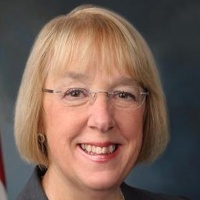
Patty Murray
Senator
WA
Patty Murray
Senator
WA
The Defense Community Infrastructure Program Tribal Eligibility Act of 2026 amends existing law to formally include Indian Tribes as eligible participants in the Defense Community Infrastructure Program. This legislation ensures that Tribal governments can access federal support for infrastructure projects that benefit military installations and their surrounding communities.
The Defense of Environment and Property Act of 2026 narrows the federal definition of "navigable waters," limits EPA and Army Corps jurisdiction, and mandates compensation for property owners affected by federal water regulations.

Rand Paul
Senator
KY
Rand Paul
Senator
KY
The Defense of Environment and Property Act of 2026 narrows the federal definition of "navigable waters" to limit EPA and Army Corps of Engineers jurisdiction over isolated wetlands and intermittent water bodies. The bill strengthens state authority over water regulation, mandates landowner consent for federal property entry, and requires agencies to compensate property owners for regulatory actions that reduce land value. Additionally, it nullifies previous federal guidance and prohibits future expansions of jurisdictional authority without explicit Congressional approval.
The BLADE Act of 2026 establishes a framework to identify, deter, and sanction foreign entities that conduct unauthorized model extraction attacks against U.S. closed-source artificial intelligence models.
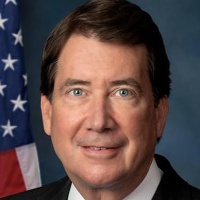
Bill Hagerty
Senator
TN
Bill Hagerty
Senator
TN
The BLADE Act (Blocking Large-scale Adversarial Distillation Efforts Act of 2026) aims to protect U.S. national security and economic interests by identifying and deterring unauthorized "model extraction attacks" against closed-source artificial intelligence models. The bill mandates that the Department of Commerce assess and track foreign entities that illicitly acquire AI capabilities, while establishing a framework to impose sanctions and export restrictions on those involved in such activities. By fostering information-sharing between the government and private AI developers, the legislation seeks to safeguard American intellectual property from foreign adversaries.
The PREFERRED Screening Act establishes a Medicare payment model to provide eligible individuals with comprehensive breast cancer risk assessments and personalized screening and risk-reduction plans.
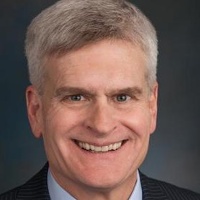
Bill Cassidy
Senator
LA
Bill Cassidy
Senator
LA
The PREFERRED Screening Act directs the Secretary of Health and Human Services to implement a Medicare payment model that incentivizes providers to offer comprehensive, personalized breast cancer risk assessments. By integrating genetic testing, family history, and clinical data, the program aims to provide tailored screening and risk-reduction plans for Medicare beneficiaries. This initiative prioritizes underserved and high-risk populations to improve early detection and evaluate the long-term effectiveness of risk-stratified breast cancer care.
The Medicare Home Health Payment Integrity and Protection Act of 2026 strengthens oversight, reforms enrollment, and resets payment structures to reduce fraud and improve accountability within the Medicare home health program.

Susan Collins
Senator
ME
Susan Collins
Senator
ME
The Medicare Home Health Payment Integrity and Protection Act of 2026 strengthens oversight of home health agencies through enhanced enrollment screenings, more frequent inspections, and stricter accreditation standards to combat fraud. The bill also resets Medicare base payment rates to improve predictability and mandates the exclusion of suspect claims from quality-based payment calculations. Additionally, it provides dedicated funding for federal fraud investigations and state-level enforcement to ensure greater program accountability.
The Medicare at Home Act establishes a new Medicare Part B benefit providing up to 20 hours per week of essential home care services for eligible older adults and individuals with disabilities.

Andy Kim
Senator
NJ
Andy Kim
Senator
NJ
The Medicare at Home Act proposes expanding Medicare Part B to cover essential home care services for older adults and individuals with disabilities. This benefit would provide up to 20 hours per week of assistance with daily living activities, helping beneficiaries remain safely in their homes while reducing the burden on family caregivers. The program would be financed through adjustments to Medicare Part B premiums and implemented through new federal standards for care providers.
The Military Chaplains Modernization Act of 2026 strengthens the leadership structure, duties, and religious freedom protections for chaplains across all branches of the U.S. Armed Forces.
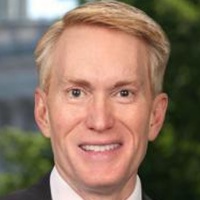
James Lankford
Senator
OK
James Lankford
Senator
OK
The Military Chaplains Modernization Act of 2026 updates and clarifies the leadership structure, duties, and responsibilities of the Chaplain Corps across the Army, Navy, and Air Force. The bill strengthens protections for chaplains to perform their duties in accordance with their sincerely held religious beliefs and the tenets of their endorsing organizations, free from censorship or retaliation. Additionally, it establishes clear legal standards for the chaplaincy and ensures that military leadership provides the necessary support for chaplains to fulfill their spiritual mission for service members.
The Abuse of the Pardon Prevention Act of 2026 mandates oversight and financial disclosures for presidential pardons, prohibits self-pardons, and expands federal bribery laws to include presidential pardon actions.
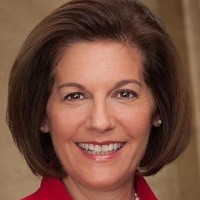
Catherine Cortez Masto
Senator
NV
Catherine Cortez Masto
Senator
NV
The Abuse of the Pardon Prevention Act of 2026 establishes stricter oversight and transparency requirements for presidential pardons involving political associates or investigations into the President. The bill mandates comprehensive documentation disclosures to Congress and the DOJ Inspector General, explicitly prohibits presidential self-pardons, and expands federal bribery laws to include the exchange of pardons for value. Additionally, it requires pardon recipients to publicly disclose any financial gifts provided to the President.
The Bus Operator Safety and Security Act mandates the installation of protective barriers in federally funded, large fixed-route buses to enhance operator safety.
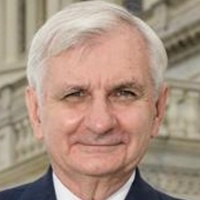
John Reed
Senator
RI
John Reed
Senator
RI
The Bus Operator Safety and Security Act mandates the installation of protective, full-enclosure barriers around the workstations of operators on new, federally funded fixed-route buses. These safety requirements apply to buses 30 feet or longer, ensuring protection from physical intrusion while maintaining the operator's visibility. Transit agencies may opt out of this requirement if they obtain a waiver from the labor organization representing their frontline workforce.
The Double the Wage for Overtime Act of 2026 amends the Fair Labor Standards Act to increase the mandatory overtime pay rate from time-and-a-half to double time.

Ruben Gallego
Senator
AZ
Ruben Gallego
Senator
AZ
The Double the Wage for Overtime Act of 2026 amends the Fair Labor Standards Act to increase the mandatory overtime pay rate from time-and-a-half to double time. This legislation ensures that employees are compensated at twice their regular hourly rate for all overtime hours worked. The new pay requirement will take effect 180 days following the bill's enactment.
This Act establishes a federal task force to recover fraudulent COVID-19 pandemic unemployment payments held by financial institutions and extends the statute of limitations for prosecuting related fraud to ten years.
James Lankford
Senator
OK
James Lankford
Senator
OK
The "Recover COVID Unemployment Fraud in Banks Act" establishes a federal task force to coordinate with states and financial institutions to identify and recover improperly paid pandemic unemployment funds. Additionally, the bill extends the statute of limitations to 10 years for criminal prosecutions and civil enforcement actions related to pandemic unemployment fraud.
The Veterans’ Earned Benefits Access Act of 2026 provides flexible repayment options and financial hardship waivers for veterans required to recoup separation or severance pay from their disability compensation.

James Risch
Senator
ID
James Risch
Senator
ID
The Veterans’ Earned Benefits Access Act of 2026 provides veterans with greater flexibility in repaying military separation or severance pay by allowing for installment plans and hardship waivers. The bill limits monthly recoupment deductions to 25% of a veteran’s disability compensation and mandates the creation of a formal process for requesting financial hardship exemptions.
The Workforce Recovery and Resilience Act expands national dislocated worker grants and technical assistance to support employment, training, and recovery services in communities impacted by substance use disorders.
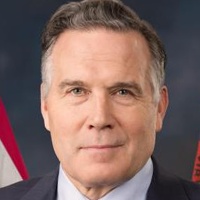
Dave McCormick
Senator
PA
Dave McCormick
Senator
PA
The Workforce Recovery and Resilience Act strengthens the national response to substance use disorders by integrating addiction-related employment and training services into the Workforce Innovation and Opportunity Act. The bill expands eligibility for National Dislocated Worker Grants to support individuals affected by substance use and authorizes funding for addiction treatment and mental health-related career training. Additionally, it mandates that the Department of Labor provide states with updated, evidence-based strategies to address the economic impacts of the addiction crisis.