Legislation
This bill prohibits recipients of federal research funding from collaborating on research with entities on U.S. government restricted lists, subject to specific national security waivers.
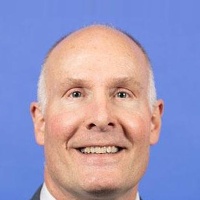
John Moolenaar
Representative
MI
John Moolenaar
Representative
MI
This Act prohibits recipients of federal research funding from engaging in research collaborations with entities or individuals on specified U.S. government restricted entity lists. It mandates the creation of government-wide guidance for standardized compliance and enforcement across federal agencies. The legislation also includes a waiver authority for agency heads if necessary to advance U.S. national security or essential scientific purposes.
This Act eliminates the mandatory departure requirement for Commonwealth Only Transitional Workers in the CNMI, replacing it with renewable work permit options of up to one or three years.
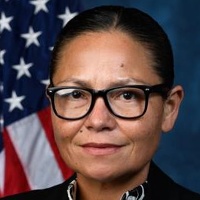
Kimberlyn King-Hinds
Representative
MP
Kimberlyn King-Hinds
Representative
MP
The Northern Mariana Islands Workforce Improvement Act eliminates the mandatory "touchback" requirement for Commonwealth Only Transitional Workers in the CNMI. This change allows eligible workers to renew their work permits without having to leave the islands first. The Act establishes new validity periods, offering general 1-year permits and up to 3-year permits for certain long-term transitional workers.
This Act mandates annual suicide prevention training for VA community care providers and establishes a public list of those who complete it to enhance veteran access to specialized care.
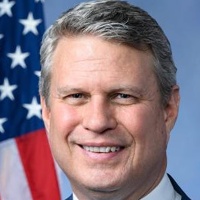
Bill Huizenga
Representative
MI
Bill Huizenga
Representative
MI
The Veterans Suicide Prevention and Care Enhancement Act of 2026 mandates annual suicide prevention training for community care providers participating in the VA program. It requires the VA to create and maintain a public "Preferred Provider List" of all trained providers to help veterans access specialized care. The Secretary must also report annually to Congress on the implementation and effectiveness of this new provider list.
The Sharri Briley and Eric Edmundson Veterans Benefits Expansion Act of 2026 increases disability compensation, enhances Dependency and Indemnity Compensation adjustments, extends certain VA home loan fee structures, and broadens VA home loan eligibility for National Guard and Reserve members.
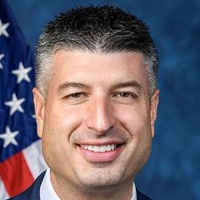
Tom Barrett
Representative
MI
Tom Barrett
Representative
MI
The Sharri Briley and Eric Edmundson Veterans Benefits Expansion Act of 2026 significantly enhances benefits for veterans and service members. It increases disability compensation with a new monthly allowance for certain veterans and ties future Dependency and Indemnity Compensation (DIC) adjustments to Social Security cost-of-living increases plus an extra percentage. The bill also expands VA home loan eligibility to include National Guard and Reserve members with at least 14 days of qualifying service, though these borrowers will pay a higher loan fee. Finally, it extends the current VA home loan fee structure and modifies definitions of active duty for Guard and Reserve components.
This joint resolution disapproves the D.C. Council's temporary amendment regarding body-worn camera transparency for use of force incidents.
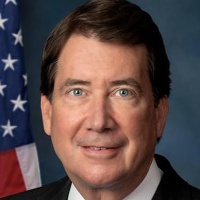
Bill Hagerty
Senator
TN
Bill Hagerty
Senator
TN
This joint resolution disapproves the District of Columbia Council's temporary amendment regarding body-worn camera transparency for use of force incidents. By passing this resolution, Congress is exercising its authority under the Home Rule Act to overturn the local D.C. legislation before it takes effect.
The Lainie Jones Comprehensive Cancer Survivorship Act of 2026 establishes a framework for improving cancer survivorship care through enhanced planning, payment models, employment assistance, grant programs, and expanded Medicaid coverage for transitions and fertility services.
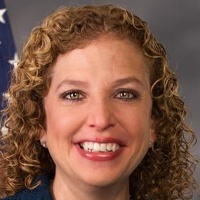
Debbie Wasserman Schultz
Representative
FL
Debbie Wasserman Schultz
Representative
FL
The Lainie Jones Comprehensive Cancer Survivorship Act of 2026 aims to improve the full spectrum of care for cancer survivors, from diagnosis through the remainder of life. The bill establishes an Office of Cancer Survivorship, mandates Medicare coverage for care planning, and creates programs to support employment and comprehensive survivorship services. It also requires Medicaid to cover essential transition services for childhood cancer survivors and mandates fertility preservation coverage for all cancer patients.
This bill mandates that DHS agencies like CBP and ICE must notify a designated point of contact before releasing an individual from custody, provided the detention exceeds 12 hours at a port of entry.
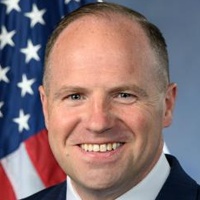
Timothy Kennedy
Representative
NY
Timothy Kennedy
Representative
NY
The DHS Release Transparency Act requires U.S. Customs and Border Protection (CBP) and U.S. Immigration and Customs Enforcement (ICE) to offer detained individuals the option to designate a point of contact for release notifications. If designated, the Department of Homeland Security must notify this contact before releasing the individual, ensuring translation services are provided throughout the process. Crucially, the collected contact information cannot be used for any enforcement actions.
This bill establishes automatic, 14-day continuing appropriations to prevent government shutdowns while imposing travel restrictions and limiting legislative business during funding gaps.
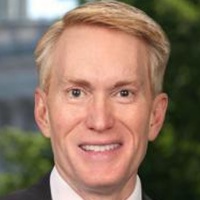
James Lankford
Senator
OK
James Lankford
Senator
OK
The Prevent Government Shutdowns Act of 2026 establishes automatic, 14-day continuing appropriations to prevent federal operations from halting when regular funding lapses. This mechanism funds programs at the previous rate until Congress enacts a full budget or continuing resolution. The bill also imposes strict limitations on official travel and congressional business during these funding gaps. Finally, it classifies the costs of this Act as discretionary spending subject to existing budget enforcement rules.
This Act establishes new competitive grants and amends existing programs to improve charter schools' access to adequate and affordable facilities.
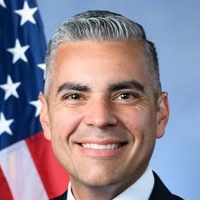
Juan Ciscomani
Representative
AZ
Juan Ciscomani
Representative
AZ
The Equitable Access to School Facilities Act establishes new competitive grants for states to support charter school facilities, prioritizing those in high-need areas. It expands how existing federal charter school grant funds can be used for facility acquisition and compliance, and allows states to reserve funds for revolving loan programs. Furthermore, the bill clarifies that federal funds used for property acquisition do not create a federal interest in the property.
This bill prohibits providing federal housing assistance to individuals not lawfully present in the U.S. and mandates cooperation with immigration enforcement for entities receiving housing grants.
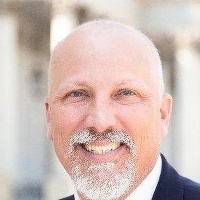
Chip Roy
Representative
TX
Chip Roy
Representative
TX
This bill, the "No Housing Welfare for Illegal Aliens Act," amends federal housing laws to severely restrict housing assistance for noncitizens. It prohibits prorated housing aid while any family member's eligibility is unconfirmed and bans the use of CDBG funds to assist individuals not lawfully present. Furthermore, the bill disqualifies entities receiving CDBG or HOME grants if they assist undocumented individuals or fail to cooperate fully with federal immigration enforcement requests.
This bill officially renames the United States Postal Service facility in Austin, Minnesota, as the "John Madden Memorial Post Office."
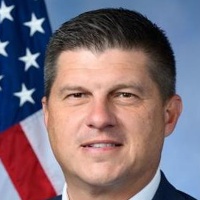
Brad Finstad
Representative
MN
Brad Finstad
Representative
MN
This bill officially renames the United States Postal Service facility located at 200 1st Avenue Southeast in Austin, Minnesota, to the "John Madden Memorial Post Office." This designation honors the late sports legend, John Madden. The change will be reflected across all official federal records and documents.
The Stay Cool Act coordinates federal heat response, funds community cooling centers and housing upgrades, and invests in urban green infrastructure to mitigate extreme heat risks.
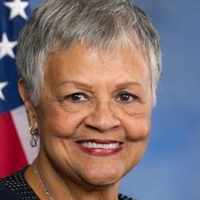
Bonnie Watson Coleman
Representative
NJ
Bonnie Watson Coleman
Representative
NJ
The **Stay Cool Act** is a comprehensive bill designed to combat the dangers of extreme heat through coordinated federal response, improved public warnings, and direct aid to vulnerable seniors. It establishes significant grant programs to fund community cooling centers, upgrade public housing with air conditioning, and develop urban green spaces and water features for neighborhood cooling. Overall, the legislation aims to increase community resilience, protect residents in federally assisted housing, and ensure more equitable access to safe, cool environments during heat emergencies.
This act establishes a grant program to help state and local governments modernize technology, improve cybersecurity, and enhance public services.
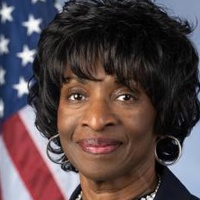
Valerie Foushee
Representative
NC
Valerie Foushee
Representative
NC
The State and Local Public Sector Innovation Act establishes a grant program to help state and local governments modernize their technology systems, enhance cybersecurity, and improve public service delivery. Funds are distributed based on population and assessed modernization needs, requiring states to pass at least 70% of the grant directly to local governments. The program also sets requirements for states regarding data governance and NIST compliance, while authorizing $500 million annually from 2027 through 2030.
The CLEAN UP Mines Act of 2026 strengthens surface coal mining reclamation requirements, monitoring, and enforcement by setting stricter deadlines for site restoration and increasing regulatory oversight.
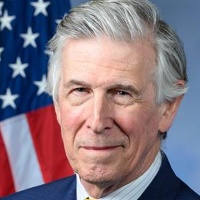
Donald Beyer
Representative
VA
Donald Beyer
Representative
VA
The CLEAN UP Mines Act of 2026 significantly strengthens environmental protection and reclamation standards for surface coal mining operations. It mandates stricter deadlines for backfilling, regrading, and revegetation following the cessation of coal production. The bill also enhances monitoring requirements for water quality and mandates annual biological assessments of local streams. Furthermore, it tightens rules regarding mine idling and the automatic non-compliance of permits left inactive for extended periods.
This bill expands the types of international agreements the Secretary of State must report to Congress and sets a deadline for the Comptroller General's post-audit reports.
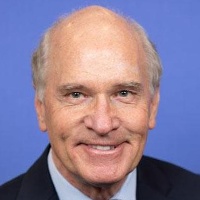
William Keating
Representative
MA
William Keating
Representative
MA
This bill expands transparency requirements under the Case-Zablocki Act by mandating the reporting of all international agreements, written or oral, where a foreign country accepts non-citizen individuals ordered removed from the U.S. It also sets a new 30-day deadline for the Comptroller General to submit post-audit reports to Congress.
This bill directs the Attorney General to establish an official station for the U.S. Attorney for the Western District of Washington in Clark County, Washington.
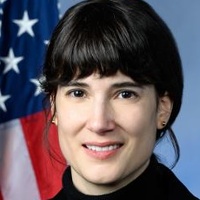
Marie Gluesenkamp Perez
Representative
WA
Marie Gluesenkamp Perez
Representative
WA
This bill mandates the Attorney General to establish an official office station for the U.S. Attorney for the Western District of Washington within Clark County, Washington. This action aims to enhance federal legal presence and operations in that specific county.
This act revises federal law to authorize lethal injection or hanging as methods of execution and mandates the establishment of federal protocols for carrying out death sentences.
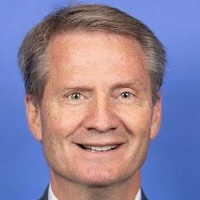
Tim Burchett
Representative
TN
Tim Burchett
Representative
TN
The Detention Reform and Offender Penalties Act of 2026, or the DROP Act of 2026, updates federal procedures for carrying out death sentences. This bill allows federal law to prescribe the method of execution, authorizing either lethal injection or hanging. It mandates the U.S. Marshals Service to establish written execution protocols within 180 days of enactment.
The NO FAKES Act of 2026 establishes a federal right for individuals, living or dead, to control the commercial use of their digital voice and visual likeness replicas, enforced through civil liability and a notice-and-takedown system for online platforms.
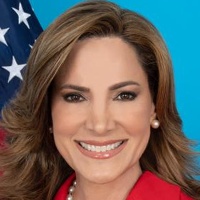
Maria Salazar
Representative
FL
Maria Salazar
Representative
FL
The NO FAKES Act of 2026 establishes a federal property right for individuals, living or deceased, to control the use of their voice or visual likeness in unauthorized, highly realistic digital replicas. This law outlines specific licensing requirements, post-mortem rights, and creates civil liability for unauthorized creation or distribution of these digital likenesses. It also implements a notice-and-takedown system for online service providers to manage infringing user-uploaded content.
This Act establishes a pilot program to award grants to school food authorities to promote the preparation of school meals using unprocessed or minimally processed ingredients.
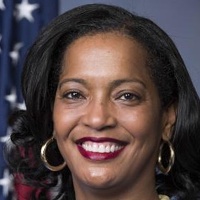
Jahana Hayes
Representative
CT
Jahana Hayes
Representative
CT
The Scratch Cooked Meals for Students Act establishes a pilot program to award competitive grants to school food authorities promoting the preparation of meals using unprocessed or minimally processed ingredients. These grants will fund training, equipment upgrades, and other necessary support for increasing scratch cooking in school meal programs. Priority will be given to authorities serving high-need student populations that commit to self-operation and workforce agreements.
This bill directs the Secretary of the Interior to study the Mullica River watershed in New Jersey for potential inclusion in the National Wild and Scenic Rivers System.
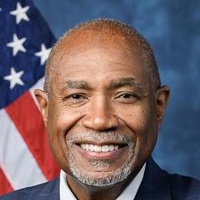
Herbert Conaway
Representative
NJ
Herbert Conaway
Representative
NJ
This bill, the Mullica River Watershed Wild and Scenic River Study Act of 2026, directs the Secretary of the Interior to study the Mullica River, Wading River, Batsto River, and their tributaries in New Jersey for potential inclusion under the Wild and Scenic Rivers Act. The Secretary must complete this study and submit a report to Congress within three years of receiving funding. This legislation initiates the formal review process to determine if these waters possess outstanding natural, cultural, or recreational values warranting federal protection.