Legislative Activity
Track George's sponsored bills, co-sponsored legislation, and voting record
The "Access to Reproductive Care for Servicemembers Act" ensures that members of the Armed Forces and their dependents can access leave and travel reimbursement for reproductive health care services, including abortion and fertility treatments, not covered by the Department of Defense, while safeguarding their privacy and prohibiting adverse actions.
Mikie Sherrill
Representative
NJ
Mikie Sherrill
Representative
NJ
The "Access to Reproductive Care for Servicemembers Act" ensures that members of the Armed Forces and their dependents can access leave and reimbursement for travel expenses related to abortion services and assisted reproductive technology, such as in vitro fertilization, when these services are not available nearby. It protects the privacy of service members seeking such care and prohibits any adverse actions against them for utilizing these provisions. The bill aims to address barriers to reproductive healthcare created by state abortion restrictions and logistical challenges faced by military personnel.
The PAST Act of 2025 significantly strengthens the Horse Protection Act by increasing penalties, banning specific action devices, and mandating licensed inspectors to combat the practice of horse soring.
Brian Fitzpatrick
Representative
PA
Brian Fitzpatrick
Representative
PA
The PAST Act of 2025 significantly strengthens the Horse Protection Act to combat the painful practice of soring in specific horse breeds. This bill increases penalties for violations, establishes stricter licensing and oversight for inspectors, and explicitly bans the use of "action devices" designed to cause unnatural gaits. The legislation aims to enhance enforcement, ensure fairer competition, and hold violators accountable through increased fines and disqualifications.
The SAFE Act of 2025 amends existing law to include equines (horses) in the prohibition of slaughtering animals for human consumption.
Vern Buchanan
Representative
FL
Vern Buchanan
Representative
FL
The SAFE Act of 2025 amends existing legislation to explicitly prohibit the slaughter of horses for human consumption, reinforcing protections for these animals. This bill seeks to prevent the inhumane treatment of American equines by closing loopholes that allow their slaughter and export for human consumption.
The Rural Veterans Transportation to Care Act expands transportation grants to include rural areas, broadens eligible recipients, increases grant amounts, and removes funding limits to improve healthcare access for veterans.

Marie Gluesenkamp Perez
Representative
WA
Marie Gluesenkamp Perez
Representative
WA
The Rural Veterans Transportation to Care Act expands the Department of Veterans Affairs' transportation grant program to include rural areas, not just highly rural ones. It broadens the range of eligible grant recipients to include county veterans service organizations and tribal organizations. The bill also increases the maximum grant amount to $60,000, with a possible increase to $80,000 for vehicle purchases needed to comply with the Americans with Disabilities Act and authorizes necessary funding by removing the previous funding limit.
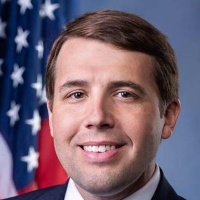
This act reinstates criminal penalties for individuals who charge unauthorized fees to veterans for assisting with claims for VA benefits.
Chris Pappas
Representative
NH
Chris Pappas
Representative
NH
The GUARD VA Benefits Act establishes criminal penalties for individuals who charge veterans unauthorized fees for assisting with claims for benefits administered by the Department of Veterans Affairs. This legislation amends existing law to prohibit soliciting, contracting for, or receiving compensation for preparing or prosecuting VA benefit claims, except where explicitly authorized by other statutes.
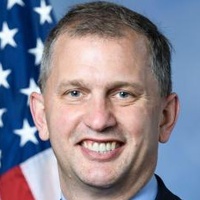
The Pell Grant Sustainability Act indexes Federal Pell Grants to inflation to help keep up with the rising costs of college for lower-income students.
Sean Casten
Representative
IL
Sean Casten
Representative
IL
The Pell Grant Sustainability Act aims to increase the buying power of Pell Grants for lower-income students. It indexes the maximum Pell Grant award to inflation, starting with a \$1,060 increase for the 2024-2025 award year, and adjusts it annually based on the Consumer Price Index. This adjustment is added to the maximum Pell Grant specified in the latest appropriation act, ensuring Pell Grants keep pace with rising education costs. The bill also extends provisions of the Higher Education Act related to Pell Grants indefinitely.
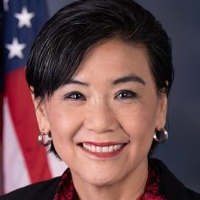
This bill expands Medicare coverage to include services provided by qualified acupuncturists.
Judy Chu
Representative
CA
Judy Chu
Representative
CA
The "Acupuncture for Our Seniors Act of 2025" expands Medicare coverage to include services provided by qualified acupuncturists, as defined by state licensure or criteria set by the Secretary of Health and Human Services. This ensures seniors have access to acupuncture services, with payment rules established under the physician fee schedule and separate payment options for institutional providers. It defines qualified acupuncturist services as those legally allowed under state law, including related services and supplies. These changes will apply to services furnished 270 days after the Act's enactment.
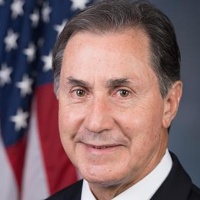
To award a Congressional Gold Medal to the 761st Tank Battalion, the first Black soldiers to serve in an American armored unit, for their valor and crucial contributions to the Allied victory in Europe.
Gary Palmer
Representative
AL
Gary Palmer
Representative
AL
This bill authorizes the Speaker of the House and the President pro tempore of the Senate to award a Congressional Gold Medal to the 761st Tank Battalion, also known as the "Black Panthers," in recognition of their courageous service and crucial contributions during World War II. The medal will be given to the National Museum of African American History and Culture for display, honoring the 761st as the first Black soldiers to serve in an American armored unit and their significant role in the Allied victory in Europe. The bill also allows for the creation and sale of bronze duplicates of the medal to support the United States Mint Public Enterprise Fund.
The RAISE Act of 2025 introduces a refundable tax credit for eligible teachers and early childhood educators, increases the tax deduction for educator expenses, and provides mandatory funding to support local educational agencies that maintain or increase teacher salaries.
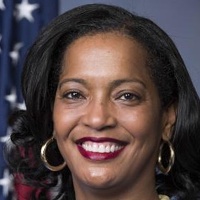
Jahana Hayes
Representative
CT
Jahana Hayes
Representative
CT
The RAISE Act of 2025 introduces a refundable tax credit for eligible teachers, offering $1,000 plus additional amounts for teachers in qualifying schools with high student poverty levels. It also increases the tax deduction for educators' expenses to $500 and expands eligibility to include early childhood educators. Additionally, the Act amends the Elementary and Secondary Education Act to provide mandatory funding to support local educational agencies that maintain or increase teacher salaries, with a portion reserved for teacher salary incentive grants. These grants can be used for various programs aimed at strengthening the teaching profession and improving educator skills.
The American Dream and Promise Act of 2025 provides a pathway to permanent residency for eligible individuals who came to the U.S. as children, or who have Temporary Protected Status (TPS) or Deferred Enforced Departure (DED) status.
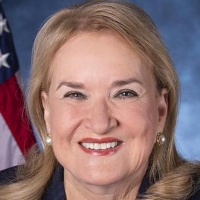
Sylvia Garcia
Representative
TX
Sylvia Garcia
Representative
TX
The American Dream and Promise Act of 2025 provides a pathway to permanent residency for eligible individuals who entered the United States as children and those with Temporary Protected Status (TPS) or Deferred Enforced Departure (DED). Title I, the Dream Act of 2025, establishes conditional permanent residency for eligible individuals who entered the U.S. as children. Title II, the American Promise Act of 2025, allows the Secretary of Homeland Security or the Attorney General to grant permanent resident status to eligible individuals from TPS or DED countries. Title III outlines general provisions, such as background checks, application processes, and fee exemptions, applicable to all seeking to adjust their status under this Act.
Ethan's Law establishes federal penalties for improperly storing firearms where minors or prohibited persons can access them and creates grant programs to incentivize states to adopt matching safe storage laws.
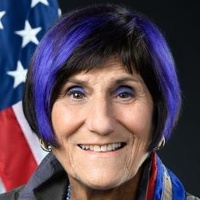
Rosa DeLauro
Representative
CT
Rosa DeLauro
Representative
CT
Ethan's Law establishes federal requirements for the secure storage of firearms to prevent unauthorized access by minors and prohibited persons, making improper storage a civil violation with escalating penalties if injury or death results. The bill also creates a federal grant program to incentivize states and Tribes to adopt matching safe storage laws. Furthermore, Congress declares that failing to comply with these storage requirements constitutes negligence and may be considered the direct cause of resulting firearm injuries.
The Federal Retirement Fairness Act allows temporary employees' service after 1988 to count toward retirement benefits under the Federal Employees Retirement System.

Gerald Connolly
Representative
VA
Gerald Connolly
Representative
VA
The Federal Retirement Fairness Act amends title 5 of the United States Code, allowing civilian service in a temporary position after December 31, 1988, to be creditable under the Federal Employees Retirement System. This change applies to current employees and Members of the United States Postal Service, and requires the Office of Personnel Management to notify eligible individuals and issue implementing regulations.
The "DOC Access Act of 2025" aims to improve dental and vision care coverage by ensuring fair payment practices, protecting providers' choices, and upholding state regulatory authority.
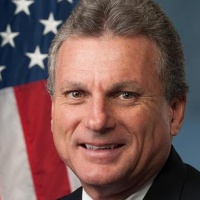
Earl Carter
Representative
GA
Earl Carter
Representative
GA
The "DOC Access Act of 2025" aims to enhance health care coverage under vision and dental plans by ensuring fair payment practices, protecting doctors' choices in labs and suppliers, and respecting state laws. It allows optometrists and dentists to charge their standard rate for non-covered services if the plan's payment is unreasonable, while ensuring they can only charge the contracted rate for dental cleanings. The bill also gives doctors more control over agreement extensions with limited benefit plans and allows them to opt out of certain provisions. Ultimately, this act seeks to balance federal guidelines with state oversight in regulating health insurance issuers and dental or vision benefit plans.
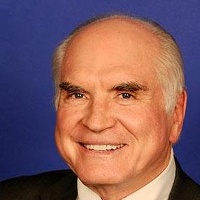
The "Access Technology Affordability Act of 2025" creates a tax credit of up to $2,000 every three years for blind individuals who purchase qualified access technology.
Mike Kelly
Representative
PA
Mike Kelly
Representative
PA
The "Access Technology Affordability Act of 2025" introduces a tax credit for blind individuals who purchase qualified access technology, such as hardware or software that converts visual information into accessible formats. The credit is capped at $2,000 per blind individual over any three consecutive tax years and will be adjusted for inflation after 2026. This credit is effective for tax years starting after December 31, 2025, and expires after December 31, 2030. It ensures that individuals cannot claim double benefits for the same expenses.
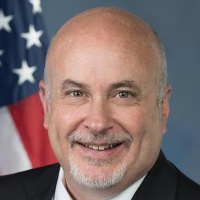
This resolution designates February 24–28, 2025, as "Public Schools Week" to celebrate the vital role of public education and advocate for the continued support and funding of our nation's schools.
Mark Pocan
Representative
WI
Mark Pocan
Representative
WI
This resolution designates February 24–28, 2025, as "Public Schools Week" to celebrate the vital role public education plays in preparing students for the future. It reaffirms the commitment to providing every child with a high-quality, inclusive, and well-funded learning environment. Additionally, the bill calls on lawmakers to prioritize equitable resources and support services to ensure student success.
The "MODERN WIC Act of 2025" expands remote access to WIC benefits by allowing virtual certification appointments, remote benefit issuance, and requires a report to Congress on the use of remote technologies within the WIC program.
Brian Fitzpatrick
Representative
PA
Brian Fitzpatrick
Representative
PA
The MODERN WIC Act of 2025 aims to modernize the WIC program by expanding options for remote certification appointments, including telephone and video calls, and allowing for remote delivery of food benefits. It requires state agencies to offer various formats for certification appointments, ensuring accessibility for individuals with disabilities. The Act also mandates a report to Congress on the use of remote technologies in WIC, focusing on their impact and best practices.
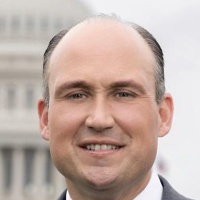
The "Make American Flags in America Act of 2025" mandates that U.S. flags displayed on Federal property or bought by Federal agencies be made entirely in the U.S., and requires a study on country-of-origin labeling enforcement for flags.
Nicholas Langworthy
Representative
NY
Nicholas Langworthy
Representative
NY
The "Make American Flags in America Act of 2025" mandates that U.S. flags displayed on Federal property or bought by Federal agencies be entirely manufactured in the U.S. using 100% U.S.-made materials, in accordance with international agreements. It also directs the Federal Trade Commission to study and report on country-of-origin labeling enforcement for U.S. flags, aiming to improve enforcement and deter violations.
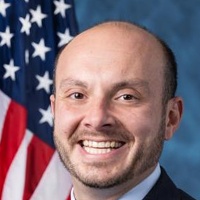
The bill modifies and extends funding for the World Trade Center Health Program, expands the types of healthcare providers who can certify mental health conditions, and requires a report to Congress on the program's budget.
Andrew Garbarino
Representative
NY
Andrew Garbarino
Representative
NY
The 9/11 Responder and Survivor Health Funding Correction Act of 2025 amends the Public Health Service Act to improve the World Trade Center (WTC) Health Program by expanding the types of healthcare providers who can conduct mental health evaluations, modifying provider credentialing, clarifying enrollment calculations, and extending the time frame for adding health conditions for WTC responders. The act adjusts the funding formula for fiscal years 2026 through 2090 and requires the Secretary of Health and Human Services to report to Congress on the program's budget, including projected needs through 2090 and recommendations for changes to the funding formula. It also stipulates that remaining funds in the Supplemental Fund, Special Fund, and Pentagon-Shanksville Fund will revert to the Treasury.
The Secure Rural Schools Reauthorization Act of 2025 extends federal funding and program authorities for states and counties containing national forest land through 2026.
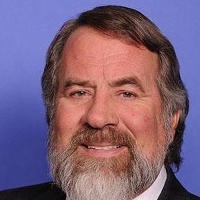
Doug LaMalfa
Representative
CA
Doug LaMalfa
Representative
CA
The Secure Rural Schools Reauthorization Act of 2025 extends critical federal funding for states and counties containing national forest land through 2026. This legislation ensures the continuation of essential community services and maintains the authority for resource advisory committees and local special projects.
The "More Homes on the Market Act" increases the tax exclusion for profit from the sale of a primary residence, incentivizing homeowners to sell and increasing housing supply.
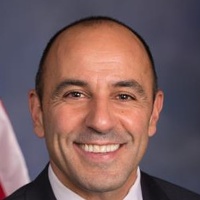
Jimmy Panetta
Representative
CA
Jimmy Panetta
Representative
CA
The "More Homes on the Market Act" increases the tax exclusion for profit from the sale of a primary residence, raising it to $500,000 for single filers and $1,000,000 for married couples filing jointly. These amounts will be adjusted for inflation starting in 2025. This change encourages homeowners to sell their properties, thereby increasing the availability of homes on the market.