Legislative Activity
Track Roger's sponsored bills, co-sponsored legislation, and voting record
This resolution condemns socialism in all its forms while reaffirming support for election security measures, including the requirement that only U.S. citizens participate in American elections.
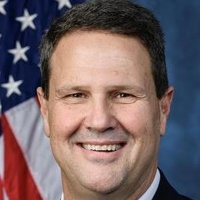
Jeff Crank
Representative
CO
Jeff Crank
Representative
CO
This resolution formally condemns socialism in all its forms, asserting that its ideology is incompatible with American values and the U.S. Constitution. It reaffirms the necessity of secure, citizen-only elections and calls for the enactment of the SAVE America Act to prevent noncitizen voting and strengthen election integrity.
The Consumer Financial Protection Accountability and Reform Act of 2026 seeks to increase the CFPB’s transparency and accountability by restructuring its funding, refining its enforcement and rulemaking standards, and establishing clearer regulatory oversight for financial institutions and consumer products.
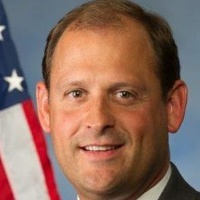
Garland Barr
Representative
KY
Garland Barr
Representative
KY
The Consumer Financial Protection Accountability and Reform Act of 2026 seeks to restructure the Consumer Financial Protection Bureau (CFPB) by bringing it under congressional appropriations and establishing more rigorous oversight and transparency requirements. The bill introduces stricter standards for enforcement actions, clarifies definitions of abusive practices, and provides new regulatory frameworks for emerging financial products like earned wage access. Additionally, it adjusts supervisory thresholds and limits the Bureau’s ability to use market-monitoring data for enforcement, aiming to increase procedural fairness for both financial institutions and consumers.
This resolution commemorates the 13 U.S. servicemembers killed at Abbey Gate and condemns the Biden administration’s handling of the 2021 withdrawal from Afghanistan.
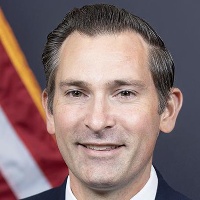
Matt Van Epps
Representative
TN
Matt Van Epps
Representative
TN
This resolution commemorates the 13 U.S. servicemembers killed during the 2021 Abbey Gate bombing in Afghanistan. It formally condemns the Biden-Harris administration for its handling of the withdrawal, citing failures in planning, security, and accountability. The measure denounces the administration's decisions as a dereliction of duty that compromised national security and abandoned American allies.
This resolution honors the life and historic congressional legacy of the Honorable Kay Granger, recognizing her trailblazing service as a Representative from Texas and her dedicated contributions to national defense and the city of Fort Worth.
Craig Goldman
Representative
TX
Craig Goldman
Representative
TX
This resolution honors the life and legacy of the Honorable Kay Granger, celebrating her nearly 28 years of service in the U.S. House of Representatives. It recognizes her historic achievements as a trailblazer for women in public office, her dedicated advocacy for national defense, and her lasting contributions to the city of Fort Worth, Texas.
The Deputy Darren Almendarez Act establishes federal criminal penalties for the illicit trafficking of catalytic converters and the unauthorized sale of their precious metals.
Brandon Gill
Representative
TX
Brandon Gill
Representative
TX
The Deputy Darren Almendarez Act establishes a new federal crime for the illegal trafficking of catalytic converters. This legislation imposes significant fines and prison sentences for the unauthorized possession or sale of these devices, while providing clear exemptions for legitimate automotive repair, recycling, and manufacturing businesses.
The Stop EU Overreach Act mandates a formal investigation by the U.S. Trade Representative into the economic burden and extraterritorial impact of European Union sustainability and environmental regulations on American businesses.
Craig Goldman
Representative
TX
Craig Goldman
Representative
TX
The Stop EU Overreach Act mandates that the United States Trade Representative (USTR) launch a formal Section 301 investigation into the extraterritorial impact of various European Union environmental and sustainability regulations on U.S. businesses. The bill seeks to address concerns that these EU mandates impose unfair, burdensome, and conflicting requirements on U.S. companies for operations occurring outside of Europe. If the investigation confirms these practices harm U.S. commerce, the USTR is authorized to take retaliatory trade actions to eliminate those burdens.
The Main Street Act aims to foster economic growth by reducing regulatory burdens on community banks, streamlining the application and merger processes, and enhancing transparency in financial supervision.
J. Hill
Representative
AR
J. Hill
Representative
AR
The Main Street Act is comprehensive legislation designed to foster a more competitive and accessible banking environment by reducing regulatory burdens on community banks and credit unions. The bill streamlines application processes, modernizes supervision standards, and enhances transparency across federal financial agencies to encourage local lending and economic growth. Additionally, it promotes innovation and financial stability by facilitating bank-fintech partnerships and improving the tools available for managing liquidity and bank resolutions.
This bill prohibits the Department of Labor from finalizing, implementing, or enforcing the proposed rule regarding heat injury and illness prevention in outdoor and indoor work settings.
Mark Messmer
Representative
IN
Mark Messmer
Representative
IN
This act, the Heat Workforce Standards Act of 2025, prohibits the Secretary of Labor from finalizing, implementing, or enforcing the proposed rule regarding heat injury and illness prevention published in August 2024. This restriction extends to any future standard substantially similar to the one proposed.
This bill clarifies that a franchisor is only considered a joint employer of a franchisee's workers if it exercises substantial, direct, and immediate control over essential terms of employment.
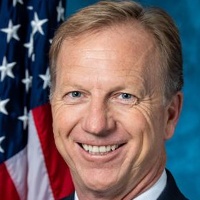
Kevin Hern
Representative
OK
Kevin Hern
Representative
OK
The American Franchise Act aims to protect the traditional franchise business model by clarifying the definition of a "joint employer." This legislation establishes that a franchisor is only considered a joint employer if it exercises "substantial direct and immediate control" over the essential terms of employment for a franchisee's workers. This change specifically targets liability risks associated with maintaining brand standards, ensuring franchisors are not automatically held responsible for local labor practices. The new standard applies prospectively to future legal proceedings.
This act amends Title IX to explicitly define "sex," "female," and "male" based on biological characteristics.
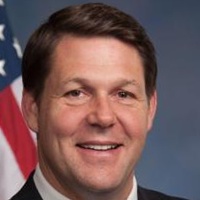
Jodey Arrington
Representative
TX
Jodey Arrington
Representative
TX
The Title IX Clarification Act of 2026 amends Title IX to explicitly define "sex," "female," and "male" based on an individual's biologically determined sex and reproductive system. This legislation clarifies the scope of sex-based protections under federal education law. The changes take effect immediately upon enactment.
This resolution honors the public service of the late Senator Lindsey Graham, condemns Omar Suleiman for celebrating his death, and supports efforts to address the incompatibility of Sharia Law with American constitutional principles.
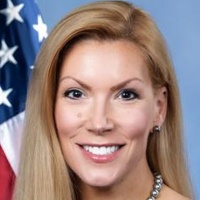
Beth Van Duyne
Representative
TX
Beth Van Duyne
Representative
TX
This resolution honors the life and public service of the late Senator Lindsey Graham while formally condemning Omar Suleiman for his public remarks celebrating the Senator's death. Additionally, the bill acknowledges Suleiman’s 2019 invitation to serve as a Guest Chaplain in the U.S. House and reaffirms support for efforts to address the perceived dangers of Sharia Law to American constitutional principles.
This Act prohibits payment card networks and processors from assigning specific merchant category codes to identify firearms retailers, protecting the privacy of firearm and ammunition purchases.
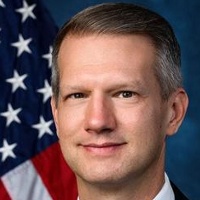
Riley Moore
Representative
WV
Riley Moore
Representative
WV
The Protecting Privacy in Purchases Act prohibits payment card networks and processors from assigning specific merchant category codes to firearms retailers. This legislation aims to protect consumer privacy by preventing the tracking of firearm and ammunition purchases through specialized financial classification. The Attorney General is tasked with enforcing these provisions and reporting annually on compliance.
This bill caps the total recovery amounts for class action lawsuits alleging willful or negligent violations of the Fair Credit Reporting Act (FCRA).
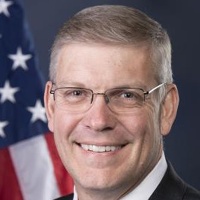
Barry Loudermilk
Representative
GA
Barry Loudermilk
Representative
GA
The FCRA Liability Harmonization Act aims to standardize civil liability for class action lawsuits under the Fair Credit Reporting Act (FCRA). This bill caps the total recovery amount for both willful and negligent violations in class actions at the lesser of $500,000 or 1% of the company's net worth. Furthermore, it places new limits on the recoverable attorney's fees and court costs associated with these class action claims.
The Freedom of Association in Higher Education Act of 2026 prohibits colleges and universities that receive federal funding from taking adverse actions against students or organizations based on their participation in single-sex social groups.
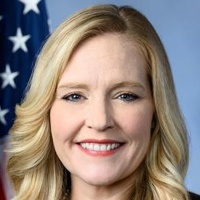
Erin Houchin
Representative
IN
Erin Houchin
Representative
IN
The Freedom of Association in Higher Education Act of 2026 protects students and single-sex social organizations from adverse actions by colleges and universities that receive federal funding. The bill ensures that students can freely join or lead these organizations without facing institutional bias or discrimination based on their membership. It establishes clear standards to prevent schools from penalizing students or organizations solely for maintaining single-sex membership policies.
The SHARE Act of 2025 establishes federal requirements for the FBI to share criminal history record information with states participating in interstate professional licensing compacts, while strictly limiting how those states can use and further disseminate that data.
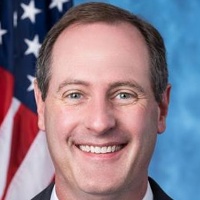
Tracey Mann
Representative
KS
Tracey Mann
Representative
KS
The SHARE Act of 2025 establishes new federal requirements for the FBI to share criminal history record information with states participating in professional licensing interstate compacts. This information sharing is strictly for the purpose of conducting background checks on applicants seeking to practice a profession in another compact state. States receiving this data are severely restricted on how they can use or further disseminate the detailed criminal history, generally only being permitted to report a binary "satisfactory" or "unsatisfactory" determination back to the compact's Commission.
The "Ban Abortion by Mail Act" mandates that providers of mifepristone and other abortion drugs conduct in-person patient visits and hold a valid medical license in the patient's state of residence.
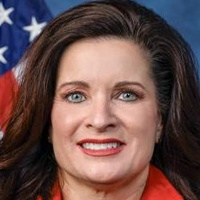
Sheri Biggs
Representative
SC
Sheri Biggs
Representative
SC
The "Ban Abortion by Mail Act" mandates that healthcare providers conduct in-person visits and hold a valid medical license in the patient's state of residence before prescribing or dispensing abortion drugs. Providers who violate these requirements face a minimum two-year loss of their FDA-mandated REMS certification. Additionally, the bill requires the Department of Health and Human Services to submit annual reports to Congress regarding providers who lose their certification due to these violations.
The Jewish American Security Act aims to combat rising antisemitism through enhanced security grants, new protections for Jewish students in education, and increased transparency requirements for online platforms regarding hate speech.

Dan Goldman
Representative
NY
Dan Goldman
Representative
NY
The Jewish American Security Act addresses the rising threat of antisemitism across the nation. This bill mandates new protections for Jewish students in educational settings and significantly increases funding and administrative support for securing Jewish community institutions. Furthermore, it requires increased transparency from large online platforms regarding their moderation of antisemitic content and mandates federal assessments of domestic and transnational antisemitic threats.
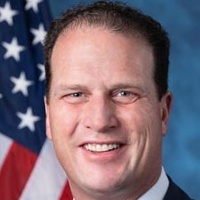
This bill exempts small domestic oil and gas marginal wells from specific Clean Air Act performance standards and reporting requirements set by the EPA.
August Pfluger
Representative
TX
August Pfluger
Representative
TX
The Protect Domestic Oil and Gas Small Business Act of 2026 exempts small "marginal wells" from specific performance standards and reporting requirements set by the EPA under the Clean Air Act. This legislation aims to reduce regulatory burdens on these smaller oil and gas operations. The bill also mandates automatic approval for state plans that remove these standards for marginal wells.
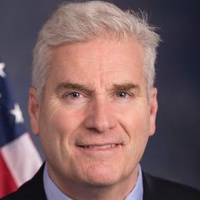
This bill modifies FDIC rules to adjust the threshold for reciprocal deposits not considered brokered funds for qualifying agent institutions and mandates a study on reciprocal deposit usage and risk.
Tom Emmer
Representative
MN
Tom Emmer
Representative
MN
The Keeping Deposits Local Act amends federal law to adjust how reciprocal deposits are treated for institutions, potentially encouraging local deposit retention. It modifies the definition of an "agent institution" based on its financial health rating. Furthermore, the bill mandates a study by the FDIC on the performance, usage, and risks associated with reciprocal deposits.
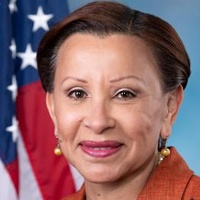
This act codifies the "Rule of Two" into law, requiring federal agencies to set aside contracts above the simplified acquisition threshold for small businesses if at least two qualified small businesses can reasonably bid.
Nydia Velázquez
Representative
NY
Nydia Velázquez
Representative
NY
The Protecting Small Business Competitions Act of 2025 codifies the "Rule of Two" into federal small business contracting law. This rule mandates that federal agencies must set aside contracts exceeding the simplified acquisition threshold for small businesses if they can reasonably expect at least two qualified small business offers. This ensures greater opportunities for small businesses to compete for federal contracts while maintaining fair market pricing.