Legislative Activity
Track Peter's sponsored bills, co-sponsored legislation, and voting record
This resolution officially recognizes the vital roles and contributions of United States teachers in building the nation's civic, cultural, and economic well-being, while encouraging recognition during National Teacher Appreciation Week.

Susan Collins
Senator
ME
Susan Collins
Senator
ME
This resolution officially recognizes the vital roles and significant contributions of teachers across the United States in strengthening the nation's civic, cultural, and economic well-being. It specifically designates National Teacher Appreciation Week, May 5–9, 2025, to raise public awareness and encourage greater respect for the teaching profession. Ultimately, this measure serves as a formal expression of gratitude from Congress to educators nationwide.
This Act reinstates and extends the time limit for victims to claim tax deductions for personal casualty losses resulting from crimes, scams, and disasters.

Tammy Baldwin
Senator
WI
Tammy Baldwin
Senator
WI
The Tax Relief for Victims of Crimes, Scams, and Disasters Act aims to provide financial relief by modifying tax rules for personal losses. This bill removes previous limitations on deducting personal casualty losses for disasters occurring after 2017. Additionally, it extends the deadline for taxpayers to file for refunds related to these previously suspended casualty loss deductions.
The Honoring Our Fallen Heroes Act of 2025 establishes a presumption that certain cancers leading to death or disability in public safety officers are the result of on-duty exposure to carcinogens.

Amy Klobuchar
Senator
MN
Amy Klobuchar
Senator
MN
The Honoring Our Fallen Heroes Act of 2025 establishes a presumption that certain cancers leading to death or disability in public safety officers were caused by on-duty exposure to recognized carcinogens. This law defines specific exposure-related cancers and sets conditions, such as five years of service, for the presumption to apply. It also updates review processes for adding new cancers to the list and grants retroactive application and filing extensions for eligible past and present claims.
This bill establishes annual reference prices for prescription drugs based on international benchmarks, capping the retail list price for federal beneficiaries and effectively extending that price cap to all consumers, with penalties for non-compliance funding NIH research.

Jeff Merkley
Senator
OR
Jeff Merkley
Senator
OR
The End Price Gouging for Medications Act requires the Secretary of HHS to establish annual reference prices for prescription drugs based on international pricing benchmarks. These reference prices will cap the retail list price for beneficiaries of major federal health programs like Medicare and Medicaid. Furthermore, this pricing structure must be extended to all consumers, including those with private insurance or who are uninsured. Manufacturers who violate these price caps face significant civil penalties, with collected funds directed to the NIH for drug research and development.
This Act establishes the non-regulatory Connecticut River Watershed Partnership program and a competitive matching grant program to fund collaborative restoration and protection efforts across the five watershed states.
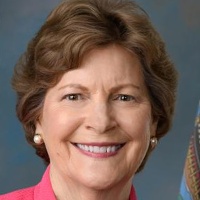
Jeanne Shaheen
Senator
NH
Jeanne Shaheen
Senator
NH
The Connecticut River Watershed Partnership Act establishes a new, non-regulatory program to coordinate restoration and protection efforts across the five-state watershed. This initiative will develop a comprehensive strategy and support it through a competitive, voluntary grant program to fund projects benefiting ecology, water quality, and climate resilience. The law specifically mandates outreach to environmental justice communities and requires annual reporting to Congress on funded projects. Funding is authorized through fiscal year 2030, with at least 75% of appropriations dedicated to the grant program.
This resolution directs the Senate Legal Counsel to sue the President to enforce the Constitution's Foreign Emoluments Clause against potential influence from foreign governments.
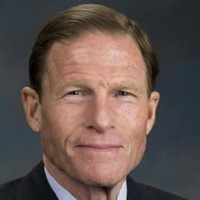
Richard Blumenthal
Senator
CT
Richard Blumenthal
Senator
CT
This resolution directs the Senate Legal Counsel to initiate a civil lawsuit to enforce the Foreign Emoluments Clause of the U.S. Constitution against the President. The action seeks to legally prevent the President from accepting gifts, payments, or benefits from foreign governments without explicit Congressional approval. This measure is being taken due to concerns that the President's personal financial dealings with foreign entities may violate constitutional restrictions designed to ensure undivided loyalty to the United States.
This resolution officially designates the week of May 11 through May 17, 2025, as National Police Week to honor law enforcement officers, remember those killed in the line of duty, and encourage public observance.
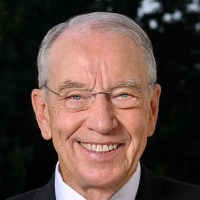
Charles Grassley
Senator
IA
Charles Grassley
Senator
IA
This resolution officially designates the week of May 11 through May 17, 2025, as "National Police Week." It serves to honor the valor and integrity of law enforcement officers across the nation. The resolution specifically remembers the officers killed in the line of duty during 2024 and encourages the public to observe this week to show appreciation for law enforcement personnel.
This resolution declares that Secretary of Health and Human Services Robert Fitzgerald Kennedy Jr. has lost the confidence of the Senate and the American people due to alleged unlawful actions, research sabotage, and undermining public health initiatives.

Angela Alsobrooks
Senator
MD
Angela Alsobrooks
Senator
MD
This Senate resolution expresses a profound lack of confidence in Secretary Robert Fitzgerald Kennedy Jr. to lead the Department of Health and Human Services. It details numerous accusations of unlawful actions, including massive staff firings, defunding critical public health programs, and undermining established vaccine and health research. Ultimately, the resolution asserts that the Secretary has lost the trust of the Senate and the American people due to his conduct in office.
The Vision Lab Choice Act of 2025 establishes new federal standards for vision plans, limiting contract lengths for optometrists and prohibiting plans from mandating specific labs or suppliers for doctors.

Kevin Cramer
Senator
ND
Kevin Cramer
Senator
ND
The Vision Lab Choice Act of 2025 aims to improve health care coverage under vision plans by setting limits on contract lengths between vision plans and optometrists. This bill also prevents vision plans from mandating which labs or suppliers optometrists must use for patient care. Furthermore, it clarifies state authority to enforce these new federal standards regarding vision benefit plans.
This Act mandates that health plans cover medically necessary diagnosis and treatment for congenital anomalies or birth defects affecting the eyes, ears, teeth, mouth, or jaw, starting in 2026.
Tammy Baldwin
Senator
WI
Tammy Baldwin
Senator
WI
The Ensuring Lasting Smiles Act mandates that health plans cover medically necessary diagnosis and treatment for congenital anomalies or birth defects affecting the eyes, ears, teeth, mouth, or jaw. This coverage must apply to outpatient and inpatient care, including necessary dental and orthodontic support, unless the procedure is purely cosmetic. These new requirements take effect for plan years beginning on or after January 1, 2026.
This Act extends and modifies Medicare payment structures for ground ambulance services, particularly increasing temporary payments for super rural providers through 2028.

Catherine Cortez Masto
Senator
NV
Catherine Cortez Masto
Senator
NV
The Protecting Access to Ground Ambulance Medical Services Act of 2025 extends critical Medicare payment provisions for ambulance services. This bill delays the expiration of special payment rules for "super rural" areas until January 1, 2028, while also implementing temporary payment increases for both super rural and standard ground ambulance services during that transition period. The goal is to ensure continued financial stability and access to essential ground ambulance care.
The American Ownership and Resilience Act establishes an Ownership Investment Facility to provide government leverage to licensed investment companies making covered investments, particularly in Employee Stock Ownership Plans (ESOPs), while setting strict operational and capital requirements for those companies.

Chris Van Hollen
Senator
MD
Chris Van Hollen
Senator
MD
The American Ownership and Resilience Act establishes an Ownership Investment Facility to provide government leverage to licensed investment companies making "covered investments," primarily focused on supporting Employee Stock Ownership Plans (ESOPs) and worker cooperatives in acquiring business ownership. The Act sets strict operational rules for these investment companies, including capital requirements, portfolio diversification limits, and mandates for independent review of ESOP transactions. Furthermore, it details the licensing process, oversight mechanisms, and reporting requirements to ensure accountability and protect employee interests.
This Act mandates that ride-sharing companies must register driver cameras, notify passengers, and provide an in-app option for passengers to opt out of rides with recording vehicles.

Marsha Blackburn
Senator
TN
Marsha Blackburn
Senator
TN
The Safe and Private Rides Act establishes clear rules for ride-sharing companies regarding cameras in drivers' vehicles. This legislation mandates that drivers must register cameras, and companies must notify passengers and provide an easy in-app option to opt out of riding in vehicles equipped with recording devices. Furthermore, the bill strictly limits how long ride-sharing companies can retain passenger video recordings. Violations of these new requirements will be enforced by the Federal Trade Commission (FTC).
The TEST AI Act of 2025 establishes a pilot program, led by NIST, to develop measurement standards and build testbeds for evaluating the reliability and security of federal Artificial Intelligence systems.
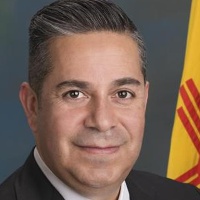
Ben Luján
Senator
NM
Ben Luján
Senator
NM
The TEST AI Act of 2025 establishes a pilot program, managed by NIST, to develop reliable measurement standards for evaluating federal Artificial Intelligence systems. This effort requires collaboration between the Departments of Commerce and Energy to create necessary testing facilities, known as "testbeds." A newly formed Working Group will advise on developing standards covering AI reliability, security, and bias, with a final report submitted to Congress detailing findings and future needs.
This Act bans paid conversion therapy practices aimed at changing an individual's sexual orientation or gender identity, treating violations as unfair and deceptive business practices enforceable by the FTC and Attorneys General.
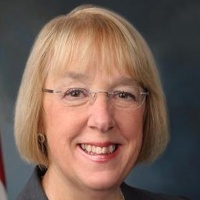
Patty Murray
Senator
WA
Patty Murray
Senator
WA
The Therapeutic Fraud Prevention Act of 2025 bans the practice of paid conversion therapy aimed at changing an individual's sexual orientation or gender identity, deeming it ineffective and harmful. This Act treats the provision or advertisement of such therapy as an unfair or deceptive business practice under the FTC Act. Enforcement authority is granted to the Federal Trade Commission, the U.S. Attorney General, and State Attorneys General. The law includes a severability clause ensuring that the invalidation of one provision does not void the entire Act.
This bill clarifies that the U.S. government's ownership stake in Freddie Mac and Fannie Mae stock does not count when determining if an organization qualifies as a tax-exempt entity.

Jerry Moran
Senator
KS
Jerry Moran
Senator
KS
The Preserving Rural Housing Investments Act clarifies tax rules regarding stock ownership in government-sponsored enterprises like Freddie Mac and Fannie Mae. Specifically, it ensures that when determining if an organization qualifies as a tax-exempt entity, the U.S. government's ownership stake in these GSEs is disregarded. This change applies to tax years ending after July 30, 2008.
This resolution officially supports the goals of National Nurses Week (May 6-12, 2025) to recognize the vital contributions of nurses to American healthcare.
Jeff Merkley
Senator
OR
Jeff Merkley
Senator
OR
This resolution officially supports the goals and ideals of National Nurses Week, observed from May 6 through May 12, 2025. It recognizes the vital contributions of nurses as frontline healthcare providers and patient advocates. The measure encourages the public to observe the week with appropriate events honoring the nursing profession.
This resolution condemns former President Trump's attacks on the free press and reaffirms the United States' commitment to protecting freedom of the press as a cornerstone of democracy.

Sheldon Whitehouse
Senator
RI
Sheldon Whitehouse
Senator
RI
This resolution strongly condemns recent actions by President Donald J. Trump that targeted and undermined the freedom of the press. It reaffirms the United States' foundational commitment to a free and independent media as essential for a functioning democracy. Furthermore, the resolution calls for the executive branch to respect journalistic rights and urges continued efforts to secure the release of imprisoned U.S. Agency for Global Media journalists abroad.
This resolution expresses support for designating the week of May 4-10, 2025, as National Small Business Week to celebrate the vital contributions of small businesses and entrepreneurs nationwide.

Joni Ernst
Senator
IA
Joni Ernst
Senator
IA
This resolution expresses strong support for designating the week of May 4 through May 10, 2025, as National Small Business Week. It aims to celebrate the vital contributions of the over 34.5 million small businesses that support tens of millions of jobs nationwide. The bill honors the hard work and entrepreneurial spirit of small business owners in every community.
This resolution officially designates April 2025 as Community College Month to recognize the vital role over 1,000 community colleges play in providing accessible education, workforce training, and economic prosperity across the United States.
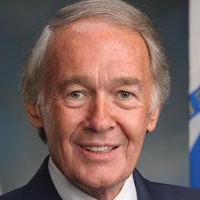
Edward Markey
Senator
MA
Edward Markey
Senator
MA
This resolution officially designates April 2025 as Community College Month to celebrate the vital role of over 1,000 community colleges nationwide. These institutions are recognized for providing accessible, affordable higher education and essential workforce training. The bill emphasizes their significant contribution to advancing local economies and overall U.S. prosperity.