
Legislative Activity
Track Maxine's sponsored bills, co-sponsored legislation, and voting record
The National Archives Protection Act prohibits the closure, relocation, or restricted public access of existing federal records centers and archive facilities.
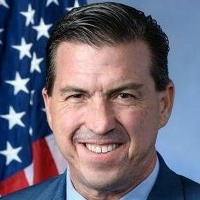
Kevin Mullin
Representative
CA
Kevin Mullin
Representative
CA
The National Archives Protection Act prevents the closure of existing federal records centers and archives. It also prohibits the Archivist from imposing unreasonable restrictions on public access or initiating facility renovations that would require the relocation of records for more than 180 days.
This bill designates the United States Postal Service facility located at 15642 Sand Canyon Avenue in Irvine, California, as the "Mary Kageyama Nomura Post Office Building."
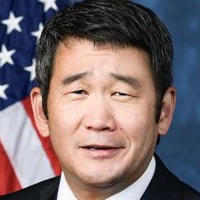
Dave Min
Representative
CA
Dave Min
Representative
CA
This bill designates the United States Postal Service facility located at 15642 Sand Canyon Avenue in Irvine, California, as the "Mary Kageyama Nomura Post Office Building."
This bill designates the United States Postal Service facility at 4640 Cass Street in San Diego, California, as the "Mary Wilding Memorial Post Office Building."

Scott Peters
Representative
CA
Scott Peters
Representative
CA
This bill designates the United States Postal Service facility located at 4640 Cass Street in San Diego, California, as the "Mary Wilding Memorial Post Office Building." All official federal references to this facility will be updated to reflect this new name.
This bill designates the Department of Veterans Affairs community-based outpatient clinic in San Jose, California, as the "Corporal Patrick D. Tillman VA Clinic."
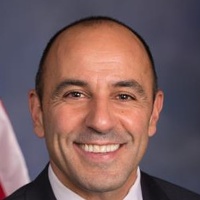
Jimmy Panetta
Representative
CA
Jimmy Panetta
Representative
CA
This bill designates the Department of Veterans Affairs community-based outpatient clinic in San Jose, California, as the "Corporal Patrick D. Tillman VA Clinic." This renaming honors the legacy of Pat Tillman, a San Jose native and former NFL player who left his professional career to serve as an Army Ranger and made the ultimate sacrifice for his country.
The **21st Century ROAD to Housing Act** aims to significantly increase housing supply and affordability through regulatory reforms, new financing tools, increased transparency, and restrictions on large institutional home purchases.

J. Hill
Representative
AR
J. Hill
Representative
AR
The **21st Century ROAD to Housing Act** is a comprehensive bill designed to significantly increase housing supply, improve affordability, and modernize federal housing programs. It tackles issues from streamlining construction regulations and incentivizing local zoning reform to restricting large corporate home purchases and enhancing financing for manufactured homes. Ultimately, the Act aims to create more pathways to homeownership and ensure safer, more stable rental conditions across the country.
This bill directs the President to remove U.S. Armed Forces from hostilities in Lebanon within seven days, pursuant to the War Powers Resolution.
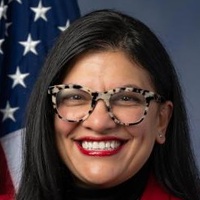
Rashida Tlaib
Representative
MI
Rashida Tlaib
Representative
MI
This resolution directs the President to withdraw U.S. Armed Forces from hostilities in Lebanon within seven days, utilizing authority under the War Powers Resolution. It explicitly clarifies that this action does not authorize the use of military force or limit security cooperation with Lebanese forces or the protection of diplomatic facilities.
The Save MEDICARE Act of 2026 reforms Medicare Advantage by tightening payment accuracy, enhancing audit and enforcement authority, and requiring private insurers to reimburse the VA for veteran healthcare services.

Lloyd Doggett
Representative
TX
Lloyd Doggett
Representative
TX
The Save MEDICARE Act of 2026 aims to increase transparency and accountability within the Medicare Advantage program by reforming payment methodologies, tightening oversight of diagnosis coding, and accelerating audit processes. The bill also enhances the Department of Veterans Affairs' ability to recover healthcare costs from private insurers and empowers states to enforce federal requirements for Medicare Advantage plans. These measures are designed to ensure more accurate payments, reduce deceptive practices, and protect resources for all Medicare enrollees.
This bill designates the United States Postal Service facility located at 6444 San Fernando Road in Glendale, California, as the "Paul Ignatius Post Office."
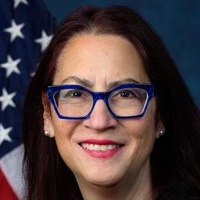
Laura Friedman
Representative
CA
Laura Friedman
Representative
CA
This bill designates the United States Postal Service facility located at 6444 San Fernando Road in Glendale, California, as the "Paul Ignatius Post Office." All official references to this location will henceforth bear this name.
The Haitian Refugee Immigration Fairness Act of 2026 provides a pathway to lawful permanent residence for eligible Haitian nationals and their families who have been continuously present in the United States since June 26, 2024.

Frederica Wilson
Representative
FL
Frederica Wilson
Representative
FL
The Haitian Refugee Immigration Fairness Act of 2026 provides a pathway to lawful permanent residence for eligible Haitian nationals who have been continuously present in the United States since June 26, 2024. This legislation allows qualified individuals and their immediate family members to apply for green cards within a three-year window, regardless of their current immigration status. The bill ensures that these adjustments occur outside of existing numerical visa limits and provides protections against deportation while applications are pending.
This Act establishes a moratorium on the construction and upgrading of new artificial intelligence data centers until Congress passes legislation ensuring AI safety, equitable economic benefits, and community approval, while also imposing export controls on related computing hardware.

Alexandria Ocasio-Cortez
Representative
NY
Alexandria Ocasio-Cortez
Representative
NY
This Act imposes an immediate moratorium on the construction and upgrading of new or existing large-scale Artificial Intelligence Data Centers. The pause will remain in effect until Congress passes legislation that mandates federal safety reviews for AI products and ensures the economic benefits of AI are shared broadly. Upon lifting the moratorium, any new or upgraded facilities must meet strict environmental, community approval, and labor standards.
This bill revises Social Security by temporarily taxing high earners, adjusting benefit calculations to favor lower earners while adding a small benefit for high earners, and tying future cost-of-living adjustments to an index reflecting elderly consumer expenses.
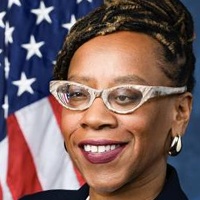
Lateefah Simon
Representative
CA
Lateefah Simon
Representative
CA
The Safeguarding American Families and Expanding Social Security Act of 2026 makes several key changes to Social Security. It temporarily taxes high earners above the current wage cap and modifies the benefit calculation formula to increase replacement rates for lower earners while adding a small component based on previously untaxed high earnings. Finally, the bill mandates that future cost-of-living adjustments will be based on a new index reflecting the spending patterns of elderly consumers.
This bill expresses congressional disapproval of the Department of Health and Human Services' rule aimed at restoring flexibility within the Child Care and Development Fund (CCDF).

Suzanne Bonamici
Representative
OR
Suzanne Bonamici
Representative
OR
This bill expresses the disapproval of Congress, under the Congressional Review Act, of a Department of Health and Human Services rule concerning the Child Care and Development Fund (CCDF). Specifically, it rejects the rule that aimed to restore flexibility within the CCDF program. As a result, the rule published on May 12, 2026, will not take effect.
This bill establishes a mandatory timeline and binding arbitration process to expedite the negotiation of first-time collective bargaining agreements between employers and newly certified unions.
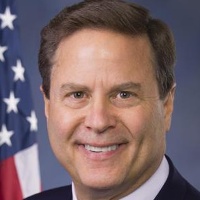
Donald Norcross
Representative
NJ
Donald Norcross
Representative
NJ
The Faster Labor Contracts Act aims to speed up the process of securing a first collective bargaining agreement after a union is certified. It establishes a mandatory timeline, including mediation and binding arbitration, if an agreement is not reached within 90 days of bargaining. This process is designed to prevent lengthy delays that currently weaken the union's position. The bill also requires a GAO report on current time-to-contract averages.
This act amends federal law to double the overtime pay rate for covered employees from time-and-a-half to double their regular rate of pay.
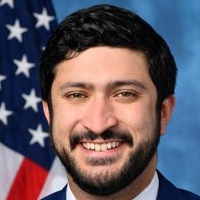
Gregorio Casar
Representative
TX
Gregorio Casar
Representative
TX
The Double the Wage for Overtime Act of 2026 amends the Fair Labor Standards Act to increase the required overtime pay rate for covered employees from time-and-a-half to double their regular rate of pay. This means employees will earn twice their normal hourly wage for all hours worked beyond 40 in a workweek. This change will take effect 180 days after the bill is enacted.
This act establishes a pilot grant program to fund the renovation and development of vital community gathering places, known as "third spaces," especially in underserved areas.

LaMonica McIver
Representative
NJ
LaMonica McIver
Representative
NJ
The RESTORE Third Spaces Act of 2026 establishes a three-year pilot grant program to renovate and develop vital community gathering places, known as "third spaces," outside of homes and workplaces. Administered by the Secretary of Commerce, the program prioritizes projects in underserved communities that strengthen local economies and combat social isolation. Grantees must ensure the resulting spaces remain free or low-cost to the public to foster social cohesion and civic engagement.
The **21st Century ROAD to Housing Act** is a sweeping bill designed to increase housing supply, improve affordability, modernize financing for manufactured homes, and enhance federal housing oversight through a series of reforms, pilots, and restrictions on institutional investors.
J. Hill
Representative
AR
J. Hill
Representative
AR
The **21st Century ROAD to Housing Act** is a comprehensive bill aimed at increasing housing supply, improving affordability, and modernizing federal housing finance and oversight. It introduces numerous pilot programs and voluntary guides to encourage zoning reform, streamlines environmental reviews, updates rules for manufactured housing, and strengthens accountability for federal housing agencies. Ultimately, the Act seeks to reduce regulatory burdens and expand access to homeownership and stable rentals for low- and moderate-income Americans.
This bill prohibits using federal funds for specific settlement payments, particularly those related to the *Trump, et al. v. IRS, et al.* case, and restricts certain compromise settlements from the Judgment Fund to high-ranking officials and specific types of claims.
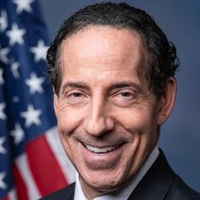
Jamie Raskin
Representative
MD
Jamie Raskin
Representative
MD
This Act prohibits the use of federal funds for specific settlement payments, including those related to the *Trump, et al. v. IRS, et al.* case. It places new restrictions on the Judgment Fund, barring payments to high-ranking officials, their relatives, and certain entities for specific types of claims. The bill also establishes strict reporting and notification requirements for large government compromise settlements.
This bill mandates the NIH to study and report on the development of a standardized, noninvasive HPV test for men to close a critical gap in cancer prevention and public health equity.
LaMonica McIver
Representative
NJ
LaMonica McIver
Representative
NJ
The Closing the HPV Testing Gap Act directs the National Institutes of Health (NIH) to conduct a comprehensive study on developing a standardized, noninvasive HPV test for men. This action aims to close a critical gap in cancer prevention and public health surveillance, which currently lacks FDA-approved testing for men. The resulting report will provide recommendations for research, implementation, and interagency coordination to advance gender equity in cancer prevention efforts.
This bill disapproves the CMS rule implementing prior authorization for select Medicare services under the WISeR Model.
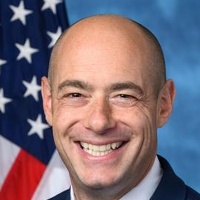
Greg Landsman
Representative
OH
Greg Landsman
Representative
OH
This bill expresses the disapproval of Congress for a new Centers for Medicare & Medicaid Services (CMS) rule requiring prior authorization for certain Medicare services under the WISeR Model. By disapproving the rule, Congress prevents its implementation. This action effectively blocks the proposed prior authorization requirement for select services.
This Act restores overtime pay protections by phasing in higher minimum salary thresholds and tightening the duties test for executive, administrative, and professional employees exempt from federal overtime requirements.
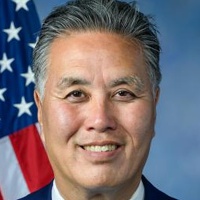
Mark Takano
Representative
CA
Mark Takano
Representative
CA
The Restoring Overtime Pay Act of 2026 significantly updates overtime exemptions under the Fair Labor Standards Act. It establishes a phased-in, rising minimum salary threshold for executive, administrative, and professional employees to qualify for overtime exemption, eventually tying it to national earnings data. Additionally, the bill tightens the "duties test," reducing the amount of non-exempt work an employee can perform while remaining exempt from overtime pay. These changes aim to restore overtime eligibility to more salaried workers.