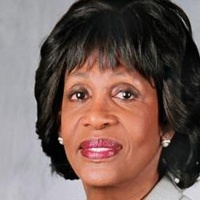
Legislative Activity
Track Maxine's sponsored bills, co-sponsored legislation, and voting record
The Smoke and Heat Ready Communities Act of 2025 establishes EPA grant programs and research initiatives to help communities prepare for, monitor, and mitigate the public health impacts of wildfire smoke and extreme heat.
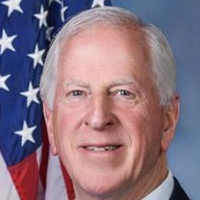
Mike Thompson
Representative
CA
Mike Thompson
Representative
CA
The Smoke and Heat Ready Communities Act of 2025 establishes EPA-led grant programs to help communities prepare for, monitor, and mitigate the public health impacts of wildfire smoke and extreme heat. The bill also creates Centers of Excellence to research the health effects of these events and funds the development of community-driven response plans. By providing resources for air filtration, protective equipment, and public outreach, the legislation aims to build local resilience against increasingly frequent climate-related air quality and heat challenges.
This bill provides a 6.62 percent Medicare payment increase for physicians and practitioners from April through December 2025 to help stabilize medical practices.
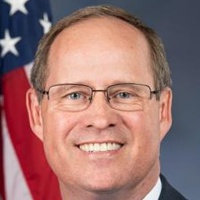
Gregory Murphy
Representative
NC
Gregory Murphy
Representative
NC
The Medicare Patient Access and Practice Stabilization Act of 2025 aims to support healthcare providers by extending Medicare payment adjustments through the end of 2025. Specifically, the bill provides a 6.62 percent payment increase for services rendered between April 1, 2025, and December 31, 2025, to help practitioners adjust to evolving Medicare payment policies.
This bill expresses the House of Representatives' desire to keep the United States Postal Service (USPS) as an independent entity within the Federal Government, protecting it from privatization. It emphasizes the USPS's importance to the mailing industry, its role in connecting communities, and the potential negative impacts of privatization on prices, services, and infrastructure.
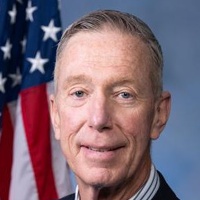
Stephen Lynch
Representative
MA
Stephen Lynch
Representative
MA
This bill expresses the House of Representatives' view that Congress should act to maintain the United States Postal Service (USPS) as an independent entity within the Federal Government. It emphasizes the USPS's role as a self-sustaining service vital to the economy and national connectivity. The resolution discourages privatization, citing concerns about increased costs, reduced services, and damage to critical infrastructure.
The Global Health, Empowerment and Rights Act prevents the U.S. government from denying foreign aid to nongovernmental organizations based on the legal health services they provide or the advocacy they conduct using their own private funds.
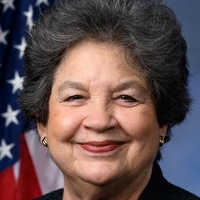
Lois Frankel
Representative
FL
Lois Frankel
Representative
FL
The Global Health, Empowerment and Rights Act prevents the U.S. government from denying foreign aid to nongovernmental organizations based on the legal health services they provide using their own private funds. It ensures that these organizations are not penalized for offering counseling or referrals that comply with local laws. Additionally, the bill prohibits the imposition of restrictive advocacy and lobbying requirements on these groups that exceed those applied to U.S.-based organizations.
Expresses the House of Representatives' disapproval of the President's decision to withdraw the United States from the Paris Agreement, urging the President to reverse his decision and Congress to prioritize climate change leadership.
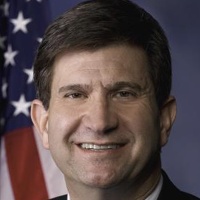
Bradley Schneider
Representative
IL
Bradley Schneider
Representative
IL
This bill expresses the House of Representatives' disapproval of the President's decision to withdraw the United States from the Paris Agreement, recognizing climate change as a threat and highlighting the increasing costs of extreme weather events. It commends entities supporting the Agreement, urges the President to reconsider, and encourages Congress to prioritize U.S. leadership on climate change.
This bill codifies Executive Order 14096 to permanently establish the federal government's commitment to achieving environmental justice for all.

Nanette Barragán
Representative
CA
Nanette Barragán
Representative
CA
This bill formally codifies Executive Order 14096, elevating the federal commitment to environmental justice into permanent statute. By establishing this mandate as law, the legislation ensures that the principles of equitable environmental protection carry the full force and effect of a congressional act.
The FAIR Act mandates a 3.3 percent basic pay increase and a 1 percent locality pay adjustment for federal civilian employees in 2026.

Gerald Connolly
Representative
VA
Gerald Connolly
Representative
VA
The FAIR Act (Federal Adjustment of Income Rates Act) proposes a 2026 pay adjustment for federal civilian employees. This legislation mandates a 3.3 percent increase in basic pay for both statutory and prevailing rate employees, alongside a 1 percent increase in locality pay.
The Saving the Civil Service Act protects the merit-based federal workforce by restricting the ability of agencies to reclassify competitive service positions into the excepted service.
Gerald Connolly
Representative
VA
Gerald Connolly
Representative
VA
The Saving the Civil Service Act protects the merit-based federal workforce by restricting the ability of agencies to reclassify competitive service positions into the excepted service. The bill establishes strict oversight, limits the number of positions that can be transferred, and mandates employee consent for such reclassifications. These measures ensure that federal staffing remains professional and protected from arbitrary political interference.
This bill prohibits the Department of Education from using appropriated funds to reorganize, decentralize, or reduce its current staffing and operational structure.
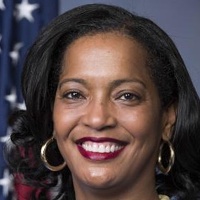
Jahana Hayes
Representative
CT
Jahana Hayes
Representative
CT
The Department of Education Protection Act prohibits the Department of Education from using federal funds to reorganize, decentralize, or reduce its staffing and operations. This legislation mandates that the Department must maintain the structure, authority, and functions that were in place as of January 1, 2025.
The LNG Public Interest Determination Act of 2025 mandates that the Secretary of Energy conduct rigorous climate, economic, and environmental justice assessments before authorizing any natural gas exports to ensure they align with the public interest.

Sean Casten
Representative
IL
Sean Casten
Representative
IL
The LNG Public Interest Determination Act of 2025 mandates that the Secretary of Energy approve natural gas exports only after a rigorous public interest review. This process requires comprehensive climate, economic, and environmental justice assessments to ensure that exports do not negatively impact U.S. consumer prices, global climate goals, or vulnerable communities. Additionally, the bill eliminates previous regulatory exemptions, ensuring all export authorizations undergo full environmental review under the National Environmental Policy Act.
This bill honors the life, achievements, and legacy of President Jimmy Carter, recognizing his dedication to public service, human rights, and global peace. It acknowledges his lasting impact as a leader and statesman.
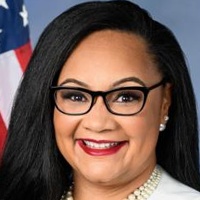
Nikema Williams
Representative
GA
Nikema Williams
Representative
GA
This bill honors the life, achievements, and legacy of Jimmy Carter, recognizing his service as a naval officer, farmer, state senator, Governor, and President. It also acknowledges his post-presidency work promoting peace, democracy, and human rights through the Carter Center, as well as his dedication to Habitat for Humanity. The bill expresses condolences to his family upon his passing and celebrates his lasting impact as a leader and statesman.
The Health Care Affordability Act of 2025 expands access to premium tax credits by removing income eligibility caps and implementing a new sliding-scale contribution formula.

Lauren Underwood
Representative
IL
Lauren Underwood
Representative
IL
The Health Care Affordability Act of 2025 expands access to health insurance by removing the 400% federal poverty level income cap for premium tax credits. It also introduces a new sliding-scale contribution formula to ensure that insurance costs remain affordable for households across all income levels. These changes are set to take effect for taxable years beginning after December 31, 2025.
The Amputation Reduction and Compassion (ARC) Act of 2025 aims to reduce preventable amputations by establishing a national peripheral artery disease (PAD) education program and mandating cost-free PAD screening for at-risk Medicare and Medicaid beneficiaries.

LaMonica McIver
Representative
NJ
LaMonica McIver
Representative
NJ
The Amputation Reduction and Compassion (ARC) Act of 2025 aims to reduce avoidable amputations caused by peripheral artery disease (PAD) through increased public awareness and improved access to care. The bill establishes a national PAD education program and mandates that Medicare and Medicaid cover essential screening tests for at-risk beneficiaries with no out-of-pocket costs. Additionally, it directs the development of clinical quality measures and launches a pilot program to improve early detection and treatment, ultimately prioritizing limb preservation over amputation.
The "Dental Care for Veterans Act" expands dental care benefits for veterans, phasing in eligibility over four years to mirror the provision of other medical services within the Department of Veterans Affairs.
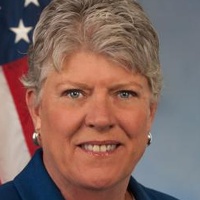
Julia Brownley
Representative
CA
Julia Brownley
Representative
CA
The Dental Care for Veterans Act aims to improve veterans' access to dental care by integrating it more closely with other medical services provided by the Department of Veterans Affairs. This bill removes specific limitations and updates existing code to allow the Secretary to provide comprehensive dental care, including dentures and appliances. The implementation of these expanded benefits will be phased in over four years, prioritizing veterans based on existing eligibility criteria. Additionally, the bill makes necessary clerical updates to reflect these changes in the U.S. Code.
Establishes a commission to study the history and impact of slavery and discrimination against African Americans from 1619 to the present and to develop proposals for reparations, including recommending appropriate remedies and educating the public on the commission's findings. The commission will submit its findings to Congress within 18 months of its first official meeting.
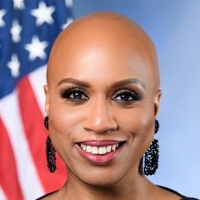
Ayanna Pressley
Representative
MA
Ayanna Pressley
Representative
MA
The "Commission to Study and Develop Reparation Proposals for African Americans Act" establishes a commission to examine the history of slavery and discrimination in the United States from 1619 to the present. The commission will study the lingering negative effects of these injustices on living African Americans and U.S. society, and recommend appropriate remedies, including how to educate the American public on its findings to promote racial healing and understanding. The commission will submit a written report of its findings and recommendations to Congress within 18 months of its first official meeting, and the act authorizes the appropriation of $20,000,000 to implement the provisions of this act.
The Washington, D.C. Admission Act provides for the admission of the State of Washington, Douglass Commonwealth into the Union while establishing a reduced federal Capital district and outlining the legal framework for the transition.

Eleanor Norton
Representative
DC
Eleanor Norton
Representative
DC
The Washington, D.C. Admission Act proposes admitting the State of Washington, Douglass Commonwealth into the Union, while maintaining a reduced federal district to serve as the nation’s capital. The bill establishes a comprehensive framework for the transition, including the election of congressional representatives, the transfer of local government authority, and the gradual shift of federal responsibilities to the new state. This legislation aims to grant D.C. residents full voting representation in Congress while ensuring the continued security and operation of the federal seat of government.