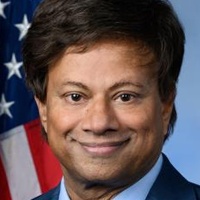
Legislative Activity
Track Shri's sponsored bills, co-sponsored legislation, and voting record
The Local Communities & Bird Habitat Stewardship Act of 2026 establishes a voluntary program and grant initiative to support community-led efforts in conserving, restoring, and protecting bird habitats within urban areas.

Debbie Dingell
Representative
MI
Debbie Dingell
Representative
MI
The Local Communities Bird Habitat Stewardship Act of 2026 establishes a voluntary Urban Bird Treaty Program to protect and restore bird habitats within urban areas. Through partnerships and a competitive grant program, the initiative supports local organizations in reducing urban hazards, conducting scientific monitoring, and engaging communities in conservation efforts.
This bill establishes a mandatory timeline and binding arbitration process to expedite the negotiation of first-time collective bargaining agreements between employers and newly certified unions.
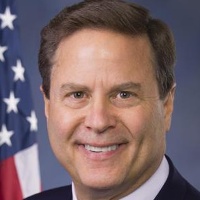
Donald Norcross
Representative
NJ
Donald Norcross
Representative
NJ
The Faster Labor Contracts Act aims to speed up the process of securing a first collective bargaining agreement after a union is certified. It establishes a mandatory timeline, including mediation and binding arbitration, if an agreement is not reached within 90 days of bargaining. This process is designed to prevent lengthy delays that currently weaken the union's position. The bill also requires a GAO report on current time-to-contract averages.
This bill expresses support for designating June 5, 2026, as "National Gun Violence Awareness Day" and June 2026 as "National Gun Violence Awareness Month" to honor victims and promote awareness of gun violence.
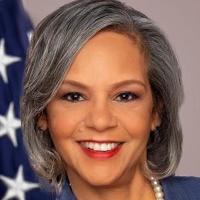
Robin Kelly
Representative
IL
Robin Kelly
Representative
IL
This bill expresses support for designating June 5, 2026, as "National Gun Violence Awareness Day" and the entire month of June 2026 as "National Gun Violence Awareness Month." The designations aim to honor the nearly 47,000 people killed by gunfire each year and raise public awareness about the devastating impact of gun violence. The resolution encourages the public to wear orange on that day and focus on community efforts to promote gun safety.
The Department of Homeland Security Accountability Act of 2026 mandates timely congressional notification and independent investigations into all serious injuries or deaths occurring within DHS custody or resulting from agency actions.
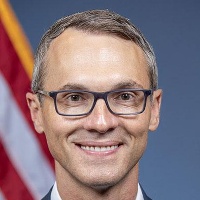
James Walkinshaw
Representative
VA
James Walkinshaw
Representative
VA
The Department of Homeland Security Accountability Act of 2026 mandates that the DHS notify Congress and local representatives within 72 hours of any serious injury or death occurring in its custody or resulting from personnel actions. The bill requires independent investigations into these incidents, establishes strict evidence preservation protocols, and enforces administrative leave for employees involved in lethal force incidents. These measures aim to increase transparency and ensure rigorous oversight of DHS operations.
This act amends federal law to require labeling of foods containing gluten-containing grains as a major food allergen.
Emanuel Cleaver
Representative
MO
Emanuel Cleaver
Representative
MO
The Celiac Safety Act of 2026 amends federal law to officially classify gluten-containing grains (wheat, rye, and barley) as a major food allergen. This change mandates that foods containing these grains must be clearly labeled as such, similar to existing major allergens like peanuts or milk. This new labeling requirement will take effect 18 months after the Act's enactment.
This resolution expresses support for designating May 2026 as Mental Health Awareness Month to address the worsening mental health crisis and promote access to care.
Andrea Salinas
Representative
OR
Andrea Salinas
Representative
OR
This resolution expresses support for designating May 2026 as Mental Health Awareness Month. It highlights the urgent and worsening national mental health crisis, citing alarming statistics across various demographics, including youth and high-risk groups. The bill aims to remove stigma, declare mental health a national priority, and support expanded funding and access to necessary services.
The American High-Speed Rail Act significantly expands federal support for high-speed rail development by increasing funding, broadening eligibility, updating safety and technology requirements, and facilitating property acquisition and freight right-of-way transfers.
Seth Moulton
Representative
MA
Seth Moulton
Representative
MA
The American High-Speed Rail Act significantly expands federal support for high-speed and higher-speed rail development by increasing funding limits, broadening eligibility for public-private partnerships, and establishing new planning and safety requirements. The bill authorizes substantial funding through 2031 for corridor development and planning, while also creating pathways for acquiring necessary right-of-way property and ensuring labor protections on federally-funded infrastructure. It also refines definitions, setting the threshold for true "high-speed rail" at 186 mph or more, and introduces a new category for "higher-speed rail."
This bill condemns the President's racist rhetoric targeting Indian and Chinese Americans while reaffirming the vital contributions of immigrants from all backgrounds to the United States.
Raja Krishnamoorthi
Representative
IL
Raja Krishnamoorthi
Representative
IL
This resolution strongly condemns the President's use of racist rhetoric targeting Indian and Chinese Americans. It reaffirms the vital contributions of immigrants from all backgrounds to the United States. Finally, the bill calls on all elected officials to cease using language that promotes racial or ethnic division.
The Stay Cool Act coordinates federal heat response, funds community cooling centers and housing upgrades, and invests in urban green infrastructure to mitigate extreme heat risks.
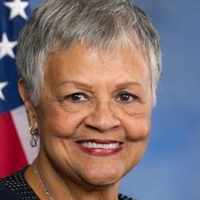
Bonnie Watson Coleman
Representative
NJ
Bonnie Watson Coleman
Representative
NJ
The **Stay Cool Act** is a comprehensive bill designed to combat the dangers of extreme heat through coordinated federal response, improved public warnings, and direct aid to vulnerable seniors. It establishes significant grant programs to fund community cooling centers, upgrade public housing with air conditioning, and develop urban green spaces and water features for neighborhood cooling. Overall, the legislation aims to increase community resilience, protect residents in federally assisted housing, and ensure more equitable access to safe, cool environments during heat emergencies.
This bill establishes the Smithsonian American Women's History Museum, designates its site on the National Mall, and sets requirements for its mission, construction, and diverse representation of viewpoints.
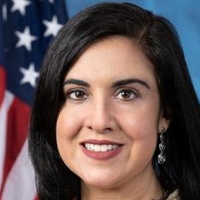
Nicole Malliotakis
Representative
NY
Nicole Malliotakis
Representative
NY
This act officially establishes the Smithsonian American Women’s History Museum and designates its location on the National Mall, requiring the transfer of land jurisdiction to the Smithsonian Institution. The museum is mandated to preserve and present the history and achievements of biological women in the United States. Furthermore, the legislation requires that exhibits and programs reflect diverse political viewpoints and authentic experiences of women, as guided by a broad array of knowledgeable sources.
This bill expands Medicare Part B coverage to reimburse for specific pharmacist services related to testing and treatment for certain public health threats, effective January 1, 2026.

Adrian Smith
Representative
NE
Adrian Smith
Representative
NE
The Ensuring Community Access to Pharmacist Services Act expands Medicare Part B coverage to include services provided by pharmacists starting January 1, 2026. This coverage is specifically for testing or treatment related to COVID-19, the flu, RSV, strep throat, or during a declared public health emergency. The bill outlines payment structures, generally covering 80% of the cost, and prohibits pharmacists from balance billing Medicare patients for these covered services.
The Provider Reimbursement Stability Act of 2026 reforms Medicare physician payment policies by updating budget neutrality thresholds, establishing a correction process for utilization estimates, mandating periodic updates to practice expense data, and limiting annual conversion factor fluctuations.
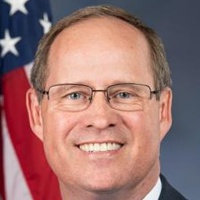
Gregory Murphy
Representative
NC
Gregory Murphy
Representative
NC
The Provider Reimbursement Stability Act of 2026 aims to improve the accuracy and predictability of Medicare physician payments. The bill reforms budget neutrality calculations, mandates periodic updates to practice expense cost data, and establishes a 2.5% cap on annual conversion factor fluctuations. These measures are designed to ensure more stable reimbursement rates for healthcare providers.
This bill establishes a national public awareness campaign, the SCREEN for Type 1 Diabetes Act, to promote the detection, screening, and management of type 1 diabetes among the public and healthcare providers.

Kim Schrier
Representative
WA
Kim Schrier
Representative
WA
This bill, the SCREEN for Type 1 Diabetes Act of 2026, mandates the creation of a national public awareness campaign to promote the detection, screening, and management of type 1 diabetes. The campaign will utilize evidence-based materials and public service announcements targeted at both healthcare providers and the general public. It also authorizes funding for grants to support local efforts in increasing screening rates, particularly in highly affected communities.
This bill authorizes the minting and sale of commemorative gold and silver coins to honor the 25th anniversary of the September 11, 2001, terrorist attacks, with surcharges supporting the National September 11 Memorial and Museum.

Dan Goldman
Representative
NY
Dan Goldman
Representative
NY
This bill authorizes the Secretary of the Treasury to mint and issue commemorative gold and silver coins marking the 25th anniversary of the September 11, 2001, terrorist attacks. The coins will honor the victims, first responders, and survivors, with designs selected in consultation with the National September 11 Memorial and Museum. All surcharges from the sale of these coins will be paid directly to the Memorial and Museum to support its operations and maintenance.
This bill reauthorizes the program collecting civil rights cold case records, expands the Review Board's authority to obtain and release historical files, and extends the Board's operating tenure to eleven years.
Bonnie Watson Coleman
Representative
NJ
Bonnie Watson Coleman
Representative
NJ
This bill reauthorizes the Civil Rights Cold Case Records Collection program, ensuring its continued operation to gather historical documents related to unsolved civil rights investigations. It strengthens the Civil Rights Cold Case Review Board's authority to obtain and expedite the public release of federal, state, and local records, removing previous opt-out exceptions for state and local entities. Furthermore, the legislation extends the tenure of the Review Board from seven to eleven years to complete its review process.
This bill prohibits using federal funds for specific settlement payments, particularly those related to the *Trump, et al. v. IRS, et al.* case, and restricts certain compromise settlements from the Judgment Fund to high-ranking officials and specific types of claims.
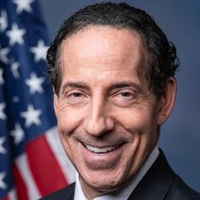
Jamie Raskin
Representative
MD
Jamie Raskin
Representative
MD
This Act prohibits the use of federal funds for specific settlement payments, including those related to the *Trump, et al. v. IRS, et al.* case. It places new restrictions on the Judgment Fund, barring payments to high-ranking officials, their relatives, and certain entities for specific types of claims. The bill also establishes strict reporting and notification requirements for large government compromise settlements.
This bill imposes a 100% tax and public reporting requirements on certain settlement payments received by former Presidents, their families, and related entities from civil actions against the United States.
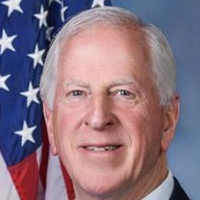
Mike Thompson
Representative
CA
Mike Thompson
Representative
CA
The SLUSH FUND Act of 2026 imposes a 100% tax on certain settlement payments received by former Presidents, their families, and related entities from funds originating from civil actions against the United States. This new tax is treated separately from standard income tax and cannot be deducted. The Act also mandates strict reporting requirements for those making these payments, with penalties for non-compliance.
This bill supports designating May 29, 2026, as "Mental Health Awareness in Agriculture Day" to raise awareness and reduce stigma surrounding mental health in the agricultural industry.
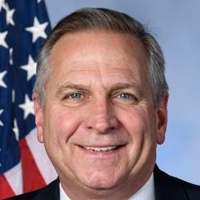
Mike Bost
Representative
IL
Mike Bost
Representative
IL
This bill supports designating May 29, 2026, as "Mental Health Awareness in Agriculture Day." The goal is to raise awareness about the unique mental health challenges faced by the agricultural industry and workforce. It also aims to continue reducing the stigma associated with mental illness in this vital sector.
This Act restores overtime pay protections by phasing in higher minimum salary thresholds and tightening the duties test for executive, administrative, and professional employees exempt from federal overtime requirements.
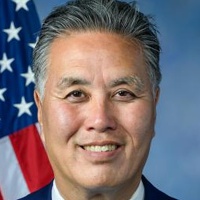
Mark Takano
Representative
CA
Mark Takano
Representative
CA
The Restoring Overtime Pay Act of 2026 significantly updates overtime exemptions under the Fair Labor Standards Act. It establishes a phased-in, rising minimum salary threshold for executive, administrative, and professional employees to qualify for overtime exemption, eventually tying it to national earnings data. Additionally, the bill tightens the "duties test," reducing the amount of non-exempt work an employee can perform while remaining exempt from overtime pay. These changes aim to restore overtime eligibility to more salaried workers.
The Lainie Jones Comprehensive Cancer Survivorship Act of 2026 establishes a framework for improving cancer survivorship care through enhanced planning, payment models, employment assistance, grant programs, and expanded Medicaid coverage for transitions and fertility services.
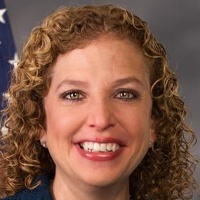
Debbie Wasserman Schultz
Representative
FL
Debbie Wasserman Schultz
Representative
FL
The Lainie Jones Comprehensive Cancer Survivorship Act of 2026 aims to improve the full spectrum of care for cancer survivors, from diagnosis through the remainder of life. The bill establishes an Office of Cancer Survivorship, mandates Medicare coverage for care planning, and creates programs to support employment and comprehensive survivorship services. It also requires Medicaid to cover essential transition services for childhood cancer survivors and mandates fertility preservation coverage for all cancer patients.