Legislative Activity
Track Dina's sponsored bills, co-sponsored legislation, and voting record
The My Body, My Data Act of 2025 establishes strict limits on the collection, use, and sharing of personal reproductive and sexual health information, while granting individuals robust rights to access, correct, and delete their sensitive data.
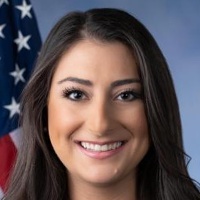
Sara Jacobs
Representative
CA
Sara Jacobs
Representative
CA
The My Body, My Data Act of 2025 establishes strict federal protections for personal reproductive and sexual health information held by regulated entities. This law limits data collection and sharing to only what is strictly necessary for providing requested services. It grants individuals the rights to access, correct, and delete this sensitive data, and requires clear public privacy policies detailing data handling practices. Finally, the Act prohibits retaliation against individuals who exercise these new privacy rights and grants enforcement authority to the FTC while allowing individuals to sue violators.
The Kids on the Go Act of 2025 incentivizes states to hire a Safe Routes to School Coordinator by increasing the federal funding share for related projects to 95 percent.
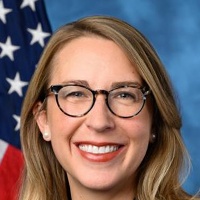
Hillary Scholten
Representative
MI
Hillary Scholten
Representative
MI
The Kids on the Go Act of 2025 mandates that every state must designate a Safe Routes to School Coordinator. States that comply with this requirement will receive an increased federal funding share of 95% for eligible Safe Routes to School projects. This aims to boost state efforts in improving safety for students traveling to and from school.
This resolution expresses the House's sense that the U.S. must take urgent, coordinated action to address the national housing crisis through the preservation and production of affordable housing.

Shontel Brown
Representative
OH
Shontel Brown
Representative
OH
This resolution declares the severe lack of affordable housing a national crisis requiring urgent, coordinated action. It calls upon federal, state, and local governments, alongside private and nonprofit partners, to prioritize the production of new affordable units and the preservation of existing ones. The bill emphasizes the need for smart policies that encourage building, protect tenants, and ensure housing stability for all Americans.
This Act establishes new procedures for Federal Firearms Licensees when background checks are delayed, mandates reporting on delayed and denied transfers, and removes a specific time limit from existing background check law.

James Clyburn
Representative
SC
James Clyburn
Representative
SC
The Enhanced Background Checks Act of 2025 reforms federal firearm background check procedures, establishing a formal petition process for buyers when the system delays a decision beyond 10 business days. This bill removes the previous 10-day time limit on background checks under the Brady Act while mandating extensive reporting from the GAO and FBI on the effectiveness and outcomes of these delayed transfers. Furthermore, the Attorney General must report on the law's impact on domestic violence victims within 150 days of enactment.
This Act mandates that most private firearm transfers must go through a licensed dealer to ensure background checks are performed on all purchasers.
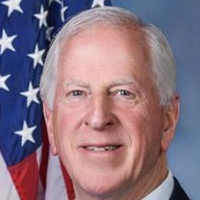
Mike Thompson
Representative
CA
Mike Thompson
Representative
CA
The Bipartisan Background Checks Act of 2025 aims to strengthen existing federal background check systems to prevent prohibited persons from acquiring firearms. This bill primarily mandates that most private firearm transfers must be facilitated through a licensed dealer who will conduct a background check. The legislation includes specific exceptions for family gifts, law enforcement, and temporary transfers under emergency circumstances.
The Elder Pride Protection Act of 2025 establishes an Attorney General-led task force to combat abuse specifically targeting older LGBTQI+ individuals through investigation, guideline development, and training.
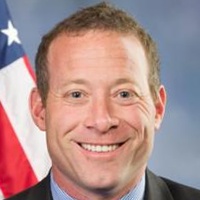
Josh Gottheimer
Representative
NJ
Josh Gottheimer
Representative
NJ
The Elder Pride Protection Act of 2025 establishes the ELDER Task Force within the Department of Justice to combat abuse targeting older LGBTQI+ individuals. This group is charged with studying the causes of this abuse, developing national best practices, and creating training materials for law enforcement. The Task Force must report its findings and progress to Congress within one year of the Act's enactment.
The Pride In Mental Health Act of 2025 establishes grants and federal initiatives to improve mental health services and research specifically for LGBTQ+ youth while explicitly prohibiting the use of funds for conversion therapy.
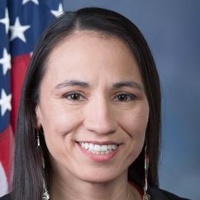
Sharice Davids
Representative
KS
Sharice Davids
Representative
KS
The Pride In Mental Health Act of 2025 establishes a new grant program to improve mental health and substance abuse outcomes for LGBTQ+ youth through culturally competent care and resource development. These grants strictly prohibit funding for conversion therapy practices. The bill also mandates federal data collection on LGBTQ+ youth mental health and requires a report on the needs of those in foster care.
The POST GRAD Act reinstates the government's authority to issue Federal Direct Stafford Loans to graduate and professional students until June 30, 2025, without requiring standard rulemaking procedures.
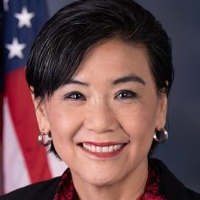
Judy Chu
Representative
CA
Judy Chu
Representative
CA
The POST GRAD Act reinstates the government's authority to issue Federal Direct Stafford Loans to graduate and professional students through June 30, 2025. This legislation amends existing law to extend the availability of these federal loans. Furthermore, the Act allows these changes to take effect immediately by exempting them from standard federal rulemaking and public comment requirements.
This resolution commemorates the victims of the 1989 Tiananmen Square massacre while condemning the Chinese Communist Party's ongoing suppression of human rights and freedoms in mainland China and Hong Kong.
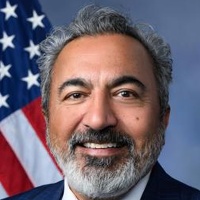
Ami Bera
Representative
CA
Ami Bera
Representative
CA
This resolution formally condemns the Chinese Communist Party for the 1989 Tiananmen Square massacre and its ongoing crackdown on human rights and freedoms in mainland China and Hong Kong. It demands that the PRC cease censorship regarding the massacre and uphold its commitments to Hong Kong's autonomy. Furthermore, the resolution expresses solidarity with victims and calls for accountability regarding abuses in Xinjiang and the suppression of democracy.
This bill mandates a comprehensive economic study to quantify the financial costs of extreme heat across health, property, labor, and infrastructure sectors.

Yassamin Ansari
Representative
AZ
Yassamin Ansari
Representative
AZ
The Extreme Heat Economic Study Act of 2025 mandates a comprehensive study, led by NOAA, to quantify the full financial costs of extreme heat events in the United States. This study must analyze impacts across health, property damage, labor productivity, and critical infrastructure like energy and agriculture. The final report will recommend a national system for tracking and publicly reporting these economic losses within four years of enactment.
This act repeals certain provisions of the Protection of Lawful Commerce in Arms Act and allows federal gun trace information to be discoverable and admissible in civil proceedings.
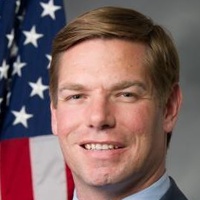
Eric Swalwell
Representative
CA
Eric Swalwell
Representative
CA
The Equal Access to Justice for Victims of Gun Violence Act of 2025 repeals key provisions of the Protection of Lawful Commerce in Arms Act. This legislation allows federal gun trace information to be discoverable and admissible as evidence in civil lawsuits and administrative hearings. The bill aims to provide victims of gun violence with greater access to relevant data in legal proceedings.
The Complete Streets Act of 2025 establishes a federal program requiring states to create local plans and adopt design standards to ensure all new and reconstructed federally funded roads safely accommodate pedestrians, cyclists, transit users, and drivers of all ages and abilities.

Steve Cohen
Representative
TN
Steve Cohen
Representative
TN
The Complete Streets Act of 2025 establishes a new federal program to ensure public roads are designed safely for all users, including pedestrians, cyclists, transit riders, and drivers of all ages and abilities. This requires states to create competitive programs offering technical assistance and construction grants to local entities that adopt formal Complete Streets policies. The law mandates the creation of federal design standards that must be incorporated into future federally funded road construction and reconstruction projects, with specific requirements for accessibility and safety improvements. Furthermore, states must commit a portion of their existing federal highway funds to support these new Complete Streets initiatives.
The BARK Act of 2025 shields good-faith donors of pet food and supplies from liability unless gross negligence or intentional harm is proven.
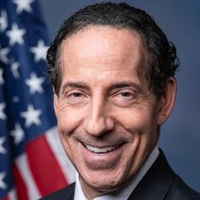
Jamie Raskin
Representative
MD
Jamie Raskin
Representative
MD
The BARK Act of 2025 aims to encourage the donation of pet food and supplies during emergencies and for charitable purposes. It provides liability protection to donors and distributing organizations against lawsuits related to the condition of donated items, provided there is no gross negligence or intentional harm. This protection applies to items that appear fit for use, even if they don't meet all commercial sales standards, provided proper disclosure and reconditioning procedures are followed.
The Excess Urban Heat Mitigation Act of 2025 establishes a grant program to fund projects, prioritizing low-income areas, that reduce extreme heat in urban environments through measures like tree planting and installing cooling infrastructure.
Yassamin Ansari
Representative
AZ
Yassamin Ansari
Representative
AZ
The Excess Urban Heat Mitigation Act of 2025 establishes a new grant program to combat dangerous urban heat islands, which disproportionately affect low-income and minority communities. This program will fund eligible entities for projects like tree planting, installing cool pavements, and establishing cooling centers. At least 75% of the annual funding must target designated low-income census tracts, ensuring resources are directed to the most vulnerable areas. The Act authorizes $30 million annually through fiscal year 2033 to support these essential mitigation efforts.
This Act establishes a coordinated federal response to extreme heat by creating an interagency committee and a National Integrated Heat Health Information System within NOAA to reduce heat-related health risks.
Yassamin Ansari
Representative
AZ
Yassamin Ansari
Representative
AZ
The Coordinated Federal Response to Extreme Heat Act of 2025 establishes a unified federal approach to mitigating the health and safety risks posed by extreme heat. It creates an Interagency Committee within NOAA to coordinate efforts across numerous federal departments and mandates the development of a National Integrated Heat Health Information System (NIHHIS). This new system will provide open access to data, forecasts, and science-backed tools to improve national preparedness and response to dangerous heat events. The Act authorizes $5 million annually through fiscal year 2029 to support these initiatives.
This bill establishes an FBI Animal Cruelty Crimes Taskforce to investigate federal animal cruelty laws, train local law enforcement, and report annually to Congress on enforcement efforts.
Josh Gottheimer
Representative
NJ
Josh Gottheimer
Representative
NJ
The FBI Animal Cruelty Taskforce Act of 2025 establishes a dedicated Animal Cruelty Crimes Taskforce within the FBI to investigate and enforce federal laws against severe animal cruelty, such as dogfighting and crush videos. This Taskforce is also responsible for developing training materials for local law enforcement. Furthermore, it must coordinate with other federal agencies and submit annual reports to Congress detailing enforcement statistics, including charges filed and convictions secured.
This resolution officially designates the Friday before Memorial Day as National Poppy Day to honor veterans and encourage the wearing of the poppy as a symbol of remembrance.

André Carson
Representative
IN
André Carson
Representative
IN
This resolution officially designates the Friday before Memorial Day as **National Poppy Day** to honor U.S. veterans. It recognizes the poppy as a long-standing symbol of remembrance for those who died in service, inspired by World War I. The bill encourages all citizens to wear a red poppy on this day to show appreciation for our fallen service members.
This act mandates that FHA loan disclosures include comparable VA loan information and requires lenders to ask about military service on standard loan applications.
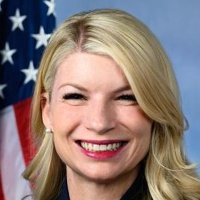
Brittany Pettersen
Representative
CO
Brittany Pettersen
Representative
CO
The VA Loan Informed Disclosure Act of 2025 (VALID Act) aims to increase awareness of VA loan options among homebuyers. It requires lenders to include comparative information about potential VA loan terms on standard FHA disclosure forms. Furthermore, the Act mandates that the Uniform Residential Loan Application include a prominent question regarding the applicant's military service.
This resolution expresses strong support for designating June 6, 2025, as National Gun Violence Awareness Day and June 2025 as National Gun Violence Awareness Month to honor victims and promote awareness.
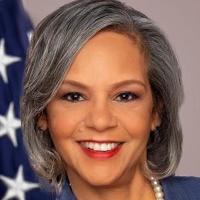
Robin Kelly
Representative
IL
Robin Kelly
Representative
IL
This resolution expresses strong support for designating June 6, 2025, as "National Gun Violence Awareness Day" and June 2025 as "National Gun Violence Awareness Month." It highlights the devastating scale of gun violence in the U.S., recognizing the thousands of annual deaths and injuries across all demographics. The bill encourages Americans to wear orange on the designated day to honor victims and promote increased awareness and community action regarding gun safety.
The Magnus White Cyclist Safety Act of 2025 mandates the Department of Transportation to establish performance standards for automatic emergency braking systems in new passenger vehicles that effectively detect vulnerable road users, including cyclists, in all light conditions.
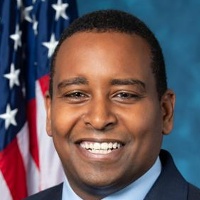
Joe Neguse
Representative
CO
Joe Neguse
Representative
CO
The Magnus White Cyclist Safety Act of 2025 mandates the Department of Transportation to establish performance standards for automatic emergency braking systems in new passenger vehicles. These standards must ensure the systems can detect vulnerable road users, including cyclists, in various lighting conditions. The final rule must be issued within three years, with compliance required within two model years following the rule's issuance.