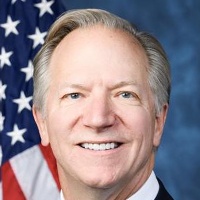
Legislative Activity
Track Robert's sponsored bills, co-sponsored legislation, and voting record
This bill mandates the creation of a single, uniform medical credentialing and privileging system shared by the Department of Defense and the Department of Veterans Affairs.
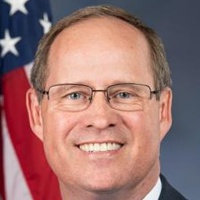
Gregory Murphy
Representative
NC
Gregory Murphy
Representative
NC
This bill mandates the Department of Defense and the Department of Veterans Affairs to create a single, uniform system for credentialing and privileging medical providers. The departments must first report on their existing systems and then jointly select one system to be implemented by January 1, 2028. This integration aims to streamline the process for medical providers serving both agencies.
This bill establishes a federal crime and civil cause of action against anyone who knowingly administers an abortion-inducing drug to a woman without her informed consent.
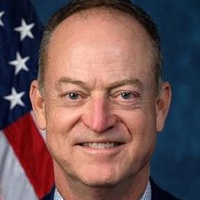
Mark Messmer
Representative
IN
Mark Messmer
Representative
IN
The Forced Abortion Prevention and Accountability Act establishes a new federal crime prohibiting the knowing and intentional administration of abortion-inducing drugs to a pregnant woman without her informed consent. This legislation creates severe criminal penalties, including up to 25 years in prison, for those who violate this prohibition or attempt to do so. Furthermore, it grants victims the right to file a civil lawsuit to recover damages for physical and psychological injuries resulting from forced abortions.
This act prohibits state and local governments from enacting regulations that restrict energy service based on the type or source of energy sold in interstate commerce.
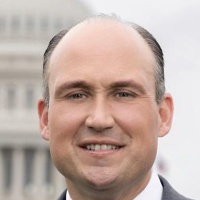
Nicholas Langworthy
Representative
NY
Nicholas Langworthy
Representative
NY
The Energy Choice Act places federal restrictions on state and local governments, preventing them from enacting regulations that prohibit or limit energy service based on its type or source. This means local governments cannot ban or restrict access to energy services sold in interstate commerce. The legislation aims to ensure consistent access to various energy sources across jurisdictions.
This act grants the Federal Energy Regulatory Commission (FERC) exclusive authority to approve or deny natural gas and LNG terminal applications, deeming such exports and imports consistent with the public interest, while preserving presidential sanction authority.
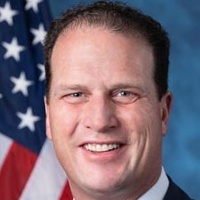
August Pfluger
Representative
TX
August Pfluger
Representative
TX
This act grants the Federal Energy Regulatory Commission (FERC) exclusive authority to approve or deny applications for natural gas and LNG export/import facilities, mandating that such actions be considered consistent with the public interest. The legislation clarifies that it does not limit the President's existing authority to impose sanctions through trade restrictions.
This act prohibits Medicare-approved medical residency programs from requiring participation in abortion-related training unless the resident voluntarily opts in.
Gregory Murphy
Representative
NC
Gregory Murphy
Representative
NC
This Act prohibits Medicare-approved medical residency programs from requiring participation in abortion-related training. Programs that offer abortion training must ensure it is strictly voluntary, allowing residents to opt-in without facing discrimination. This ensures medical residents are not compelled to participate in abortion procedures, assistance, or referrals against their conscience.
This bill prohibits the use of federal funds to cover any expenses related to abortion services for individuals unlawfully present in the United States.
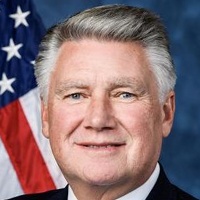
Mark Harris
Representative
NC
Mark Harris
Representative
NC
This bill, the "No Taxpayer Funded Abortion Travel for Illegal Aliens Act," prohibits the use of federal funds to cover any expenses related to abortion services for individuals unlawfully present in the United States. These prohibited expenses include travel, lodging, meals, and related support services. The legislation specifically targets federal funding for aiding unlawful immigrants in accessing abortion care.
This bill removes the requirement for union members to exhaust internal remedies before pursuing legal action against their union or its officers.
Mark Harris
Representative
NC
Mark Harris
Representative
NC
The Fair Access to Justice for Union Members Act removes the requirement for union members to complete internal hearing procedures before pursuing legal or administrative action against their union or its officers. This change aims to streamline the process for members seeking justice or resolution outside of the union's internal structure. The provision will take effect 18 months after enactment.
This Act mandates that labor organizations must secure a majority vote via secret ballot referendum from their members to ratify collective bargaining agreements or authorize strikes.
Mark Harris
Representative
NC
Mark Harris
Representative
NC
The Ask the Union Members Act mandates that labor organizations must secure approval from a majority of their members through a secret ballot referendum to ratify a collective bargaining agreement or authorize a strike. This ensures that major decisions affecting union members are approved directly by those members via a secret vote. These new requirements will take effect 18 months after the Act's enactment.
This resolution condemns the persecution of Christians in Nigeria and supports decisive U.S. action to end the existential threat they face.
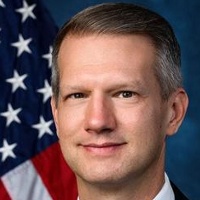
Riley Moore
Representative
WV
Riley Moore
Representative
WV
This resolution condemns the severe, ongoing persecution and mass killing of Christians in Nigeria by terrorist groups and militants. It criticizes the Nigerian government for failing to protect its Christian citizens and for enforcing blasphemy laws. Finally, Congress stands ready to support decisive action, including sanctions, to end this existential threat and calls for direct humanitarian aid to victims.
This resolution commends President Trump for redesignating Nigeria as a Country of Particular Concern due to severe religious freedom violations and calls for specific U.S. policy actions, including aid conditioning and targeted sanctions.
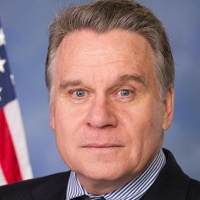
Christopher Smith
Representative
NJ
Christopher Smith
Representative
NJ
This resolution commends President Trump for redesignating Nigeria as a Country of Particular Concern due to severe and ongoing religious freedom violations. It details extensive violence against religious minorities, primarily Christians, by extremist groups and highlights the Nigerian government's failure to act. The bill calls for specific U.S. foreign policy actions, including conditioning aid and imposing targeted sanctions on responsible individuals and groups.
The SAFE Drivers Act mandates that all commercial driver's license applicants and renewal candidates must pass a standardized English proficiency test approved by the FMCSA.
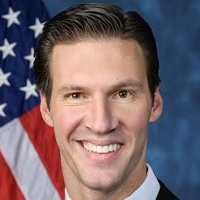
Pat Harrigan
Representative
NC
Pat Harrigan
Representative
NC
The SAFE Drivers Act mandates that all applicants for a Commercial Driver's License (CDL) or learner's permit must pass a standardized English proficiency test approved by the FMCSA. This requirement applies immediately upon the bill's enactment for all new and renewing applicants. States are responsible for administering the test, and failure to comply with these new federal oversight rules may result in the withholding of federal highway funding.
This Act mandates that Congress must approve the budget and all appropriations bills by October 1st or Members of Congress will forfeit their pay for the period of non-compliance, effective September 29, 2027.
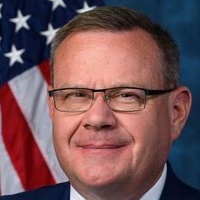
Tim Moore
Representative
NC
Tim Moore
Representative
NC
The No Budget, No Pay Act mandates that Congress must pass the concurrent budget resolution and all necessary appropriations bills by October 1st each year. If Congress fails to meet this deadline, Members of Congress will have their pay suspended for the period of non-compliance. This suspension includes a prohibition on receiving any retroactive back pay for the time they were out of compliance. These provisions are set to take effect starting September 29, 2027.
The PAVE Act mandates that Medicare cover and require the verification and evaluation of reported penicillin allergies during seniors' initial and annual wellness visits to improve patient outcomes and antibiotic stewardship.
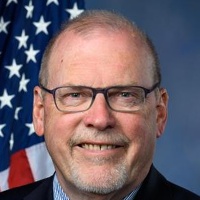
H. Griffith
Representative
VA
H. Griffith
Representative
VA
The Penicillin Allergy Verification and Evaluation (PAVE) Act addresses the widespread issue of inaccurate penicillin allergy labels, which often lead to poorer patient outcomes. This bill mandates that Medicare cover and require physicians to perform a formal penicillin allergy verification and evaluation for seniors during their initial and annual wellness visits. The goal is to correctly identify patients who can safely take penicillin, improving care and promoting responsible antibiotic stewardship.
This act streamlines the Nuclear Regulatory Commission's licensing process by allowing permits and licenses to be issued without mandatory hearings unless requested, and by updating procedural requirements for various nuclear facility applications.
H. Griffith
Representative
VA
H. Griffith
Representative
VA
The Efficient Nuclear Licensing Hearings Act streamlines the Nuclear Regulatory Commission's (NRC) process for issuing certain nuclear facility permits and licenses. This legislation allows the NRC to issue permits without automatically holding a full hearing if no affected party requests one. It also updates procedures to favor informal hearings when they are held and modifies timing requirements for license issuance.
This resolution honors the life and legacy of Charles "Charlie" James Kirk, condemns his assassination as political violence, and calls for a renewed commitment to civil discourse and American founding principles.

Mike Johnson
Representative
LA
Mike Johnson
Representative
LA
This resolution honors the life and legacy of Charles "Charlie" James Kirk, founder of Turning Point USA. It strongly condemns his assassination as an act of political violence. The bill calls for a renewed national commitment to civil discourse and the founding principles of the United States.
The Safe Step Act mandates that group health plans using medication step therapy establish clear, timely exception processes for patients and doctors when required drugs are medically inappropriate or ineffective.
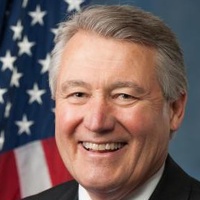
Rick Allen
Representative
GA
Rick Allen
Representative
GA
The Safe Step Act establishes mandatory, transparent exception processes for health plans that use "step therapy" protocols for prescription drugs. This ensures patients or their doctors can quickly request coverage for a prescribed medication when specific clinical criteria are met, such as previous treatment failure or risk of harm. Plans must decide on standard requests within 72 hours and urgent requests within 24 hours, and approved exceptions must last for at least one year. Furthermore, insurers must report detailed data annually on exception requests, approvals, and denials to the Secretary of Health and Human Services.
The GRID Power Act directs the Federal Energy Regulatory Commission to rapidly update interconnection rules to prioritize and expedite the connection of dispatchable power projects that enhance grid reliability and resilience.
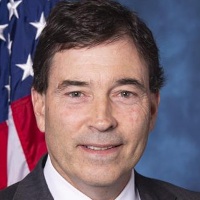
Troy Balderson
Representative
OH
Troy Balderson
Representative
OH
The GRID Power Act directs the Federal Energy Regulatory Commission (FERC) to rapidly update rules governing how new power plants connect to the electric grid. This legislation mandates that FERC prioritize and streamline the interconnection process for dispatchable power projects that demonstrably improve grid reliability and resilience. The goal is to ensure that necessary, dependable power sources can connect quickly while maintaining public input and regular review of the new procedures.
This bill establishes a mechanism to ensure the Federal Aviation Administration remains funded and operational during a lapse in appropriations by drawing from the Airport and Airway Trust Fund.
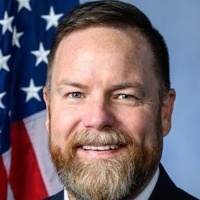
Aaron Bean
Representative
FL
Aaron Bean
Representative
FL
The Aviation Funding Stability Act of 2025 establishes a mechanism to ensure the Federal Aviation Administration (FAA) remains operational during a lapse in appropriations. If Congress fails to pass a budget, the FAA can draw from the Airport and Airway Trust Fund to continue existing programs and projects at the previous year's spending rate. This temporary funding lasts until a new budget is enacted or for a maximum of 30 days, whichever comes first. This measure aims to prevent disruptions to critical aviation services during government shutdowns.
This bill establishes the "CHOICE arrangement" as a new type of employer-funded health reimbursement plan integrated with individual market coverage, provides tax incentives for offering it, and allows participants to use pre-tax cafeteria plan funds for their coverage.
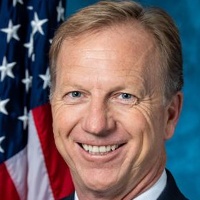
Kevin Hern
Representative
OK
Kevin Hern
Representative
OK
The Choice Arrangement Act of 2025 establishes new rules for employer-funded Health Reimbursement Arrangements (HRAs) integrated with individual health insurance, creating a "CHOICE arrangement." This legislation outlines specific nondiscrimination, substantiation, and notice requirements for employers offering these plans. Furthermore, the Act allows participants to use pre-tax cafeteria plan funds for their coverage and introduces a new, temporary tax credit for eligible small and medium-sized employers who offer these arrangements.
This Act mandates that new passenger motor vehicles sold in the U.S. must include standard equipment capable of receiving AM broadcast radio signals.

Gus Bilirakis
Representative
FL
Gus Bilirakis
Representative
FL
The AM Radio for Every Vehicle Act of 2025 mandates that the Secretary of Transportation establish a rule requiring AM broadcast radio receivers to be installed as standard equipment in new passenger motor vehicles. This requirement aims to ensure public access to AM radio signals, which are often used for emergency alerts. The bill also directs a GAO study on the effectiveness of AM radio within the national emergency alert system compared to other technologies. Finally, the Act preempts state and local laws on this matter and includes a sunset provision eight years after enactment.