
Legislative Activity
Track Eleanor's sponsored bills, co-sponsored legislation, and voting record
This Act establishes federal grants to fund unarmed mobile crisis response teams that divert nonviolent mental health and substance use calls away from police dispatch.
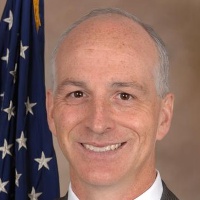
Adam Smith
Representative
WA
Adam Smith
Representative
WA
The 911 Community Crisis Responders Act of 2025 establishes a federal grant program to fund unarmed mobile crisis response teams across the nation. These teams will respond to nonviolent emergencies involving mental health, homelessness, or substance use, diverting calls away from law enforcement. Grantees must use funds for training, system upgrades, and reporting on program impact, including demographic data on those served. The goal is to ensure trained professionals provide appropriate, de-escalated care for individuals in crisis.
This Act modernizes FEMA's approach to extreme weather by establishing a panel to review disaster incident periods, expanding funding eligibility for heat and cold response projects, and mandating new guidance and a comprehensive study on the impacts of extreme temperatures.
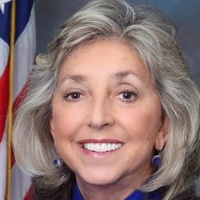
Dina Titus
Representative
NV
Dina Titus
Representative
NV
The Extreme Weather and Heat Response Modernization Act aims to update FEMA's approach to handling disasters, particularly those involving extreme heat and cold. It establishes a panel to review and modernize the definition of disaster "incident periods" to better account for slow-onset and complex weather events. Furthermore, the bill expands funding eligibility for mitigation projects focused on extreme heat and mandates comprehensive studies and new guidance to integrate extreme temperature preparedness across all FEMA operations.
This act bans the interstate transportation of horses using vehicles with two or more stacked levels.
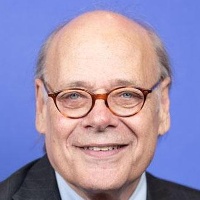
Steve Cohen
Representative
TN
Steve Cohen
Representative
TN
The Horse Transportation Safety Act of 2025 prohibits the interstate transport of horses using any truck or trailer with two or more stacked levels. This measure aims to enhance animal welfare during cross-state travel by banning multilevel transport configurations. Violators who knowingly break this rule face civil penalties ranging from $\$100$ to $\$500$ per violation.
This Act mandates the Attorney General to annually collect and report anonymized data on law enforcement interactions with individuals experiencing mental illness for research and statistical purposes.
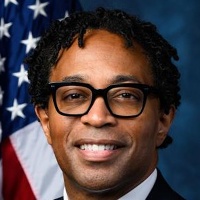
Wesley Bell
Representative
MO
Wesley Bell
Representative
MO
The Public Safety and Mental Health Reporting Act mandates the Attorney General to annually collect detailed, anonymized data on all law enforcement interactions with individuals experiencing mental illness. This data will be used exclusively for research and statistical analysis, with annual summaries reported to Congress and made publicly available. The goal is to better understand these encounters to improve public safety and mental health responses.
This Act establishes an independent National Police Misuse of Force Investigation Board to investigate deaths, shootings, and severe injury incidents involving police custody, and mandates support for victims' families.

Ilhan Omar
Representative
MN
Ilhan Omar
Representative
MN
The National Police Misuse of Force Investigation Board Act of 2025 establishes an independent federal board tasked with investigating deaths, shootings, and severe injuries resulting from police use of force. This Board will conduct thorough inquiries, issue public reports with findings and recommendations, and establish special boards of inquiry for high-profile cases. Furthermore, the Act imposes requirements on state and local governments receiving federal funds to ensure the Board's findings can be used in subsequent legal proceedings.
The Fairness, Inclusion, Rehabilitation, and Expungement for Incarcerated Firefighters Act (FIRE Act) extends workplace safety and wage protections to incarcerated firefighters, provides grants for state compliance and reentry programs, and establishes a process for expunging certain past convictions.
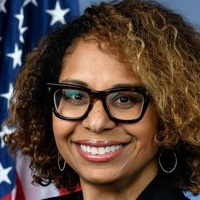
Sydney Kamlager-Dove
Representative
CA
Sydney Kamlager-Dove
Representative
CA
The Fairness, Inclusion, Rehabilitation, and Expungement for Incarcerated Firefighters Act (FIRE Act) ensures incarcerated firefighters receive workplace safety protections under OSHA and fair wage standards under the FLSA. The bill also establishes grant programs to help states implement these safety measures and support reentry services for former incarcerated firefighters. Finally, it creates a process for eligible individuals to petition the court to expunge certain past criminal convictions.
This bill mandates immediate medical attention for individuals in federal custody displaying medical distress and establishes penalties for officials who negligently fail to provide it.
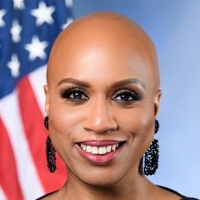
Ayanna Pressley
Representative
MA
Ayanna Pressley
Representative
MA
The Andrew Kearse Accountability for Denial of Medical Care Act of 2025 mandates that federal officials immediately provide or secure medical attention for individuals in federal custody displaying medical distress. Negligently failing to do so, resulting in unnecessary pain, injury, or death, is established as a federal crime punishable by fines or imprisonment. The bill also empowers State Attorneys General to sue federal officials over violations and requires mandatory training and confidential complaint mechanisms for agency staff.
This Act eliminates the legal doctrine of qualified immunity, making it easier to sue government officials for violating constitutional rights.
Ayanna Pressley
Representative
MA
Ayanna Pressley
Representative
MA
The Ending Qualified Immunity Act aims to restore accountability for government officials who violate constitutional rights. This bill eliminates the legal doctrine of qualified immunity, which currently shields officials from liability unless their actions violated a "clearly established" right. By removing this defense, the Act makes it easier for individuals to sue state and local officials for misconduct.
The MARSHALS Act restructures the U.S. Marshals Service, moving its organization and leadership entirely under the judicial branch, overseen by the Chief Justice and a new Board.
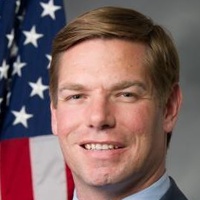
Eric Swalwell
Representative
CA
Eric Swalwell
Representative
CA
The MARSHALS Act fundamentally restructures the United States Marshals Service (USMS), moving its organization entirely into the judicial branch. This bill establishes that the Director and all U.S. Marshals will be appointed by the Chief Justice, subject to oversight from a new Board. The legislation also clarifies the USMS's authority to protect federal judicial personnel and outlines specific conditions under which the Service can assist the Department of Justice.
This Act restores the right to sue over disparate impact discrimination under Title VI, mandates equity compliance officers in federally funded schools, and establishes a Special Assistant for Equity and Inclusion within the Department of Education.
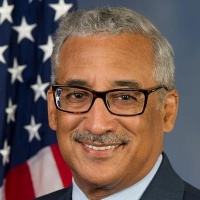
Robert Scott
Representative
VA
Robert Scott
Representative
VA
The Equity and Inclusion Enforcement Act of 2025 restores the right to sue for disparate impact violations under Title VI of the Civil Rights Act of 1964. It also mandates that all federally funded educational institutions designate an employee to coordinate Title VI compliance and publicly share their contact information. Finally, the Act establishes a new Special Assistant for Equity and Inclusion within the Department of Education to oversee and promote compliance efforts.
This resolution supports recognizing May as "Sex Ed For All Month" to promote equitable access to comprehensive, medically accurate, and inclusive sexual health education for all young people.
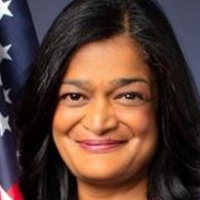
Pramila Jayapal
Representative
WA
Pramila Jayapal
Representative
WA
This resolution officially recognizes May as "Sex Ed For All Month" to promote honest and inclusive sexual health education for all young people. It highlights the need to address current disparities and barriers that prevent youth from accessing vital health information. The bill urges federal, state, and local officials to support evidence-based, medically accurate sex education programs. Ultimately, it champions the right of every young person to receive comprehensive education necessary for making healthy decisions about their bodies and futures.
This Act mandates the National Park Service to establish a program to reduce and eliminate the sale and distribution of disposable plastic products, like single-use water bottles and utensils, across all national park units.

Mike Quigley
Representative
IL
Mike Quigley
Representative
IL
The Reducing Waste in National Parks Act mandates the National Park Service (NPS) to establish a program to significantly reduce or eliminate the sale and distribution of disposable plastic products, including single-use water bottles, across all park units. Regional directors must implement these changes while considering operational costs, visitor safety regarding water access, and vendor contracts. The law also requires proactive visitor education and biennial reviews to assess the program's effectiveness and public impact.
This Act establishes a pilot program to provide grants through intermediary organizations to build the capacity of local groups revitalizing business districts in underserved communities.
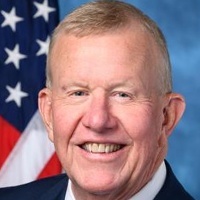
Mike Ezell
Representative
MS
Mike Ezell
Representative
MS
The Capacity Building for Business Districts Pilot Program Act of 2025 establishes a new federal program to strengthen local business districts, particularly in underserved communities. This program will award grants to larger intermediary organizations, which will then provide technical assistance, training, and capacity building support to smaller, local groups managing neighborhood commercial areas. The goal is to enhance the ability of these local organizations to drive economic growth, job creation, and revitalization in distressed and rural areas.
This bill prohibits high-ranking government officials and their families from trading, profiting from, or controlling digital assets while in office to prevent conflicts of interest.
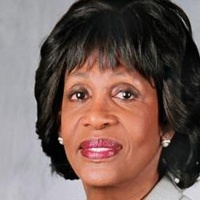
Maxine Waters
Representative
CA
Maxine Waters
Representative
CA
The Stop TRUMP in Crypto Act of 2025 prohibits covered government officials and their immediate families from trading, owning, or profiting from digital assets while in office. This legislation specifically bans insider trading of crypto and prevents officials from using intermediaries or complex ownership structures to bypass these restrictions. The Act aims to eliminate conflicts of interest by ensuring high-ranking officials cannot benefit financially from involvement with cryptocurrencies.
This bill establishes a grant program to fund nonprofit organizations providing free, on-site eye care services, including exams and glasses, to public school students.
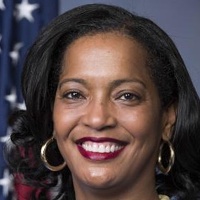
Jahana Hayes
Representative
CT
Jahana Hayes
Representative
CT
The See the Board Act establishes a new federal grant program administered by the Secretary of Health and Human Services. This program aims to fund nonprofit organizations that provide free, on-site eye care services, including exams and glasses, directly to students in public elementary and secondary schools. The goal is to improve student access to necessary vision care through mobile or portable clinics.
This bill establishes a demonstration project to award competitive grants to low-graduation-rate secondary schools to hire additional school counselors focused on supporting at-risk students.
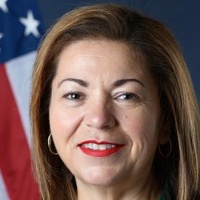
Linda Sánchez
Representative
CA
Linda Sánchez
Representative
CA
The Put School Counselors Where They’re Needed Act establishes a demonstration project to award competitive grants to low-graduation-rate secondary schools. These grants fund the hiring of additional school counselors specifically tasked with supporting students at risk of not graduating. The goal is to supplement existing staff and provide intensive, individualized support to boost four-year graduation rates.
The Real Education and Access for Healthy Youth Act of 2025 establishes federal grant programs to fund comprehensive, evidence-informed, and culturally responsive sex education and youth-friendly sexual health services, prioritizing underserved communities.
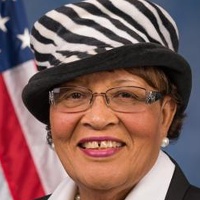
Alma Adams
Representative
NC
Alma Adams
Representative
NC
The Real Education and Access for Healthy Youth Act of 2025 aims to establish comprehensive, evidence-based, and culturally responsive sex education and health services for young people aged 10 to 29. The bill creates competitive grant programs to fund sex education in K-12 schools and higher education, support educator training, and improve access to youth-friendly sexual health services, especially for underserved communities. It explicitly mandates that all funded programs must be medically accurate, inclusive of all identities, and centered on principles of consent and reproductive justice. The Act authorizes $100 million annually and repeals prior funding streams dedicated to abstinence-only education.
The Save Our Forests Act of 2025 mandates increased staffing and reinstatement of former employees within the Forest Service while ensuring the continuation of all authorized Forest Service projects.
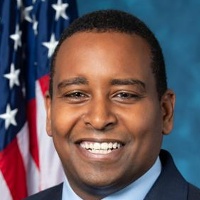
Joe Neguse
Representative
CO
Joe Neguse
Representative
CO
The Save Our Forests Act of 2025 aims to strengthen the management and health of the National Forest System. This legislation mandates the immediate hiring of additional Forest Service personnel and the reinstatement of recently departed employees. Furthermore, it ensures the continuation of all previously authorized and funded Forest Service projects under various existing laws.
This act establishes fixed, non-renewable 18-year terms for future Supreme Court Justices and outlines a staggered appointment schedule, while also creating a temporary mechanism for filling vacancies below the nine-justice quorum.
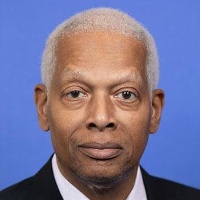
Henry Johnson
Representative
GA
Henry Johnson
Representative
GA
The Supreme Court Tenure Establishment and Retirement Modernization Act of 2025 establishes fixed, non-renewable 18-year terms for all future Supreme Court Justices, with appointments staggered every two years. This legislation also outlines a process for phasing out current Justices upon the confirmation of new appointees. Finally, it grants the Chief Justice the authority to temporarily fill sudden vacancies below the standard nine-justice level using a randomly selected retired Justice.
This resolution expresses strong support for designating May 2025 as Mental Health Awareness Month to highlight the national mental health crisis and encourage greater action and access to care.
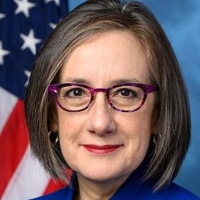
Andrea Salinas
Representative
OR
Andrea Salinas
Representative
OR
This resolution expresses strong support for designating May 2025 as Mental Health Awareness Month to combat a growing national crisis. It highlights alarming statistics regarding rising mental illness rates, significant barriers to accessing care, and disproportionate impacts on youth and marginalized communities. Ultimately, the bill declares mental health a national priority and encourages increased public awareness and support for mental health services.