Legislative Activity
Track Analilia's sponsored bills, co-sponsored legislation, and voting record
This Act establishes warrant requirements for the arrest of unaccompanied minors away from the border, prohibits military transport for immigration enforcement, and ensures children have the right to legal consultation before signing documents affecting their immigration status.
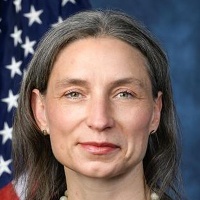
Maxine Dexter
Representative
OR
Maxine Dexter
Representative
OR
The Dignity and Due Process for Children Act of 2026 establishes new protections for unaccompanied alien children encountered in the U.S. It mandates a judicial warrant for the arrest or detention of these children away from the border and prohibits the use of military assets for immigration enforcement, except during natural disasters. Furthermore, the bill ensures children cannot be coerced into signing legal documents affecting their status without first having a confidential consultation with a lawyer.
This bill establishes a structured process for Puerto Rico to transition to independence, statehood, or a reformed Commonwealth status following a voter plebiscite.
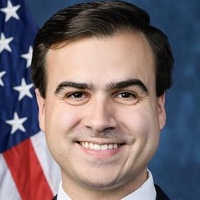
Pablo José Hernández Rivera
Representative
PR
Pablo José Hernández Rivera
Representative
PR
This bill outlines four distinct, mutually exclusive pathways for determining Puerto Rico's future political status: Independence, Commonwealth, Statehood, or Free Association with the United States. Each title establishes a detailed, step-by-step process for transition, including constitutional requirements, transfer of federal property, and the future status of citizenship and federal benefits, contingent upon voter approval for the chosen option. The legislation aims to provide a clear, democratic mechanism for resolving the island's territorial status.
The BLANCHE Act of 2026 strictly controls and prohibits federal payments to the President resulting from any settlement with the United States, requiring mandatory federal court approval for any such agreement.
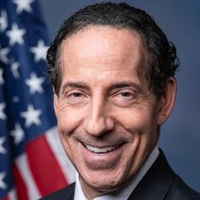
Jamie Raskin
Representative
MD
Jamie Raskin
Representative
MD
The BLANCHE Act of 2026 strictly regulates and prohibits any settlement where the federal government pays the sitting President or a third party at the President's direction to resolve a claim against the United States. Any such agreement must be reviewed and explicitly approved by a federal court after a public hearing to ensure the parties are truly adverse and the settlement is in the interest of justice. These rigorous standards apply retroactively to all existing and future agreements between the President and the United States.
This resolution directs the President to remove all United States Armed Forces from Lebanon within seven days of its adoption.
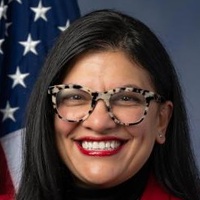
Rashida Tlaib
Representative
MI
Rashida Tlaib
Representative
MI
This resolution invokes the War Powers Resolution to mandate the withdrawal of all United States Armed Forces from Lebanon. It directs the President to complete this removal within seven days of the resolution's adoption.
The Department of Homeland Security Accountability Act of 2026 mandates timely congressional notification and independent investigations into all serious injuries or deaths occurring within DHS custody or resulting from agency actions.
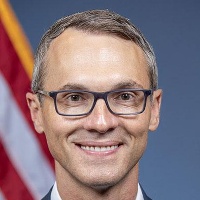
James Walkinshaw
Representative
VA
James Walkinshaw
Representative
VA
The Department of Homeland Security Accountability Act of 2026 mandates that the DHS notify Congress and local representatives within 72 hours of any serious injury or death occurring in its custody or resulting from personnel actions. The bill requires independent investigations into these incidents, establishes strict evidence preservation protocols, and enforces administrative leave for employees involved in lethal force incidents. These measures aim to increase transparency and ensure rigorous oversight of DHS operations.
The American High-Speed Rail Act significantly expands federal support for high-speed rail development by increasing funding, broadening eligibility, updating safety and technology requirements, and facilitating property acquisition and freight right-of-way transfers.
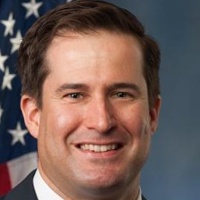
Seth Moulton
Representative
MA
Seth Moulton
Representative
MA
The American High-Speed Rail Act significantly expands federal support for high-speed and higher-speed rail development by increasing funding limits, broadening eligibility for public-private partnerships, and establishing new planning and safety requirements. The bill authorizes substantial funding through 2031 for corridor development and planning, while also creating pathways for acquiring necessary right-of-way property and ensuring labor protections on federally-funded infrastructure. It also refines definitions, setting the threshold for true "high-speed rail" at 186 mph or more, and introduces a new category for "higher-speed rail."
The Provider Reimbursement Stability Act of 2026 reforms Medicare physician payment policies by updating budget neutrality thresholds, establishing a correction process for utilization estimates, mandating periodic updates to practice expense data, and limiting annual conversion factor fluctuations.
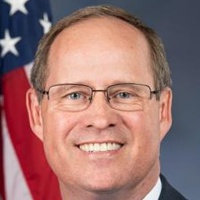
Gregory Murphy
Representative
NC
Gregory Murphy
Representative
NC
The Provider Reimbursement Stability Act of 2026 aims to improve the accuracy and predictability of Medicare physician payments. The bill reforms budget neutrality calculations, mandates periodic updates to practice expense cost data, and establishes a 2.5% cap on annual conversion factor fluctuations. These measures are designed to ensure more stable reimbursement rates for healthcare providers.
This bill authorizes the minting and sale of commemorative gold and silver coins to honor the 25th anniversary of the September 11, 2001, terrorist attacks, with surcharges supporting the National September 11 Memorial and Museum.

Dan Goldman
Representative
NY
Dan Goldman
Representative
NY
This bill authorizes the Secretary of the Treasury to mint and issue commemorative gold and silver coins marking the 25th anniversary of the September 11, 2001, terrorist attacks. The coins will honor the victims, first responders, and survivors, with designs selected in consultation with the National September 11 Memorial and Museum. All surcharges from the sale of these coins will be paid directly to the Memorial and Museum to support its operations and maintenance.
This bill prohibits using federal funds for specific settlement payments, particularly those related to the *Trump, et al. v. IRS, et al.* case, and restricts certain compromise settlements from the Judgment Fund to high-ranking officials and specific types of claims.
Jamie Raskin
Representative
MD
Jamie Raskin
Representative
MD
This Act prohibits the use of federal funds for specific settlement payments, including those related to the *Trump, et al. v. IRS, et al.* case. It places new restrictions on the Judgment Fund, barring payments to high-ranking officials, their relatives, and certain entities for specific types of claims. The bill also establishes strict reporting and notification requirements for large government compromise settlements.
This bill directs the President to remove U.S. Armed Forces from hostilities with Iran, with a narrow exception for self-defense.
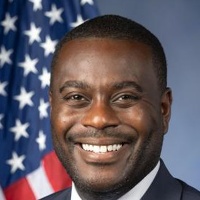
Gabe Amo
Representative
RI
Gabe Amo
Representative
RI
This bill directs the President to withdraw U.S. Armed Forces from hostilities involving Iran, as authorized under the War Powers Resolution. The only exception allows the President to maintain forces necessary for self-defense or the defense of allies against an imminent attack, provided specific reporting requirements are met. Any continued military engagement without a declaration of war requires explicit congressional authorization.
This act prohibits the imposition of the death penalty for any federal crime and mandates resentencing for those previously sentenced to death.
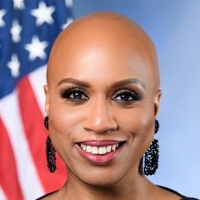
Ayanna Pressley
Representative
MA
Ayanna Pressley
Representative
MA
This Act, the Federal Death Penalty Prohibition Act, immediately bans the imposition of the death penalty for all federal crimes upon enactment. It also mandates that individuals previously sentenced to death for federal offenses must be resentenced.
The **Protecting Our Democracy Act** imposes sweeping restrictions on presidential power, enhances congressional oversight, strengthens ethics and anti-corruption laws, and bolsters accountability for federal officials.
Jamie Raskin
Representative
MD
Jamie Raskin
Representative
MD
The **Protecting Our Democracy Act** imposes sweeping reforms across the executive branch to strengthen accountability and restore checks and balances. It restricts presidential pardon power, closes loopholes to ensure no President is above the law, and enforces constitutional emoluments clauses to prevent self-enrichment. Furthermore, the Act enhances congressional oversight by strengthening subpoena enforcement, increasing transparency around White House visitors and tax returns, and protecting federal whistleblowers from retaliation.
This act establishes universal free breakfast and lunch programs in schools, eliminates meal debt, and updates poverty metrics across various federal education and nutrition programs.

Ilhan Omar
Representative
MN
Ilhan Omar
Representative
MN
The Universal School Meals Program Act of 2026 establishes permanent, universal free breakfast and lunch programs for all enrolled students at participating schools, eliminating income tests and meal debt collection. The bill significantly updates federal funding mechanisms by replacing reliance on free and reduced-price lunch data with new measures for identifying economically disadvantaged students across various education and social programs. Furthermore, it expands access to summer and afterschool meals while making technical amendments across several federal education and nutrition laws.
This resolution designates the week of May 4 through May 8, 2026, as Teacher Appreciation Week while recognizing the critical role and priorities of the nation's public school teachers.
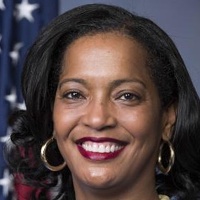
Jahana Hayes
Representative
CT
Jahana Hayes
Representative
CT
This resolution officially designates the week of May 4 through May 8, 2026, as Teacher Appreciation Week. It recognizes the vital role of public school teachers and highlights their key priorities, including support for existing federal protections and funding. Furthermore, the bill encourages leaders to engage directly with teachers to ensure their expertise informs education policy.
This Act establishes a phased-in increase of the federal minimum wage, ultimately tying it to two-thirds of the national median hourly wage while also reforming wages for tipped workers, youth workers, and incarcerated workers, and phasing out subminimum wages for workers with disabilities.
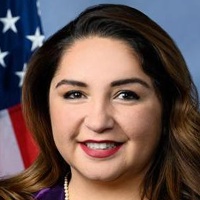
Delia Ramirez
Representative
IL
Delia Ramirez
Representative
IL
The Living Wage For All Act establishes a phased increase of the federal minimum wage, ultimately aiming to tie it to two-thirds of the national median hourly wage. It creates differentiated wage schedules, requiring large corporations to reach higher minimums sooner than other employers. Furthermore, the bill phases out subminimum wages for tipped workers and workers with disabilities, and extends federal wage protections to incarcerated workers.
This act extends eligibility for various Department of Veterans Affairs benefits to former service members discharged solely due to their sexual orientation or gender identity.
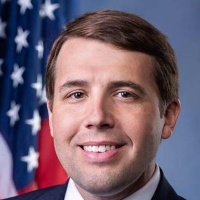
Chris Pappas
Representative
NH
Chris Pappas
Representative
NH
The Securing the Rights our Veterans Earned Act (SERVE Act) extends eligibility for key Department of Veterans Affairs (VA) benefits to former service members who were discharged based on their sexual orientation or gender identity. This includes access to hospital care, mental health services, national cemetery burial, Post-9/11 GI Bill education assistance, and housing loans. The bill also mandates the VA Secretary to conduct outreach regarding these newly available benefits.
The Ultra-Millionaire Tax Act of 2026 establishes an annual federal wealth tax on individuals with a net worth exceeding $50 million while increasing funding for IRS enforcement and taxpayer services.
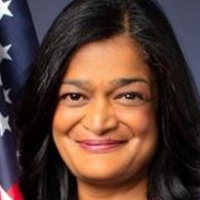
Pramila Jayapal
Representative
WA
Pramila Jayapal
Representative
WA
The Ultra-Millionaire Tax Act of 2026 proposes a new annual federal wealth tax on individuals with a net worth exceeding $50 million, with rates ranging from 2% to 3% based on total assets. The legislation includes robust enforcement measures, such as increased IRS funding and mandatory audit requirements, to ensure compliance among the ultra-wealthy. Additionally, it strengthens foreign asset disclosure requirements to prevent tax avoidance.
The Energy Bills Relief Act aims to lower energy costs for families by reversing clean energy rollbacks, expanding assistance programs, streamlining grid upgrades, and increasing transparency in utility regulation.
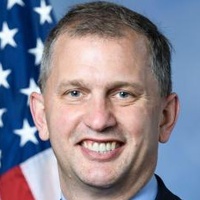
Sean Casten
Representative
IL
Sean Casten
Representative
IL
The Energy Bills Relief Act is a comprehensive bill designed to lower energy costs for American families, accelerate the deployment of low-cost, clean energy, and modernize the nation's electricity grid. It achieves this by reversing harmful policies against renewables, expanding energy assistance programs, streamlining grid connection processes, and increasing transparency in utility regulation. Ultimately, the legislation aims to create a more reliable, affordable, and cleaner energy system while ensuring communities have a stronger voice in energy development.
This bill imposes a 50% excise tax on the windfall profits of major oil companies when oil prices exceed 2025 averages, with revenues funding quarterly, income-limited gasoline price rebates for eligible individuals.
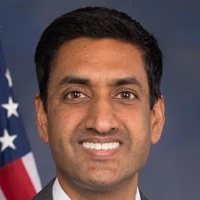
Ro Khanna
Representative
CA
Ro Khanna
Representative
CA
This bill imposes a 50% excise tax on the windfall profits of major oil companies when crude oil prices exceed a 2025 average benchmark. Revenue generated funds a new trust, which is then used to provide quarterly, refundable gasoline price rebates to eligible individuals. The rebate amount is subject to income phase-outs and requires a valid Social Security number for full credit.
This bill strengthens democracy by banning foreign spending in U.S. elections, increasing transparency for "dark money" in politics, and mandating clear disclosure of funders in political advertising.
Chris Pappas
Representative
NH
Chris Pappas
Representative
NH
The Democracy Is Strengthened by Casting Light On Spending in Elections Act of 2026 aims to increase transparency and security in U.S. elections. It closes loopholes to ban foreign national spending in elections, mandates disclosure for "dark money" political spending, and requires clear funding disclosures on political ads. The bill also centralizes legal challenges to campaign finance laws in Washington, D.C., for faster resolution.