
Legislative Activity
Track Celeste's sponsored bills, co-sponsored legislation, and voting record
This bill establishes new payment rules and prohibitions for Pharmacy Benefit Managers (PBMs) administering federal employee health plans, including penalties for noncompliance.
Jake Auchincloss
Representative
MA
Jake Auchincloss
Representative
MA
This bill, the Pharmacists Fight Back in Federal Employee Health Benefit Plans Act, establishes new rules for Pharmacy Benefit Managers (PBMs) administering prescription drug benefits for federal employees. It mandates specific reimbursement rates for pharmacies and prohibits PBMs from engaging in anti-competitive practices like steering patients to affiliated pharmacies. The legislation also institutes civil monetary penalties and potential debarment for PBMs that fail to comply with these new requirements.
This bill honors the lives and ultimate sacrifice of four wildland firefighters who died in the line of duty in 2026 while expressing gratitude to all personnel who risk their lives protecting communities from wildfires.
Jeff Hurd
Representative
CO
Jeff Hurd
Representative
CO
This resolution honors the lives and ultimate sacrifice of wildland firefighters Emily Barker, Nick Hutcherson, Sydney Watson, and Nicholas Dale, who lost their lives in the line of duty during the 2026 wildfire season. It expresses deep gratitude to all wildland firefighters, aviation crews, and support personnel for their courage and continued commitment to protecting American communities. Furthermore, it recognizes the ongoing need to support these frontline responders and invites the nation to honor their service and sacrifice.
The Fair Treatment of Religious Organizations Act of 2026 amends the tax code to protect the tax-exempt status of religious organizations by ensuring their beliefs regarding marriage, sexuality, and gender identity are not deemed inconsistent with public policy.
Blake Moore
Representative
UT
Blake Moore
Representative
UT
The Fair Treatment of Religious Organizations Act of 2026 amends the Internal Revenue Code to clarify how the IRS determines the tax-exempt status of religious organizations. It ensures that religious beliefs regarding marriage, sexuality, and gender identity are not considered inconsistent with public policy. Additionally, the bill establishes that a belief qualifies as religious regardless of whether it is considered central to a specific system of faith.
The Geo POWER Act establishes a Milestone-Based Geothermal Demonstration Program to accelerate the commercialization of next-generation geothermal technologies through innovative, milestone-based financing for projects in new regions.
Nicholas Begich
Representative
AK
Nicholas Begich
Representative
AK
The Geo POWER Act aims to accelerate the commercialization of next-generation geothermal energy by establishing a Milestone-Based Geothermal Demonstration Program. This program will provide innovative, milestone-based financing to overcome high upfront costs for geothermal exploration and drilling in new regions. The goal is to generate public data and catalyze demonstration projects across diverse geologies to reduce risk and attract private investment.
This bill designates the American mastodon as the national fossil mammal and the *Tyrannosaurus rex* as the national fossil dinosaur of the United States.
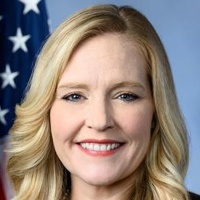
Erin Houchin
Representative
IN
Erin Houchin
Representative
IN
This bill, titled the "National Fossil Act," officially designates the American mastodon as the national fossil mammal and the *Tyrannosaurus rex* as the national fossil dinosaur of the United States. It amends federal law to formally recognize these two prehistoric species.
The Declaration of Independence Reaffirmation Act of 2026 formally reaffirms the Declaration of Independence as a foundational legal document of the United States in commemoration of the nation’s 250th anniversary.
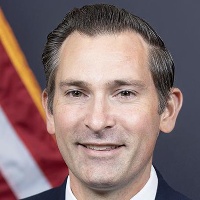
Matt Van Epps
Representative
TN
Matt Van Epps
Representative
TN
The Declaration of Independence Reaffirmation Act of 2026 commemorates the 250th anniversary of American independence by formally reaffirming the Declaration of Independence as a foundational legal document of the United States. This Act underscores the nation's commitment to the principles of national sovereignty, natural rights, and government by consent. To preserve these values, the legislation officially incorporates the full text of the Declaration into federal law.
The Securing Agriculture's Workforce Act of 2026 modernizes the H-2A visa program by streamlining the application process through a centralized online platform, updating labor and housing requirements, and expanding the definition of eligible agricultural work.
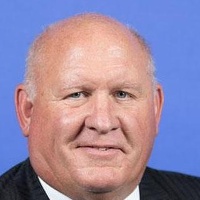
Glenn Thompson
Representative
PA
Glenn Thompson
Representative
PA
The Securing Agriculture's Workforce Act of 2026 modernizes the H-2A visa program to better support the agricultural industry by streamlining application processes and establishing a centralized online portal for employers. The bill updates labor certification, housing, and wage requirements while expanding the definition of eligible agricultural work to include a broader range of activities. Additionally, it enhances worker protections—including new heat illness prevention standards—and provides greater administrative efficiency for federal agencies managing the program.
The NSF AI Education Act of 2025 expands National Science Foundation support for AI education through new scholarships, industry fellowships, community college centers of excellence, and research awards for K-12 AI integration.
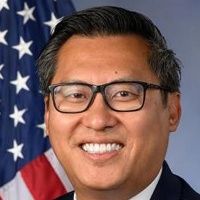
Vince Fong
Representative
CA
Vince Fong
Representative
CA
The NSF AI Education Act of 2025 significantly expands the National Science Foundation's role in bolstering the AI workforce through education and training. It establishes new scholarships and fellowships for students and professionals in AI-related fields, while also creating Centers of AI Excellence at community colleges and technical schools. Furthermore, the bill funds research awards to develop effective AI teaching methods and materials for K-12 education. Overall, this legislation aims to build a robust, skilled, and diverse AI talent pipeline across all educational levels.
This bill renames and revises the Great American Outdoors Act's maintenance fund, increases dedicated funding through new, higher fees for foreign visitors, and sets spending priorities for deferred maintenance across public lands agencies.
Bruce Westerman
Representative
AR
Bruce Westerman
Representative
AR
This bill, the Great American Outdoors Act 250, significantly reforms and renames the existing public lands restoration fund to the America’s Legacy Restoration Fund. It secures dedicated funding streams, primarily from energy revenues and new fees on foreign visitors, to address critical deferred maintenance across the National Park Service, Forest Service, and other public land agencies. The legislation establishes strict spending priorities for infrastructure repair while also creating pilot programs for enhancing outdoor recreation and sportsmen's access. Finally, it mandates increased transparency and accountability through standardized metrics and public reporting on all funded projects.
This bill, the Hydropower Licensing Affordability Act, modernizes the hydropower licensing process by expanding the Federal Energy Regulatory Commission's authority to require mitigation measures for adverse effects on federal reservations and fish populations.
Cliff Bentz
Representative
OR
Cliff Bentz
Representative
OR
This bill, the Hydropower Licensing Affordability Act, modernizes the hydropower licensing process under the Federal Power Act. It expands the Federal Energy Regulatory Commission's authority to impose conditions on licenses to ensure hydropower projects reasonably mitigate direct adverse effects on federal reservations and local fish populations.
The Geothermal Energy Advancement Act streamlines geothermal leasing and permitting processes on federal lands by mandating timely application processing, establishing cost recovery mechanisms, updating operational standards, and creating new administrative roles to facilitate development.
Jeff Hurd
Representative
CO
Jeff Hurd
Representative
CO
The Geothermal Energy Advancement Act aims to accelerate geothermal energy development on federal lands by streamlining permitting processes, even when lawsuits are pending. It establishes cost recovery mechanisms for federal geothermal application processing and mandates the update of the BLM's "Gold Book" to include geothermal standards. Furthermore, the bill creates a Geothermal Ombudsman and a Permitting Task Force to improve efficiency and addresses royalty timing for geothermal electricity production.
The CLEAN Act mandates annual geothermal lease sales and establishes strict timelines for the review and issuance of geothermal drilling permits.
Russ Fulcher
Representative
ID
Russ Fulcher
Representative
ID
The CLEAN Act aims to accelerate geothermal energy development by requiring the Department of the Interior to hold annual geothermal lease sales, ensuring a minimum of 75% of nominated parcels are offered. It also establishes strict, expedited timelines for the review and issuance of geothermal drilling permits. This legislation seeks to streamline the leasing and permitting process to boost domestic clean energy production.
This act extends the Bureau of Land Management's authority to collect oil and gas permit processing fees through 2037, directing those funds to the BLM Permit Processing Improvement Fund.
Mike Kennedy
Representative
UT
Mike Kennedy
Representative
UT
The License to Drill Act extends the Bureau of Land Management's (BLM) authority to collect oil and gas permit processing fees until 2037. This extension ensures that fees collected from 2027 through 2037 are directly transferred to the BLM Permit Processing Improvement Fund.
This bill establishes the Smithsonian American Women's History Museum, designates its site on the National Mall, and sets requirements for its mission, construction, and diverse representation of viewpoints.
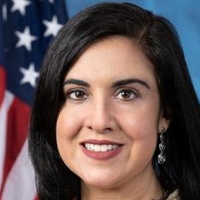
Nicole Malliotakis
Representative
NY
Nicole Malliotakis
Representative
NY
This act officially establishes the Smithsonian American Women’s History Museum and designates its location on the National Mall, requiring the transfer of land jurisdiction to the Smithsonian Institution. The museum is mandated to preserve and present the history and achievements of biological women in the United States. Furthermore, the legislation requires that exhibits and programs reflect diverse political viewpoints and authentic experiences of women, as guided by a broad array of knowledgeable sources.
This bill expands Medicare Part B coverage to reimburse for specific pharmacist services related to testing and treatment for certain public health threats, effective January 1, 2026.

Adrian Smith
Representative
NE
Adrian Smith
Representative
NE
The Ensuring Community Access to Pharmacist Services Act expands Medicare Part B coverage to include services provided by pharmacists starting January 1, 2026. This coverage is specifically for testing or treatment related to COVID-19, the flu, RSV, strep throat, or during a declared public health emergency. The bill outlines payment structures, generally covering 80% of the cost, and prohibits pharmacists from balance billing Medicare patients for these covered services.
This bill authorizes the minting and sale of commemorative gold and silver coins to honor the 25th anniversary of the September 11, 2001, terrorist attacks, with surcharges supporting the National September 11 Memorial and Museum.

Dan Goldman
Representative
NY
Dan Goldman
Representative
NY
This bill authorizes the Secretary of the Treasury to mint and issue commemorative gold and silver coins marking the 25th anniversary of the September 11, 2001, terrorist attacks. The coins will honor the victims, first responders, and survivors, with designs selected in consultation with the National September 11 Memorial and Museum. All surcharges from the sale of these coins will be paid directly to the Memorial and Museum to support its operations and maintenance.
This resolution expresses strong support for law enforcement officers and recognizes their vital role in protecting communities while opposing efforts to defund police departments.
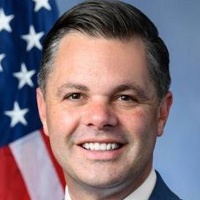
Zachary (Zach) Nunn
Representative
IA
Zachary (Zach) Nunn
Representative
IA
This resolution expresses strong support for law enforcement officers, recognizing their vital role in protecting communities and upholding the rule of law. It acknowledges the daily sacrifices officers make and affirms their essential contributions to public safety. The resolution also opposes policies that undermine law enforcement, such as defunding efforts and sanctuary policies.
This act establishes a rebuttable presumption favoring the authorization for service members to carry personal firearms on military installations when off-duty.
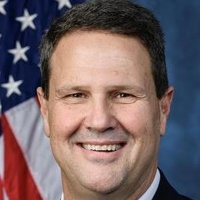
Jeff Crank
Representative
CO
Jeff Crank
Representative
CO
This bill establishes a rebuttable presumption that members of the Armed Forces should be authorized to carry personal firearms on military installations when off-duty. It amends existing law to require that requests for authorization begin with the assumption of approval. Any denial must be provided in writing and include specific, objective reasons.
This bill designates the United States Postal Service facility located at 111 South Tremont Street in Tremonton, Utah, as the "Sorensen-Estrada Post Office."
Blake Moore
Representative
UT
Blake Moore
Representative
UT
This bill officially designates the United States Postal Service facility located at 111 South Tremont Street in Tremonton, Utah, as the "Sorensen-Estrada Post Office." It further mandates that all future federal references to this location must use the new name.
This bill expresses congressional disapproval of the Bureau of Land Management's rule withdrawing federal lands in three Minnesota counties.
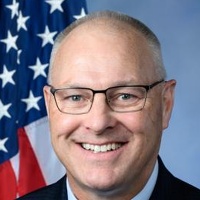
Pete Stauber
Representative
MN
Pete Stauber
Representative
MN
This bill expresses the disapproval of Congress regarding a Bureau of Land Management rule that withdrew federal lands in specific Minnesota counties under Public Land Order No. 7917. By disapproving the rule, Congress renders it legally void.