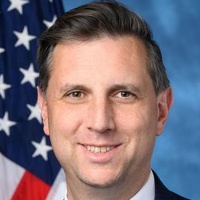
Legislative Activity
Track Seth's sponsored bills, co-sponsored legislation, and voting record
This act repeals certain provisions of the Protection of Lawful Commerce in Arms Act and allows federal gun trace information to be discoverable and admissible in civil proceedings.
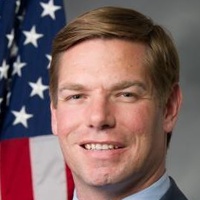
Eric Swalwell
Representative
CA
Eric Swalwell
Representative
CA
The Equal Access to Justice for Victims of Gun Violence Act of 2025 repeals key provisions of the Protection of Lawful Commerce in Arms Act. This legislation allows federal gun trace information to be discoverable and admissible as evidence in civil lawsuits and administrative hearings. The bill aims to provide victims of gun violence with greater access to relevant data in legal proceedings.
This Act establishes a coordinated federal response to extreme heat by creating an interagency committee and a National Integrated Heat Health Information System within NOAA to reduce heat-related health risks.
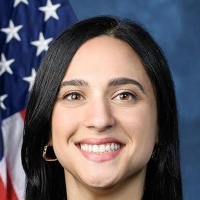
Yassamin Ansari
Representative
AZ
Yassamin Ansari
Representative
AZ
The Coordinated Federal Response to Extreme Heat Act of 2025 establishes a unified federal approach to mitigating the health and safety risks posed by extreme heat. It creates an Interagency Committee within NOAA to coordinate efforts across numerous federal departments and mandates the development of a National Integrated Heat Health Information System (NIHHIS). This new system will provide open access to data, forecasts, and science-backed tools to improve national preparedness and response to dangerous heat events. The Act authorizes $5 million annually through fiscal year 2029 to support these initiatives.
This resolution urgently calls for the immediate delivery of humanitarian aid to address the severe hunger crisis in Gaza and demands the administration use all diplomatic means to secure hostage release and end the fighting.
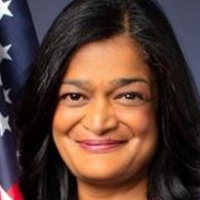
Pramila Jayapal
Representative
WA
Pramila Jayapal
Representative
WA
This resolution formally expresses the House of Representatives' grave concern over the severe humanitarian crisis and widespread suffering of civilians in Gaza, alongside the plight of hostages. It urgently calls on the Administration to use all diplomatic tools to secure the release of all hostages. Furthermore, the bill demands the immediate delivery and secure distribution of essential humanitarian aid to address the catastrophic hunger crisis in Gaza.
This Act formally establishes the science-based Advisory Committee on Immunization Practices (ACIP) and mandates that changes to the National Vaccine Injury Compensation Program's injury table must be supported by a preponderance of the best available scientific evidence.
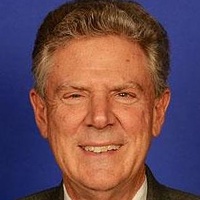
Frank Pallone
Representative
NJ
Frank Pallone
Representative
NJ
The Family Vaccine Protection Act formally establishes the Advisory Committee on Immunization Practices (ACIP) into law, requiring all its vaccine recommendations to be based on the preponderance of the best available, peer-reviewed scientific evidence. This legislation mandates strict procedures for the CDC Director to adopt or reject ACIP advice, including notifying Congress if a recommendation is rejected. Furthermore, the Act requires that any changes to the National Vaccine Injury Compensation Program's injury table must also be supported by strong scientific evidence.
The Fair and Equal Housing Act of 2025 updates the Fair Housing Act to explicitly prohibit discrimination based on sexual orientation and gender identity, and expands protections against discrimination based on association or perceived identity.
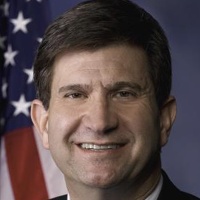
Bradley Schneider
Representative
IL
Bradley Schneider
Representative
IL
The Fair and Equal Housing Act of 2025 significantly updates existing fair housing laws to explicitly prohibit discrimination based on sexual orientation and gender identity. This legislation broadens protections to cover discrimination based on association or perceived association with protected groups. Furthermore, it strengthens anti-intimidation measures related to these newly defined protected characteristics in housing matters.
This resolution expresses the House's sense that Congress should enact the Older Americans Bill of Rights to guarantee older Americans the right to live with dignity and independence through improved healthcare, financial security, and community participation.

Janice Schakowsky
Representative
IL
Janice Schakowsky
Representative
IL
This resolution expresses the sense of the House that Congress should enact the Older Americans Bill of Rights to affirm the right of older Americans to live with dignity and independence. It highlights severe challenges facing seniors, including poverty, food insecurity, social isolation, and gaps in healthcare access. The proposed Bill of Rights calls for strengthening Social Security and Medicare, lowering prescription drug costs, and ensuring access to affordable housing and essential services. Ultimately, this measure urges Congress to establish comprehensive protections for the financial security, health, and community participation of older adults.
The VET PFAS Act expands VA healthcare and disability benefits for veterans and their families exposed to toxic PFAS chemicals at military installations by establishing presumptions of service connection for related illnesses.
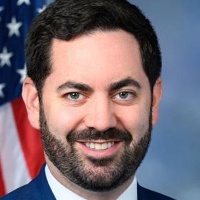
Michael Lawler
Representative
NY
Michael Lawler
Representative
NY
The VET PFAS Act expands healthcare and disability benefits for veterans and their families exposed to toxic PFAS chemicals, like PFOA, at contaminated military installations. It establishes a presumption of service connection for specific related illnesses, making it easier for veterans to receive disability compensation. Furthermore, the bill grants eligible family members access to VA medical care, contingent upon future appropriations. The VA is also required to report annually on the implementation and utilization of these new provisions for three years.
This resolution expresses support for establishing "National Extreme Heat Awareness Week" from July 3–10, 2025, to educate the public on the dangers and risks associated with extreme heat.
Michael Lawler
Representative
NY
Michael Lawler
Representative
NY
This resolution expresses strong support for designating July 3 through July 10, 2025, as "National Extreme Heat Awareness Week." The goal is to raise public awareness about the significant dangers and widespread risks extreme heat poses to public safety, infrastructure, and the economy. By establishing this week, Congress encourages nationwide education and preparedness efforts to mitigate heat-related illnesses and fatalities.
This bill establishes a 25% tax credit for purchasing U.S.-made circuit boards and substrates while also creating a $3 billion federal incentive program to boost domestic manufacturing and research in these critical electronic components.
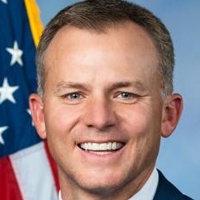
Blake Moore
Representative
UT
Blake Moore
Representative
UT
The Protecting Circuit Boards and Substrates Act establishes a 25% tax credit for purchasing U.S.-made printed circuit boards and integrated circuit substrates starting in 2026. It also creates a federal incentive program, managed by the Commerce Department, to provide up to $3 billion in funding to boost domestic manufacturing and research and development in these critical electronic components. The program prioritizes national security needs, workforce development, and supports for small and diverse-owned businesses.
This bill restricts the transfer of specific offensive military articles and defense services to Israel until Congress authorizes their use for specified purposes and Israel provides written assurances of compliance with international law.
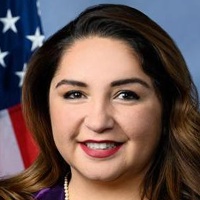
Delia Ramirez
Representative
IL
Delia Ramirez
Representative
IL
This bill imposes significant restrictions on the transfer of specific defense articles and services to Israel. Transfers of listed military equipment, such as certain bombs and ammunition, are prohibited unless Congress first passes a law detailing their specific authorized use. Furthermore, Israel must provide satisfactory written assurances that the items will only be used for those stated purposes and in compliance with international law.
The College for All Act of 2025 establishes federal-state partnerships and grants to eliminate tuition and fees at public and tribal colleges, boosts Pell Grants, and increases funding for minority-serving institutions.
Pramila Jayapal
Representative
WA
Pramila Jayapal
Representative
WA
The College for All Act of 2025 establishes a Federal-State partnership to eliminate tuition and required fees at public and Tribal colleges for eligible students, while significantly increasing Federal Pell Grant maximum awards and expanding eligibility to include many "Dreamer students." The bill also creates new grant programs to cover tuition at private non-profit HBCUs and MSIs, and funds initiatives to improve student success and support for low-income and first-generation students. Finally, it increases overall appropriations for HBCUs, Tribal Colleges, and other Minority-Serving Institutions.
This act establishes fixed, non-renewable 18-year terms for future Supreme Court Justices and outlines a staggered appointment schedule, while also creating a temporary mechanism for filling vacancies below the nine-justice quorum.
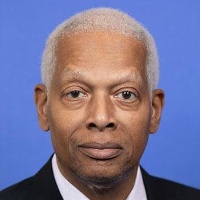
Henry Johnson
Representative
GA
Henry Johnson
Representative
GA
The Supreme Court Tenure Establishment and Retirement Modernization Act of 2025 establishes fixed, non-renewable 18-year terms for all future Supreme Court Justices, with appointments staggered every two years. This legislation also outlines a process for phasing out current Justices upon the confirmation of new appointees. Finally, it grants the Chief Justice the authority to temporarily fill sudden vacancies below the standard nine-justice level using a randomly selected retired Justice.
The Protect our Parks Act of 2025 mandates the immediate full staffing of the National Park Service, the rehiring of recently terminated employees, and the continuation of all authorized park improvement projects.
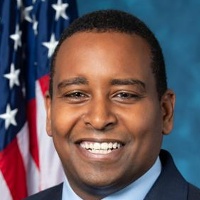
Joe Neguse
Representative
CO
Joe Neguse
Representative
CO
The Protect our Parks Act of 2025 mandates the Secretary of the Interior to immediately ensure the National Park Service is fully staffed to protect resources and enhance visitor safety. This legislation requires filling all maintenance positions and reinstating any NPS employees terminated since January 20, 2025. Furthermore, the Act ensures the continuation of all previously authorized and funded National Park Service projects.
This Act establishes the national Wildlife Confiscations Network to coordinate the proper care and placement of live animals seized by federal authorities during wildlife smuggling enforcement.
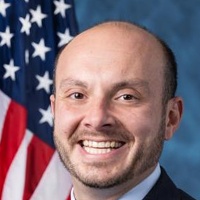
Andrew Garbarino
Representative
NY
Andrew Garbarino
Representative
NY
The Wildlife Confiscations Network Act of 2025 establishes a national, voluntary partnership—the Wildlife Confiscations Network—to coordinate the care and placement of illegally smuggled or confiscated wildlife. This network will utilize qualified animal care facilities to ensure seized animals receive proper triage, housing, and forensic documentation. The Act authorizes up to $5 million annually from Fiscal Year 2026 through 2030 to support this critical infrastructure.
This bill protects striking and locked-out workers by preventing employers from terminating or altering their group health plan coverage during a labor dispute and establishes significant civil penalties for violations.
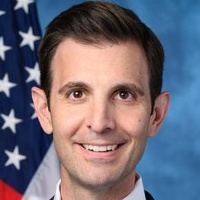
Chris Deluzio
Representative
PA
Chris Deluzio
Representative
PA
The Striking and Locked Out Workers Healthcare Protection Act ensures that employers cannot terminate or alter group health plan coverage for employees during a lawful strike or an employer-initiated lockout. This legislation aims to prevent employers from using health benefits as leverage during labor disputes. The bill also establishes significant civil penalties, including fines up to \$150,000 per violation, for employers who interfere with this coverage, and allows for individual liability for directors and officers involved in such violations.
This Act mandates the inclusion of Asian American, Native Hawaiian, and Pacific Islander history across federally supported K-12 American history and civics education programs and assessments.

Grace Meng
Representative
NY
Grace Meng
Representative
NY
This Act mandates the inclusion of Asian American, Native Hawaiian, and Pacific Islander (AANHPI) history across federally supported K-12 American history and civics education programs. It recognizes the vital, yet often omitted, contributions of AANHPI communities while addressing historical exclusion and systemic racism. The legislation directs educational programs to partner with the Smithsonian's Asian Pacific American Center to develop accurate and comprehensive curricula. This ensures AANHPI history is integrated into national assessments and teacher training.
The Save Our Forests Act of 2025 mandates increased staffing and reinstatement of former employees within the Forest Service while ensuring the continuation of all authorized Forest Service projects.
Joe Neguse
Representative
CO
Joe Neguse
Representative
CO
The Save Our Forests Act of 2025 aims to strengthen the management and health of the National Forest System. This legislation mandates the immediate hiring of additional Forest Service personnel and the reinstatement of recently departed employees. Furthermore, it ensures the continuation of all previously authorized and funded Forest Service projects under various existing laws.
This Act establishes mandatory ethics codes, recusal standards, and enhanced financial disclosure requirements for Supreme Court Justices and federal judges.
Henry Johnson
Representative
GA
Henry Johnson
Representative
GA
The Supreme Court Ethics, Recusal, and Transparency Act of 2025 establishes a mandatory, public code of conduct and a formal complaint process for Supreme Court Justices, modeled after procedures for lower federal judges. The bill also institutes stricter disclosure requirements for gifts and financial ties, and mandates judicial disqualification in cases involving recent lobbying contact or significant financial relationships with involved parties. Furthermore, it creates new review panels for disqualification motions and requires parties and *amici* to disclose financial supporters connected to the case.
This Act establishes a grant program for installing suicide deterrents on public structures and clarifies funding eligibility for bridge safety barriers.
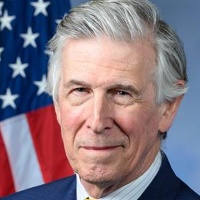
Donald Beyer
Representative
VA
Donald Beyer
Representative
VA
The Barriers to Suicide Act of 2025 establishes a new grant program through the Department of Transportation to fund the installation of suicide deterrents like nets and barriers at high-risk locations such as bridges and rail stations. The bill also amends existing law to explicitly allow National Highway System funds to be used for these safety barriers on bridges. Finally, it mandates a study on the effectiveness of suicide prevention measures for structures other than bridges.
This bill revises federal anti-discrimination laws, including those covering age, race, sex, and disability, by establishing a "motivating factor" standard of proof that makes it easier for plaintiffs to prove discrimination.
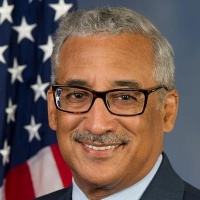
Robert Scott
Representative
VA
Robert Scott
Representative
VA
The Protecting Older Workers Against Discrimination Act of 2025 significantly lowers the standard of proof required for employment discrimination claims under major federal laws like the ADEA, Title VII, and the ADA. It establishes that an illegal factor only needs to be a "motivating factor" in an employer's decision, rather than the sole cause. While this makes it easier to prove discrimination, remedies like damages are limited if the employer can prove they would have made the same decision regardless. These new standards apply immediately to all pending claims upon enactment.