
Legislative Activity
Track Max's sponsored bills, co-sponsored legislation, and voting record
This resolution condemns Hamas for assassinating innocent Palestinians in Gaza following a ceasefire agreement.
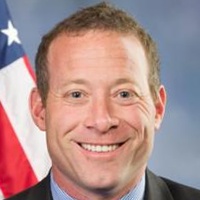
Josh Gottheimer
Representative
NJ
Josh Gottheimer
Representative
NJ
This resolution condemns Hamas for its campaign of assassinations and intimidation against innocent Palestinian civilians in Gaza following a recent ceasefire agreement. The House of Representatives expresses strong disapproval of these terroristic acts aimed at regaining territorial control. Furthermore, the resolution reaffirms the U.S. commitment to supporting the ceasefire and promoting stability for civilians in Gaza.
This act ensures the uninterrupted funding of the Supplemental Nutrition Assistance Program (SNAP) for fiscal year 2026, even if Congress delays passing the full USDA budget.
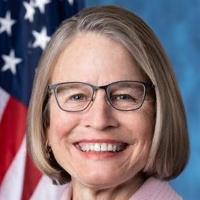
Mariannette Miller-Meeks
Representative
IA
Mariannette Miller-Meeks
Representative
IA
The Keep SNAP Funded Act of 2025 ensures that Supplemental Nutrition Assistance Program (SNAP) benefits continue without interruption if Congress fails to pass the full Department of Agriculture budget by October 1, 2025. This legislation authorizes automatic funding from the Treasury to maintain benefit payments. Furthermore, it guarantees that any benefits missed due to a funding lapse will be paid retroactively once the bill is enacted.
This bill strengthens and enforces mandatory country of origin labeling requirements specifically for beef, protecting the authority to enforce these standards against international trade challenges.
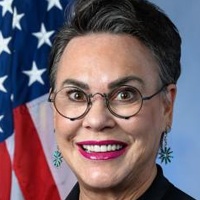
Harriet Hageman
Representative
WY
Harriet Hageman
Representative
WY
The Country of Origin Labeling Enforcement Act of 2025 updates existing agricultural law to specifically clarify and strengthen country of origin labeling requirements for beef. This bill ensures that beef labeling rules mirror those currently applied to lamb and venison, including for ground products. Furthermore, it explicitly protects the Secretary of Agriculture's authority to enforce these beef labeling standards against any conflicting international trade rulings.
This bill implements the transfer and investment of frozen Russian sovereign assets into a dedicated Ukraine Support Fund, mandating regular aid disbursements and requiring diplomatic engagement with allies.
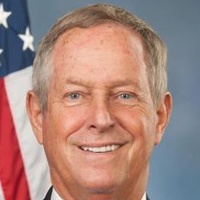
Joe Wilson
Representative
SC
Joe Wilson
Representative
SC
The REPO for Ukrainians Implementation Act of 2025 formally recognizes international calls to repurpose frozen Russian sovereign assets to aid Ukraine. This bill grants the President authority to transfer non-confiscated Russian assets into the Ukraine Support Fund, where they must be invested in U.S. government debt. Furthermore, the Secretary of State is mandated to obligate at least $250 million from the fund to Ukraine every quarter. The Act also requires the President to report on the location of these Russian assets globally and directs diplomatic efforts to encourage allies to contribute quarterly.
This resolution officially recognizes October 2025 as National Breast Cancer Awareness Month to highlight the seriousness of the disease, address disparities in care, and urge action for better research and access to treatment.
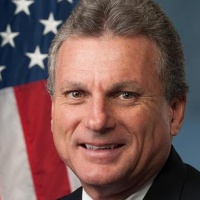
Earl Carter
Representative
GA
Earl Carter
Representative
GA
This resolution formally recognizes October 2025 as National Breast Cancer Awareness Month to highlight the serious impact of the disease in the U.S. It underscores the urgent need for improved access to affordable screening, diagnosis, and treatment, alongside robust research funding. The measure also draws attention to significant disparities in outcomes based on race, ethnicity, and age. Ultimately, this declaration expresses the House's support for awareness efforts and calls for action to address the ongoing challenges faced by those affected by breast cancer.
The Pray Safe Act of 2025 establishes a Department of Homeland Security Federal Clearinghouse to publish evidence-based safety and security best practices and information on federal grants for nonprofit organizations, faith-based organizations, and houses of worship.
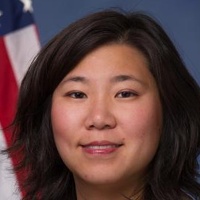
Grace Meng
Representative
NY
Grace Meng
Representative
NY
The Pray Safe Act of 2025 establishes a Federal Clearinghouse within the Department of Homeland Security to publish evidence-based safety and security best practices for nonprofit organizations, faith-based organizations, and houses of worship. This Clearinghouse will centralize information on security recommendations and available federal grant programs to help these entities prevent and respond to threats. The Act also mandates a GAO report evaluating existing federal security grant programs for these organizations.
This constitutional amendment prohibits members of Congress from receiving compensation during any period of a government shutdown.
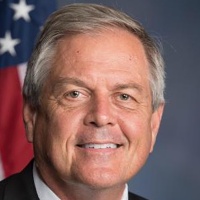
Ralph Norman
Representative
SC
Ralph Norman
Representative
SC
This proposed constitutional amendment would prohibit members of Congress from receiving any compensation for the duration of a government shutdown. If Congress fails to pass necessary funding, Senators and Representatives will not be paid until the government is fully operational again. The amendment also grants Congress the authority to enact laws to enforce this provision.
This resolution honors the life and legacy of Charles "Charlie" James Kirk, condemns his assassination as political violence, and calls for a renewed commitment to civil discourse and American founding principles.

Mike Johnson
Representative
LA
Mike Johnson
Representative
LA
This resolution honors the life and legacy of Charles "Charlie" James Kirk, founder of Turning Point USA. It strongly condemns his assassination as an act of political violence. The bill calls for a renewed national commitment to civil discourse and the founding principles of the United States.
This resolution supports designating the week of September 21 through September 27, 2025, as "Gold Star Families Remembrance Week" to honor the families of fallen service members.
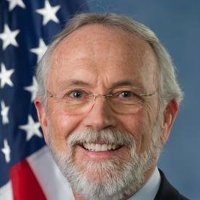
Dan Newhouse
Representative
WA
Dan Newhouse
Representative
WA
This resolution supports designating the week of September 21 through September 27, 2025, as "Gold Star Families Remembrance Week." The measure aims to officially recognize and honor the profound sacrifices made by families who have lost a loved one serving in the U.S. Armed Forces. It encourages communities nationwide to observe this week through acts of service and by celebrating the lives of these fallen service members.
This bill establishes a mechanism to ensure the Federal Aviation Administration remains funded and operational during a lapse in appropriations by drawing from the Airport and Airway Trust Fund.
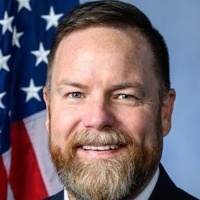
Aaron Bean
Representative
FL
Aaron Bean
Representative
FL
The Aviation Funding Stability Act of 2025 establishes a mechanism to ensure the Federal Aviation Administration (FAA) remains operational during a lapse in appropriations. If Congress fails to pass a budget, the FAA can draw from the Airport and Airway Trust Fund to continue existing programs and projects at the previous year's spending rate. This temporary funding lasts until a new budget is enacted or for a maximum of 30 days, whichever comes first. This measure aims to prevent disruptions to critical aviation services during government shutdowns.
This bill establishes a new federal tax credit for individuals who donate cash to approved workforce development or apprenticeship training programs, capped at \$1,700 annually.
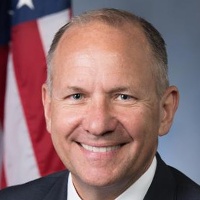
Lloyd Smucker
Representative
PA
Lloyd Smucker
Representative
PA
The USA Workforce Investment Act establishes a new federal tax credit for individuals who donate cash to approved workforce development or apprenticeship training programs. This credit is capped at \$1,700 annually and cannot be claimed alongside a standard charitable deduction for the same contribution. Any unused credit can be carried forward for up to five years.
This resolution officially recognizes the 250th anniversary of the United States Navy, celebrating its history, global strength, and vital contributions to national security and diplomacy.
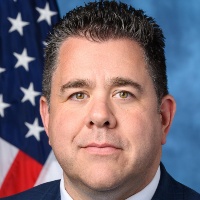
Nicolas LaLota
Representative
NY
Nicolas LaLota
Representative
NY
This resolution officially recognizes the 250th birthday of the United States Navy, celebrating its long history since the Continental Navy was established in 1775. Congress expresses deep gratitude for the bravery and dedication of all past and present Sailors who have defended the nation. The bill reaffirms the Navy's vital role in global security, humanitarian efforts, and maintaining American strength worldwide.
This bill establishes the "CHOICE arrangement" as a new type of employer-funded health reimbursement plan integrated with individual market coverage, provides tax incentives for offering it, and allows participants to use pre-tax cafeteria plan funds for their coverage.
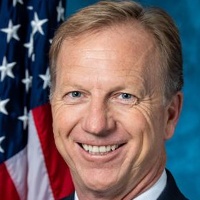
Kevin Hern
Representative
OK
Kevin Hern
Representative
OK
The Choice Arrangement Act of 2025 establishes new rules for employer-funded Health Reimbursement Arrangements (HRAs) integrated with individual health insurance, creating a "CHOICE arrangement." This legislation outlines specific nondiscrimination, substantiation, and notice requirements for employers offering these plans. Furthermore, the Act allows participants to use pre-tax cafeteria plan funds for their coverage and introduces a new, temporary tax credit for eligible small and medium-sized employers who offer these arrangements.
This Act mandates the modernization and expansion of the NOAA Weather Radio system to ensure reliable, uninterrupted hazard alerts for all residents via both traditional radio and digital platforms.
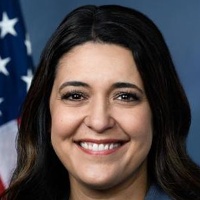
Stephanie Bice
Representative
OK
Stephanie Bice
Representative
OK
The NOAA Weather Radio Modernization Act of 2025 aims to significantly upgrade and expand the national weather alert system to ensure reliable, uninterrupted access for all Americans, regardless of location. This legislation mandates the modernization of existing infrastructure, including transitioning to newer communication technologies and expanding transmitter coverage to underserved rural and tribal areas. Furthermore, the Act requires a comprehensive assessment to improve data dissemination and ensure the system remains resilient against various threats.
This act eliminates federal income tax on overtime compensation earned by all workers.
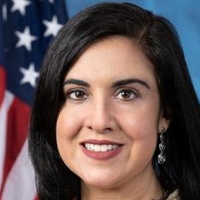
Nicole Malliotakis
Representative
NY
Nicole Malliotakis
Representative
NY
The No Tax on Overtime for All Workers Act amends the tax code to clarify and expand the definition of "qualified overtime compensation." This change ensures that overtime pay earned above a standard rate, whether mandated by the Fair Labor Standards Act or agreed upon beforehand with an employer, is treated favorably for tax purposes. The goal is to incentivize and reward workers for putting in extra hours.
This Act mandates that new passenger motor vehicles sold in the U.S. must include standard equipment capable of receiving AM broadcast radio signals.

Gus Bilirakis
Representative
FL
Gus Bilirakis
Representative
FL
The AM Radio for Every Vehicle Act of 2025 mandates that the Secretary of Transportation establish a rule requiring AM broadcast radio receivers to be installed as standard equipment in new passenger motor vehicles. This requirement aims to ensure public access to AM radio signals, which are often used for emergency alerts. The bill also directs a GAO study on the effectiveness of AM radio within the national emergency alert system compared to other technologies. Finally, the Act preempts state and local laws on this matter and includes a sunset provision eight years after enactment.
This bill amends the Social Security Act to provide Medicare coverage for FDA-approved multi-cancer early detection screening tests starting in 2028.
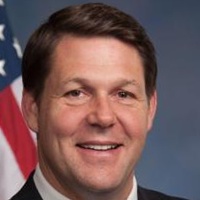
Jodey Arrington
Representative
TX
Jodey Arrington
Representative
TX
The Nancy Gardner Sewell Medicare Multi-Cancer Early Detection Screening Coverage Act amends the Social Security Act to provide Medicare Part B coverage for multi-cancer early detection screening tests starting January 1, 2028. This legislation establishes clear criteria for qualifying tests and outlines payment structures to ensure beneficiaries have access to these advanced diagnostic tools. Importantly, this coverage is designed to complement, rather than replace, existing Medicare-covered cancer screenings.
This Act ensures the automatic continuation of pay for active duty military personnel and essential civilian support staff if Congress fails to pass a budget for fiscal year 2026.
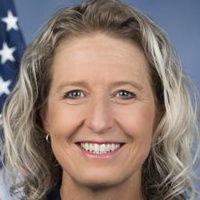
Jennifer Kiggans
Representative
VA
Jennifer Kiggans
Representative
VA
The Pay Our Troops Act of 2026 ensures that active duty military personnel and essential civilian support staff continue to receive their pay if Congress has not yet passed the full budget for fiscal year 2026. This act provides automatic continuing appropriations from the Treasury to prevent a lapse in military salaries due to budget delays. The funding automatically terminates once a new budget or continuing resolution is passed, or on January 1, 2027, whichever comes first.
This bill updates COPS Hiring Program grants to allow local law enforcement agencies to use funds for recruitment and retention bonuses when facing staffing shortages.
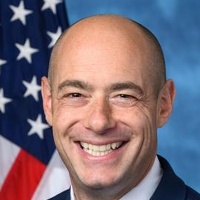
Greg Landsman
Representative
OH
Greg Landsman
Representative
OH
This Act, the Enhancing COPS Hiring Program Grants for Local Law Enforcement Act, updates federal grant guidelines to allow local law enforcement agencies to use public safety funds for hiring and retention bonuses. These bonuses are specifically permitted when departments face significant recruitment challenges or high attrition rates. The bill also clarifies the definition of a "law enforcement officer" for grant eligibility purposes.
This bill establishes a program to identify and correct the grave markers of Jewish servicemembers mistakenly buried under Latin Crosses in overseas U.S. military cemeteries.
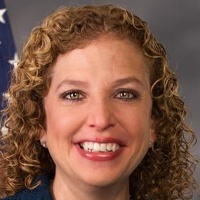
Debbie Wasserman Schultz
Representative
FL
Debbie Wasserman Schultz
Representative
FL
This act establishes the Fallen Servicemembers Religious Heritage Restoration Program to correct historical errors where Jewish service members killed in WWI and WWII were mistakenly buried under non-Jewish grave markers overseas. The American Battle Monuments Commission will contract with a nonprofit organization to identify these "covered members" and contact their survivors over a five-year period. The legislation also extends a deadline related to certain pension payments.