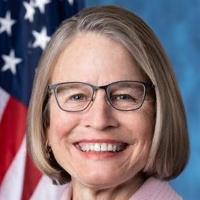
Legislative Activity
Track Mariannette's sponsored bills, co-sponsored legislation, and voting record
This bill requires Medicare Part D prescription drug plans to provide preferred, lower-cost access to qualifying generic and biosimilar medications starting in 2027.
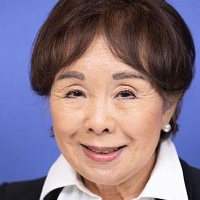
Doris Matsui
Representative
CA
Doris Matsui
Representative
CA
The Ensuring Access to Lower-Cost Medicines for Seniors Act of 2026 mandates that Medicare Part D plans prioritize lower-cost generic and biosimilar drugs on their formularies starting in 2027. By requiring these medications to be placed in preferred tiers and prohibiting restrictive access barriers, the bill aims to reduce out-of-pocket costs for seniors.
This bill establishes new federal tax credits for the production of and capital investment in facilities that manufacture qualified renewable materials from biomass.
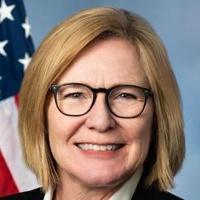
Michelle Fischbach
Representative
MN
Michelle Fischbach
Representative
MN
This bill amends the Internal Revenue Code to incentivize the domestic production of and investment in biobased renewable materials. It establishes a production tax credit of 10 cents per pound for qualified materials and a 30 percent investment tax credit for facilities dedicated to their manufacture. These measures aim to support sustainable supply chains by providing financial support for non-fuel, non-food biomass conversion projects.
The Fertilizer Transparency Act of 2026 mandates weekly price and quantity reporting for fertilizer manufacturers and wholesalers to provide farmers with greater market transparency through a public USDA dashboard.
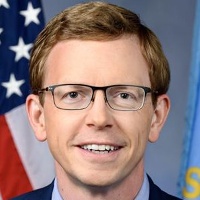
Dusty Johnson
Representative
SD
Dusty Johnson
Representative
SD
The Fertilizer Transparency Act of 2026 mandates weekly price and quantity reporting for fertilizer manufacturers and wholesalers to increase market transparency for farmers. The bill also establishes a public dashboard to track these reports alongside new weekly retail price surveys conducted by the USDA. These measures aim to provide clearer market data while protecting confidential business information and maintaining existing antitrust oversight.
This bill establishes a priority review process to make certain oral contraceptives available over-the-counter for adults while requiring a GAO study on federal funding for contraceptive services.
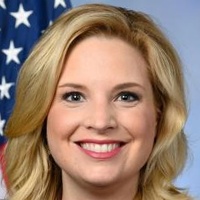
Ashley Hinson
Representative
IA
Ashley Hinson
Representative
IA
The Allowing Greater Access to Safe and Effective Contraception Act establishes a priority review process to make certain oral contraceptives available over-the-counter for adults aged 18 and older. The bill also mandates a comprehensive GAO study to track federal spending on contraceptive-related activities across various government programs over the past 15 years.
The Access to LARCs Act directs the Secretary of Health and Human Services to study and report on barriers to contraceptive access at community health centers located in health care deserts.
Ashley Hinson
Representative
IA
Ashley Hinson
Representative
IA
The Access to LARCs Act directs the Secretary of Health and Human Services to study and report on the barriers to accessing a range of contraceptive methods at community health centers located in health care deserts. This legislation aims to identify challenges related to reimbursement, provider training, and inventory to help improve reproductive health access for underserved populations.
The PREDICT Act prohibits federal officials and their associates from trading in prediction markets tied to political event outcomes.
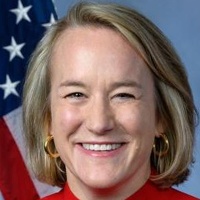
Nicole (Nikki) Budzinski
Representative
IL
Nicole (Nikki) Budzinski
Representative
IL
The PREDICT Act prohibits federal officials, including members of Congress, the President, and high-level executive and judicial employees, from trading in prediction markets tied to political events. The bill mandates financial penalties for violations, requires the disgorgement of any profits, and ensures public transparency by requiring ethics offices to disclose all assessed fines.
This bill prohibits federal agencies from banning the use of lead ammunition and tackle on federal lands and waters unless specific, evidence-based criteria and state-level coordination requirements are met.

Robert Wittman
Representative
VA
Robert Wittman
Representative
VA
The Protecting Access for Hunters and Anglers Act prevents federal agencies from banning the use of lead ammunition and tackle on federal lands and waters open to hunting and fishing. Exceptions to this rule are only permitted if specific, site-based field data proves lead is causing a wildlife population decline and the action is approved by or consistent with state wildlife policies.
This Act establishes new federal standards and requirements for states issuing commercial driver's licenses (CDLs) to individuals who are not residents of that issuing state, particularly focusing on drivers from foreign countries and U.S. territories.
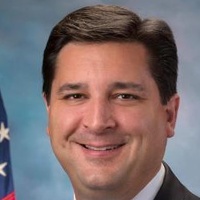
David Rouzer
Representative
NC
David Rouzer
Representative
NC
The Non-Domiciled CDL Integrity Act establishes new federal standards for states issuing Commercial Driver's Licenses (CDLs) to individuals who do not reside in that state. This bill sets specific, strict requirements for foreign nationals seeking a CDL, including proof of lawful status and job-related visas, while also outlining distinct procedures for applicants residing in U.S. territories. The legislation mandates enhanced record-keeping and reporting by states to the Secretary of Transportation regarding these non-domiciled licenses.
The POINTS Act of 2026 establishes a federal grant program to expand access to prevention, screening, and treatment services for individuals struggling with gambling addiction.
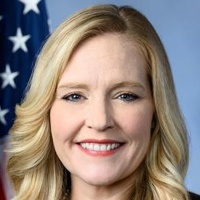
Erin Houchin
Representative
IN
Erin Houchin
Representative
IN
The POINTS Act of 2026 establishes a federal grant program to fund the prevention, screening, and treatment of gambling addiction. By providing resources to states and Tribal organizations, the bill aims to expand access to specialized care, public awareness campaigns, and support services for at-risk populations. Priority is given to programs serving disproportionately impacted groups, including veterans and youth, as well as those operating in underserved or rural areas.
The Medicaid VBPs for Patients (MVP) Act modernizes Medicaid drug pricing and reporting rules to facilitate value-based purchasing arrangements between states and manufacturers, aiming to improve patient access to innovative therapies.
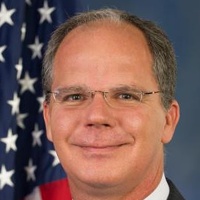
Brett Guthrie
Representative
KY
Brett Guthrie
Representative
KY
The Medicaid VBPs for Patients (MVP) Act updates federal drug pricing regulations to formally support value-based purchasing arrangements in Medicaid and Medicare. By refining how drug prices are calculated and providing guidance for state-level implementation, the bill aims to improve patient access to innovative therapies while ensuring better health outcomes. Additionally, it creates necessary legal exceptions for these arrangements and mandates a GAO study to evaluate their long-term impact on costs and patient care.
The Quantum in Practice Act integrates quantum molecular modeling and simulation into the National Quantum Initiative to accelerate breakthroughs in medicine, materials science, and industrial manufacturing.
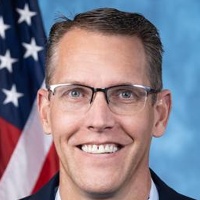
Randy Feenstra
Representative
IA
Randy Feenstra
Representative
IA
The Quantum in Practice Act formally integrates quantum molecular modeling and simulation into the National Quantum Initiative. By prioritizing this research, the bill aims to accelerate breakthroughs in fields such as medicine, energy storage, material science, and sustainable agriculture.
This bill expresses support for the National FFA Organization by designating February 21-28, 2026, as National FFA Week and celebrating the 50th anniversary of the Alaska State FFA Association.
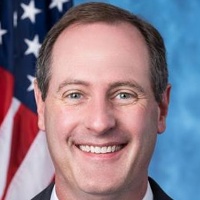
Tracey Mann
Representative
KS
Tracey Mann
Representative
KS
This resolution expresses support for the National FFA Organization and designates February 21–28, 2026, as National FFA Week. It recognizes the FFA's vital role in developing future leaders through agricultural education. The bill also celebrates the 50th anniversary of the chartering of the Alaska State FFA Association.
This bill exempts specific less-than-lethal projectile devices from federal firearm restrictions, excise taxes, and National Firearms Act regulations to promote de-escalation innovation in law enforcement.
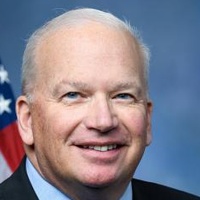
Scott Fitzgerald
Representative
WI
Scott Fitzgerald
Representative
WI
The Law-Enforcement Innovate to De-Escalate Act aims to promote de-escalation by exempting specific, clearly defined less-than-lethal projectile devices from federal firearm restrictions and excise taxes. This legislation provides a formal process for determining which devices qualify for these exemptions under both federal law and the National Firearms Act. The bill also modernizes tax regulations by exempting qualifying less-than-lethal devices and their ammunition from federal excise taxes.
This bill strengthens the Department of Energy's mission to secure a reliable domestic supply chain for critical energy resources through ongoing assessments, strategic development, and diversification efforts.
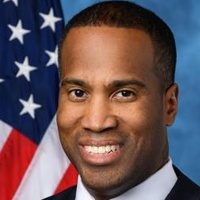
John James
Representative
MI
John James
Representative
MI
The Securing America’s Critical Minerals Supply Act aims to bolster U.S. energy security by focusing on critical energy resources. This legislation tasks the Department of Energy with assessing vulnerabilities in supply chains and developing strategies to increase domestic production and recycling. The bill mandates ongoing evaluations of resource importance, supply chain risks, and the influence of adversarial nations. Ultimately, it seeks to ensure a reliable and secure supply of essential energy materials for the nation.
This Act officially renames the Des Moines and Marshalltown VA clinics to honor fallen Iowa National Guard heroes, Staff Sergeant Edgar Torres-Tovar and Staff Sergeant William Nathaniel Howard.
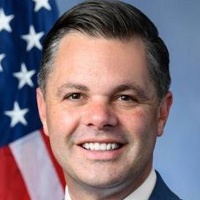
Zachary (Zach) Nunn
Representative
IA
Zachary (Zach) Nunn
Representative
IA
This Act officially designates two Department of Veterans Affairs clinics in Iowa to honor fallen Iowa National Guard heroes. The Des Moines VA clinic will be renamed the Staff Sergeant Edgar Torres-Tovar VA Clinic. Additionally, the Marshalltown VA clinic will be named the Staff Sergeant William Nathaniel Howard VA Clinic.
The SELF DRIVE Act of 2026 establishes federal safety requirements, testing rules, and data reporting standards for the safe deployment and research of automated driving systems in vehicles.
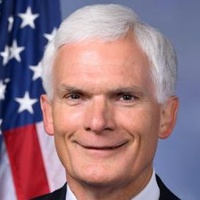
Robert Latta
Representative
OH
Robert Latta
Representative
OH
The SELF DRIVE Act of 2026 establishes a federal framework for the safe testing and deployment of automated driving systems (ADS) across the United States. It mandates that manufacturers submit a comprehensive "safety case" demonstrating their ADS will not pose an unreasonable risk before vehicles can be sold. Furthermore, the bill creates a national repository for automated vehicle crash data and clarifies federal preemption over state laws regarding ADS sales and reporting.
This bill mandates that unspent federal agency funds be split, with most going to debt reduction, some rolled over for one year, and a small portion used for employee retention bonuses, while also limiting future budget requests.
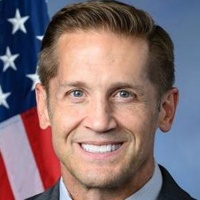
Rich McCormick
Representative
GA
Rich McCormick
Representative
GA
The Incentivize Savings Act mandates how federal agencies must handle unspent appropriations by dedicating the majority to debt reduction and allowing a portion for employee retention bonuses. This legislation also restricts future budget requests to only account for inflation unless the agency fully spends its prior allocation. Ultimately, the bill aims to encourage fiscal responsibility by linking unspent funds to debt reduction and limiting budget growth.
This bill establishes eligibility requirements for amateur athletic organizations based on biological sex, prohibiting individuals whose sex is male from competing in female-designated amateur athletic competitions.
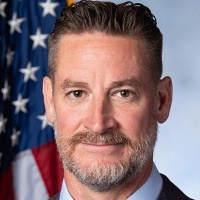
W. Steube
Representative
FL
W. Steube
Representative
FL
This Act establishes specific definitions for "female," "male," and "sex" based on biological reproductive systems for amateur athletics. It mandates that organizations recognized by the U.S. Olympic & Paralympic Committee must prohibit individuals identified as male from competing in competitions designated for females. This aims to protect competitive opportunities specifically for biological females in amateur sports.
This bill establishes federal standards for voter identification, registration, election administration, and mail-in ballot procedures for federal elections.
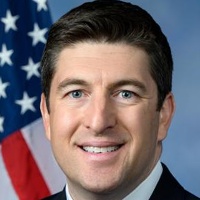
Bryan Steil
Representative
WI
Bryan Steil
Representative
WI
The Make Elections Great Again Act establishes new federal standards for voter identification, citizenship verification for registration, and statewide voter list maintenance for federal elections. It also standardizes election administration by mandating paper ballots, banning ranked-choice voting, and implementing strict new rules for requesting and returning mail-in ballots. The bill aims to increase election integrity through enhanced documentation and procedural uniformity across states.
This resolution recognizes and celebrates the significant contributions of Catholic schools across the United States during the 52nd annual National Catholic Schools Week in January 2026.
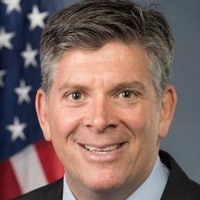
Darin LaHood
Representative
IL
Darin LaHood
Representative
IL
This resolution officially recognizes and celebrates the 52nd annual National Catholic Schools Week, taking place from January 25 to January 31, 2026. It honors the significant contributions of Catholic schools nationwide, highlighting their commitment to academic excellence, diverse student populations, and values-based education. The bill supports the goals of this week, which is cosponsored by the National Catholic Educational Association and the U.S. Conference of Catholic Bishops.