Legislative Activity
Track Blake's sponsored bills, co-sponsored legislation, and voting record
The "Death Tax Repeal Act" eliminates estate and generation-skipping transfer taxes, adjusts gift tax calculations, and sets a $10,000,000 lifetime gift exemption.
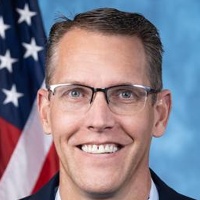
Randy Feenstra
Representative
IA
Randy Feenstra
Representative
IA
The "Death Tax Repeal Act" eliminates both estate and generation-skipping transfer taxes, effective from the date of enactment. It adjusts gift tax calculations by setting the lifetime gift exemption at $10,000,000, with inflation adjustments after 2011. The Act also includes transitional rules for applying certain sections of the Internal Revenue Code during the enactment year.
The "National Right-to-Work Act" prohibits mandatory union membership as a condition of employment, protecting employees' rights to choose whether or not to join or support a labor union.
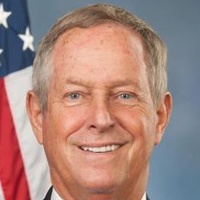
Joe Wilson
Representative
SC
Joe Wilson
Representative
SC
The "National Right-to-Work Act" amends both the National Labor Relations Act and the Railway Labor Act to protect an employee's right to choose whether or not to join or support a labor union. It eliminates the possibility of mandatory union membership or dues payments as a condition of employment, ensuring that employees cannot be forced to join or support a union against their will.
This Act prohibits federal agencies from imposing water use restrictions or demanding water rights transfers as conditions for land use agreements, reinforcing state authority over water allocation.
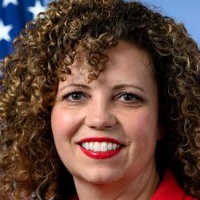
Celeste Maloy
Representative
UT
Celeste Maloy
Representative
UT
The Water Rights Protection Act affirms the long-standing authority of states in evaluating, regulating, and allocating water use. It prohibits federal agencies from imposing restrictions on water rights that exceed those established under state law when issuing land use agreements. Furthermore, the Act explicitly forbids federal agencies from conditioning permits on the transfer of state-recognized water rights to the United States. This legislation ensures federal actions remain consistent with state water law without altering existing reserved water rights or certain federal environmental laws.
This bill creates a 20-year demonstration project waiving certain Social Security disability benefit rules for blind Americans to encourage their return to work.
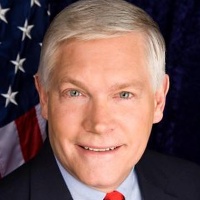
Pete Sessions
Representative
TX
Pete Sessions
Representative
TX
The Blind Americans Return to Work Act of 2025 initiates a 20-year demonstration project aimed at helping blind Americans receiving Social Security disability benefits return to work. For the first 10 years, eligibility for benefits will be determined without considering substantial gainful activity, and benefits will be reduced based on earnings above a set amount, incentivizing employment without immediate loss of support. The project waives certain benefit requirements to facilitate successful employment, with participants having the option to opt out after the initial 10-year period. This act aims to support blind individuals in their transition back to the workforce while maintaining a safety net.
This bill amends the Internal Revenue Code to clarify that temporary healthcare providers (locum tenens) are not employees for tax purposes, aiming to reduce healthcare provider shortages.
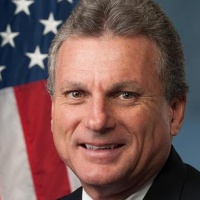
Earl Carter
Representative
GA
Earl Carter
Representative
GA
The "Health Care Provider Shortage Minimization Act of 2025" aims to address healthcare provider shortages by clarifying the tax status of qualified locum tenens physicians and advanced care practitioners. It ensures that these temporary healthcare providers are not classified as employees for tax purposes, provided they meet specific conditions such as working under a written contract and for no more than one continuous year at a service site. This clarification applies to services performed after the Act's enactment.
The "Freedom to Invest in Tomorrow's Workforce Act" expands the use of 529 savings accounts to cover expenses related to postsecondary credentialing programs, including tuition, fees, books, supplies, equipment, and testing fees.

Robert Wittman
Representative
VA
Robert Wittman
Representative
VA
The "Freedom to Invest in Tomorrow's Workforce Act" amends Section 529 savings accounts to include expenses related to postsecondary credentialing programs. This allows 529 funds to cover costs like tuition, fees, books, supplies, and testing fees for recognized programs and credentials, as defined by the bill. These changes would apply to distributions made after the bill is enacted.
Prohibits the use of the DeepSeek application on government devices, with exceptions for law enforcement, national security, and security research under specific conditions.
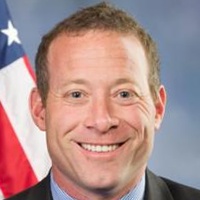
Josh Gottheimer
Representative
NJ
Josh Gottheimer
Representative
NJ
The "No DeepSeek on Government Devices Act" prohibits the use of the DeepSeek application on government devices, with exceptions for law enforcement, national security, and security research. The Office of Management and Budget is tasked with creating guidelines for executive agencies to remove DeepSeek from their information technology. Any authorized use of DeepSeek under the exceptions requires documented risk mitigation actions.
The "Ski Hill Resources for Economic Development Act" allows the Forest Service to retain and reinvest fees collected from ski area permits to improve visitor services, reduce wildfire risk, and support ski area program administration.
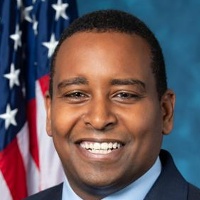
Joe Neguse
Representative
CO
Joe Neguse
Representative
CO
The "Ski Hill Resources for Economic Development Act" establishes a "Ski Area Fee Retention Account" within the Treasury, directing ski area permit fees collected by the Secretary of Agriculture into this account. These funds will be used to support the administration, maintenance, and improvement of ski areas and related visitor services within the National Forest System. A majority of the fees collected at a specific unit will be reinvested into that unit, with a smaller portion available for use across other National Forest System units. The funds cannot be used for wildfire suppression or land acquisition.
This joint resolution nullifies the Forest Service’s "Law Enforcement; Criminal Prohibitions" rule, preventing it from taking effect.
Celeste Maloy
Representative
UT
Celeste Maloy
Representative
UT
This joint resolution exercises congressional authority to nullify a U.S. Forest Service rule titled "Law Enforcement; Criminal Prohibitions." By passing this measure, Congress prevents the rule from taking effect and ensures it has no force or effect.
This bill authorizes the President to extend permanent normal trade relations to Kazakhstan by terminating the application of title IV of the Trade Act of 1974 to the country.
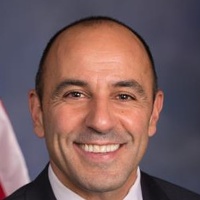
Jimmy Panetta
Representative
CA
Jimmy Panetta
Representative
CA
The US-Kazakhstan Trade Modernization Act authorizes the President to grant Kazakhstan permanent normal trade relations status. This legislation recognizes Kazakhstan’s compliance with international freedom of emigration requirements and its commitment to World Trade Organization standards. By terminating the application of title IV of the Trade Act of 1974, the bill aims to modernize and solidify the bilateral trade relationship between the two nations.
This bill requires the Congressional Budget Office and the Joint Committee on Taxation to include debt servicing costs in their official cost estimates for proposed legislation.
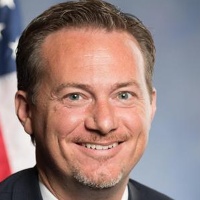
Michael Cloud
Representative
TX
Michael Cloud
Representative
TX
The Cost Estimates Improvement Act requires the Congressional Budget Office (CBO) and the Joint Committee on Taxation (JCT) to include the impact of debt servicing costs in their official legislative cost estimates. This legislation aims to provide a more comprehensive view of the long-term fiscal consequences of proposed federal spending and tax policies.
The Fair Access to Banking Act prohibits large financial institutions and payment networks from denying services to law-abiding businesses based on subjective, non-financial, or political criteria.
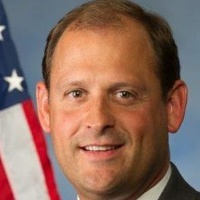
Garland Barr
Representative
KY
Garland Barr
Representative
KY
The Fair Access to Banking Act prohibits large financial institutions and payment networks from denying services to law-abiding businesses based on subjective, politically motivated, or reputational criteria. The bill mandates that financial institutions use impartial, quantitative, risk-based standards to evaluate customers rather than category-based exclusions. To ensure compliance, the legislation establishes enforcement mechanisms through federal regulators and provides a legal pathway for businesses to sue for damages if they are unfairly denied access to financial services.
This resolution calls on the United Nations Security Council to immediately impose an arms embargo on the Burmese military to hold them accountable for human rights abuses and the 2021 coup.
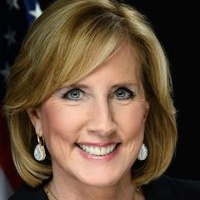
Claudia Tenney
Representative
NY
Claudia Tenney
Representative
NY
This resolution calls on the United Nations Security Council to immediately impose an arms embargo against the Burmese military (the Tatmadaw) in response to the 2021 coup and ongoing human rights abuses. It outlines that the embargo should remain in place until the military releases detained leaders, restores democratic governance, and ends violence against civilians and ethnic minorities.
The Protect Our Clothes from PFAS Act amends the Harmonized Tariff Schedule to remove specific water-resistance criteria that currently incentivize the use of PFAS in garment manufacturing.

Chellie Pingree
Representative
ME
Chellie Pingree
Representative
ME
The Protect Our Clothes from PFAS Act aims to update federal tariff classifications for water-resistant garments. By removing specific criteria from the Harmonized Tariff Schedule, this bill seeks to modernize how apparel is categorized in relation to water-resistance standards.
The Dismantle DEI Act of 2025 immediately rescinds federal diversity, equity, and inclusion (DEI) mandates across executive offices, contracting, grants, and education, while banning related training and imposing penalties for non-compliance.
Michael Cloud
Representative
TX
Michael Cloud
Representative
TX
The Dismantle DEI Act of 2025 aims to immediately rescind diversity, equity, and inclusion (DEI) mandates across the federal government, including shutting down related offices and banning specific ideological training for federal personnel and contractors. The bill prohibits the use of federal funds for DEI activities by grant recipients and mandates that federal advisory committees cease all such practices or face termination. Furthermore, it establishes strong enforcement mechanisms, allowing individuals to sue violators and seek financial penalties for non-compliance.
The Educational Choice for Children Act of 2025 establishes federal tax credits for contributions to scholarship-granting organizations, providing lower- and middle-income families with financial support for K–12 educational expenses.

Adrian Smith
Representative
NE
Adrian Smith
Representative
NE
The Educational Choice for Children Act of 2025 establishes federal tax credits for individuals and corporations that contribute to scholarship-granting organizations. These organizations provide K–12 education scholarships to students from lower- and middle-income households to cover tuition, tutoring, and other qualified educational expenses. The bill also protects the autonomy of participating schools and scholarship organizations from government interference while ensuring that scholarship funds remain tax-free for recipient families.
This bill permanently authorizes the delivery of cardiac and pulmonary rehabilitation services in the home via telehealth, allowing for virtual physician supervision and expanding hospital billing eligibility.
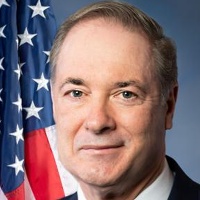
John Joyce
Representative
PA
John Joyce
Representative
PA
The Sustainable Cardiopulmonary Rehabilitation Services in the Home Act permanently codifies the ability for patients to receive cardiac and pulmonary rehabilitation services from the comfort of their own homes. By authorizing telehealth delivery and virtual physician supervision, the bill expands access to these essential services while removing restrictive geographic requirements. This legislation ensures that the flexibility established during the COVID-19 pandemic remains a permanent, standard feature of Medicare coverage.
This bill recognizes the significant contributions of tax-exempt fraternal benefit societies to communities across the United States through charitable activities, volunteer work, and financial support for their members, and expresses Congressional support for their continued promotion.
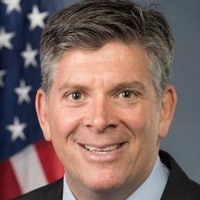
Darin LaHood
Representative
IL
Darin LaHood
Representative
IL
This bill recognizes the significant historical and ongoing contributions of tax-exempt fraternal benefit societies to communities across the United States through charitable activities, volunteer work, and financial support for members. It expresses the sense of Congress that these societies are a valuable support system that addresses unmet needs and generates substantial returns to the U.S. through their tax-exempt status. The bill also advocates for the continued promotion of fraternal benefit societies.
The Abundant American Resources Act of 2025 mandates federal agencies to conduct comprehensive studies assessing the economic value of mineral resources located on restricted onshore and offshore federal lands.
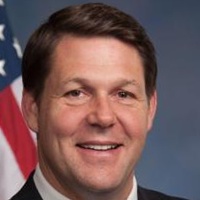
Jodey Arrington
Representative
TX
Jodey Arrington
Representative
TX
The Abundant American Resources Act of 2025 mandates that federal agencies conduct comprehensive studies to determine the economic value of mineral, oil, and natural gas deposits located within restricted onshore and offshore federal lands. These assessments aim to quantify the potential resources currently held in areas such as national monuments and protected environmental zones. The findings must be completed within three years of the bill's enactment.
The Educational Choice for Children Act of 2025 establishes a federal tax credit for donations to scholarship-granting organizations to help families fund K-12 educational expenses, including private school tuition and homeschooling costs.
Adrian Smith
Representative
NE
Adrian Smith
Representative
NE
The Educational Choice for Children Act of 2025 establishes a federal tax credit for donations to scholarship-granting organizations, which provide financial assistance for K-12 educational expenses. This initiative aims to expand school choice by helping eligible families cover costs such as tuition, tutoring, and educational therapies. The bill also includes robust protections to ensure the autonomy of participating private and religious schools and the freedom of parents to direct their children's education.