Legislative Activity
Track Barry's sponsored bills, co-sponsored legislation, and voting record
The Disaster Reforestation Act amends the tax code to allow timber owners to claim larger casualty loss deductions for destroyed timber, provided they commit to replanting the affected land within five years.
Earl Carter
Representative
GA
Earl Carter
Representative
GA
The Disaster Reforestation Act amends the Internal Revenue Code to provide tax relief for timber owners whose uncut timber is destroyed by natural disasters, pests, or disease. It allows owners to deduct the appraised value of lost timber—including pre-merchantable stands—provided they commit to reforesting the land within five years. This measure supports active timber businesses by ensuring tax deductions more accurately reflect the economic loss caused by casualty events.
This bill authorizes the President to initiate formal negotiations with the Government of Panama to reacquire the Panama Canal.

Dusty Johnson
Representative
SD
Dusty Johnson
Representative
SD
The Panama Canal Repurchase Act of 2025 authorizes the President to initiate formal negotiations with the Government of Panama to reacquire the Panama Canal. The legislation also mandates that the President provide Congress with a progress report on these negotiations within 180 days of enactment.
This bill proposes a constitutional amendment to repeal the 16th Amendment, thus removing Congress's authority to levy income taxes, except in times of war, with implementation details to be reported by the Secretary of the Treasury.
Warren Davidson
Representative
OH
Warren Davidson
Representative
OH
This bill proposes a constitutional amendment to repeal the 16th Amendment, which would eliminate the federal income tax, except during times of war. The repeal would take effect two years after the amendment's ratification. The Secretary of the Treasury would be required to submit a report to Congress with recommendations for implementing legislation within 180 days of ratification.
This bill mandates the formal abolishment of the Bureau of Alcohol, Tobacco, Firearms and Explosives (ATF).
Eric Burlison
Representative
MO
Eric Burlison
Representative
MO
The Abolish the ATF Act is a legislative proposal that mandates the immediate dissolution of the Bureau of Alcohol, Tobacco, Firearms and Explosives. This bill seeks to formally terminate the agency and eliminate its federal oversight functions.
This bill proposes a constitutional amendment to limit members of the House of Representatives to three terms and Senators to two terms, with specific provisions for partial terms. Terms served before the amendment's ratification would not be counted towards these limits, and the amendment must be ratified within seven years to be valid.
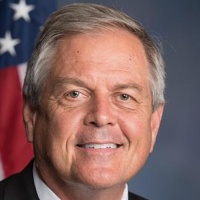
Ralph Norman
Representative
SC
Ralph Norman
Representative
SC
This bill proposes a constitutional amendment to limit the number of terms a member of Congress can serve. Representatives would be limited to 3 terms and Senators to 2 terms, with specific rules for partial terms. Terms served before the amendment's ratification would not be counted. The amendment must be ratified by three-fourths of the states within seven years to be valid.
The "No Bailout for Sanctuary Cities Act" would deny certain federal funds to sanctuary jurisdictions that obstruct information sharing or detainment requests from Homeland Security regarding individuals' immigration status, while requiring an annual report on non-compliant jurisdictions.
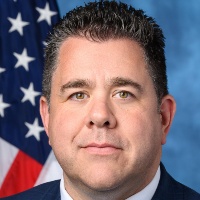
Nicolas LaLota
Representative
NY
Nicolas LaLota
Representative
NY
The "No Bailout for Sanctuary Cities Act" aims to withhold certain federal funds from state and local governments deemed "sanctuary jurisdictions" that obstruct the sharing of immigration status information or compliance with detainment requests from Homeland Security. These jurisdictions would be ineligible for federal funds intended to benefit individuals in the U.S. without legal immigration status. The Department of Homeland Security is required to report annually to the House and Senate Judiciary Committees on non-compliant states and local governments.
The Regulations from the Executive in Need of Scrutiny (REINS) Act of 2025 increases congressional accountability by requiring federal agencies to obtain legislative approval for all "major" rules before they can take effect.

Katherine Cammack
Representative
FL
Katherine Cammack
Representative
FL
The Regulations from the Executive in Need of Scrutiny (REINS) Act of 2025 aims to increase federal regulatory accountability by requiring Congress to approve any "major" rule before it can take effect. Under this legislation, rules with a significant economic impact require a joint resolution of approval from both chambers of Congress to become law. By shifting this authority back to the legislative branch, the Act seeks to ensure greater transparency and oversight of the federal rulemaking process.
The First Amendment Accountability Act allows individuals to sue federal executive branch employees for civil damages when their First Amendment rights are violated under color of federal authority.

Harriet Hageman
Representative
WY
Harriet Hageman
Representative
WY
The First Amendment Accountability Act empowers individuals to sue federal executive branch employees for violating their First Amendment rights while acting under federal authority. This legislation allows victims to seek monetary damages and legal remedies, while explicitly excluding internal federal employment disputes from its scope. Additionally, it provides for the recovery of attorney’s fees for successful plaintiffs to ensure greater accountability for government actions.
This bill amends the Internal Revenue Code to specify that expenses paid for an abortion cannot be claimed as medical expense deductions. This change would be effective for taxable years starting after the enactment date of this Act.

Andy Biggs
Representative
AZ
Andy Biggs
Representative
AZ
The "Abortion Is Not Health Care Act of 2025" amends the Internal Revenue Code to specify that expenses paid for an abortion cannot be claimed as a medical expense deduction. This change applies to taxable years starting after the enactment of this Act.
The FIND Act prohibits federal agencies from contracting with entities that discriminate against the firearm and ammunition industry, ensuring fair access to government contracts for these businesses. Contractors must certify they do not discriminate against firearm entities, with violations leading to contract termination.
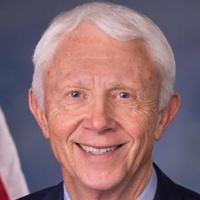
Jack Bergman
Representative
MI
Jack Bergman
Representative
MI
The FIND Act prohibits federal agencies from contracting with entities that discriminate against the firearm and ammunition industry. It requires federal contractors to certify they do not discriminate against firearm entities and prohibits them from awarding subcontracts to entities that do not provide a similar certification. Violations of these clauses will result in contract termination. The act defines "discriminate" as making judgments or refusing/limiting services based on biased criteria, rather than case-by-case evaluations, empirical data, financial risk, or legal non-compliance.
The Stopping Border Surges Act implements stricter asylum eligibility requirements, accelerates deportation timelines for unaccompanied minors, and mandates family detention to deter unauthorized border crossings.
Andy Biggs
Representative
AZ
Andy Biggs
Representative
AZ
The Stopping Border Surges Act proposes comprehensive reforms to U.S. immigration policy by tightening asylum eligibility and accelerating the processing of unaccompanied minors. The bill mandates stricter screening standards, expands detention authority for families, and limits legal protections for those seeking asylum. Ultimately, the legislation aims to deter fraudulent claims and expedite removals through more restrictive border and interior enforcement measures.
The "Fentanyl is a WMD Act" mandates the Department of Homeland Security to classify illicit fentanyl as a weapon of mass destruction.

Lauren Boebert
Representative
CO
Lauren Boebert
Representative
CO
The "Fentanyl is a WMD Act" mandates the Department of Homeland Security to classify illicit fentanyl as a weapon of mass destruction. This directs the Assistant Secretary for the Countering Weapons of Mass Destruction Office to treat illicit fentanyl as such, as defined in the Homeland Security Act of 2002.
The FairTax Act of 2025 proposes replacing federal income, payroll, and estate taxes with a national consumption-based sales tax, accompanied by monthly family rebates and the eventual sunsetting of the IRS.
Earl Carter
Representative
GA
Earl Carter
Representative
GA
The FairTax Act of 2025 proposes a fundamental overhaul of the U.S. tax system by repealing federal income, payroll, estate, and gift taxes starting in 2027. In their place, the legislation establishes a national sales tax on new goods and services, supported by a monthly rebate for qualified families to offset the cost of basic necessities. The bill also transitions tax administration to the Treasury Department and includes a sunset provision that terminates the sales tax if the Sixteenth Amendment is not repealed within seven years.
The Federal Reserve Transparency Act of 2025 mandates a comprehensive audit of the Federal Reserve System by the Comptroller General, ensuring greater transparency and accountability. This act requires a detailed report to Congress with findings and recommendations, while also repealing audit limitations.

Thomas Massie
Representative
KY
Thomas Massie
Representative
KY
The Federal Reserve Transparency Act of 2025 mandates a comprehensive audit of the Federal Reserve System by the Comptroller General within one year. Following the audit, a detailed report must be submitted to Congress, including findings and recommendations. This act aims to increase transparency and accountability within the Federal Reserve System by repealing audit limitations.