Legislative Activity
Track Barry's sponsored bills, co-sponsored legislation, and voting record
The Kayleigh’s Law Act of 2026 mandates lifetime no-contact injunctions for defendants convicted of federal violent or sexual crimes to ensure the ongoing protection of victims.
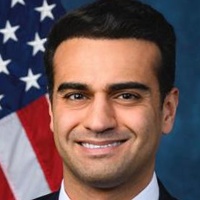
Abraham Hamadeh
Representative
AZ
Abraham Hamadeh
Representative
AZ
The Kayleigh’s Law Act of 2026 mandates that federal courts issue lifetime no-contact orders for defendants convicted of specific violent or sexual offenses. These permanent protections ensure victims are shielded from further harassment without incurring any legal fees. The legislation provides a clear framework for these orders to remain in effect unless a conviction is overturned or specific legal conditions for termination are met.
This resolution commemorates the 13 U.S. servicemembers killed at Abbey Gate and condemns the Biden administration’s handling of the 2021 withdrawal from Afghanistan.
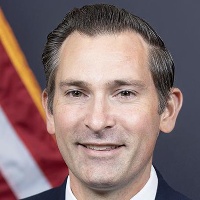
Matt Van Epps
Representative
TN
Matt Van Epps
Representative
TN
This resolution commemorates the 13 U.S. servicemembers killed during the 2021 Abbey Gate bombing in Afghanistan. It formally condemns the Biden-Harris administration for its handling of the withdrawal, citing failures in planning, security, and accountability. The measure denounces the administration's decisions as a dereliction of duty that compromised national security and abandoned American allies.
The Permanent CBDC Ban Act prohibits the Federal Reserve from issuing a central bank digital currency.
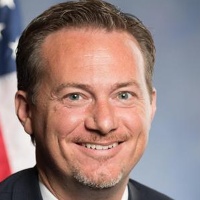
Michael Cloud
Representative
TX
Michael Cloud
Representative
TX
The Permanent CBDC Ban Act seeks to codify a long-term prohibition on the issuance of a Central Bank Digital Currency (CBDC) by the Federal Reserve. By amending the Federal Reserve Act, this legislation aims to permanently restrict the government from implementing a digital dollar.
The PERFORM Act prohibits the Postmaster General from receiving performance-based bonuses if the Postal Service fails to meet specific financial and service benchmarks while mandating increased transparency regarding executive compensation.
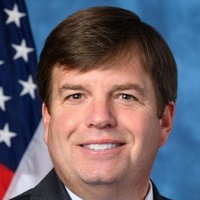
Dale Strong
Representative
AL
Dale Strong
Representative
AL
The PERFORM Act increases accountability for the U.S. Postal Service by prohibiting performance-based bonuses for the Postmaster General if the agency fails to meet specific financial, service, or reporting benchmarks. Additionally, the bill mandates increased transparency through annual reporting on executive compensation and requires the Inspector General to audit compliance with these new standards.
This bill officially designates the United States Postal Service facility at 401 North Elm Street in Tuskegee, Alabama, as the "Tuskegee Airmen Memorial Post Office."
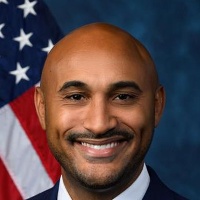
Shomari Figures
Representative
AL
Shomari Figures
Representative
AL
This bill officially renames the United States Postal Service facility at 401 North Elm Street in Tuskegee, Alabama. The facility will now be known as the "Tuskegee Airmen Memorial Post Office." This designation requires all official documents to use the new name for the location.
This bill establishes new payment rules and prohibitions for Pharmacy Benefit Managers (PBMs) administering federal employee health plans, including penalties for noncompliance.
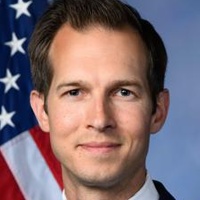
Jake Auchincloss
Representative
MA
Jake Auchincloss
Representative
MA
This bill, the Pharmacists Fight Back in Federal Employee Health Benefit Plans Act, establishes new rules for Pharmacy Benefit Managers (PBMs) administering prescription drug benefits for federal employees. It mandates specific reimbursement rates for pharmacies and prohibits PBMs from engaging in anti-competitive practices like steering patients to affiliated pharmacies. The legislation also institutes civil monetary penalties and potential debarment for PBMs that fail to comply with these new requirements.
The Tuskegee Airmen Memorial Act of 2026 authorizes the establishment of a privately funded commemorative work in Washington, D.C., to honor the Tuskegee Airmen of World War II.
Shomari Figures
Representative
AL
Shomari Figures
Representative
AL
The Tuskegee Airmen Memorial Act of 2026 authorizes Tuskegee Airmen, Inc. to establish a commemorative work on federal land in Washington, D.C., to honor the original Tuskegee Airmen of World War II. The project will be funded entirely through private donations, with no federal funds permitted for its construction or maintenance.
This Act mandates that schools must obtain prior written consent from parents or eligible students before collecting specific survey or evaluation data.
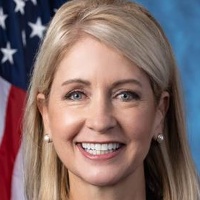
Mary Miller
Representative
IL
Mary Miller
Representative
IL
The Parents Opt-in Protection Act requires schools to obtain prior written consent before collecting specific survey or evaluation data from students. This legislation amends existing law to ensure that participation in certain student surveys is voluntary and requires explicit parental or student permission.
This bill prohibits the Department of Labor from finalizing, implementing, or enforcing the proposed rule regarding heat injury and illness prevention in outdoor and indoor work settings.
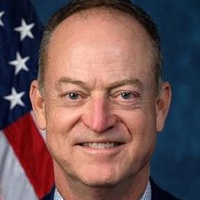
Mark Messmer
Representative
IN
Mark Messmer
Representative
IN
This act, the Heat Workforce Standards Act of 2025, prohibits the Secretary of Labor from finalizing, implementing, or enforcing the proposed rule regarding heat injury and illness prevention published in August 2024. This restriction extends to any future standard substantially similar to the one proposed.
This bill clarifies that a franchisor is only considered a joint employer of a franchisee's workers if it exercises substantial, direct, and immediate control over essential terms of employment.
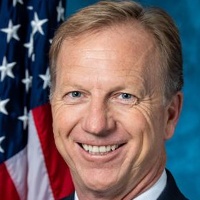
Kevin Hern
Representative
OK
Kevin Hern
Representative
OK
The American Franchise Act aims to protect the traditional franchise business model by clarifying the definition of a "joint employer." This legislation establishes that a franchisor is only considered a joint employer if it exercises "substantial direct and immediate control" over the essential terms of employment for a franchisee's workers. This change specifically targets liability risks associated with maintaining brand standards, ensuring franchisors are not automatically held responsible for local labor practices. The new standard applies prospectively to future legal proceedings.
This act amends Title IX to explicitly define "sex," "female," and "male" based on biological characteristics.
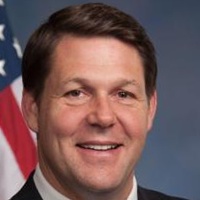
Jodey Arrington
Representative
TX
Jodey Arrington
Representative
TX
The Title IX Clarification Act of 2026 amends Title IX to explicitly define "sex," "female," and "male" based on an individual's biologically determined sex and reproductive system. This legislation clarifies the scope of sex-based protections under federal education law. The changes take effect immediately upon enactment.
This Act authorizes the Secretary of Health and Human Services to mandate the destruction of refused imported articles that pose a significant public health risk, prohibiting their re-export or movement within U.S. commerce.
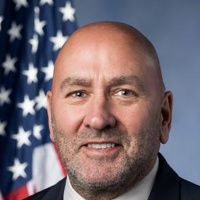
Clay Higgins
Representative
LA
Clay Higgins
Representative
LA
The Destruction of Hazardous Imports Act authorizes the Secretary of Health and Human Services to mandate the destruction of imported goods that pose a significant public health risk and have been refused admission into the U.S. This legislation removes the option for owners to export these hazardous items and requires them to cover all destruction costs. Owners are granted due process through formal notice and hearing procedures before any destruction order is finalized.
The No GRIFT Act of 2026 prohibits the Department of Justice from awarding grants to nonprofit organizations that rely on federal funding for over half their revenue while paying any employee more than the Attorney General’s salary.

Andy Biggs
Representative
AZ
Andy Biggs
Representative
AZ
The No GRIFT Act of 2026 prohibits the Department of Justice from awarding grants to nonprofit organizations that rely on federal funding for more than half of their revenue while paying any employee more than the Attorney General’s annual salary. To qualify for funding, organizations must certify that they do not exceed these compensation and revenue thresholds.
The English Language Proficiency Act eliminates all existing exemptions to the naturalization requirement, mandating that all citizenship applicants demonstrate proficiency in the English language and knowledge of U.S. history and government.
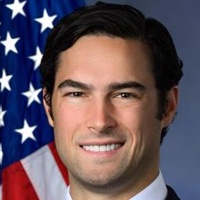
Brandon Gill
Representative
TX
Brandon Gill
Representative
TX
The English Language Proficiency Act amends the Immigration and Nationality Act to mandate that all naturalization applicants demonstrate proficiency in the English language and knowledge of U.S. history and government. This bill eliminates existing exemptions previously granted to elderly applicants and individuals with physical or developmental disabilities. Consequently, all applicants for U.S. citizenship would be required to meet these standards without exception.
The Chloe Cole Act of 2026 establishes a private right of action allowing individuals to sue healthcare providers for damages resulting from gender-transition medical interventions performed on them as minors.
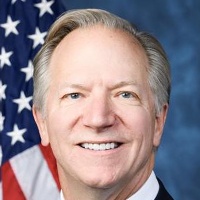
Robert Onder
Representative
MO
Robert Onder
Representative
MO
The Chloe Cole Act of 2026 establishes a federal private right of action allowing individuals to sue healthcare professionals and institutions for damages related to gender-transition medical interventions performed on them as minors. The bill permits lawsuits regardless of when the intervention occurred and sets a statute of limitations extending 25 years past the individual's 18th birthday. Additionally, it mandates strict liability for such interventions performed after the Act's enactment.
This bill allows qualifying small rural hospitals to receive Medicare Part A reimbursement for anesthesiology services on a reasonable cost basis, replacing the current requirement for separate Part B billing.

John Moolenaar
Representative
MI
John Moolenaar
Representative
MI
The Medicare Access to Rural Anesthesiology Act seeks to improve anesthesia coverage in small, rural hospitals by transitioning payment for these services from Medicare Part B to Part A. Under this bill, qualifying rural and critical access hospitals will be reimbursed on a reasonable cost basis, allowing them to better support anesthesiologists in low-volume settings. This change simplifies billing and helps ensure that rural patients maintain access to essential surgical care.
This Act prohibits payment card networks and processors from assigning specific merchant category codes to identify firearms retailers, protecting the privacy of firearm and ammunition purchases.
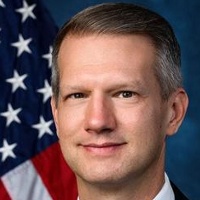
Riley Moore
Representative
WV
Riley Moore
Representative
WV
The Protecting Privacy in Purchases Act prohibits payment card networks and processors from assigning specific merchant category codes to firearms retailers. This legislation aims to protect consumer privacy by preventing the tracking of firearm and ammunition purchases through specialized financial classification. The Attorney General is tasked with enforcing these provisions and reporting annually on compliance.
The Sunshine Protection Act of 2025 establishes daylight saving time as the permanent, year-round standard time across the United States, while providing states the option to maintain their current standard time.
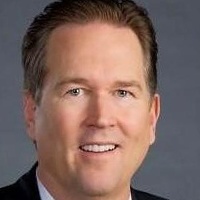
Vern Buchanan
Representative
FL
Vern Buchanan
Representative
FL
The Sunshine Protection Act of 2025 proposes making daylight saving time the permanent, year-round standard time across the United States. By advancing standard time zones by one hour, the bill eliminates the need for biannual clock changes. Additionally, it provides states that currently observe standard time year-round the option to maintain their existing timekeeping practices.
This bill requires hospitals participating in federal health care programs to collect and report aggregate data on the immigration status of their patients to federal agencies.

Chip Roy
Representative
TX
Chip Roy
Representative
TX
The Illegal Alien Patient Reporting Act requires hospitals participating in federal health care programs to collect and report data on the immigration status of their patients. Hospitals must include status inquiries on intake forms and submit quarterly aggregate reports to federal agencies, with failure to comply resulting in exclusion from federal programs. The legislation also mandates an annual report to Congress detailing these findings and the financial impact of uncompensated care for individuals not lawfully present.
This resolution honors the life, selfless service, and heroic sacrifice of Corey Comperatore, a dedicated volunteer firefighter and community leader from Sarver, Pennsylvania.
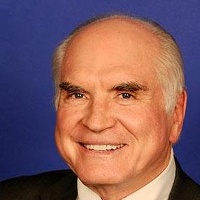
Mike Kelly
Representative
PA
Mike Kelly
Representative
PA
This resolution honors the life and legacy of Corey Comperatore, a dedicated volunteer firefighter, U.S. Army Reserve veteran, and community leader from Sarver, Pennsylvania. It recognizes his selfless sacrifice and heroic actions in protecting his family, while extending the House of Representatives' deepest condolences to his loved ones.