Legislative Activity
Track Lucy's sponsored bills, co-sponsored legislation, and voting record
This resolution designates February 24–28, 2025, as "Public Schools Week" to celebrate the vital role of public education and advocate for the continued support and funding of our nation's schools.
Mark Pocan
Representative
WI
Mark Pocan
Representative
WI
This resolution designates February 24–28, 2025, as "Public Schools Week" to celebrate the vital role public education plays in preparing students for the future. It reaffirms the commitment to providing every child with a high-quality, inclusive, and well-funded learning environment. Additionally, the bill calls on lawmakers to prioritize equitable resources and support services to ensure student success.
The Federal Retirement Fairness Act allows temporary employees' service after 1988 to count toward retirement benefits under the Federal Employees Retirement System.

Gerald Connolly
Representative
VA
Gerald Connolly
Representative
VA
The Federal Retirement Fairness Act amends title 5 of the United States Code, allowing civilian service in a temporary position after December 31, 1988, to be creditable under the Federal Employees Retirement System. This change applies to current employees and Members of the United States Postal Service, and requires the Office of Personnel Management to notify eligible individuals and issue implementing regulations.
This resolution recognizes January 2025 as "National Mentoring Month" to highlight the vital role of mentorship in empowering youth and strengthening communities across the United States.
Mary Scanlon
Representative
PA
Mary Scanlon
Representative
PA
This resolution recognizes January 2025 as "National Mentoring Month" to highlight the vital role mentoring plays in fostering academic success, self-esteem, and career development for youth. It celebrates the contributions of mentors nationwide while calling for increased public and private collaboration to expand quality mentoring programs. Ultimately, the bill aims to close the "mentoring gap" to ensure all young people have the supportive adult connections necessary to reach their full potential.
The "ALYSSA Act" would require all elementary and secondary schools to install silent panic alarms to alert law enforcement during a school security emergency as a condition for receiving federal funding.
Josh Gottheimer
Representative
NJ
Josh Gottheimer
Representative
NJ
The "ALYSSA Act" amends the Elementary and Secondary Education Act of 1965 to require all elementary and secondary schools to install silent panic alarms for use during school security emergencies. To receive federal funding, local education agencies must equip each school with at least one panic alarm, defined as a silent security system for signaling life-threatening emergencies to law enforcement. This ensures schools have a direct and immediate way to alert law enforcement during critical situations.
This resolution supports the designation of February 16, 2025, as "International Black Aviation Professionals Day" to honor the historic achievements and ongoing contributions of Black pioneers in aviation and space exploration.
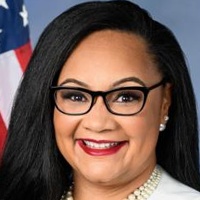
Nikema Williams
Representative
GA
Nikema Williams
Representative
GA
This resolution supports the designation of February 16, 2025, as "International Black Aviation Professionals Day" to honor the historic and ongoing contributions of Black Americans in aviation and space exploration. It celebrates the pioneers who broke racial and gender barriers in flight, military service, engineering, and leadership. Furthermore, the bill encourages public education and continued efforts to increase diversity and opportunity within the aviation workforce.
The "Accelerating Kids’ Access to Care Act of 2025" streamlines Medicaid and CHIP enrollment for out-of-state providers, increasing healthcare access for children.
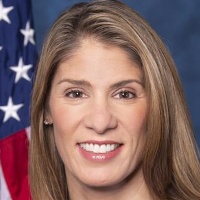
Lori Trahan
Representative
MA
Lori Trahan
Representative
MA
The "Accelerating Kids Access to Care Act of 2025" streamlines the enrollment process for out-of-state healthcare providers in Medicaid and CHIP, ensuring children under 21 have access to care from eligible providers across state lines. By reducing administrative burdens and unnecessary screening requirements, the Act aims to improve healthcare access for children while maintaining necessary safeguards against fraud and abuse. Participating providers will be enrolled for a 5-year period, and the changes will take effect three years after the Act's enactment.
The "MODERN WIC Act of 2025" expands remote access to WIC benefits by allowing virtual certification appointments, remote benefit issuance, and requires a report to Congress on the use of remote technologies within the WIC program.
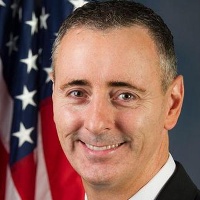
Brian Fitzpatrick
Representative
PA
Brian Fitzpatrick
Representative
PA
The MODERN WIC Act of 2025 aims to modernize the WIC program by expanding options for remote certification appointments, including telephone and video calls, and allowing for remote delivery of food benefits. It requires state agencies to offer various formats for certification appointments, ensuring accessibility for individuals with disabilities. The Act also mandates a report to Congress on the use of remote technologies in WIC, focusing on their impact and best practices.
The "Make American Flags in America Act of 2025" mandates that U.S. flags displayed on Federal property or bought by Federal agencies be made entirely in the U.S., and requires a study on country-of-origin labeling enforcement for flags.
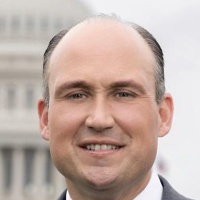
Nicholas Langworthy
Representative
NY
Nicholas Langworthy
Representative
NY
The "Make American Flags in America Act of 2025" mandates that U.S. flags displayed on Federal property or bought by Federal agencies be entirely manufactured in the U.S. using 100% U.S.-made materials, in accordance with international agreements. It also directs the Federal Trade Commission to study and report on country-of-origin labeling enforcement for U.S. flags, aiming to improve enforcement and deter violations.
The bill modifies and extends funding for the World Trade Center Health Program, expands the types of healthcare providers who can certify mental health conditions, and requires a report to Congress on the program's budget.
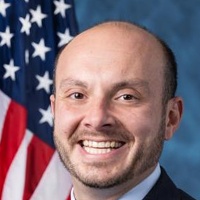
Andrew Garbarino
Representative
NY
Andrew Garbarino
Representative
NY
The 9/11 Responder and Survivor Health Funding Correction Act of 2025 amends the Public Health Service Act to improve the World Trade Center (WTC) Health Program by expanding the types of healthcare providers who can conduct mental health evaluations, modifying provider credentialing, clarifying enrollment calculations, and extending the time frame for adding health conditions for WTC responders. The act adjusts the funding formula for fiscal years 2026 through 2090 and requires the Secretary of Health and Human Services to report to Congress on the program's budget, including projected needs through 2090 and recommendations for changes to the funding formula. It also stipulates that remaining funds in the Supplemental Fund, Special Fund, and Pentagon-Shanksville Fund will revert to the Treasury.
This bill authorizes the creation of a Congressional Gold Medal to posthumously honor President Jimmy Carter for his dedicated service to the Nation, to be presented to the Carter Center.
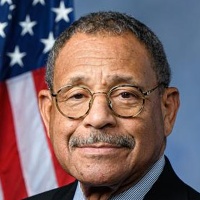
Sanford Bishop
Representative
GA
Sanford Bishop
Representative
GA
The "President Jimmy Carter Congressional Gold Medal Act" authorizes the posthumous presentation of a Congressional Gold Medal to former President Jimmy Carter in recognition of his dedicated service to the Nation. This medal, created by the Secretary of the Treasury, will be given to the Carter Center in Atlanta, Georgia, following the award ceremony. The Act also permits the creation and sale of bronze duplicates of the gold medal to the public and authorizes the United States Mint to use its Public Enterprise Fund to cover the costs of producing the medals.
This bill authorizes a Congressional Gold Medal to be awarded to the First Rhode Island Regiment in recognition of their heroic service during the Revolutionary War, particularly highlighting their integrated composition and valor at the Battle of Rhode Island.
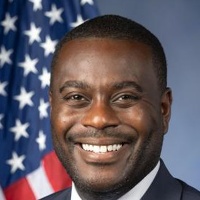
Gabe Amo
Representative
RI
Gabe Amo
Representative
RI
The "First Rhode Island Regiment Congressional Gold Medal Act" authorizes the creation of a Congressional Gold Medal to honor the First Rhode Island Regiment, a historically significant integrated unit that fought valiantly during the Revolutionary War. The medal will be presented to the Rhode Island State Library for public display and research. The Act also allows for the creation and sale of bronze duplicates of the medal to support the United States Mint Public Enterprise Fund.
The Justice for Murder Victims Act allows federal prosecution of homicide offenses without time limitations between the act causing death and the victim's death.
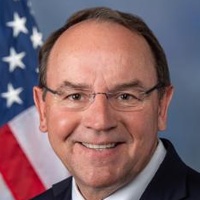
Thomas Tiffany
Representative
WI
Thomas Tiffany
Representative
WI
The Justice for Murder Victims Act allows prosecution for homicide offenses under federal law, regardless of the time between the act that caused the death and the victim's death. This eliminates any time restrictions that might prevent prosecution in certain homicide cases.
This bill establishes an Office of Gun Violence Prevention within the Department of Justice to coordinate gun violence prevention efforts, evaluate related programs and policies, recommend evidence-based strategies, and assist communities affected by gun violence.
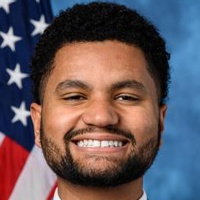
Maxwell Frost
Representative
FL
Maxwell Frost
Representative
FL
The "Office of Gun Violence Prevention Act of 2025" establishes an Office of Gun Violence Prevention within the Department of Justice, led by a Director appointed by the Attorney General, to coordinate gun violence prevention efforts, evaluate related laws and programs, and recommend evidence-based policies to Congress and the President. The Director will also convene an advisory council comprising various officials and at least 12 additional individuals representing gun violence survivors, community violence intervention service providers, and other relevant groups. The Office will also assist communities affected by gun violence with crisis response activities, such as providing access to mental health services and suicide prevention resources. Finally, the act authorizes the appropriation of necessary funds to carry out the provisions of the bill.
This resolution expresses Congressional opposition to imposing new performance fees or royalties on local radio stations and businesses for broadcasting or playing music.
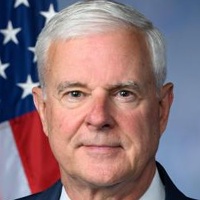
Steve Womack
Representative
AR
Steve Womack
Representative
AR
The Local Radio Freedom Act expresses Congressional opposition to imposing new performance fees, taxes, or royalties on local radio stations and businesses for playing music. It argues that the current system of free airplay provides essential promotional value to artists and that new fees would threaten the financial viability of local broadcasters and the vital community services they provide.
The United States-Israel Defense Partnership Act of 2025 bolsters defense cooperation between the U.S. and Israel through joint programs, funding increases, and extended authorities related to countering unmanned systems, anti-tunnel technology, emerging technologies, and war reserve stockpiles, while also exploring Israel's inclusion in the national technology and industrial base and assessing integrated air and missile defense in the CENTCOM region.
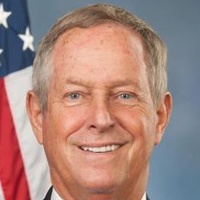
Joe Wilson
Representative
SC
Joe Wilson
Representative
SC
The United States-Israel Defense Partnership Act of 2025 seeks to bolster the defense relationship between the United States and Israel through joint initiatives and increased cooperation. It establishes programs to counter unmanned systems, extend anti-tunnel and counter-UAS cooperation, and promote collaboration in emerging technologies like AI and cybersecurity. The act also mandates the establishment of a Defense Innovation Unit office in Israel and assesses integrated air and missile defense in the U.S. Central Command region. Finally, it explores Israel's potential inclusion in the national technology and industrial base.
The Honoring Our Fallen Heroes Act of 2025 expands public safety officer benefits to include disability and death coverage for certain cancers presumed to be caused by on-duty exposure to carcinogens, and clarifies "line of duty" definitions for first responder benefits.
Mary Scanlon
Representative
PA
Mary Scanlon
Representative
PA
The Honoring Our Fallen Heroes Act of 2025 expands public safety officer benefits to include deaths and disabilities caused by exposure-related cancers, presuming that certain cancers diagnosed within 15 years of service are line-of-duty injuries if the officer served for at least 5 years. It defines "exposure-related cancer" and allows for updates to the list based on medical evidence, while also permitting individuals to petition for additions. The Act also clarifies "line of duty action" and applies retroactively to claims dating back to January 1, 2020, with a three-year window for filing claims based on these amendments.
The "Alternatives to PAIN Act" aims to improve Medicare Part D coverage for non-opioid pain management drugs by reducing cost-sharing and removing barriers like step therapy and prior authorization, starting in 2026.
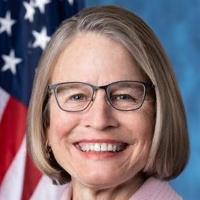
Mariannette Miller-Meeks
Representative
IA
Mariannette Miller-Meeks
Representative
IA
The "Alternatives to PAIN Act" amends Medicare Part D to improve access to non-opioid pain management drugs by waiving deductibles and ensuring they are placed on the lowest cost-sharing tier starting in 2026. The Act also prohibits the use of step therapy and prior authorization requirements for these drugs, further easing access for patients. These changes aim to provide more accessible alternatives for pain management, reducing reliance on opioids.
The SHIELD Act of 2025 makes it a federal crime to knowingly distribute intimate visual depictions without consent, with exceptions for law enforcement, reporting illegal activity, and legitimate purposes, while also protecting communications service providers from liability unless they intentionally solicit or knowingly distribute the content.
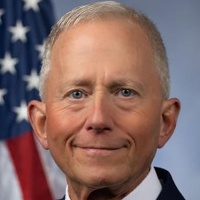
Jefferson Van Drew
Representative
NJ
Jefferson Van Drew
Representative
NJ
The "SHIELD Act of 2025" aims to protect individuals from the non-consensual distribution of intimate visual depictions, establishing federal offenses and penalties for those who knowingly distribute such images with reckless disregard for the depicted individual's lack of consent, or distribute depictions of nude minors. It defines key terms, sets forth specific offenses, and outlines penalties including fines and imprisonment, while also providing exceptions for law enforcement activities, good-faith distributions, and protecting communications service providers from liability under certain conditions. The act also addresses threats related to the distribution of intimate images and establishes extraterritorial jurisdiction in certain cases.
The "National Plan for Epilepsy Act" aims to create a comprehensive national strategy to improve epilepsy prevention, diagnosis, treatment, and research through coordinated federal efforts and an advisory council.
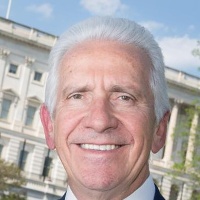
Jim Costa
Representative
CA
Jim Costa
Representative
CA
The "National Plan for Epilepsy Act" aims to address the significant impact of epilepsy by establishing a comprehensive national plan for its prevention, diagnosis, treatment, and cure. This act mandates the creation of an Advisory Council on Epilepsy Research, Care, and Services, composed of federal and non-federal experts, to evaluate and improve federally funded epilepsy efforts. The council will provide recommendations to enhance coordination, diagnosis, treatment, research, and public awareness, and reduce the financial burden of epilepsy on families. Ultimately, the act seeks to improve the lives of individuals with epilepsy and their caregivers through coordinated research, improved access to care, and enhanced public awareness.
The "Freedom to Invest in Tomorrow's Workforce Act" expands the use of 529 savings accounts to cover expenses related to postsecondary credentialing programs, including tuition, fees, books, supplies, equipment, and testing fees.

Robert Wittman
Representative
VA
Robert Wittman
Representative
VA
The "Freedom to Invest in Tomorrow's Workforce Act" amends Section 529 savings accounts to include expenses related to postsecondary credentialing programs. This allows 529 funds to cover costs like tuition, fees, books, supplies, and testing fees for recognized programs and credentials, as defined by the bill. These changes would apply to distributions made after the bill is enacted.