Legislative Activity
Track Daniel's sponsored bills, co-sponsored legislation, and voting record
The STRONG Act doubles the maximum loan amounts available for both SBA 7(a) small business loans and development company loans to support national growth.
Mark Alford
Representative
MO
Mark Alford
Representative
MO
The Supporting Trade and Rebuilding Opportunity for National Growth Act, or STRONG Act, significantly increases the maximum loan amounts available through key Small Business Administration (SBA) programs. Specifically, it doubles the maximum size for standard 7(a) loans from $\$3.75$ million to $\$7.5$ million. Additionally, the bill raises the maximum loan amount for development company loans from $\$5$ million to $\$10$ million. These changes aim to provide greater capital access for small business growth and development.
This Act establishes a pilot program to utilize the Department of Defense's SkillBridge authority to train and hire transitioning servicemembers as U.S. Border Patrol agents.
Mike Carey
Representative
OH
Mike Carey
Representative
OH
The Veterans Border Patrol Training Act establishes a pilot program to leverage the Department of Defense's SkillBridge program to train and hire transitioning servicemembers directly as U.S. Border Patrol agents. This initiative aims to facilitate a smooth transition for military personnel into federal law enforcement roles. The Secretary of Homeland Security must report annually to Congress on the program's participation and outcomes. This pilot program is set to automatically expire five years after its commencement date.
This bill allows associations of employers to sponsor group health plans, treating them as a single employer under ERISA, with specific requirements for plan structure and premium rating.
Tim Walberg
Representative
MI
Tim Walberg
Representative
MI
The Association Health Plans Act amends federal law to allow certain groups or associations of employers to sponsor a single group health plan, treating them as a single employer for coverage purposes. This aims to expand access to health coverage by enabling broader risk pooling across different industries. The bill establishes specific criteria these associations must meet to qualify, including minimum size and operational standards. Finally, it outlines rules for setting premium rates and prohibits discrimination based on health status for plans established under this Act.
This act modifies federal charter school grants to provide targeted support, technical assistance, and pre-planning funds for educator-led charter school development.

Julia Letlow
Representative
LA
Julia Letlow
Representative
LA
The Empower Charter School Educators to Lead Act modifies federal Charter School Program grants to strengthen state oversight and support for high-quality charter schools. It prioritizes funding for educator-led groups planning to open new schools by offering pre-charter planning subgrants. The bill also refines how states allocate grant funds, ensuring the majority supports the opening and expansion of charter schools.
The RISE Act caps the tax rate on a portion of adjusted net capital gains at 15 percent to encourage investment and savings.
J. Hill
Representative
AR
J. Hill
Representative
AR
The Revitalizing Investment, Savings, and Entrepreneurship (RISE) Act aims to encourage investment by capping the federal tax rate on a specific portion of adjusted net capital gains at 15 percent. This change modifies existing tax code provisions to provide a lower, predictable rate for certain investment profits.
This Act allows certain investment companies to exclude the fees and expenses of underlying business development companies when reporting total acquired fund costs on their SEC registration statements.
Brad Sherman
Representative
CA
Brad Sherman
Representative
CA
The Access to Small Business Investor Capital Act amends SEC reporting requirements for certain investment companies. This change allows these companies to exclude the indirect fees and expenses incurred from investing in an Acquired Fund, provided that Acquired Fund is a business development company. This simplifies the calculation of total "Acquired Fund Fees and Expenses" disclosed on registration statements.
This Act directs the Secretary of HHS to issue guidance on Medicaid/CHIP coverage for postpartum pelvic health services and establishes a national education campaign on the topic.
Don Bacon
Representative
NE
Don Bacon
Representative
NE
The Optimizing Postpartum Outcomes Act of 2025 aims to improve women's health after childbirth by clarifying Medicaid/CHIP coverage for essential pelvic health services. It mandates federal guidance for states on covering services like pelvic floor exams and physical therapy, alongside establishing a national education campaign for both providers and new mothers. The bill also directs the GAO to study existing coverage gaps for postpartum women under Medicaid.
This act ensures that time spent receiving outpatient observation services in a hospital counts toward the required 3-day inpatient stay for Medicare coverage of skilled nursing facility services.
Joe Courtney
Representative
CT
Joe Courtney
Representative
CT
The Improving Access to Medicare Coverage Act of 2025 ensures that time spent receiving outpatient observation services in a hospital counts toward the required 3-day inpatient stay needed to qualify for Medicare coverage of skilled nursing facility (SNF) services. This change effectively removes a significant barrier to accessing post-hospital care for many Medicare beneficiaries. The Secretary of HHS is authorized to implement this rule immediately.
The FIGHT Act of 2025 strengthens federal prohibitions against animal fighting, enhances enforcement mechanisms, and allows citizens to sue violators of animal fighting provisions.
Don Bacon
Representative
NE
Don Bacon
Representative
NE
The FIGHT Act of 2025 significantly strengthens federal prohibitions against animal fighting ventures, specifically targeting the sponsorship, exhibition, and gambling associated with these events. This legislation clarifies the definition of a rooster for legal purposes and bans the interstate transport of roosters for fighting. Furthermore, it empowers private citizens to file lawsuits against violators, allowing for civil penalties and the potential seizure of property used to facilitate illegal animal fighting.
The Community TEAMS Act of 2025 establishes grants for medical schools to partner with rural and underserved health facilities to expand community-based clinical training for medical students.
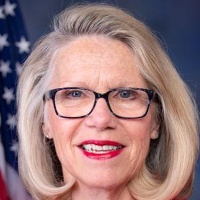
Carol Miller
Representative
WV
Carol Miller
Representative
WV
The Community TEAMS Act of 2025 establishes new federal grants to fund partnerships between medical schools and local health facilities in rural and medically underserved communities. These grants aim to expand clinical training opportunities for medical students in high-need areas. The ultimate goal is to encourage these students to establish long-term medical practices within those communities after graduation.
The SAFE Cities Act establishes a process for identifying and restricting federal funding to local jurisdictions that refuse to take reasonable steps to stop violence and property destruction.
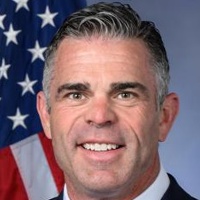
Tony Wied
Representative
WI
Tony Wied
Representative
WI
The SAFE Cities Act establishes a process for the Attorney General to officially designate certain state or local governments as "anarchist jurisdictions" based on their failure to take reasonable steps to stop violence and property destruction. Once designated, these jurisdictions will face restrictions or unfavorable treatment regarding the distribution of federal grants. The criteria focus on local policies that hinder law enforcement's ability to restore order or that involve significant cuts to police funding.
This resolution strongly condemns the rise in ideologically motivated attacks against Jewish individuals in the U.S., including the recent Boulder assault, and reaffirms the House's commitment to combating antisemitism and political violence.
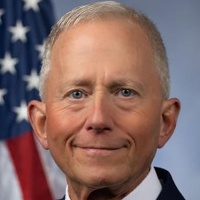
Jefferson Van Drew
Representative
NJ
Jefferson Van Drew
Representative
NJ
This resolution strongly condemns the recent rise in ideologically motivated attacks targeting Jewish individuals and institutions across the United States, including the violent assault in Boulder, Colorado. The House of Representatives reaffirms its commitment to combating antisemitism and politically motivated violence in all its forms. It calls for thorough investigation and prosecution of such incidents and urges all sectors of society to speak out against hate.
This act establishes strict, expedited 90-day timelines for regulatory approval of bank holding company, savings and loan holding company, and insured depository institution merger applications, with automatic approval if the deadline is missed.
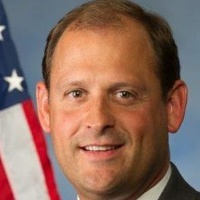
Garland Barr
Representative
KY
Garland Barr
Representative
KY
The Bank Failure Prevention Act of 2025 establishes strict, accelerated timelines for federal agencies reviewing applications for bank mergers and holding company changes. This legislation mandates that agencies must either approve or deny applications within 90 days of submission, or the application is automatically approved. The goal is to streamline the regulatory process by imposing clear deadlines for completeness checks and final decisions.
This bill raises asset thresholds across several key financial regulations, including those governing CFPB supervision, the Volker Rule, qualified mortgages, and capital requirements, from $\$10$ billion to $\$50$ billion.
Garland Barr
Representative
KY
Garland Barr
Representative
KY
The Financial Institution Regulatory Tailoring Enhancement Act significantly raises key asset thresholds across several major financial regulations from $\$10$ billion to $\$50$ billion. This change reduces the scope of supervision by the Consumer Financial Protection Bureau (CFPB) for many large financial institutions. Furthermore, it adjusts the applicability of the Volker Rule, qualified mortgage definitions, and certain capital requirements.
The FAIR Exams Act establishes strict deadlines for regulatory examinations and responses, creates an independent review board for supervisory disputes, and grants financial institutions the right to an independent, *de novo* review of material supervisory determinations.
J. Hill
Representative
AR
J. Hill
Representative
AR
The Fair Audits and Inspections for Regulators’ Exams (FAIR Exams) Act establishes strict deadlines for federal regulators to complete financial examinations and issue reports. It also creates a new, independent Board to review complaints about examination practices and allows financial institutions to appeal "material supervisory determinations" *de novo*. Furthermore, the bill mandates faster regulatory responses to requests for permission or guidance and strengthens anti-retaliation protections for institutions using appeal rights.
This act modifies federal securities laws to establish specific fiduciary and investment approval requirements for certain 403(b) retirement plans offered by charities and educational institutions to maintain their exemptions from registration.

Frank Lucas
Representative
OK
Frank Lucas
Representative
OK
The Retirement Fairness for Charities and Educational Institutions Act of 2025 modifies federal securities laws to update exemptions for 403(b) retirement plans. This legislation clarifies requirements under the Investment Company Act, the Securities Act, and the Securities Exchange Act. The changes generally condition these exemptions on the employer taking on specific fiduciary responsibilities regarding the selection and approval of investment options offered to participants.
This bill mandates an independent review of VA claimant forms to ensure clarity and establishes a timeline for implementing necessary improvements, while also slightly extending a current limit on certain pension payments.
Robert Bresnahan
Representative
PA
Robert Bresnahan
Representative
PA
The Simplifying Forms for Veterans Claims Act mandates an independent review of all Department of Veterans Affairs (VA) forms sent to claimants to ensure they are clear and easy to understand. The VA Secretary must hire an outside entity to assess these forms and implement recommendations for improvement within a set timeline. Additionally, this bill slightly extends the expiration date for certain limits on veterans' pension payments.
This bill restructures the Consumer Financial Protection Bureau (CFPB) from a single-director agency into an independent commission-led agency with specific expertise and political balance requirements.
Bill Huizenga
Representative
MI
Bill Huizenga
Representative
MI
This bill, the Bureau of Consumer Financial Protection Commission Act, restructures the Consumer Financial Protection Bureau (CFPB) by replacing its single Director leadership with an independent, five-member commission appointed by the President and confirmed by the Senate. The legislation updates numerous federal laws to replace references to the "Director" with the "Commission" or "Bureau" to reflect this new governance structure. The commission will oversee the agency's core rulemaking and enforcement authority, with a Chair selected from among its members to manage day-to-day operations.
This Act restricts federal subpoena power over insurance data, enhances confidentiality protections for data shared by the Federal Insurance Office, and limits the Office of Financial Research's ability to subpoena insurance companies while imposing new requirements on financial regulators when collecting data from them.
Scott Fitzgerald
Representative
WI
Scott Fitzgerald
Representative
WI
The Insurance Data Protection Act aims to adjust federal regulatory authority over insurance data by limiting the subpoena power of the Office of Financial Research against insurance companies. It also strengthens confidentiality protections for data shared with and held by the Federal Insurance Office and other financial regulators. Furthermore, the bill mandates that financial regulators must seek existing data from other sources before directly collecting information from insurance companies, ensuring data privacy is maintained.
This Act establishes a tax credit for businesses using domestically retreaded tires and mandates that federal fleets prioritize purchasing retreaded tires when available.
Darin LaHood
Representative
IL
Darin LaHood
Representative
IL
The Retreaded Tire Jobs, Supply Chain Security and Sustainability Act of 2025 establishes a new federal tax credit for businesses purchasing qualified, domestically retreaded tires through 2028. The bill also mandates that federal executive agencies prioritize purchasing retreaded tires when available through the GSA schedule, rather than buying new ones. These provisions aim to boost domestic jobs, enhance supply chain security, and promote sustainability in the tire industry.