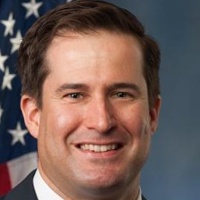
Legislative Activity
Track Seth's sponsored bills, co-sponsored legislation, and voting record
This resolution recognizes the 15th anniversary of the 2011 Tucson shooting, honoring the victims, survivors, and the ongoing advocacy of Gabby Giffords.
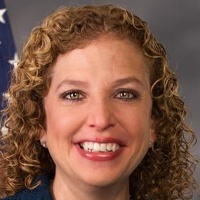
Debbie Wasserman Schultz
Representative
FL
Debbie Wasserman Schultz
Representative
FL
This resolution commemorates the 15th anniversary of the tragic January 8, 2011, Tucson shooting, honoring the six lives lost and the thirteen injured. It specifically commends the courage and ongoing advocacy of gun violence survivor and former Congresswoman Gabby Giffords. The resolution also recognizes the resilience of the community and reaffirms a commitment to ending political violence.
This bill directs the President to issue an annual proclamation establishing Democracy Day on January 6th to commemorate the 2021 attack on the U.S. Capitol and affirm the importance of the peaceful transition of power.
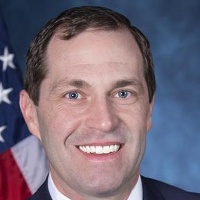
Jason Crow
Representative
CO
Jason Crow
Representative
CO
This bill proposes establishing an annual observance called "Democracy Day" by directing the President to issue a yearly proclamation. The observance is set for January 6th to commemorate the 2021 attack on the U.S. Capitol and affirm the importance of the peaceful transition of presidential power. It calls upon all levels of government and the public to observe the day with appropriate activities.
This bill expresses support for designating a week in September as "National Hispanic-Serving Institutions Week" to recognize their achievements and goals.
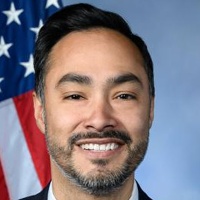
Joaquin Castro
Representative
TX
Joaquin Castro
Representative
TX
This bill officially designates the week of September 15 through September 21, 2024, as "National Hispanic-Serving Institutions Week." It recognizes the significant achievements and goals of these vital institutions across the nation. The resolution encourages public observance with appropriate activities to demonstrate support for Hispanic-Serving Institutions during Hispanic Heritage Month.
The SAW Act establishes a federal prohibition and penalties for intentionally using a motor vehicle to harm or capture mammalian predators on most federal lands, with an exception for self-defense.
Valerie Hoyle
Representative
OR
Valerie Hoyle
Representative
OR
The Snowmobiles Arent Weapons (SAW) Act establishes a federal prohibition against using a motor vehicle to intentionally harm or capture mammalian predators on most federal lands. This act sets significant penalties, including fines and imprisonment, for violations. An exception is made for actions taken in self-defense against immediate harm.
The ARMENIA Security Partnership Act mandates a review of U.S. security assistance for Armenia and restricts aid to Azerbaijan unless specific conditions regarding regional peace and human rights are met.

Gus Bilirakis
Representative
FL
Gus Bilirakis
Representative
FL
The ARMENIA Security Partnership Act requires the Secretary of Defense to certify that Azerbaijan has taken specific steps toward peace and regional stability before continuing certain security waivers. If this certification cannot be made, the Act mandates a comprehensive review of Armenia’s defense needs and restricts the President’s authority to waive security assistance limitations. This legislation aims to bolster Armenia’s self-defense capabilities and deter regional aggression.
The GRACE Act establishes a minimum annual refugee admission ceiling of 125,000, allows for higher numbers based on presidential determination and private sponsorship, and mandates detailed quarterly reporting on admissions and processing.
Zoe Lofgren
Representative
CA
Zoe Lofgren
Representative
CA
The GRACE Act establishes the Guaranteed Refugee Admission Ceiling Enhancement Act to reform how the annual number of refugee admissions is set, requiring a minimum of 125,000 plus an additional amount for privately sponsored refugees. The bill mandates detailed quarterly public reporting on admission progress and processing statistics, including security checks and circuit ride operations. It also requires the President to submit plans if admissions fall significantly below the annual goal.
This bill directs the President to withdraw U.S. Armed Forces from hostilities with presidentially designated terrorist organizations in the Western Hemisphere unless Congress authorizes the action.
Gregory Meeks
Representative
NY
Gregory Meeks
Representative
NY
This bill directs the President to withdraw U.S. Armed Forces from hostilities involving designated terrorist organizations in the Western Hemisphere. Such withdrawal must occur unless Congress has explicitly authorized the military action through a declaration of war or a specific use of force authorization. The directive is issued under the authority of the War Powers Resolution.
The Public Health Air Quality Act of 2025 establishes comprehensive new monitoring, reporting, and data transparency requirements for industrial air toxics and ambient air quality across the nation.
Troy Carter
Representative
LA
Troy Carter
Representative
LA
The Public Health Air Quality Act of 2025 aims to significantly enhance air quality monitoring and public data access across the United States. It establishes new federal requirements for industrial facilities to monitor and report hazardous air pollutant emissions, including real-time fenceline data. The Act also mandates the deployment of hundreds of new, advanced air quality monitors in vulnerable communities to better assess compliance with National Ambient Air Quality Standards. Ultimately, this legislation seeks to use improved, publicly accessible data to protect public health from industrial air pollution.
This bill reauthorizes and expands the Farmers Market and Local Food Promotion Program to $100 million annually while prioritizing the establishment of new farmers markets and increasing program oversight.
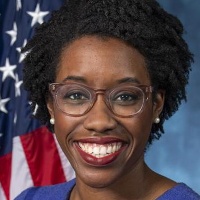
Lauren Underwood
Representative
IL
Lauren Underwood
Representative
IL
The New Markets for Farmers and Families Act reauthorizes and expands the Farmers Market and Local Food Promotion Program to bolster local agricultural economies. The bill doubles total authorized funding to $100 million, establishes a set-aside for new farmers markets, and introduces updated matching requirements. Additionally, it mandates increased transparency through new reporting requirements on program participation and oversight.
The Farmers to Families Act establishes grants and expands benefit usage to increase direct sales of local agricultural products to participants in federal nutrition assistance programs like WIC.
Lauren Underwood
Representative
IL
Lauren Underwood
Representative
IL
The Farmers to Families Act establishes a grant program to increase the purchase of local agricultural products by recipients of federal nutrition assistance programs like WIC. It expands where WIC and Senior Farmers Market Nutrition Program benefits can be used to include local food sources and requires the USDA to facilitate EBT access for these purchases. The Act also creates a Technical Assistance Center to help farmers and markets comply with new regulations and accept federal nutrition benefits.
This Act establishes a comprehensive federal strategy to combat rising antisemitism through policy statements, enhanced security grants, improved hate crime reporting, and specific mandates for educational institutions and federal agencies, while prohibiting the weaponization of antisemitism for partisan goals.
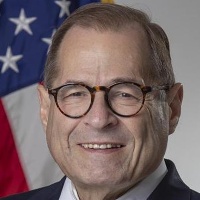
Jerrold Nadler
Representative
NY
Jerrold Nadler
Representative
NY
The Antisemitism Response and Prevention Act of 2025 aims to combat rising antisemitism through comprehensive federal action, emphasizing evidence-based strategies consistent with democratic values. The bill establishes new offices within the DOJ and FBI to coordinate counter-efforts and improve hate crime data collection. Furthermore, it mandates specific compliance and reporting requirements for colleges regarding civil rights and prohibits partisan conditions on nonprofit security grants.
This Act establishes a grant program to fund state, local, and Tribal governments for the complete destruction of firearms.
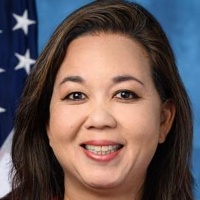
Jill Tokuda
Representative
HI
Jill Tokuda
Representative
HI
The Restoring Trust in Public Safety Act establishes a grant program to fund the complete destruction of firearms by state, local, and Tribal governments. Eligible entities can apply for competitive grants to cover costs associated with destruction equipment, services, and training. Grantees must certify that all firearms and components are fully destroyed and maintain detailed records of the process.
This act restricts senior government officials and their families from owning or trading specific investments, requiring divestment of existing holdings to restore public trust.
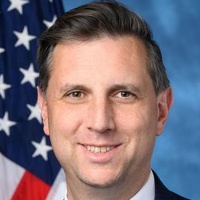
Seth Magaziner
Representative
RI
Seth Magaziner
Representative
RI
The Restore Trust in Government Act establishes strict new federal restrictions on senior government officials and their immediate families regarding the ownership and trading of specific financial investments. Covered individuals must divest existing investments that fall under the law's definition within a set timeframe, with limited exceptions. Violators face significant financial penalties, including a 10% fee on the investment value and disgorgement of any profits earned from prohibited transactions.
This bill, the ESTUARIES Act, amends the National Estuary Program to officially add the Mississippi Sound and extends its funding authorization through fiscal year 2031, while placing specific restrictions on using funds for the Mississippi Sound's inclusion in fiscal years 2025 and 2026.
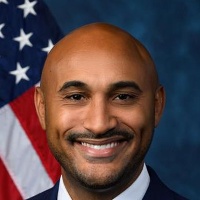
Shomari Figures
Representative
AL
Shomari Figures
Representative
AL
The ESTUARIES Act amends the Federal Water Pollution Control Act to officially add the Mississippi Sound to the National Estuary Program and extends the program's funding authorization through fiscal year 2031. However, the bill places specific restrictions on the EPA Administrator regarding the use of funds to implement this addition during fiscal years 2025 and 2026. This ensures that the expansion of the program is contingent upon specific funding levels in the near term.
This bill establishes the Office of Fusion within the Department of Energy to accelerate the research, development, and commercial deployment of fusion energy in the United States.
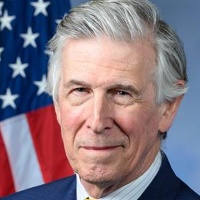
Donald Beyer
Representative
VA
Donald Beyer
Representative
VA
The Office of Fusion Act of 2025 reestablishes a dedicated Office of Fusion within the Department of Energy to accelerate the research, development, and commercial deployment of fusion energy. This office will coordinate federal efforts, foster public-private partnerships aimed at starting construction on private fusion power plants by 2028, and ensure U.S. leadership in the sector. The Act mandates the creation of a commercial deployment roadmap to identify and overcome key barriers to bringing fusion power online.
This bill prohibits the Department of Defense from contracting with entities that employ certain high-level government officials or their immediate family members in key roles to ensure ethical procurement practices.
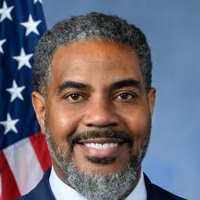
Steven Horsford
Representative
NV
Steven Horsford
Representative
NV
The ETHICAL Procurement Act aims to increase integrity in defense contracting by prohibiting the Department of Defense from awarding contracts to entities that employ certain high-level government officials or their immediate family members in key roles. This legislation specifically targets conflicts of interest arising from the involvement of presidential appointees, Schedule C employees, and Senior Executive Service members in defense contractors. The Secretary of Defense is required to quickly establish regulations to define and enforce these new eligibility restrictions.
This bill authorizes Congress to award Congressional Gold Medals to the 1980 U.S. Men's Olympic Ice Hockey team for their historic "Miracle on Ice" victory.
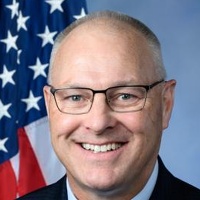
Pete Stauber
Representative
MN
Pete Stauber
Representative
MN
This bill, the Miracle on Ice Congressional Gold Medal Act, officially authorizes Congress to award Congressional Gold Medals to the 1980 U.S. Men's Olympic Ice Hockey Team for their historic "Miracle on Ice" victory. The medals will be struck by the Treasury and permanently displayed at specific national sports museums. The Act also permits the sale of duplicate bronze medals to cover production costs.
This act nullifies a recent Executive Order regarding federal labor relations and ensures existing collective bargaining agreements remain in effect.
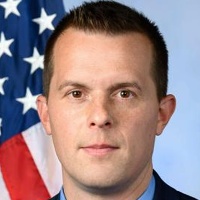
Jared Golden
Representative
ME
Jared Golden
Representative
ME
The Protect America's Workforce Act nullifies a specific Executive Order issued in March 2025 concerning exclusions from federal labor-management relations programs. This legislation ensures that any existing collective bargaining agreements between federal agencies and employee unions remain fully in effect until their stated expiration dates. The Act also prohibits the use of federal funds to implement the overturned Executive Order.
This bill establishes new payment standards, rebate requirements, and anti-steering rules for Pharmacy Benefit Managers in Medicare and Medicaid while increasing transparency in Medicaid drug price reporting.
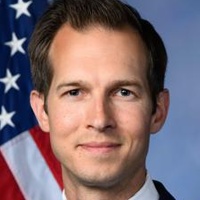
Jake Auchincloss
Representative
MA
Jake Auchincloss
Representative
MA
This bill establishes new federal requirements for Pharmacy Benefit Managers (PBMs) contracting with Medicare Part D and Medicaid plans, effective in 2027. It mandates specific payment standards for pharmacies, requires PBMs to pass manufacturer rebates directly to patients and plan sponsors, and strictly prohibits steering patients toward specific pharmacies. Additionally, the legislation enhances transparency by expanding drug price reporting requirements for all types of pharmacies within the Medicaid program.
The Endometriosis CARE Act establishes a comprehensive program to advance research, improve awareness, analyze access barriers, and study disparities related to endometriosis.
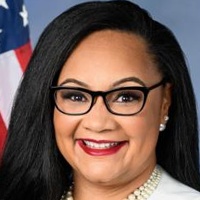
Nikema Williams
Representative
GA
Nikema Williams
Representative
GA
The Endometriosis CARE Act aims to improve the understanding and management of endometriosis through increased research funding and data collection at the NIH. The bill also mandates studies to identify barriers to treatment access and requires the development of public education campaigns and provider information resources. Furthermore, it calls for a comprehensive study on disparities in endometriosis prevalence, detection, and treatment outcomes.