This Act establishes a comprehensive federal strategy to combat rising antisemitism through policy statements, enhanced security grants, improved hate crime reporting, and specific mandates for educational institutions and federal agencies, while prohibiting the weaponization of antisemitism for partisan goals.
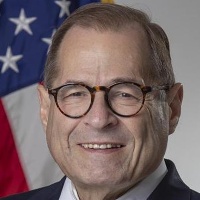
Jerrold Nadler
Representative
NY-12
The Antisemitism Response and Prevention Act of 2025 aims to combat rising antisemitism through comprehensive federal action, emphasizing evidence-based strategies consistent with democratic values. The bill establishes new offices within the DOJ and FBI to coordinate counter-efforts and improve hate crime data collection. Furthermore, it mandates specific compliance and reporting requirements for colleges regarding civil rights and prohibits partisan conditions on nonprofit security grants.
New Antisemitism Bill Boosts FBI Hate Crime Tracking, Funds Security Grants by $500M, and Blocks Political Interference in Colleges
This bill, officially titled the Antisemitism Response and Prevention Act of 2025, is a major overhaul of how the federal government addresses antisemitism and hate crimes. At its core, the Act aims to lock in significant funding for security and civil rights enforcement while explicitly preventing future administrations from using the fight against antisemitism as a pretext to attack academic programs or suppress protected speech.
It authorizes a huge funding increase for the Nonprofit Security Grant Program, jumping the authorization to $500 million annually from 2027 through 2032 (Sec. 8). For community centers, synagogues, and other at-risk religious and community institutions, this means a much bigger pool of money to pay for physical security upgrades like reinforced doors, cameras, and training. Crucially, the bill prohibits FEMA or state agencies from imposing conditions on these grants related to the recipient’s policies on diversity, immigration, or political positions—directly addressing a major point of contention from recent years (Sec. 8).
The College Campus Civil Rights Overhaul
For anyone with kids in college or working in higher education, Section 4 is the big one. It amends the Higher Education Act to mandate that every college and university designate a Title VI Coordinator responsible for investigating complaints of discrimination based on race, color, or national origin. Think of this person as the campus civil rights point-person (Sec. 4).
Institutions must also run an annual public awareness campaign about Title VI rights and publish an annual report detailing every complaint investigated by the coordinator. However, the bill is careful to draw a line: it requires colleges to distinguish between actual discrimination prohibited by Title VI and political expression protected by the First Amendment. This provision is designed to protect Jewish students from harassment while simultaneously shielding academic freedom and criticism of foreign governments from being labeled as discrimination (Sec. 3, Sec. 4).
Insulating Federal Enforcement from Politics
The Act establishes two new, highly protected positions designed to be immune from political turnover. First, within the Department of Justice, it creates the Office of the National Coordinator to Counter Antisemitism. This Coordinator, who cannot be a political appointee, will serve a four-year term and be the Attorney General’s principal advisor on domestic antisemitism, coordinating federal strategy and ensuring it’s evidence-based (Sec. 6).
Second, it establishes a Hate Crime Reporting Center within the FBI, led by a non-political Coordinator who serves a six-year term and can only be removed for cause. The Center’s mission is to record, track, and publish data on every hate crime committed in the U.S. (Sec. 7). For law enforcement and community groups, this promises much more accurate and comprehensive data than current voluntary reporting systems, backed by $50 million in annual funding (Sec. 7).
Speaking of funding, the Department of Education’s Office for Civil Rights (OCR)—the agency that investigates campus discrimination—gets a massive boost, with $280 million authorized annually through 2032. Furthermore, the bill demands the Secretary of Education certify that all OCR regional offices closed or consolidated between January 2025 and the bill’s enactment are reopened and adequately staffed, preventing the executive branch from gutting the office through attrition or reorganization (Sec. 5).
The Fine Print: What This Means for You
This legislation is a clear reaction to the recent political climate. The bill’s “Findings” section (Sec. 2) explicitly criticizes the alleged “weaponization” of antisemitism accusations by the previous administration to target diversity programs and suppress pro-Palestinian activism. The bill attempts to put up guardrails against this, stating that definitions of antisemitism (like the IHRA definition) are valuable educational tools but should not be applied in punitive legal contexts like immigration enforcement or criminal prosecutions (Sec. 3).
If you’re a busy professional, what you need to know is this: The bill aims to make Jewish communities physically safer through better-funded security grants and improve civil rights enforcement on college campuses. Simultaneously, it tries to ensure that the necessary fight against hate doesn't become a tool for ideological conformity or political score-settling, by protecting speech and insulating key enforcement roles from political purges. The trade-off is the creation of highly specialized, non-political roles within the DOJ and FBI, which will add new layers of bureaucracy and reporting requirements across the federal government (Sec. 6, Sec. 7).