Legislative Activity
Track Nicholas's sponsored bills, co-sponsored legislation, and voting record
The PEAT Act of 2026 clarifies that biologics cannot be classified solely based on the presence of a clinically inactive protein component.
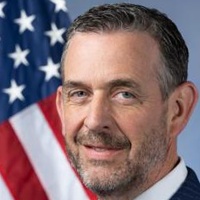
Michael Rulli
Representative
OH
Michael Rulli
Representative
OH
The PEAT Act of 2026 clarifies the classification of certain biologics under the Public Health Service Act. This legislation ensures that a biologic cannot be regulated solely based on the presence of a clinically inactive protein component. The bill aims to streamline regulatory requirements by focusing on active components.
This bill officially renames the U.S. Postal Service facility at 2200 South Salina Street in Syracuse, New York, as the "Wallie Howard Jr. Post Office Building."
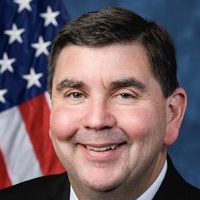
John Mannion
Representative
NY
John Mannion
Representative
NY
This bill officially designates the United States Postal Service facility at 2200 South Salina Street in Syracuse, New York, as the "Wallie Howard Jr. Post Office Building." This renaming standardizes all future references to the building across federal documents and records.
This bill condemns the multiple assassination attempts against President Donald J. Trump and recognizes the critical mission of the Department of Homeland Security.
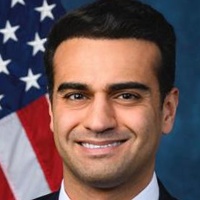
Abraham Hamadeh
Representative
AZ
Abraham Hamadeh
Representative
AZ
This bill strongly condemns the multiple attempted assassinations against President Donald J. Trump, including the attack on April 25, 2026. It commends the heroism of law enforcement and recognizes the critical mission of the Department of Homeland Security. Furthermore, the resolution calls for unity against political violence and the full funding of essential security agencies.
The MATCH Act mandates stricter export controls on semiconductor manufacturing equipment to countries of concern and requires the U.S. to coordinate with allied nations to prevent the transfer of critical technology to adversarial entities.
Michael Baumgartner
Representative
WA
Michael Baumgartner
Representative
WA
The Multilateral Alignment of Technology Controls on Hardware (MATCH) Act aims to protect U.S. national security by restricting adversary access to advanced semiconductor manufacturing equipment. The bill mandates diplomatic efforts to align export controls with allied nations and establishes a framework to impose strict U.S. regulations if those partners fail to implement sufficient safeguards. By targeting specific entities and facilities in countries of concern, the legislation seeks to close gaps in the current export control regime and maintain America’s technological advantage.
The SECURE Data Act establishes comprehensive consumer data privacy rights, mandates data security standards for controllers, regulates data brokers, and outlines enforcement by the FTC and state attorneys general.
John Joyce
Representative
PA
John Joyce
Representative
PA
The SECURE Data Act establishes comprehensive consumer privacy rights, including the rights to access, correct, and delete personal data. It imposes strict requirements on companies regarding data minimization, security, and transparency, particularly concerning sensitive data and targeted advertising. The Act also mandates registration for data brokers and creates a framework for enforcement by the FTC and state attorneys general, while preempting conflicting state laws.
This bill aims to restrict the labeling of non-dairy products as standardized dairy products unless they meet a strict new definition based on milk from hooved mammals.
John Joyce
Representative
PA
John Joyce
Representative
PA
The DAIRY PRIDE Act aims to protect the integrity of dairy labeling by establishing a strict definition for what can be called a "dairy product." This bill prohibits foods that do not meet this new standard—derived from the milk of hooved mammals—from being sold across state lines under standardized dairy names. Enforcement will be managed by the FDA, which is required to issue guidance and report on compliance actions to Congress.
This Act repeals the federal beneficial ownership information reporting requirements for domestic persons and entities, limiting them only to foreign individuals and foreign-connected companies, and mandates the deletion of existing domestic data.
Warren Davidson
Representative
OH
Warren Davidson
Representative
OH
The Repealing Big Brother Overreach Act significantly narrows the federal beneficial ownership information reporting requirements. This legislation limits reporting obligations exclusively to foreign individuals and foreign-connected companies. Furthermore, it mandates the deletion of all previously collected data pertaining to domestic persons and entities.
This bill requires the Center for Medicare and Medicaid Innovation to test a bundled payment model for providing comprehensive, accountable produce and nutrition services to eligible individuals with chronic diseases.
Lloyd Smucker
Representative
PA
Lloyd Smucker
Representative
PA
The Accountable Produce is Medicine Act of 2026 requires the Center for Medicare and Medicaid Innovation to test a new bundled payment model for treating chronic diseases using food and related services. This model will fund selected programs that provide comprehensive "Accountable Produce is Medicine" services, including tailored nutrition, care coordination, and monitoring, to eligible high-risk individuals. The goal is to improve health outcomes and demonstrate cost savings within Medicare, Medicaid, and CHIP.
This bill expands Medicare coverage for remote physiologic monitoring services for individuals with end-stage renal disease receiving home dialysis.
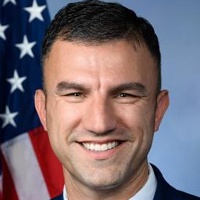
Rudy Yakym
Representative
IN
Rudy Yakym
Representative
IN
The KIDNEY Remote Monitoring Act expands Medicare coverage for remote monitoring services for individuals with end-stage renal disease receiving home dialysis. This legislation ensures physicians can be reimbursed for providing these essential remote monitoring services. Beginning in 2028, these services will be paid under the standard Medicare physician fee schedule.
This bill prohibits liability against energy businesses for damages or relief related to the use of their products, effectively banning climate-related lawsuits in federal and state courts.
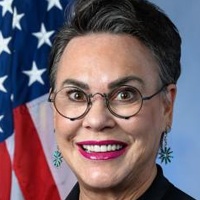
Harriet Hageman
Representative
WY
Harriet Hageman
Representative
WY
This bill, the Stop Climate Shakedowns Act of 2026, prohibits federal and state courts from hearing lawsuits seeking damages or relief against energy companies for harms related to climate change. It voids existing state laws that impose liability on energy businesses for climate-related issues, asserting that the regulation of emissions falls under exclusive federal jurisdiction. The Act aims to protect the energy industry from litigation and ensure affordable, reliable energy.
This bill officially renames the United States Postal Service facility at 1200 William Street in Buffalo, New York, as the William J. Donovan Post Office Building.
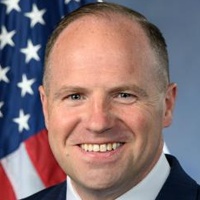
Timothy Kennedy
Representative
NY
Timothy Kennedy
Representative
NY
This bill officially renames the United States Postal Service facility located at 1200 William Street in Buffalo, New York. The facility will now be known as the William J. Donovan Post Office Building. This designation will apply to all federal references to the building.
The SACRED Act establishes federal criminal penalties and civil remedies for the intimidation, harassment, or obstruction of individuals accessing places of religious worship.
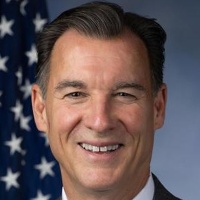
Thomas Suozzi
Representative
NY
Thomas Suozzi
Representative
NY
The SACRED Act establishes federal criminal penalties and civil remedies for individuals who intimidate, harass, or obstruct those attempting to enter or exit places of religious worship. By creating a 100-foot protected zone, the bill aims to safeguard the First Amendment right to religious freedom while ensuring the physical safety of congregants.
This bill directs the U.S. Fish and Wildlife Service to establish regional management frameworks for controlling double-crested cormorant populations to protect fisheries, ecosystems, and public resources.
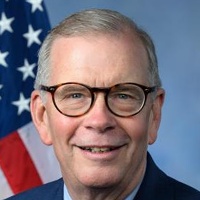
Tim Walberg
Representative
MI
Tim Walberg
Representative
MI
The Responsible Cormorant Management and Control Act of 2026 mandates the development of regional frameworks to manage double-crested cormorant populations sustainably. By coordinating with State and Tribal agencies, the U.S. Fish and Wildlife Service will establish authorized methods for population control to protect fisheries, sensitive habitats, and other wildlife. The bill also requires periodic population surveys and framework updates to ensure management strategies remain effective and science-based.
The Linemen Legacy Act amends the Homeland Security Act to officially classify utility line technicians as emergency response providers during federally declared disasters.
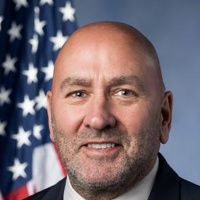
Clay Higgins
Representative
LA
Clay Higgins
Representative
LA
The Linemen Legacy Act amends the Homeland Security Act to officially classify utility line technicians as "emergency response providers." This designation ensures that linemen receive formal recognition and support when responding to major disasters or federally declared emergencies.
This bill prohibits federal agencies from banning the use of lead ammunition and tackle on federal lands and waters unless specific, evidence-based criteria and state-level coordination requirements are met.

Robert Wittman
Representative
VA
Robert Wittman
Representative
VA
The Protecting Access for Hunters and Anglers Act prevents federal agencies from banning the use of lead ammunition and tackle on federal lands and waters open to hunting and fishing. Exceptions to this rule are only permitted if specific, site-based field data proves lead is causing a wildlife population decline and the action is approved by or consistent with state wildlife policies.
The Enhanced Iran Sanctions Act of 2025 mandates broad economic and immigration sanctions on foreign individuals, entities, and financial institutions that support Iran’s nuclear, missile, drone, or terrorist activities, while specifically targeting the country's petroleum and petrochemical sectors.
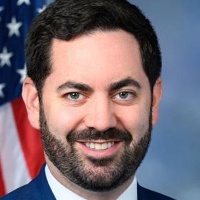
Michael Lawler
Representative
NY
Michael Lawler
Representative
NY
The Enhanced Iran Sanctions Act of 2025 strengthens U.S. policy by imposing mandatory sanctions on foreign persons and financial institutions that support Iran’s nuclear, ballistic missile, drone, and terrorist activities. The bill specifically targets Iran’s petroleum and petrochemical sectors to cut off funding for these malign programs. Additionally, it expands the State Department’s "Rewards for Justice" program to incentivize the reporting of individuals who evade these sanctions.
This bill prohibits federal agencies from providing funding or support for the creation or maintenance of state-level firearm ownership databases, with exceptions for records of lost or stolen weapons.

Paul Gosar
Representative
AZ
Paul Gosar
Representative
AZ
The Gun Owner Registration Information Protection Act prohibits federal agencies from providing funding or support for the creation and maintenance of state-level firearm ownership databases. This legislation ensures that federal resources cannot be used to track lawful gun owners, with a specific exception for databases tracking lost or stolen firearms.
The Iran Human Rights, Internet Freedom, and Accountability Act of 2026 aims to support the Iranian people by expanding internet access, strengthening sanctions against regime officials, and establishing a Treasury initiative to combat Iranian government corruption and kleptocracy.
Michael Lawler
Representative
NY
Michael Lawler
Representative
NY
The Iran Human Rights, Internet Freedom, and Accountability Act of 2026 aims to support the Iranian people by expanding access to uncensored internet and communication technologies. The bill strengthens U.S. policy against regime repression by mandating investigations into human rights abuses and establishing a new Treasury initiative to combat corruption and money laundering by Iranian officials. Additionally, it enhances congressional oversight of sanctions and promotes independent media to counter state-sponsored censorship.
This bill exempts specific less-than-lethal projectile devices from federal firearm restrictions, excise taxes, and National Firearms Act regulations to promote de-escalation innovation in law enforcement.
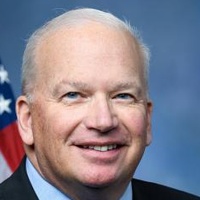
Scott Fitzgerald
Representative
WI
Scott Fitzgerald
Representative
WI
The Law-Enforcement Innovate to De-Escalate Act aims to promote de-escalation by exempting specific, clearly defined less-than-lethal projectile devices from federal firearm restrictions and excise taxes. This legislation provides a formal process for determining which devices qualify for these exemptions under both federal law and the National Firearms Act. The bill also modernizes tax regulations by exempting qualifying less-than-lethal devices and their ammunition from federal excise taxes.
This Act establishes the United States-Israel Defense Technology Cooperation Initiative to accelerate joint research, development, and integration of defense technologies between the two nations.
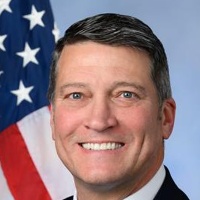
Ronny Jackson
Representative
TX
Ronny Jackson
Representative
TX
This bill establishes the United States-Israel Defense Technology Cooperation Initiative to accelerate joint research, development, and integration of critical defense technologies. The initiative focuses on key areas like AI, missile defense, and counter-drone systems to enhance the security and technological edge of both nations. It mandates regular reporting to Congress on progress and authorizes funding for fiscal years 2027 through 2029.