Legislative Activity
Track Laurel's sponsored bills, co-sponsored legislation, and voting record
This bill updates the definition of "customs waters" to align with international law, extending U.S. authority for customs enforcement to the territorial sea and contiguous zone.

Maria Salazar
Representative
FL
Maria Salazar
Representative
FL
The "Extending Limits of U.S. Customs Waters Act" updates the definition of "customs waters" to align with international law, Presidential Proclamation 5928, and Presidential Proclamation 7219. It extends U.S. customs authority to include the territorial sea and contiguous zone, as permitted by international law. These changes will take effect the day after the Act is enacted.
The "National Right-to-Work Act" prohibits mandatory union membership as a condition of employment, protecting employees' rights to choose whether or not to join or support a labor union.
Joe Wilson
Representative
SC
Joe Wilson
Representative
SC
The "National Right-to-Work Act" amends both the National Labor Relations Act and the Railway Labor Act to protect an employee's right to choose whether or not to join or support a labor union. It eliminates the possibility of mandatory union membership or dues payments as a condition of employment, ensuring that employees cannot be forced to join or support a union against their will.
The United States-Israel Defense Partnership Act of 2025 bolsters defense cooperation between the U.S. and Israel through joint programs, funding increases, and extended authorities related to countering unmanned systems, anti-tunnel technology, emerging technologies, and war reserve stockpiles, while also exploring Israel's inclusion in the national technology and industrial base and assessing integrated air and missile defense in the CENTCOM region.
Joe Wilson
Representative
SC
Joe Wilson
Representative
SC
The United States-Israel Defense Partnership Act of 2025 seeks to bolster the defense relationship between the United States and Israel through joint initiatives and increased cooperation. It establishes programs to counter unmanned systems, extend anti-tunnel and counter-UAS cooperation, and promote collaboration in emerging technologies like AI and cybersecurity. The act also mandates the establishment of a Defense Innovation Unit office in Israel and assesses integrated air and missile defense in the U.S. Central Command region. Finally, it explores Israel's potential inclusion in the national technology and industrial base.
Prohibits designating Big Cypress National Preserve as wilderness.
C. Franklin
Representative
FL
C. Franklin
Representative
FL
This bill prohibits the Big Cypress National Preserve in Florida from being designated as wilderness or included in the National Wilderness Preservation System. This ensures the area will not receive the specific protections and management guidelines associated with wilderness areas.
The PREEMIE Reauthorization Act of 2025 extends funding for research and programs aimed at preventing premature births and improving the health outcomes of preterm infants, while also mandating a comprehensive study on preterm birth in the U.S.

Robin Kelly
Representative
IL
Robin Kelly
Representative
IL
The "PREEMIE Reauthorization Act of 2025" extends funding for research on preterm births and infant care through 2029. It directs the Department of Health and Human Services to establish an interagency working group to address premature birth issues and mandates a comprehensive study by the National Academies of Sciences, Engineering, and Medicine on preterm births, including cost analysis, risk factor identification, and best practices for prevention and treatment. A report on the study's findings must be submitted to Congress and the Secretary of Health and Human Services within 24 months.
This joint resolution seeks to disapprove and nullify the Environmental Protection Agency’s rule regarding the phasedown and management of hydrofluorocarbons.
Neal Dunn
Representative
FL
Neal Dunn
Representative
FL
This joint resolution seeks to invoke the Congressional Review Act to disapprove and nullify the Environmental Protection Agency’s recent rule regarding the phasedown and management of hydrofluorocarbons. If enacted, the rule would have no force or effect, effectively blocking the EPA's regulatory framework for these substances.
The Marc Fischer Memorial Act mandates the implementation of a comprehensive digital mail scanning strategy across all federal prisons to detect and interdict synthetic drugs like fentanyl.
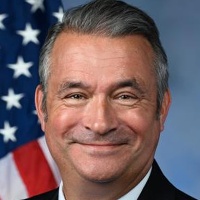
Don Bacon
Representative
NE
Don Bacon
Representative
NE
The Marc Fischer Memorial Act mandates that the Bureau of Prisons implement a comprehensive strategy to achieve 100% digital scanning of all inmate mail to interdict fentanyl and other synthetic drugs. By transitioning to digital mail processing, the Act aims to protect staff and inmates from lethal exposure, improve institutional security, and alleviate the administrative burden on correctional personnel.
The Fair Access to Banking Act prohibits large financial institutions and payment networks from denying services to law-abiding businesses based on subjective, non-financial, or political criteria.
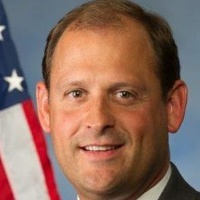
Garland Barr
Representative
KY
Garland Barr
Representative
KY
The Fair Access to Banking Act prohibits large financial institutions and payment networks from denying services to law-abiding businesses based on subjective, politically motivated, or reputational criteria. The bill mandates that financial institutions use impartial, quantitative, risk-based standards to evaluate customers rather than category-based exclusions. To ensure compliance, the legislation establishes enforcement mechanisms through federal regulators and provides a legal pathway for businesses to sue for damages if they are unfairly denied access to financial services.
This bill establishes a federal standard requiring pasteurized orange juice to contain at least 10.0 percent orange juice soluble solids by weight.
C. Franklin
Representative
FL
C. Franklin
Representative
FL
The Defending Domestic Orange Juice Production Act of 2025 establishes a federal quality standard requiring pasteurized orange juice to contain at least 10.0 percent orange juice soluble solids by weight. This measure ensures product consistency by excluding added sweeteners from the calculation of these solids.
The Dismantle DEI Act of 2025 immediately rescinds federal diversity, equity, and inclusion (DEI) mandates across executive offices, contracting, grants, and education, while banning related training and imposing penalties for non-compliance.
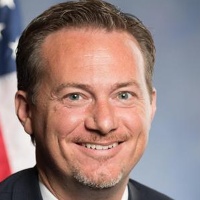
Michael Cloud
Representative
TX
Michael Cloud
Representative
TX
The Dismantle DEI Act of 2025 aims to immediately rescind diversity, equity, and inclusion (DEI) mandates across the federal government, including shutting down related offices and banning specific ideological training for federal personnel and contractors. The bill prohibits the use of federal funds for DEI activities by grant recipients and mandates that federal advisory committees cease all such practices or face termination. Furthermore, it establishes strong enforcement mechanisms, allowing individuals to sue violators and seek financial penalties for non-compliance.
This bill provides a 6.62 percent Medicare payment increase for physicians and practitioners from April through December 2025 to help stabilize medical practices.
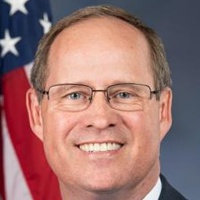
Gregory Murphy
Representative
NC
Gregory Murphy
Representative
NC
The Medicare Patient Access and Practice Stabilization Act of 2025 aims to support healthcare providers by extending Medicare payment adjustments through the end of 2025. Specifically, the bill provides a 6.62 percent payment increase for services rendered between April 1, 2025, and December 31, 2025, to help practitioners adjust to evolving Medicare payment policies.
The Educational Choice for Children Act of 2025 establishes federal tax credits for contributions to scholarship-granting organizations, providing lower- and middle-income families with financial support for K–12 educational expenses.

Adrian Smith
Representative
NE
Adrian Smith
Representative
NE
The Educational Choice for Children Act of 2025 establishes federal tax credits for individuals and corporations that contribute to scholarship-granting organizations. These organizations provide K–12 education scholarships to students from lower- and middle-income households to cover tuition, tutoring, and other qualified educational expenses. The bill also protects the autonomy of participating schools and scholarship organizations from government interference while ensuring that scholarship funds remain tax-free for recipient families.
The Performing Artist Tax Parity Act of 2025 updates and expands tax deductions for performing artists by including agent commissions, adjusting income thresholds for inflation, and increasing the nominal employer limit.

Vern Buchanan
Representative
FL
Vern Buchanan
Representative
FL
The Performing Artist Tax Parity Act of 2025 updates tax code deductions for performing artists by allowing them to deduct essential business expenses—including agent and manager commissions—directly from their taxable income. The bill introduces an income-based phaseout for the deduction, increases the "nominal employer" threshold, and implements annual inflation adjustments to ensure the policy remains current. These changes aim to provide greater financial relief for working artists by simplifying how they account for professional costs.
The Born-Alive Abortion Survivors Protection Act requires health care practitioners to provide the same level of care to infants born alive after an abortion attempt as they would to any other newborn, mandating immediate hospitalization and imposing penalties for violations, while protecting the mother from prosecution. It also allows the mother of a child born alive to file a civil action against anyone who violated the act.
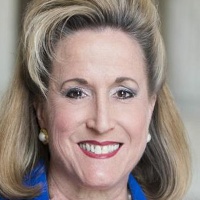
Ann Wagner
Representative
MO
Ann Wagner
Representative
MO
The "Born-Alive Abortion Survivors Protection Act" ensures that infants born alive after an abortion receive the same medical care as any other newborn, mandating immediate hospitalization and requiring healthcare practitioners to report any failures to comply. Violators face fines, imprisonment, and potential prosecution for homicide or attempted homicide, while the mother of the child cannot be prosecuted. The bill also allows the woman who had the abortion to file a civil action against anyone who violated the act. It defines abortion and attempts at abortion, and renames "Partial-Birth Abortions" to "Abortions" in relevant sections of the U.S. Code.
The Main Street Tax Certainty Act makes the 20% pass-through business income deduction permanent by removing its scheduled expiration after 2025.
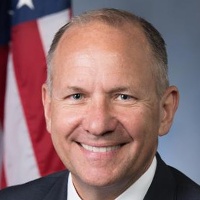
Lloyd Smucker
Representative
PA
Lloyd Smucker
Representative
PA
The Main Street Tax Certainty Act makes the 20% pass-through business income deduction permanent. By removing the current 2025 expiration date, this legislation ensures long-term tax relief for owners of qualified pass-through entities.
The Myakka Wild and Scenic River Act of 2025 designates approximately 34 miles of Florida’s Myakka River as a component of the National Wild and Scenic Rivers System to ensure its long-term protection through cooperative federal and local management.
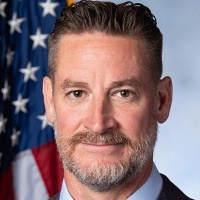
W. Steube
Representative
FL
W. Steube
Representative
FL
The Myakka Wild and Scenic River Act of 2025 designates approximately 34 miles of the Myakka River in Sarasota County, Florida, as a component of the National Wild and Scenic Rivers System. This legislation ensures long-term protection through cooperative management between the Secretary of the Interior and local Florida agencies, while explicitly prohibiting the use of eminent domain for land acquisition. The bill maintains existing land management practices and leverages the established Myakka River Management Coordinating Council to oversee the river's preservation.
This bill proposes a constitutional amendment to permanently set the number of Supreme Court justices at nine, requiring ratification by three-fourths of the states within seven years.

Dusty Johnson
Representative
SD
Dusty Johnson
Representative
SD
This bill proposes a constitutional amendment to fix the number of Supreme Court justices at nine. For this amendment to be valid, three-fourths of the state legislatures must ratify it within seven years of its submission.
This bill prohibits federal funding for abortions and for health insurance plans that cover abortions, clarifies these prohibitions under the Affordable Care Act, and requires health plans to disclose the extent of their abortion coverage and any related surcharges.
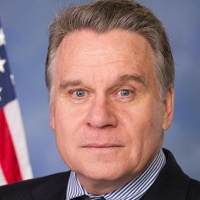
Christopher Smith
Representative
NJ
Christopher Smith
Representative
NJ
The "No Taxpayer Funding for Abortion and Abortion Insurance Full Disclosure Act of 2025" seeks to prohibit the use of federal funds for abortions and for health plans that cover abortions, while allowing individuals and entities to purchase separate abortion coverage with non-federal funds. It clarifies that premium tax credits and cost-sharing reductions under the Affordable Care Act (ACA) cannot be used for health plans that include abortion coverage. The Act also revises notice requirements for health plans, mandating clear disclosure of abortion coverage and any associated premium surcharges to enrollees. Exceptions to the funding restrictions are included for cases of rape, incest, or when the mother's life is in danger.
This bill amends the Immigration and Nationality Act to deem aliens convicted of or admitting to committing sex offenses, domestic violence, stalking, child abuse, or violating protection orders as inadmissible and deportable. It broadens the definition of crimes against children to include domestic violence, regardless of grant funding status.

Nancy Mace
Representative
SC
Nancy Mace
Representative
SC
The "Preventing Violence Against Women by Illegal Aliens Act" amends the Immigration and Nationality Act to deem aliens inadmissible and deportable if they have committed or admitted to acts constituting sex offenses, domestic violence, stalking, child abuse, or violating protection orders. It broadens the definition of crimes against children to include any crime constituting domestic violence.
The Red Snapper Act of 2025 prohibits the Secretary of Commerce from closing South Atlantic bottom fishing areas until the Great Red Snapper Count study is completed and integrated into official stock assessments.
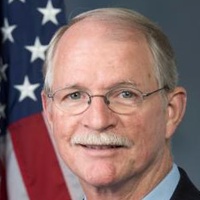
John Rutherford
Representative
FL
John Rutherford
Representative
FL
The Red Snapper Act of 2025 prohibits the Secretary of Commerce from closing South Atlantic fishing areas until the "Great Red Snapper Count" study is completed and its data is integrated into official stock assessments. This legislation aims to protect the regional economy and recreational fishing industry by ensuring management decisions are based on the most current and accurate scientific data.