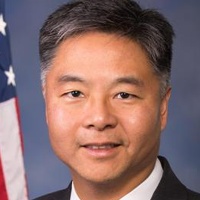
Legislative Activity
Track Ted's sponsored bills, co-sponsored legislation, and voting record
This Act ensures that disability compensation or pension payments received by veterans are excluded when determining eligibility for low-income housing tax credits and residential rental project bonds.

Linda Sánchez
Representative
CA
Linda Sánchez
Representative
CA
The Fair Housing for Disabled Veterans Act ensures that veterans' disability compensation or pension payments are excluded when determining income eligibility for low-income housing tax credits and related rental project bonds. This change prevents veterans from being penalized for their service-related benefits when applying for affordable housing assistance. The Act takes effect immediately upon passage.
The Safe Step Act mandates that group health plans using medication step therapy establish clear, timely exception processes for patients and doctors when required drugs are medically inappropriate or ineffective.

Rick Allen
Representative
GA
Rick Allen
Representative
GA
The Safe Step Act establishes mandatory, transparent exception processes for health plans that use "step therapy" protocols for prescription drugs. This ensures patients or their doctors can quickly request coverage for a prescribed medication when specific clinical criteria are met, such as previous treatment failure or risk of harm. Plans must decide on standard requests within 72 hours and urgent requests within 24 hours, and approved exceptions must last for at least one year. Furthermore, insurers must report detailed data annually on exception requests, approvals, and denials to the Secretary of Health and Human Services.
The America’s CHILDREN Act of 2025 establishes a path to permanent residency for certain long-term college graduates who entered the U.S. as dependents of work visa holders and updates age-out protections for dependent children.
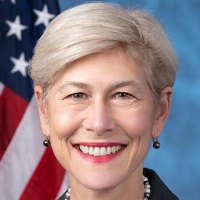
Deborah Ross
Representative
NC
Deborah Ross
Representative
NC
The America’s CHILDREN Act of 2025 establishes a new pathway to permanent residency for certain individuals who entered the U.S. as children, lived here legally for at least eight years as dependents of work visa holders, and subsequently earned a U.S. college degree. The bill also introduces significant "age-out" protections, allowing long-term dependents to retain their original priority dates for visa processing. Furthermore, it clarifies rules for derivative beneficiaries, potentially granting them work authorization in certain dependent statuses.
The SHINE for Autumn Act of 2025 establishes federal grants for states to improve stillbirth surveillance, data collection, and risk factor research while mandating the development of standardized educational guidelines on stillbirth.

Young Kim
Representative
CA
Young Kim
Representative
CA
The SHINE for Autumn Act of 2025 aims to significantly improve federal support for state-level stillbirth research and data collection. It authorizes grants for states to enhance surveillance, track risk factors, and build local capacity for analyzing stillbirth data, provided the information remains de-identified. Furthermore, the bill mandates the development of standardized guidelines and educational materials regarding stillbirth awareness and risk factors, developed in consultation with experts and bereaved families.
This bill officially designates the historic alignment of US Highway 66 as the Route 66 National Historic Trail, managed by the National Park Service without the use of eminent domain.
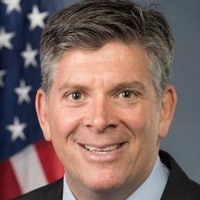
Darin LaHood
Representative
IL
Darin LaHood
Representative
IL
This bill officially designates the historic path of US Highway 66, stretching from Chicago to Santa Monica, as the Route 66 National Historic Trail. The National Park Service will manage the trail while preserving its unique character and consulting with affected Indian Tribes. Crucially, the designation prohibits the use of eminent domain for land acquisition and ensures it does not interfere with existing or future energy projects.
The Redistricting Reform Act of 2025 mandates the use of independent, nonpartisan commissions to draw fair congressional maps based on strict criteria, while establishing federal court oversight and administrative procedures to ensure compliance.
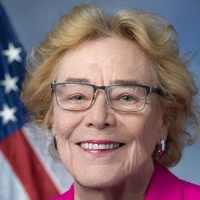
Zoe Lofgren
Representative
CA
Zoe Lofgren
Representative
CA
The Redistricting Reform Act of 2025 fundamentally overhauls congressional map-drawing by mandating the use of independent, non-partisan commissions in every state. This legislation establishes strict, prioritized criteria for map creation, explicitly banning partisan manipulation and requiring maps to prioritize community representation over political advantage. Furthermore, it sets firm deadlines for map enactment and establishes clear federal court procedures to intervene if states fail to adopt a lawful plan. Overall, the bill aims to ensure fairer congressional representation by removing map-drawing authority from state legislatures.
The GREEN Streets Act mandates new federal performance goals for state roads focused on reducing emissions and vehicle miles traveled, requires environmental analysis for road expansion projects, and imposes spending requirements on states that fail to meet climate-related road targets.
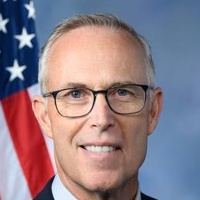
Jared Huffman
Representative
CA
Jared Huffman
Representative
CA
The **GREEN Streets Act** updates federal road performance measures to mandate that states set goals for reducing vehicle miles traveled and greenhouse gas emissions while improving climate resilience. It requires detailed environmental and community impact analyses before approving road capacity expansion projects that increase traffic lanes. Furthermore, the bill establishes new national standards for transit accessibility and mandates that states failing to meet emission performance targets must dedicate federal funding toward projects that reduce driving and improve alternatives like transit, walking, and biking.
This House resolution strongly condemns all forms of political violence and demands an end to dehumanizing rhetoric against political opponents.

Marc Veasey
Representative
TX
Marc Veasey
Representative
TX
This House Resolution strongly condemns all forms of political violence and threats against elected officials and public figures, regardless of political affiliation. It affirms that disagreements must be resolved through peaceful and democratic means, not intimidation or force. The resolution urges law enforcement to prosecute those who commit or encourage such violence. Finally, it calls on all leaders to cease using dehumanizing rhetoric and promote civil discourse.
This constitutional amendment grants Congress and the states the authority to regulate campaign contributions and expenditures, and to establish public financing systems for political campaigns.

Joe Neguse
Representative
CO
Joe Neguse
Representative
CO
This constitutional amendment seeks to grant Congress and the states the authority to regulate contributions and expenditures in political campaigns. It specifically allows for the establishment of public financing systems to offset the influence of private money in elections. The amendment ensures that any regulations enacted must not infringe upon the freedom of the press.
This bill establishes a six-year pilot program for selected hospitals to provide medically tailored, home-delivered meals and nutrition therapy to high-risk Medicare patients upon discharge to reduce hospital readmissions.
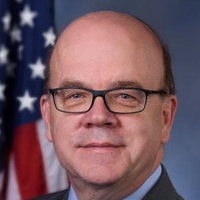
James McGovern
Representative
MA
James McGovern
Representative
MA
This bill establishes a six-year pilot program for hospitals to provide medically tailored, home-delivered meals and nutrition therapy to eligible Medicare patients upon discharge. The goal is to improve health outcomes and reduce hospital readmissions for individuals with diet-sensitive conditions who have difficulty with daily living activities. Participating hospitals will receive payment for these services, which must be provided at no out-of-pocket cost to the patient. The Secretary of Health and Human Services will evaluate the program's effectiveness using data collected from the participating sites.
This bill amends the Social Security Act to provide Medicare coverage for FDA-approved multi-cancer early detection screening tests starting in 2028.
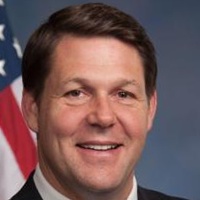
Jodey Arrington
Representative
TX
Jodey Arrington
Representative
TX
The Nancy Gardner Sewell Medicare Multi-Cancer Early Detection Screening Coverage Act amends the Social Security Act to provide Medicare Part B coverage for multi-cancer early detection screening tests starting January 1, 2028. This legislation establishes clear criteria for qualifying tests and outlines payment structures to ensure beneficiaries have access to these advanced diagnostic tools. Importantly, this coverage is designed to complement, rather than replace, existing Medicare-covered cancer screenings.
This bill ensures Medicare coverage for certain breakthrough medical devices during a four-year transitional period while accelerating the final coverage decision process.
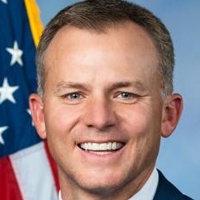
Blake Moore
Representative
UT
Blake Moore
Representative
UT
This Act, the Ensuring Patient Access to Critical Breakthrough Products Act, aims to speed up Medicare coverage for innovative, FDA-approved "breakthrough devices." It establishes a process for manufacturers to gain a four-year transitional coverage period for these devices, ensuring patients have timely access while long-term coverage decisions are finalized. The bill also allocates funding to CMS to manage these expedited reviews and allows for oversight of provider billing practices related to these new technologies.
This bill disapproves and nullifies the recent Centers for Medicare & Medicaid Services rule concerning integrity and affordability within the Affordable Care Act marketplaces.

Emilia Sykes
Representative
OH
Emilia Sykes
Representative
OH
This bill expresses the disapproval of Congress regarding a recent rule issued by the Centers for Medicare & Medicaid Services (CMS) concerning the integrity and affordability of the Affordable Care Act marketplaces. Utilizing the Congressional Review Act, this measure immediately cancels the specific CMS regulation. Consequently, the proposed changes to marketplace rules will not take effect.
This bill mandates dedicated, funded resources for specialized 988 Suicide Prevention Lifeline services for LGBTQ+ youth.
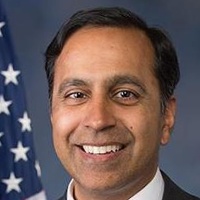
Raja Krishnamoorthi
Representative
IL
Raja Krishnamoorthi
Representative
IL
The **988 LGBTQ+ Youth Access Act of 2025** addresses the high rates of suicide risk among LGBTQ youth by strengthening specialized support through the national crisis hotline. This bill mandates that dedicated resources and services, such as a specific dialing option, must be maintained for LGBTQ individuals contacting 988. Furthermore, it requires that at least 9 percent of appropriated funds for the hotline be specifically reserved to ensure these specialized services for LGBTQ youth remain fully operational.
This Act ensures the automatic continuation of pay for active duty military personnel and essential civilian support staff if Congress fails to pass a budget for fiscal year 2026.
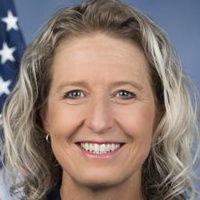
Jennifer Kiggans
Representative
VA
Jennifer Kiggans
Representative
VA
The Pay Our Troops Act of 2026 ensures that active duty military personnel and essential civilian support staff continue to receive their pay if Congress has not yet passed the full budget for fiscal year 2026. This act provides automatic continuing appropriations from the Treasury to prevent a lapse in military salaries due to budget delays. The funding automatically terminates once a new budget or continuing resolution is passed, or on January 1, 2027, whichever comes first.
The FAMILY Act establishes a national paid family and medical leave insurance program administered by the Social Security Administration, providing benefits for caregiving related to serious health conditions or victims of violence.

Rosa DeLauro
Representative
CT
Rosa DeLauro
Representative
CT
The FAMILY Act establishes a national Paid Family and Medical Leave Insurance program administered by a new office within the Social Security Administration. This program provides monthly benefits to eligible individuals who take time off for qualified caregiving reasons, including serious health conditions or victims of violence. The Act also sets forth detailed eligibility requirements, benefit calculation formulas, and job protection guarantees for employees utilizing the leave. Finally, it creates a funding mechanism to support existing state-level paid leave programs that meet federal standards.
The FAIR Act of 2025 invalidates pre-dispute arbitration agreements and joint-action waivers for employment, consumer, antitrust, and civil rights claims, while preserving the right to voluntary arbitration after a dispute arises.

Henry Johnson
Representative
GA
Henry Johnson
Representative
GA
The FAIR Act of 2025 invalidates pre-dispute arbitration agreements and class action waivers for employment, consumer, antitrust, and civil rights claims. This law restores the right for individuals to pursue these disputes in court or through collective legal action. The provisions apply to all covered disputes arising on or after the date the Act is enacted.
The George Floyd Justice in Policing Act of 2025 comprehensively reforms policing by increasing accountability, mandating transparency through data collection, restricting dangerous tactics, and prohibiting sexual misconduct by officials acting under color of law.
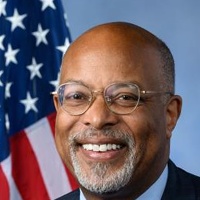
Glenn Ivey
Representative
MD
Glenn Ivey
Representative
MD
The George Floyd Justice in Policing Act of 2025 is a comprehensive bill designed to increase police accountability and transparency nationwide through federal mandates and funding incentives. It reforms standards for prosecuting civil rights violations, eliminates qualified immunity, and establishes national registries for police misconduct and use-of-force data. Furthermore, the Act bans specific dangerous police tactics like chokeholds and restricts the transfer of military equipment to local departments.
This Act mandates the President to review specific Azerbaijani officials for potential U.S. sanctions based on findings of human rights abuses, forced displacement, and mistreatment of detainees.
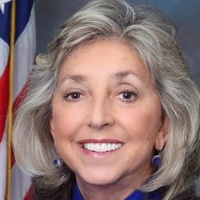
Dina Titus
Representative
NV
Dina Titus
Representative
NV
The Azerbaijan Sanctions Review Act of 2025 mandates the President to review specific Azerbaijani government and military officials for potential U.S. sanctions. This review is prompted by Congressional findings detailing severe human rights abuses, including the forced displacement from Nagorno-Karabakh and the alleged war crimes committed by Azerbaijani forces. The President must report to Congress within 180 days on whether these individuals meet the criteria for sanctions under existing human rights and anti-corruption laws. This action aims to address ongoing abuses and the detention of political figures and prisoners of war.
This bill prohibits federal health agencies from sharing identifiable Medicaid data with U.S. Immigration and Customs Enforcement (ICE).

Sydney Kamlager-Dove
Representative
CA
Sydney Kamlager-Dove
Representative
CA
The Limiting ICE’s Nationwide Encroachment Act (LINE Act) prohibits federal health agencies, like CMS and HHS, from sharing the personally identifiable Medicaid enrollment data of individuals with U.S. Immigration and Customs Enforcement (ICE). This measure is designed to protect the private health information of Medicaid recipients from being used for immigration enforcement purposes.