Legislative Activity
Track Jennifer's sponsored bills, co-sponsored legislation, and voting record
The "New Era of Preventing End-Stage Kidney Disease Act" aims to improve research, early intervention, and treatment for rare kidney diseases through centers of excellence, studies, and provider education initiatives.

Gus Bilirakis
Representative
FL
Gus Bilirakis
Representative
FL
The "New Era of Preventing End-Stage Kidney Disease Act" aims to improve the prevention, diagnosis, and treatment of rare kidney diseases through research, education, and increased public awareness. It establishes Centers of Excellence for Rare Kidney Disease Research, directs studies on testing and treatment approaches, and promotes provider education in nephrology. The Act prioritizes addressing disparities in affected populations and seeks to delay or eliminate the need for dialysis and transplant. It authorizes appropriations for these activities from 2026 through 2030.
The "DOC Access Act of 2025" aims to improve dental and vision care coverage by ensuring fair payment practices, protecting providers' choices, and upholding state regulatory authority.
Earl Carter
Representative
GA
Earl Carter
Representative
GA
The "DOC Access Act of 2025" aims to enhance health care coverage under vision and dental plans by ensuring fair payment practices, protecting doctors' choices in labs and suppliers, and respecting state laws. It allows optometrists and dentists to charge their standard rate for non-covered services if the plan's payment is unreasonable, while ensuring they can only charge the contracted rate for dental cleanings. The bill also gives doctors more control over agreement extensions with limited benefit plans and allows them to opt out of certain provisions. Ultimately, this act seeks to balance federal guidelines with state oversight in regulating health insurance issuers and dental or vision benefit plans.
The Federal Retirement Fairness Act allows temporary employees' service after 1988 to count toward retirement benefits under the Federal Employees Retirement System.

Gerald Connolly
Representative
VA
Gerald Connolly
Representative
VA
The Federal Retirement Fairness Act amends title 5 of the United States Code, allowing civilian service in a temporary position after December 31, 1988, to be creditable under the Federal Employees Retirement System. This change applies to current employees and Members of the United States Postal Service, and requires the Office of Personnel Management to notify eligible individuals and issue implementing regulations.
This bill authorizes the creation of a Congressional Gold Medal to honor the volunteers and communities involved with the North Platte Canteen during World War II.

Adrian Smith
Representative
NE
Adrian Smith
Representative
NE
The North Platte Canteen Congressional Gold Medal Act recognizes and honors the volunteers and donors of the North Platte Canteen in Nebraska during World War II with a Congressional Gold Medal. This medal will be presented by the Speaker of the House and the President pro tempore of the Senate, and then displayed at the Lincoln County Historical Museum. The Act also authorizes the creation and sale of bronze duplicates of the gold medal to cover production costs, with proceeds deposited into the Mint's Public Enterprise Fund.
This bill establishes a dedicated section within the Department of Justice to enforce federal animal cruelty laws, enhance investigations and prosecutions, and improve inter-agency coordination.
David Joyce
Representative
OH
David Joyce
Representative
OH
The Animal Cruelty Enforcement Act of 2025 establishes an Animal Cruelty Crimes Section within the Department of Justice to enforce federal animal cruelty laws, pursue investigations and prosecutions, and coordinate with other agencies. The section is required to submit an annual report to Congress regarding charges, convictions, and investigations. The bill recognizes the connection between animal cruelty and other crimes and aims to address the lack of dedicated enforcement of animal protection laws.
The bill modifies and extends funding for the World Trade Center Health Program, expands the types of healthcare providers who can certify mental health conditions, and requires a report to Congress on the program's budget.
Andrew Garbarino
Representative
NY
Andrew Garbarino
Representative
NY
The 9/11 Responder and Survivor Health Funding Correction Act of 2025 amends the Public Health Service Act to improve the World Trade Center (WTC) Health Program by expanding the types of healthcare providers who can conduct mental health evaluations, modifying provider credentialing, clarifying enrollment calculations, and extending the time frame for adding health conditions for WTC responders. The act adjusts the funding formula for fiscal years 2026 through 2090 and requires the Secretary of Health and Human Services to report to Congress on the program's budget, including projected needs through 2090 and recommendations for changes to the funding formula. It also stipulates that remaining funds in the Supplemental Fund, Special Fund, and Pentagon-Shanksville Fund will revert to the Treasury.
Cameron's Law incentivizes pharmaceutical companies to develop treatments for rare diseases by increasing the orphan drug tax credit from 25% to 50%.
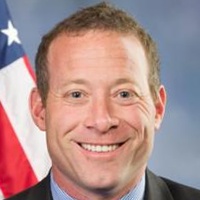
Josh Gottheimer
Representative
NJ
Josh Gottheimer
Representative
NJ
Cameron's Law amends the Internal Revenue Code of 1986 to increase the orphan drug tax credit from 25% to 50%. This change aims to incentivize the development of treatments for rare diseases by offering greater financial support to companies through enhanced tax benefits. The adjusted tax credit will be effective for taxable years starting after the enactment of this law.
The "Make American Flags in America Act of 2025" mandates that U.S. flags displayed on Federal property or bought by Federal agencies be made entirely in the U.S., and requires a study on country-of-origin labeling enforcement for flags.
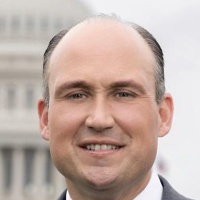
Nicholas Langworthy
Representative
NY
Nicholas Langworthy
Representative
NY
The "Make American Flags in America Act of 2025" mandates that U.S. flags displayed on Federal property or bought by Federal agencies be entirely manufactured in the U.S. using 100% U.S.-made materials, in accordance with international agreements. It also directs the Federal Trade Commission to study and report on country-of-origin labeling enforcement for U.S. flags, aiming to improve enforcement and deter violations.
This bill designates the Honor and Remember Flag as the official national symbol recognizing fallen members of the U.S. Armed Forces and mandates its display at various federal locations on specific holidays.
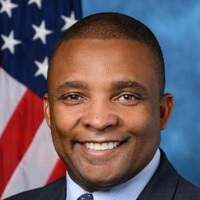
Donald Davis
Representative
NC
Donald Davis
Representative
NC
The Honor and Remember Flag Recognition Act designates the Honor and Remember Flag as the official national symbol recognizing members of the U.S. Armed Forces who die in the line of duty. It mandates the flag's display at various federal locations on specific holidays, including Armed Forces Day, Memorial Day, and Veterans Day. The bill requires relevant departments to establish regulations for flag display and directs the General Services Administration to procure and distribute the flags.
The EAGLES Act of 2025 codifies and expands the National Threat Assessment Center to prevent targeted violence through research, training, and multidisciplinary collaboration, particularly in schools.
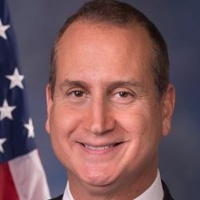
Mario Diaz-Balart
Representative
FL
Mario Diaz-Balart
Representative
FL
The EAGLES Act of 2025 codifies and expands the National Threat Assessment Center within the Secret Service to focus on preventing targeted violence through research, training, and information sharing. It establishes a national program on targeted school violence prevention, mandating research, training courses, and coordination among various departments and agencies. The Act authorizes \$10 million annually from 2026 to 2030 for these activities, emphasizing early intervention and support for individuals exhibiting concerning behavior, while explicitly prohibiting the use of funds for firearms training. This act aims to standardize threat assessment and prevention practices at all levels, ensuring a proactive and comprehensive approach to school safety.
The I CAN Act removes practice and billing barriers for Nurse Practitioners, CRNAs, and CNMs across Medicare and Medicaid while increasing transparency in federal health program coverage decisions.
David Joyce
Representative
OH
David Joyce
Representative
OH
The "I CAN Act" is comprehensive legislation designed to remove existing practice and billing barriers for various Advanced Practice Registered Nurses (APRNs)—including Nurse Practitioners, CRNAs, and CNMs—within Medicare and Medicaid. It aims to expand patient access to care by allowing these qualified professionals to supervise, order, and bill for services to the full extent of their state-defined scope of practice. Furthermore, the bill enhances transparency and accountability for Medicare's local coverage decisions affecting APRN services. Overall, this act seeks to integrate APRNs more fully into federal healthcare programs, improving efficiency and service delivery.
This Act establishes a three-year pilot program to offer donated-fund supported hyperbaric oxygen therapy for veterans with TBI or PTSD and extends certain pension payment limits.
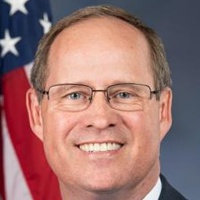
Gregory Murphy
Representative
NC
Gregory Murphy
Representative
NC
This Act establishes a three-year pilot program to provide hyperbaric oxygen therapy (HBOT) to veterans suffering from traumatic brain injury (TBI) or PTSD, funded solely through donations. It also mandates an updated Government Accountability Office (GAO) report assessing recent clinical trials on HBOT for these conditions. Finally, the bill extends the expiration date for certain limitations on veteran pension payments.
The "National Right-to-Work Act" prohibits mandatory union membership as a condition of employment, protecting employees' rights to choose whether or not to join or support a labor union.
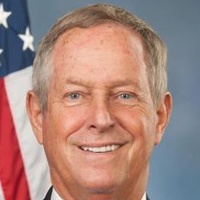
Joe Wilson
Representative
SC
Joe Wilson
Representative
SC
The "National Right-to-Work Act" amends both the National Labor Relations Act and the Railway Labor Act to protect an employee's right to choose whether or not to join or support a labor union. It eliminates the possibility of mandatory union membership or dues payments as a condition of employment, ensuring that employees cannot be forced to join or support a union against their will.
The "U.S. Park Police Modernization Act" updates the pay scale and advancement steps for U.S. Park Police officers.
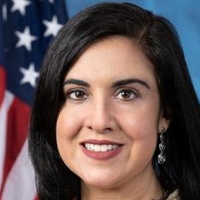
Nicole Malliotakis
Representative
NY
Nicole Malliotakis
Representative
NY
The U.S. Park Police Modernization Act amends the District of Columbia Police and Firemen’s Salary Act of 1958 to adjust the pay scales for United States Park Police officers. It revises the service step schedule for officers and members of the United States Park Police and modifies service step advancements. These changes will take effect on the first day of the first pay period after the enactment of this Act.
The Honoring Our Fallen Heroes Act of 2025 expands public safety officer benefits to include disability and death coverage for certain cancers presumed to be caused by on-duty exposure to carcinogens, and clarifies "line of duty" definitions for first responder benefits.
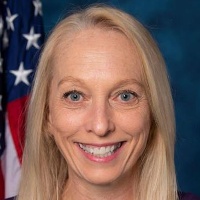
Mary Scanlon
Representative
PA
Mary Scanlon
Representative
PA
The Honoring Our Fallen Heroes Act of 2025 expands public safety officer benefits to include deaths and disabilities caused by exposure-related cancers, presuming that certain cancers diagnosed within 15 years of service are line-of-duty injuries if the officer served for at least 5 years. It defines "exposure-related cancer" and allows for updates to the list based on medical evidence, while also permitting individuals to petition for additions. The Act also clarifies "line of duty action" and applies retroactively to claims dating back to January 1, 2020, with a three-year window for filing claims based on these amendments.
Mandates the creation of a national registry for Korean American divided families to facilitate potential reunions and requires the Secretary of State to advocate for these reunions in dialogues with North Korea.
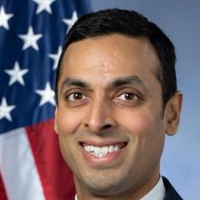
Suhas Subramanyam
Representative
VA
Suhas Subramanyam
Representative
VA
The Korean American Divided Families National Registry Act mandates the State Department to create a national registry of Korean Americans separated from family in North Korea since 1953, in order to prepare for potential family reunions. It requires the Secretary of State to include progress toward these reunions in any dialogue with North Korea, consult with South Korea, and submit annual reports to Congress on the registry's status and reunion efforts. The registry will serve as a private internal database to organize reunions and maintain information on divided families, including those who may have passed away.
The "Alternatives to PAIN Act" aims to improve Medicare Part D coverage for non-opioid pain management drugs by reducing cost-sharing and removing barriers like step therapy and prior authorization, starting in 2026.
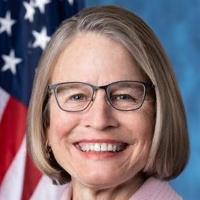
Mariannette Miller-Meeks
Representative
IA
Mariannette Miller-Meeks
Representative
IA
The "Alternatives to PAIN Act" amends Medicare Part D to improve access to non-opioid pain management drugs by waiving deductibles and ensuring they are placed on the lowest cost-sharing tier starting in 2026. The Act also prohibits the use of step therapy and prior authorization requirements for these drugs, further easing access for patients. These changes aim to provide more accessible alternatives for pain management, reducing reliance on opioids.
Protects water and wastewater treatment facilities from CERCLA liability for PFAS releases if they comply with applicable laws and are not grossly negligent.

Marie Gluesenkamp Perez
Representative
WA
Marie Gluesenkamp Perez
Representative
WA
The "Water Systems PFAS Liability Protection Act" shields water and wastewater treatment facilities from CERCLA liability for PFAS releases if they comply with applicable laws and handle PFAS during or after water treatment. This protection covers specific non-polymeric PFAS and applies to public water systems, treatment works, and related entities. The exemption does not apply in cases of gross negligence or willful misconduct.
The United States-Israel Defense Partnership Act of 2025 bolsters defense cooperation between the U.S. and Israel through joint programs, funding increases, and extended authorities related to countering unmanned systems, anti-tunnel technology, emerging technologies, and war reserve stockpiles, while also exploring Israel's inclusion in the national technology and industrial base and assessing integrated air and missile defense in the CENTCOM region.
Joe Wilson
Representative
SC
Joe Wilson
Representative
SC
The United States-Israel Defense Partnership Act of 2025 seeks to bolster the defense relationship between the United States and Israel through joint initiatives and increased cooperation. It establishes programs to counter unmanned systems, extend anti-tunnel and counter-UAS cooperation, and promote collaboration in emerging technologies like AI and cybersecurity. The act also mandates the establishment of a Defense Innovation Unit office in Israel and assesses integrated air and missile defense in the U.S. Central Command region. Finally, it explores Israel's potential inclusion in the national technology and industrial base.
The "National Plan for Epilepsy Act" aims to create a comprehensive national strategy to improve epilepsy prevention, diagnosis, treatment, and research through coordinated federal efforts and an advisory council.

Jim Costa
Representative
CA
Jim Costa
Representative
CA
The "National Plan for Epilepsy Act" aims to address the significant impact of epilepsy by establishing a comprehensive national plan for its prevention, diagnosis, treatment, and cure. This act mandates the creation of an Advisory Council on Epilepsy Research, Care, and Services, composed of federal and non-federal experts, to evaluate and improve federally funded epilepsy efforts. The council will provide recommendations to enhance coordination, diagnosis, treatment, research, and public awareness, and reduce the financial burden of epilepsy on families. Ultimately, the act seeks to improve the lives of individuals with epilepsy and their caregivers through coordinated research, improved access to care, and enhanced public awareness.