Legislative Activity
Track John's sponsored bills, co-sponsored legislation, and voting record
This bill establishes a federal crime with severe penalties for knowingly forcing a woman to have an abortion using drugs, and allows victims to file civil lawsuits for damages.
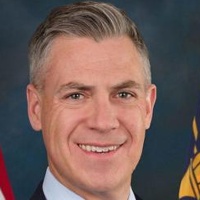
Jim Banks
Senator
IN
Jim Banks
Senator
IN
The Forced Abortion Prevention and Accountability Act establishes a new federal crime for knowingly forcing an abortion on a woman using drugs, carrying penalties up to 25 years in prison. This legislation also allows victims to file civil lawsuits seeking substantial damages, including compensation for physical and psychological injuries. The bill strictly defines terms like "abortion-inducing drug" and "informed consent" to ensure clear enforcement of these protections.
This resolution designates a week in October 2025 as "Religious Education Week" to affirm the importance of religious education for civic and moral development and encourages states to accommodate students seeking religious instruction.
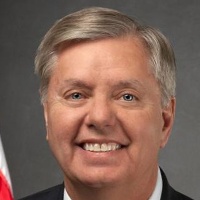
Lindsey Graham
Senator
SC
Lindsey Graham
Senator
SC
This resolution officially designates the week of October 5–11, 2025, as "Religious Education Week" to celebrate the importance of religious education in the United States. It affirms that religious instruction is vital for developing moral and civic citizens, citing historical precedent and Supreme Court rulings that protect parental rights in education. Furthermore, the resolution calls upon states and territories to accommodate students who wish to be released from public school for religious instruction.
This act prohibits federal employees from simultaneously holding multiple civil service jobs or contracting with the government, establishing penalties and mandatory annual audits to enforce compliance.

Joni Ernst
Senator
IA
Joni Ernst
Senator
IA
The Dismantling Double Dippers Act of 2025 prohibits federal employees from simultaneously holding two civil service jobs or receiving payment from a government contract while employed by the government, unless explicitly authorized. Violators face mandatory repayment of illegal earnings, potential criminal investigation by the Department of Justice, and agency disciplinary action. The OPM Inspector General is required to conduct annual audits across federal agencies to detect and report on these violations.
This resolution expresses support for designating September 20–27, 2025, as National Estuaries Week to recognize the vital ecological and economic importance of these coastal environments.

Sheldon Whitehouse
Senator
RI
Sheldon Whitehouse
Senator
RI
This resolution expresses support for designating the week of September 20 through September 27, 2025, as "National Estuaries Week." It recognizes the critical economic, ecological, and protective value of estuaries to the nation. The bill applauds ongoing efforts by federal, state, and local partners to study, protect, and restore these vital coastal environments.
This act ensures that public colleges receiving federal funds cannot deny religious student groups the same rights, benefits, and privileges granted to other student organizations.

James Lankford
Senator
OK
James Lankford
Senator
OK
The Equal Campus Access Act of 2025 ensures that public colleges receiving federal funding must grant religious student organizations the same rights, benefits, and privileges afforded to all other student groups. This prevents institutions from denying resources or penalizing religious groups based on their beliefs, practices, speech, leadership selection, or conduct standards. Essentially, the bill mandates equal treatment for all student organizations on campus to maintain federal funding eligibility.
This Act establishes emergency financial assistance and loans for private forest owners and timber businesses to combat pine beetle outbreaks and provides supplemental grants to government entities for response efforts.

Cindy Hyde-Smith
Senator
MS
Cindy Hyde-Smith
Senator
MS
The Emergency Pine Beetle Response Act of 2025 establishes emergency financial assistance for private forest owners and timber service businesses impacted by pine beetle outbreaks. This aid includes cost-share payments to cover restoration efforts and new emergency loan options specifically for nonindustrial private forest landowners. The bill also provides supplemental grants to state, Tribal, and local governments to aid in their response and recovery from these infestations.
The SHINE for Autumn Act of 2025 aims to improve stillbirth research and data collection through federal grants to states while mandating the creation and publication of public educational guidelines on stillbirth risk factors.
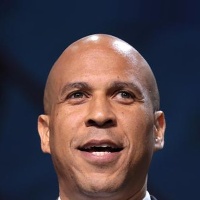
Cory Booker
Senator
NJ
Cory Booker
Senator
NJ
The SHINE for Autumn Act of 2025 aims to significantly improve the national understanding and prevention of stillbirths. It authorizes federal grants to help states enhance stillbirth surveillance, data collection, and analysis, ensuring all collected data remains de-identified. Furthermore, the Act mandates the creation of clear federal guidelines for standardized data collection and the development of public educational materials regarding stillbirth risk factors.
This resolution expresses support for designating October 14, 2025, as the "National Day of Remembrance for Charlie Kirk" to honor his advocacy for free speech, civic education, and individual liberty.
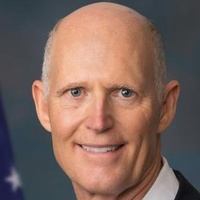
Rick Scott
Senator
FL
Rick Scott
Senator
FL
This resolution expresses support for designating October 14, 2025, as the "National Day of Remembrance for Charlie Kirk." It formally honors Kirk's legacy as a champion of free speech, civic education, and individual liberty through his work with Turning Point USA and his writing. The resolution encourages citizens and organizations nationwide to observe this day through activities promoting faith, liberty, and democracy.
This resolution condemns the assassination of Charlie Kirk while honoring his life, legacy, and commitment to civil discourse on college campuses.
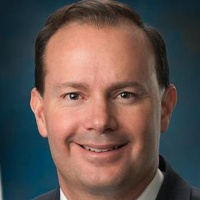
Mike Lee
Senator
UT
Mike Lee
Senator
UT
This resolution formally condemns the assassination of Charlie Kirk and honors his life and legacy as a devoted husband, father, and founder of Turning Point USA. It recognizes his commitment to encouraging civil discourse on college campuses across the nation. The Senate also extends its deepest sympathies to his surviving family.
The FIRE Act prohibits federal, state, and local governments from enacting or enforcing any restrictions on firearm magazines based on their ammunition capacity.

James Risch
Senator
ID
James Risch
Senator
ID
The Freedom from Improper Regulation and Enforcement Act (FIRE Act) prohibits federal agencies from enacting or enforcing any rules that limit firearm magazine capacity. Furthermore, this Act voids all existing state and local laws that attempt to restrict, prohibit, or penalize individuals based on a firearm magazine's capacity. These provisions take effect 30 days after the bill is enacted into law.
This resolution expresses support for designating September 11 through September 17, 2025, as "Patriot Week" to honor American history, foundational documents, and core values.
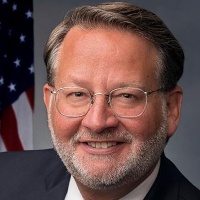
Gary Peters
Senator
MI
Gary Peters
Senator
MI
This resolution expresses support for designating September 11 through September 17, 2025, as "Patriot Week." It aims to encourage citizens to reflect on core American values, foundational documents, and influential historical figures. The week serves as an opportunity to remember the events of September 11th and renew appreciation for the nation's history and principles. The Senate encourages participation from all levels of government and the public to promote the study of U.S. history.
This Act amends existing law to expand research, mandate five-year action strategies, and enhance monitoring and response coordination across marine and freshwater systems to combat harmful algal blooms and hypoxia.
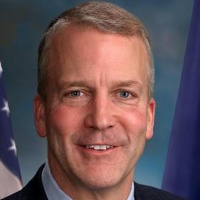
Dan Sullivan
Senator
AK
Dan Sullivan
Senator
AK
The Harmful Algal Bloom and Hypoxia Research and Control Amendments Act of 2025 significantly updates federal efforts to combat harmful algal blooms (HABs) and hypoxia across all U.S. waters, including freshwater systems. The bill expands the scope of the interagency Task Force, mandates the creation of a five-year national Action Strategy for HABs, and enhances monitoring and forecasting capabilities. It also clarifies agency roles, assigning EPA new duties for freshwater blooms while tasking NOAA with marine and Great Lakes response, and establishes a new incubator program for control technologies.
This bill prohibits the EPA from reallocating renewable fuel obligations from small refineries operating under an exemption extension and requires their produced volumes to be counted in total production calculations.
Mike Lee
Senator
UT
Mike Lee
Senator
UT
The Protect Consumers from Reallocation Costs Act of 2025 prohibits the EPA from reassigning the renewable fuel obligations of small refineries that have received an exemption extension. This ensures that the obligated volume remains with the exempt refinery rather than being shifted to other obligated parties. Furthermore, the fuel produced by these exempt small refineries must still be counted when calculating a company's total production for compliance purposes.
This resolution recognizes suicide as a serious public health crisis and expresses support for designating September 8, 2025, as "988 Day" to promote the vital 988 Suicide and Crisis Lifeline.
Cory Booker
Senator
NJ
Cory Booker
Senator
NJ
This resolution recognizes suicide as a serious public health crisis in the United States and expresses strong support for the 988 Suicide and Crisis Lifeline. It specifically designates September 8, 2025, as "988 Day" to promote awareness of this vital, life-saving resource. The bill celebrates the success of the 988 system in connecting individuals in crisis with immediate support.
The LETITIA Act establishes significantly enhanced mandatory minimum penalties for public officials convicted of federal financial crimes like bank fraud, loan application fraud, and tax fraud.

John Cornyn
Senator
TX
John Cornyn
Senator
TX
The LETITIA Act significantly increases criminal penalties for public officials who commit financial crimes, including bank fraud, lying on loan applications, and tax fraud. This legislation establishes mandatory minimum sentences and higher fines that escalate based on the number of prior offenses committed by the official. Furthermore, it directs the Department of Justice and the Department of the Treasury to issue guidance ensuring rigorous investigation and enforcement of these enhanced statutes against public servants.
This resolution solemnly marks the anniversary of the attempted assassination of President Trump, condemns political violence, and honors the victims and first responders involved.
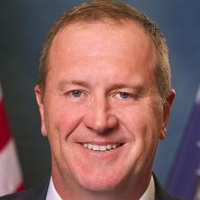
Eric Schmitt
Senator
MO
Eric Schmitt
Senator
MO
This resolution solemnly marks the one-year anniversary of the attempted assassination of former President Donald J. Trump. It condemns the multiple attempts against his life and other political officials, while honoring the victims and first responders involved in the July 2024 shooting. The measure further calls for an end to the incitement of political violence that threatens the democratic process.
The Equal Shot Act of 2025 prohibits the Small Business Administration from denying financial assistance to qualified firearm entities, affiliates, or trade associations solely based on their connection to the firearms industry.
James Risch
Senator
ID
James Risch
Senator
ID
The Equal Shot Act of 2025 aims to prevent discrimination against businesses within the firearms industry when applying for financial assistance from the Small Business Administration (SBA). This legislation explicitly prohibits the SBA from denying loans or guarantees solely based on an applicant's status as a firearm entity, affiliate, or trade association. The Act first establishes clear definitions for these industry participants to ensure fair and equal consideration for all qualified applicants.
This resolution recognizes the 20th anniversary of Hurricane Katrina by honoring its victims and responders while reaffirming commitment to Gulf Coast flood mitigation efforts.
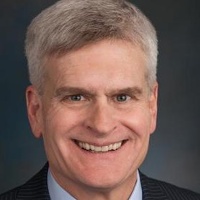
Bill Cassidy
Senator
LA
Bill Cassidy
Senator
LA
This resolution commemorates the 20th anniversary of Hurricane Katrina, honoring the lives lost and recognizing the extraordinary efforts of first responders and community support during the recovery. It highlights the significant investment made in strengthening Gulf Coast flood defenses since the disaster. Ultimately, the resolution reaffirms a commitment to continued flood mitigation and resilience for vulnerable coastal communities.
This resolution observes the 20th anniversary of Hurricane Katrina, recognizing its devastating impact while commending the Gulf Coast's progress in rebuilding and reaffirming commitment to continued recovery efforts.
Cindy Hyde-Smith
Senator
MS
Cindy Hyde-Smith
Senator
MS
This resolution observes the 20th anniversary of Hurricane Katrina, recognizing the devastating impact the storm had on the Gulf Coast region. It highlights the immense human and infrastructure toll caused by the disaster while commending the extraordinary recovery and rebuilding efforts undertaken since 2005. Ultimately, the resolution reaffirms the commitment to the continued restoration and prosperity of the affected communities.
This Act promotes private employee ownership by extending tax deferrals for S corporation ESOP sales, establishing Treasury and Labor support offices, and ensuring ESOP-owned businesses retain small business eligibility.
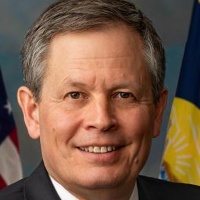
Steve Daines
Senator
MT
Steve Daines
Senator
MT
The Promotion and Expansion of Private Employee Ownership Act of 2025 aims to significantly boost employee ownership in S corporations through Employee Stock Ownership Plans (ESOPs). This bill extends crucial tax deferral benefits for stock sales to ESOPs and establishes new offices within the Treasury and Labor Departments to provide technical assistance and advocacy. Furthermore, it amends the Small Business Act to ensure ESOP-owned businesses do not automatically lose small business status when they transition to majority employee ownership.