Legislative Activity
Track Ro's sponsored bills, co-sponsored legislation, and voting record
This Act establishes federal grants to fund comprehensive, trauma-informed mental health services and support programs in schools for students facing significant challenges.
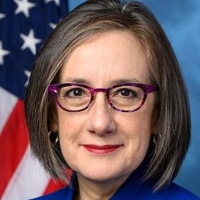
Andrea Salinas
Representative
OR
Andrea Salinas
Representative
OR
The Mental Health Services for Students Act of 2025 establishes a new federal program to provide comprehensive, trauma-informed mental health services and supports in schools through grants and contracts. These funds will support partnerships to implement awareness campaigns, staff training on trauma and suicide risk, and direct student and family treatment. The Secretary must ensure equitable distribution of funding, which is capped at \$2 million per award, with Congress authorized to appropriate \$300 million annually for the initial years.
This bill directs the President to immediately remove U.S. Armed Forces from hostilities against Venezuela and certain criminal organizations unless Congress specifically authorizes the use of force.

Ilhan Omar
Representative
MN
Ilhan Omar
Representative
MN
This bill directs the President to immediately remove United States Armed Forces from hostilities against the Bolivarian Republic of Venezuela and certain designated criminal groups. Congress asserts that these military actions lack the necessary constitutional authorization or a declaration of war. The resolution mandates withdrawal unless Congress subsequently passes specific authorization or the U.S. is subject to an armed attack.
The HEADACHE Act establishes a National Headache Disorders Initiative, an advisory council, and mandates annual reporting to Congress to improve research, care, and data collection for headache disorders.
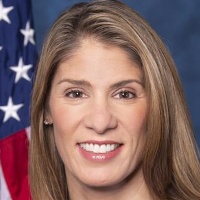
Lori Trahan
Representative
MA
Lori Trahan
Representative
MA
The HEADACHE Act establishes a comprehensive National Headache Disorders Initiative to improve research, workforce development, and care coordination for all headache disorders. It mandates the creation of an Advisory Council to guide federal efforts and requires the Secretary of Health and Human Services to submit annual reports to Congress detailing progress and recommending actions. This legislation aims to address disparities and reduce the societal and financial burden of these conditions before the Act automatically expires five years after enactment.
This resolution formally recognizes the historical significance of the Vietnamese Heritage Flag as a symbol of freedom and democracy for the Vietnamese-American community.
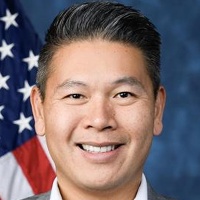
Derek Tran
Representative
CA
Derek Tran
Representative
CA
This resolution formally recognizes the historical significance of the yellow flag with three red stripes as the former flag of the Republic of Vietnam. Congress acknowledges this flag as a powerful symbol of freedom and democracy for the Vietnamese-American community. The bill affirms the flag's importance to those who fled communism and their enduring commitment to democratic values.
This resolution condemns using federal regulatory power or litigation to suppress lawful political speech critical of a party or the President, warning against authoritarianism.

Yassamin Ansari
Representative
AZ
Yassamin Ansari
Representative
AZ
This resolution strongly condemns attempts to use federal regulatory power or litigation to suppress lawful speech critical of a political party or the President. It reaffirms the fundamental importance of the First Amendment and warns that such actions resemble tactics used by authoritarian regimes. The bill urges government agencies to protect free expression and ensure accountability, not political censorship.
This House resolution strongly condemns all forms of political violence and demands an end to dehumanizing rhetoric against political opponents.
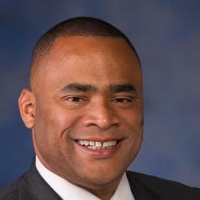
Marc Veasey
Representative
TX
Marc Veasey
Representative
TX
This House Resolution strongly condemns all forms of political violence and threats against elected officials and public figures, regardless of political affiliation. It affirms that disagreements must be resolved through peaceful and democratic means, not intimidation or force. The resolution urges law enforcement to prosecute those who commit or encourage such violence. Finally, it calls on all leaders to cease using dehumanizing rhetoric and promote civil discourse.
This bill mandates that federally funded higher education institutions update their harassment policies to explicitly cover technology-facilitated harassment and establishes a competitive grant program to fund anti-harassment initiatives.
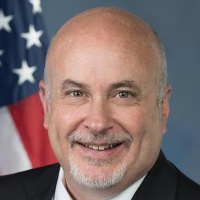
Mark Pocan
Representative
WI
Mark Pocan
Representative
WI
The Tyler Clementi Higher Education Anti-Harassment Act of 2025 mandates that colleges receiving federal funds update their policies to explicitly prohibit and detail procedures for addressing harassment based on protected characteristics, including technology-facilitated abuse. The bill also establishes a competitive grant program, funded up to $50 million annually, to support campus efforts in harassment prevention, training, and support services. This legislation adds new requirements without superseding existing civil rights protections.
The Redistricting Reform Act of 2025 mandates the use of independent, nonpartisan commissions to draw fair congressional maps based on strict criteria, while establishing federal court oversight and administrative procedures to ensure compliance.
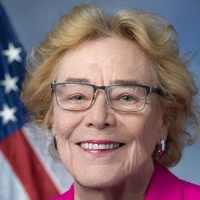
Zoe Lofgren
Representative
CA
Zoe Lofgren
Representative
CA
The Redistricting Reform Act of 2025 fundamentally overhauls congressional map-drawing by mandating the use of independent, non-partisan commissions in every state. This legislation establishes strict, prioritized criteria for map creation, explicitly banning partisan manipulation and requiring maps to prioritize community representation over political advantage. Furthermore, it sets firm deadlines for map enactment and establishes clear federal court procedures to intervene if states fail to adopt a lawful plan. Overall, the bill aims to ensure fairer congressional representation by removing map-drawing authority from state legislatures.
The Patients Over Profit Act prohibits common ownership between Medicare-related health insurance issuers and certain healthcare providers, requiring divestiture and imposing penalties for violations.
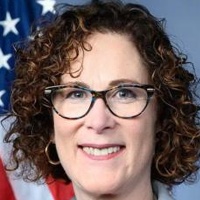
Valerie Hoyle
Representative
OR
Valerie Hoyle
Representative
OR
The Patients Over Profit Act (POP Act) prohibits common ownership between entities that run Medicare-related health insurance plans and certain healthcare providers. This aims to prevent conflicts of interest by separating insurance and provider control within the Medicare system. Violators will be required to divest one of their holdings within a set timeframe. Enforcement actions can result in the disgorgement of ill-gotten gains, which will be directed toward community healthcare needs.
This bill mandates dedicated, funded resources for specialized 988 Suicide Prevention Lifeline services for LGBTQ+ youth.
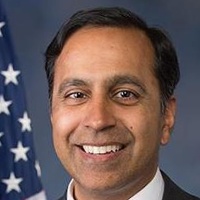
Raja Krishnamoorthi
Representative
IL
Raja Krishnamoorthi
Representative
IL
The **988 LGBTQ+ Youth Access Act of 2025** addresses the high rates of suicide risk among LGBTQ youth by strengthening specialized support through the national crisis hotline. This bill mandates that dedicated resources and services, such as a specific dialing option, must be maintained for LGBTQ individuals contacting 988. Furthermore, it requires that at least 9 percent of appropriated funds for the hotline be specifically reserved to ensure these specialized services for LGBTQ youth remain fully operational.
This bill amends the Social Security Act to provide Medicare coverage for FDA-approved multi-cancer early detection screening tests starting in 2028.
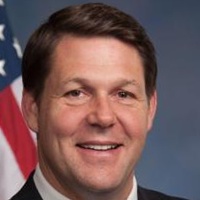
Jodey Arrington
Representative
TX
Jodey Arrington
Representative
TX
The Nancy Gardner Sewell Medicare Multi-Cancer Early Detection Screening Coverage Act amends the Social Security Act to provide Medicare Part B coverage for multi-cancer early detection screening tests starting January 1, 2028. This legislation establishes clear criteria for qualifying tests and outlines payment structures to ensure beneficiaries have access to these advanced diagnostic tools. Importantly, this coverage is designed to complement, rather than replace, existing Medicare-covered cancer screenings.
This bill disapproves and nullifies the recent Centers for Medicare & Medicaid Services rule concerning integrity and affordability within the Affordable Care Act marketplaces.
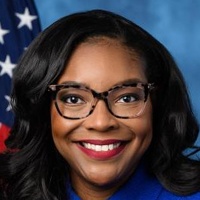
Emilia Sykes
Representative
OH
Emilia Sykes
Representative
OH
This bill expresses the disapproval of Congress regarding a recent rule issued by the Centers for Medicare & Medicaid Services (CMS) concerning the integrity and affordability of the Affordable Care Act marketplaces. Utilizing the Congressional Review Act, this measure immediately cancels the specific CMS regulation. Consequently, the proposed changes to marketplace rules will not take effect.
The FAMILY Act establishes a national paid family and medical leave insurance program administered by the Social Security Administration, providing benefits for caregiving related to serious health conditions or victims of violence.

Rosa DeLauro
Representative
CT
Rosa DeLauro
Representative
CT
The FAMILY Act establishes a national Paid Family and Medical Leave Insurance program administered by a new office within the Social Security Administration. This program provides monthly benefits to eligible individuals who take time off for qualified caregiving reasons, including serious health conditions or victims of violence. The Act also sets forth detailed eligibility requirements, benefit calculation formulas, and job protection guarantees for employees utilizing the leave. Finally, it creates a funding mechanism to support existing state-level paid leave programs that meet federal standards.
This Act ensures the automatic continuation of pay for active duty military personnel and essential civilian support staff if Congress fails to pass a budget for fiscal year 2026.
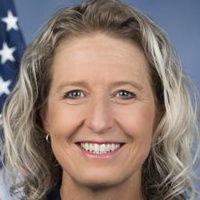
Jennifer Kiggans
Representative
VA
Jennifer Kiggans
Representative
VA
The Pay Our Troops Act of 2026 ensures that active duty military personnel and essential civilian support staff continue to receive their pay if Congress has not yet passed the full budget for fiscal year 2026. This act provides automatic continuing appropriations from the Treasury to prevent a lapse in military salaries due to budget delays. The funding automatically terminates once a new budget or continuing resolution is passed, or on January 1, 2027, whichever comes first.
The FAIR Act of 2025 invalidates pre-dispute arbitration agreements and joint-action waivers for employment, consumer, antitrust, and civil rights claims, while preserving the right to voluntary arbitration after a dispute arises.

Henry Johnson
Representative
GA
Henry Johnson
Representative
GA
The FAIR Act of 2025 invalidates pre-dispute arbitration agreements and class action waivers for employment, consumer, antitrust, and civil rights claims. This law restores the right for individuals to pursue these disputes in court or through collective legal action. The provisions apply to all covered disputes arising on or after the date the Act is enacted.
The George Floyd Justice in Policing Act of 2025 comprehensively reforms policing by increasing accountability, mandating transparency through data collection, restricting dangerous tactics, and prohibiting sexual misconduct by officials acting under color of law.
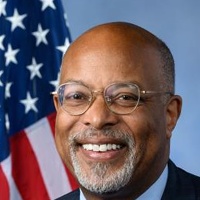
Glenn Ivey
Representative
MD
Glenn Ivey
Representative
MD
The George Floyd Justice in Policing Act of 2025 is a comprehensive bill designed to increase police accountability and transparency nationwide through federal mandates and funding incentives. It reforms standards for prosecuting civil rights violations, eliminates qualified immunity, and establishes national registries for police misconduct and use-of-force data. Furthermore, the Act bans specific dangerous police tactics like chokeholds and restricts the transfer of military equipment to local departments.
This bill establishes the National Infrastructure Bank to finance major U.S. infrastructure projects while granting the Bank and its investors favorable federal tax exemptions.
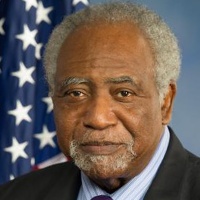
Danny Davis
Representative
IL
Danny Davis
Representative
IL
The National Infrastructure Bank Act of 2025 establishes a new, mixed-ownership federal corporation chartered to finance major infrastructure projects across the nation. This legislation authorizes the Bank to raise substantial capital and issue significant loans to spur economic growth while prioritizing projects in disadvantaged communities. Furthermore, the bill grants the Bank and its specific investors favorable tax exemptions to encourage participation and operation.
This resolution expresses the House of Representatives' disapproval of the planned WISeR Model, asserting that its expansion of prior authorization requirements will undermine beneficiary access to necessary healthcare.
Mark Pocan
Representative
WI
Mark Pocan
Representative
WI
This resolution expresses the sense of the House of Representatives opposing the implementation of the proposed Wasteful and Inappropriate Service Reduction (WISeR) Model. The House believes this model would severely undermine beneficiary access to necessary healthcare by significantly expanding prior authorization requirements in traditional Medicare. It urges the Centers for Medicare and Medicaid Services to terminate the plan due to concerns over patient access and the poor track record of private entities managing these reviews.
This bill posthumously awards a Congressional Gold Medal to honor the groundbreaking civil rights achievements of Constance Baker Motley and authorizes the production and sale of bronze duplicates.
Rosa DeLauro
Representative
CT
Rosa DeLauro
Representative
CT
This bill, the Congressional Tribute to Constance Baker Motley Act of 2025, posthumously awards the Congressional Gold Medal to the pioneering civil rights attorney and federal judge, Constance Baker Motley. The legislation recognizes her historic achievements, including her role in *Brown v. Board of Education* and her service as the first African-American woman appointed as a federal judge. The Secretary of the Treasury is authorized to strike the medal, and provisions are made for selling bronze duplicates to cover production costs.
This bill establishes advance appropriations for key Bureau of Indian Affairs, Bureau of Indian Education, and Indian Health Service programs starting in fiscal year 2026 and mandates forward-looking budget estimates to improve planning.
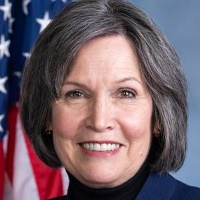
Betty McCollum
Representative
MN
Betty McCollum
Representative
MN
The Indian Programs Advance Appropriations Act of 2025 establishes a system of advance appropriations for key Bureau of Indian Affairs (BIA), Bureau of Indian Education (BIE), and Indian Health Service (IHS) programs starting in fiscal year 2026. This legislation mandates that budget requests must include forward-looking funding estimates for the subsequent fiscal year to improve agency planning and transparency. Furthermore, the bill requires annual reporting to Congress on resource adequacy for these critical services after consultation with Tribal nations.