
Legislative Activity
Track Pramila's sponsored bills, co-sponsored legislation, and voting record
This Act conditions eligibility for Edward Byrne Memorial Justice Assistance Grants on prohibiting firearm transfers with licensed dealers identified by the ATF as frequently selling guns used quickly in crimes.
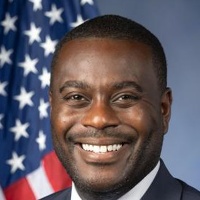
Gabe Amo
Representative
RI
Gabe Amo
Representative
RI
The Responsible Retirement of Law Enforcement Firearms Act of 2025 (RRLEF Act) amends the Edward Byrne Memorial Justice Assistance Grant Program to require state and local agencies to cease firearm transfers with licensed dealers flagged by the ATF. Dealers are placed on a restricted list if a significant number of their traced firearms show a "short time-to-crime." Furthermore, the Act mandates increased public disclosure of firearm tracing data by the ATF, removing previous statutory restrictions on making this information public.
This bill reauthorizes and extends funding for the Special Diabetes Programs through fiscal year 2030 at \$160 million annually.

Diana DeGette
Representative
CO
Diana DeGette
Representative
CO
The Special Diabetes Program Reauthorization Act of 2025 extends critical funding for the Special Diabetes Programs supporting Type 1 diabetes research and prevention. This bill commits $160 million annually for the program from fiscal years 2026 through 2030. The legislation ensures continued support for these vital diabetes initiatives over the next five years.
The Future Generations Protection Act mandates zero greenhouse gas emissions from new power plants, bans hydraulic fracturing starting in 2029, and restricts crude oil and natural gas exports while prioritizing a just transition away from fossil fuels.

Janice Schakowsky
Representative
IL
Janice Schakowsky
Representative
IL
The Future Generations Protection Act aims to combat climate change by immediately banning greenhouse gas emissions from new power plants and halting the approval of most new Liquefied Natural Gas (LNG) terminals. It also establishes a nationwide ban on hydraulic fracturing starting in 2029 and generally prohibits the export of domestically produced crude oil and natural gas, with limited exceptions for oil swaps and historical trade relationships. Furthermore, the Act mandates that the energy transition prioritize environmental justice, fairness for fossil fuel workers, and strong labor union involvement.
The Patients Over Profit Act prohibits common ownership between Medicare-related health insurance issuers and certain healthcare providers, requiring divestiture and imposing penalties for violations.
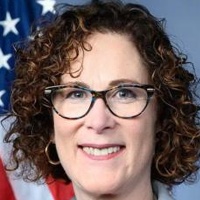
Valerie Hoyle
Representative
OR
Valerie Hoyle
Representative
OR
The Patients Over Profit Act (POP Act) prohibits common ownership between entities that run Medicare-related health insurance plans and certain healthcare providers. This aims to prevent conflicts of interest by separating insurance and provider control within the Medicare system. Violators will be required to divest one of their holdings within a set timeframe. Enforcement actions can result in the disgorgement of ill-gotten gains, which will be directed toward community healthcare needs.
This bill mandates dedicated, funded resources for specialized 988 Suicide Prevention Lifeline services for LGBTQ+ youth.
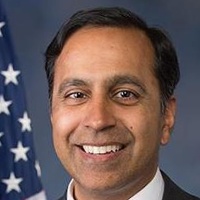
Raja Krishnamoorthi
Representative
IL
Raja Krishnamoorthi
Representative
IL
The **988 LGBTQ+ Youth Access Act of 2025** addresses the high rates of suicide risk among LGBTQ youth by strengthening specialized support through the national crisis hotline. This bill mandates that dedicated resources and services, such as a specific dialing option, must be maintained for LGBTQ individuals contacting 988. Furthermore, it requires that at least 9 percent of appropriated funds for the hotline be specifically reserved to ensure these specialized services for LGBTQ youth remain fully operational.
This bill establishes a grant program to fund public colleges training medical students to provide primary health care in medically underserved communities.
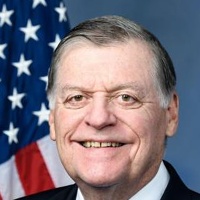
Tom Cole
Representative
OK
Tom Cole
Representative
OK
The Medical Student Education Authorization Act of 2025 establishes a new federal grant program to bolster primary healthcare in medically underserved communities. This funding, administered by HRSA, will support public medical colleges that train students committed to practicing in high-need areas like rural or Tribal regions. Grants will focus on developing community-based training, increasing faculty capacity, and providing direct student support to improve the primary care workforce pipeline.
This bill amends the Social Security Act to provide Medicare coverage for FDA-approved multi-cancer early detection screening tests starting in 2028.
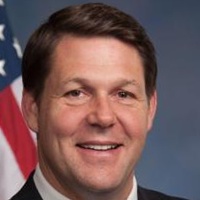
Jodey Arrington
Representative
TX
Jodey Arrington
Representative
TX
The Nancy Gardner Sewell Medicare Multi-Cancer Early Detection Screening Coverage Act amends the Social Security Act to provide Medicare Part B coverage for multi-cancer early detection screening tests starting January 1, 2028. This legislation establishes clear criteria for qualifying tests and outlines payment structures to ensure beneficiaries have access to these advanced diagnostic tools. Importantly, this coverage is designed to complement, rather than replace, existing Medicare-covered cancer screenings.
The FAMILY Act establishes a national paid family and medical leave insurance program administered by the Social Security Administration, providing benefits for caregiving related to serious health conditions or victims of violence.

Rosa DeLauro
Representative
CT
Rosa DeLauro
Representative
CT
The FAMILY Act establishes a national Paid Family and Medical Leave Insurance program administered by a new office within the Social Security Administration. This program provides monthly benefits to eligible individuals who take time off for qualified caregiving reasons, including serious health conditions or victims of violence. The Act also sets forth detailed eligibility requirements, benefit calculation formulas, and job protection guarantees for employees utilizing the leave. Finally, it creates a funding mechanism to support existing state-level paid leave programs that meet federal standards.
This bill establishes the National Infrastructure Bank to finance major U.S. infrastructure projects while granting the Bank and its investors favorable federal tax exemptions.

Danny Davis
Representative
IL
Danny Davis
Representative
IL
The National Infrastructure Bank Act of 2025 establishes a new, mixed-ownership federal corporation chartered to finance major infrastructure projects across the nation. This legislation authorizes the Bank to raise substantial capital and issue significant loans to spur economic growth while prioritizing projects in disadvantaged communities. Furthermore, the bill grants the Bank and its specific investors favorable tax exemptions to encourage participation and operation.
The George Floyd Justice in Policing Act of 2025 comprehensively reforms policing by increasing accountability, mandating transparency through data collection, restricting dangerous tactics, and prohibiting sexual misconduct by officials acting under color of law.
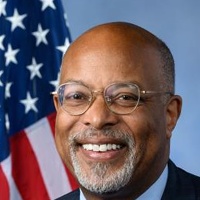
Glenn Ivey
Representative
MD
Glenn Ivey
Representative
MD
The George Floyd Justice in Policing Act of 2025 is a comprehensive bill designed to increase police accountability and transparency nationwide through federal mandates and funding incentives. It reforms standards for prosecuting civil rights violations, eliminates qualified immunity, and establishes national registries for police misconduct and use-of-force data. Furthermore, the Act bans specific dangerous police tactics like chokeholds and restricts the transfer of military equipment to local departments.
The FAIR Act of 2025 invalidates pre-dispute arbitration agreements and joint-action waivers for employment, consumer, antitrust, and civil rights claims, while preserving the right to voluntary arbitration after a dispute arises.

Henry Johnson
Representative
GA
Henry Johnson
Representative
GA
The FAIR Act of 2025 invalidates pre-dispute arbitration agreements and class action waivers for employment, consumer, antitrust, and civil rights claims. This law restores the right for individuals to pursue these disputes in court or through collective legal action. The provisions apply to all covered disputes arising on or after the date the Act is enacted.
The Equal Tax Act limits preferential capital gains rates for high earners, imposes deemed realization of capital gains upon gift or death, creates exclusions for inherited family farm/business gains, and places new caps and reporting requirements on various tax benefits.
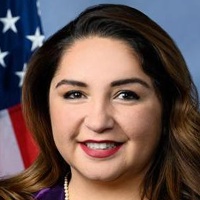
Delia Ramirez
Representative
IL
Delia Ramirez
Representative
IL
The Equal Tax Act aims to increase tax fairness by limiting preferential tax rates for high earners and treating property transfers at death or as a gift as a taxable event. It introduces new rules for capital gains exclusions on inherited family farms and businesses, while also capping the use of like-kind exchanges for non-farming real estate. Finally, the Act adjusts the calculation for the Qualified Business Income deduction based on income thresholds.
This resolution expresses the House of Representatives' disapproval of the planned WISeR Model, asserting that its expansion of prior authorization requirements will undermine beneficiary access to necessary healthcare.
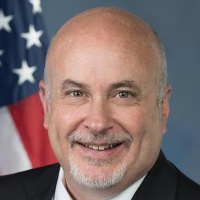
Mark Pocan
Representative
WI
Mark Pocan
Representative
WI
This resolution expresses the sense of the House of Representatives opposing the implementation of the proposed Wasteful and Inappropriate Service Reduction (WISeR) Model. The House believes this model would severely undermine beneficiary access to necessary healthcare by significantly expanding prior authorization requirements in traditional Medicare. It urges the Centers for Medicare and Medicaid Services to terminate the plan due to concerns over patient access and the poor track record of private entities managing these reviews.
This bill posthumously awards a Congressional Gold Medal to honor the groundbreaking civil rights achievements of Constance Baker Motley and authorizes the production and sale of bronze duplicates.
Rosa DeLauro
Representative
CT
Rosa DeLauro
Representative
CT
This bill, the Congressional Tribute to Constance Baker Motley Act of 2025, posthumously awards the Congressional Gold Medal to the pioneering civil rights attorney and federal judge, Constance Baker Motley. The legislation recognizes her historic achievements, including her role in *Brown v. Board of Education* and her service as the first African-American woman appointed as a federal judge. The Secretary of the Treasury is authorized to strike the medal, and provisions are made for selling bronze duplicates to cover production costs.
This act increases the corporate tax rate for companies whose CEO-to-worker pay ratio exceeds 50 to 1, based on a five-year average calculation.
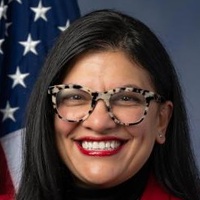
Rashida Tlaib
Representative
MI
Rashida Tlaib
Representative
MI
The Tax Excessive CEO Pay Act of 2025 imposes a federal income tax penalty on corporations whose CEO-to-worker pay ratio exceeds 50-to-1, calculated using a five-year average. If the ratio is too high, the standard 21% corporate tax rate will increase according to a specified penalty table. This measure applies to tax years beginning after December 31, 2025, with exceptions for smaller companies below a $100 million revenue threshold.
The RESULTS Act reforms how Medicare determines payment rates for clinical diagnostic laboratory tests by mandating the use of comprehensive, real-world private payor claims data collected from an independent entity.
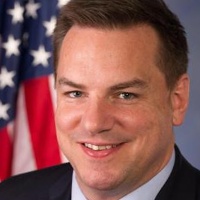
Richard Hudson
Representative
NC
Richard Hudson
Representative
NC
The Reforming and Enhancing Sustainable Updates to Laboratory Testing Services Act of 2025 (RESULTS Act) aims to improve Medicare payment rates for clinical lab tests by mandating the collection of more accurate, real-world payment data directly from large, independent private insurance claims databases. This legislation updates definitions, collection timelines, and calculation methods to ensure Medicare payments for widely available tests reflect current market rates. It also establishes default payment rules if sufficient private payor data cannot be secured.
This Act establishes sanctions against Pakistani officials undermining democracy and human rights, while urging the U.S. government to promote democratic institutions in Pakistan until September 30, 2030.
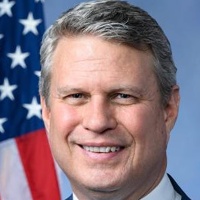
Bill Huizenga
Representative
MI
Bill Huizenga
Representative
MI
The Pakistan Freedom and Accountability Act expresses strong U.S. support for democracy and human rights in Pakistan, citing concerns over military influence and recent election interference. This legislation directs the President to identify and impose sanctions on Pakistani officials responsible for undermining democratic processes or committing serious human rights abuses. The Act emphasizes the need for civilian control over the military and sets an expiration date for its provisions in September 2030.
This act removes a federal payment limitation for certain state Medicaid home and community-based services (HCBS) waivers.

Debbie Dingell
Representative
MI
Debbie Dingell
Representative
MI
The HCBS Worker Protection Act of 2025 removes a federal payment limitation for certain home and community-based services (HCBS) waivers under Medicaid. This change grants states greater flexibility in receiving federal matching funds for these essential community services.
This act modifies the Family and Medical Leave Act (FMLA) to establish specific eligibility criteria and leave calculation methods for paraprofessionals and other essential education support staff.

Sean Casten
Representative
IL
Sean Casten
Representative
IL
This bill, the ESP, Paraprofessional, and Education Support Staff Family Leave Act, updates eligibility requirements for certain school employees under the Family and Medical Leave Act (FMLA). It adjusts how paraprofessionals and education support staff meet the required hours of service by using a percentage of expected monthly hours worked during the school year. Furthermore, the bill mandates clear guidelines for calculating FMLA leave entitlement for these employees to account for non-standard school schedules.
The **Congressional Power of the Purse Act** strengthens Congress's control over impoundment, mandates detailed federal spending transparency, and tightens oversight on the declaration and termination of national emergencies.
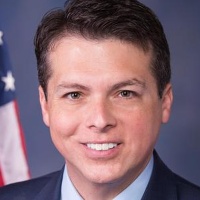
Brendan Boyle
Representative
PA
Brendan Boyle
Representative
PA
The Congressional Power of the Purse Act is a comprehensive bill designed to reassert Congressional authority over federal spending, emergency declarations, and executive branch financial oversight. It strengthens Congress's ability to prevent impoundment of appropriated funds, mandates greater transparency regarding unspent government money, and imposes strict time limits and review procedures on presidential declarations of national emergencies. Ultimately, the Act aims to increase accountability across the Executive Branch regarding the execution and management of taxpayer funds.